 Flatiron Holiday Window Walk Planner for Remote Teams
Free Things to Do
SoHo Shaded Greenway Cycling Trail: West River Connector
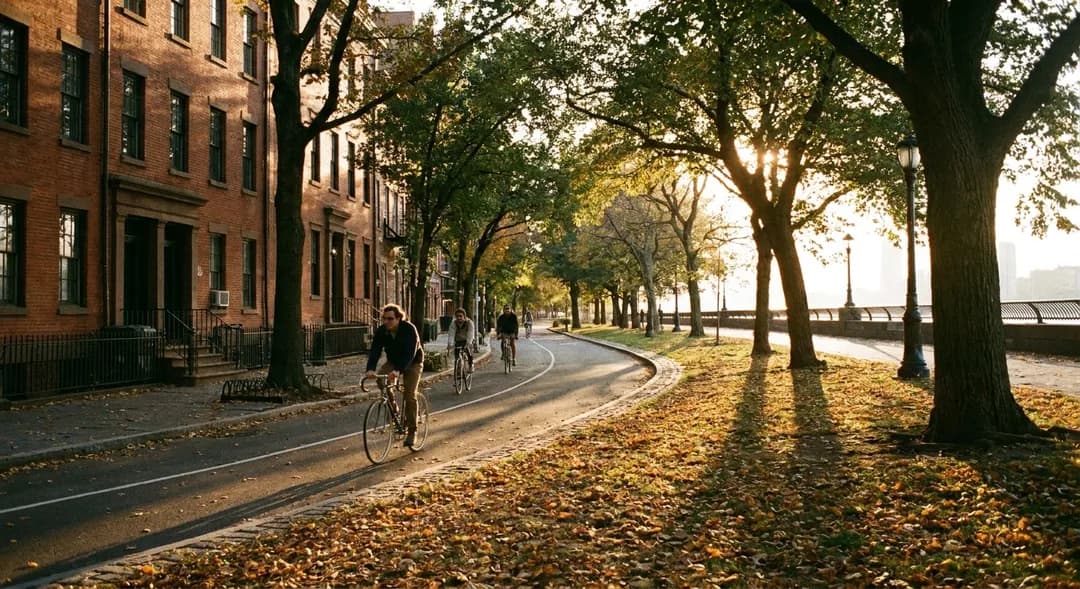
SoHo riders can bypass cobblestone streets toward the shaded Hudson Greenway near Spring Street. Check western bike lanes and river views before your session.
Start your SoHo shaded greenway cycling trail connection from the western edge of the historic landmark district near Broome and Hudson Streets, where the tight cast-iron street canyons begin to give way to broad western skies. Bypassing the historic, bone-rattling cobblestones of central SoHo by funneling westward toward the Hudson River Greenway unlocks an uninterrupted car-free cycling corridor spanning miles along the waterfront. In Karpo APP, you can map the quietest cross-street connectors alongside live traffic signal timing to cross West Street without frustrating delays or sudden stops. Having this four-mile riverfront loop paired with a southern turnaround at Canal Street gives you immediate adaptability whenever urban construction, utility trenching, or shopping crowds impact local avenue traffic. The broad avenue layout west of Varick Street provides clear forward visibility, making it easy to spot lane openings and adjust your speed. Having a mapped trajectory eliminates stressful route hesitation at busy commercial intersections.
Navigate The Smooth Asphalt Spoke Along Spring Street
Pedaling westward along Spring Street provides the cleanest, smoothest route out of SoHo's congested commercial shopping core. The newly resurfaced asphalt lane features distinct green thermoplastic bicycle stencils, buffered painted lanes, and concrete refuge islands that guide riders safely across Varick and Hudson Streets. Mature street trees lining the western blocks of Spring Street throw refreshing morning shade across the roadway, keeping the approach calm and pleasantly cool before you reach the open riverbank. Smooth green asphalt coatings enhance traction in damp conditions, giving riders dependable grip across every block. The gentle downhill slope toward the water requires minimal pedaling effort during the initial approach.
As you approach the multi-lane crossing of Route 9A (West Street), decelerate gradually and align with the dedicated bicycle signal queue. Never rush the yellow light across this wide state highway; wait for the illuminated green bicycle stencil that grants a conflict-free crossing phase. Karpo APP helps riders track signal cycle durations at key river crossings, allowing you to time your approach smoothly without abrupt braking or hazardous mid-street hesitation.
Join The Tree-Shaded Hudson River Greenway At Pier 34 The wide separated bikeway allows faster commuters and leisurely riders to share the waterfront harmoniously. River breezes provide natural cooling during intense mid-day cycling efforts.
Touching down onto the Hudson River Greenway near Pier 34 and the Holland Tunnel ventilation towers, you enter a dedicated, fully separated two-way cycling boulevard. Towering London plane trees and riverside honey locusts create a leafy green canopy that shields cyclists from direct southern sun and highway glare. The pavement here is exceptionally flat and well-maintained, letting you settle into a rhythmic pedaling cadence while taking in panoramic views of the Hudson River water traffic and tugboats.
Riders moving at a training pace should maintain the right-hand lane except when passing slower cruisers, rollerbladers, or cargo bikes. The greenway features painted lane dividers and clear directional arrows that must be respected at all times. Keep your ears tuned for warning chimes from approaching pacelines, and always look over your left shoulder before pulling out to overtake slower recreational traffic. The open river horizon offers stunning views of nautical traffic, from historic tugboats to sleek commuter ferries. Checking wind direction along the exposed shoreline helps you pace your return ride accurately.
Extend Southward Past Canal Street Toward Tribeca
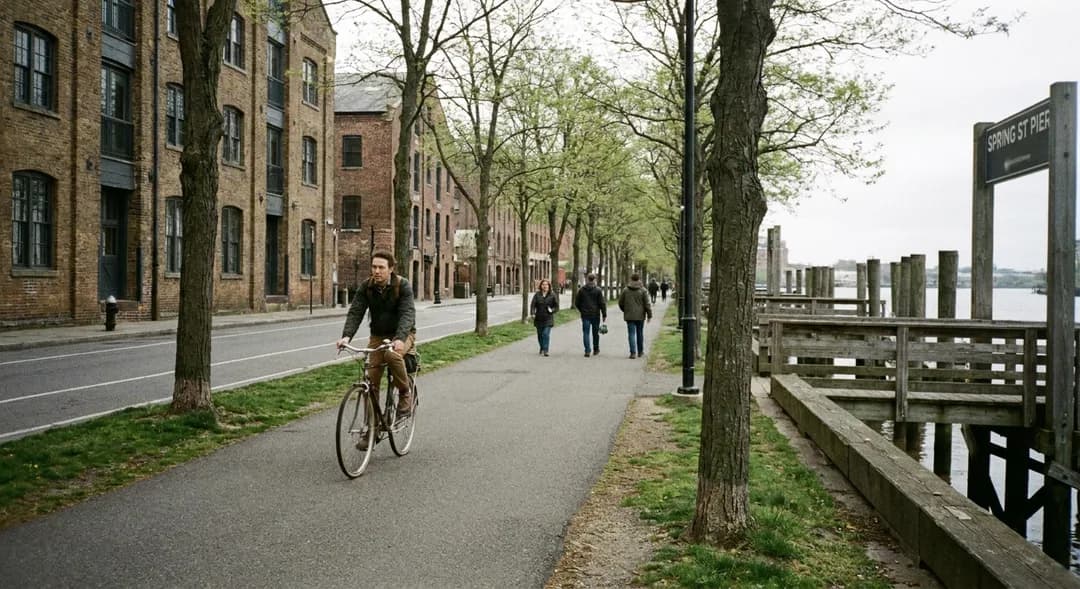
Continuing southward past Canal Street, the greenway dips into an expansive park curve lined with landscaped berms and maritime grasses that insulate cyclists from vehicular noise. This segment offers exceptional shade during early afternoon hours when the towering commercial buildings of Hudson Square block out harsh southwestern rays. Look down to observe painted distance markers embedded in the asphalt that help you track mileage and interval pacing accurately. Clear sightlines and synchronized traffic signals create a predictable and low-stress urban cycling corridor. The gentle avenue gradient makes the return journey comfortable for riders of all skill levels.
The wide plaza at Pier 26 serves as an ideal intermediate turnaround point if you are short on time. Featuring ecological wetlands and shaded boardwalk seating, this riverfront dock allows you to pause, hydrate, and assess tidal wind resistance before deciding whether to push onward toward Battery Park City or loop back north toward the Village.
Establish A Protected Eastbound Return Route Carrying basic repair tools guarantees you can handle minor roadside adjustments without interrupting your training session. Proper bike maintenance keeps your ride smooth, quiet, and dependable.
When completing your loop and returning toward SoHo, avoid attempting to ride against traffic on one-way side streets. Grand Street offers the most practical and protected eastbound bicycle corridor, featuring a dedicated parking-protected lane that carries cyclists safely back across the district toward Sixth Avenue and Broadway. The tall cast-iron facades along Grand Street provide reliable shade throughout the afternoon, keeping the urban return leg comfortably cool.
Riding the Grand Street corridor requires watchful attention at commercial intersections, where delivery vans and rideshare vehicles frequently turn across the bike lane. Maintain your fingers over the brake levers, watch for car doors opening into your path, and use the dedicated bike signal boxes at major avenue crossings to navigate cross-town traffic without stress or conflict.
Equipment Considerations And Urban Safety Protocols
Navigating from SoHo's historic avenues to the open riverfront requires a bike setup that balances speed with puncture resilience. Running tires between thirty-two and thirty-eight millimeters wide offers the ideal sweet spot, delivering low rolling resistance on the greenway while easily soaking up rough pavement joints and utility covers near the avenues. Check tire pressures before every ride and carry an extra inner tube, tire boot, and mini-pump in your saddlebag.
Mount a reliable, clear-sounding bell to communicate your presence on shared riverfront plazas without startling pedestrians. A daytime running light mounted high on your handlebars ensures you stand out against deep tree shadows and bright waterfront glare, giving oncoming cyclists and turning motorists clear visual notice of your approach.
Refine Your Riverfront Route Knowledge In Karpo APP
Conclude your cycling workout by logging road surface quality, construction detours, and preferred signal crossings into Karpo APP. Noting seasonal wind patterns along the Hudson bulkheads and saving optimal shade windows turns what could be a hectic city ride into a seamless, highly repeatable fitness ritual. Sharing your verified route observations empowers fellow neighborhood cyclists to ride smarter and safer.
Connecting the historic energy of SoHo to the tranquility of the Hudson River Greenway is one of the most rewarding urban cycling experiences in Manhattan. By respecting traffic signals, sharing the riverfront path courteously, and utilizing well-protected avenue connectors, you can enjoy the ultimate combination of architectural charm and athletic speed on two wheels.
Ask Karpo for more information.
Keep reading
- Flatiron Holiday Window Walk Planner for Remote Teams
 SoHo Holiday Window Walk Planner for a Sketchbook Afternoon
 Upper East Side Holiday Window Walk Planner After a Museum