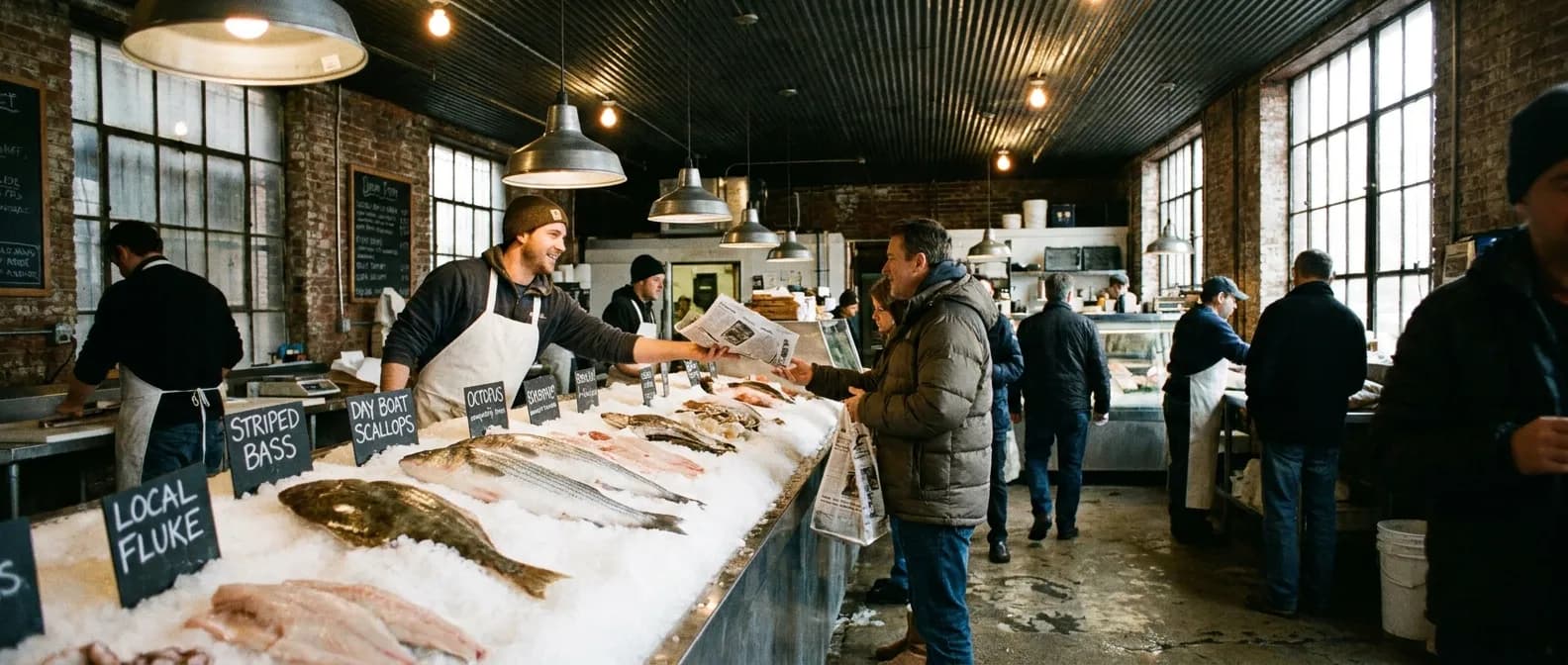
The useful thing about a serious seafood counter is that dinner begins before anyone sits down. The case shows what arrived, what sold quickly, and what the staff is excited to move that evening. For a small group, that creates a better plan than arriving with four fixed orders copied from an old menu. Ask what is strongest right now, choose one anchor fish, then add shellfish or prepared sides around it. The result can feel spontaneous without becoming expensive chaos.
Want the shortest route from today's catch to a table everyone likes? Text Karpo for a live seafood-counter plan, current hours, and a nearby backup before you leave home.
The counter is the menu
This guide works best as three different versions of the same idea: Chelsea for maximum choice and easy indoor logistics, Astoria for a hands-on pick-and-cook meal, and Greenpoint for a neighborhood market rhythm. None is a promise that a specific fish will be waiting. That uncertainty is the point, and it is also why calling ahead matters.
Lobster Place: use the case before the crowd
Lobster Place's fish market inside Chelsea Market is the easiest introduction because the counter, prepared-food options, and surrounding market solve several group problems at once. One person can focus on raw fish, another can choose oysters or sushi, and the friend who does not want a full seafood order still has alternatives nearby. The official fish-market page emphasizes the display and counter format rather than a rigid prix-fixe experience.
Go earlier than your ideal dinner time. The practical advantage is not merely finding a seat; it is seeing a fuller case and having enough attention to ask basic questions about origin, texture, and preparation. Build the order in rounds instead of buying everything at once. Start with the item that will disappear fastest, then decide whether the table actually needs another dish.
Chelsea Market is also the weather-proof option. If a summer storm or heat advisory makes a neighborhood crawl unpleasant, this stop keeps transit, food, restrooms, and backup choices under one roof. The tradeoff is obvious: peak periods can feel like a train concourse with better snacks.
Astoria Seafood: choose first, cook second
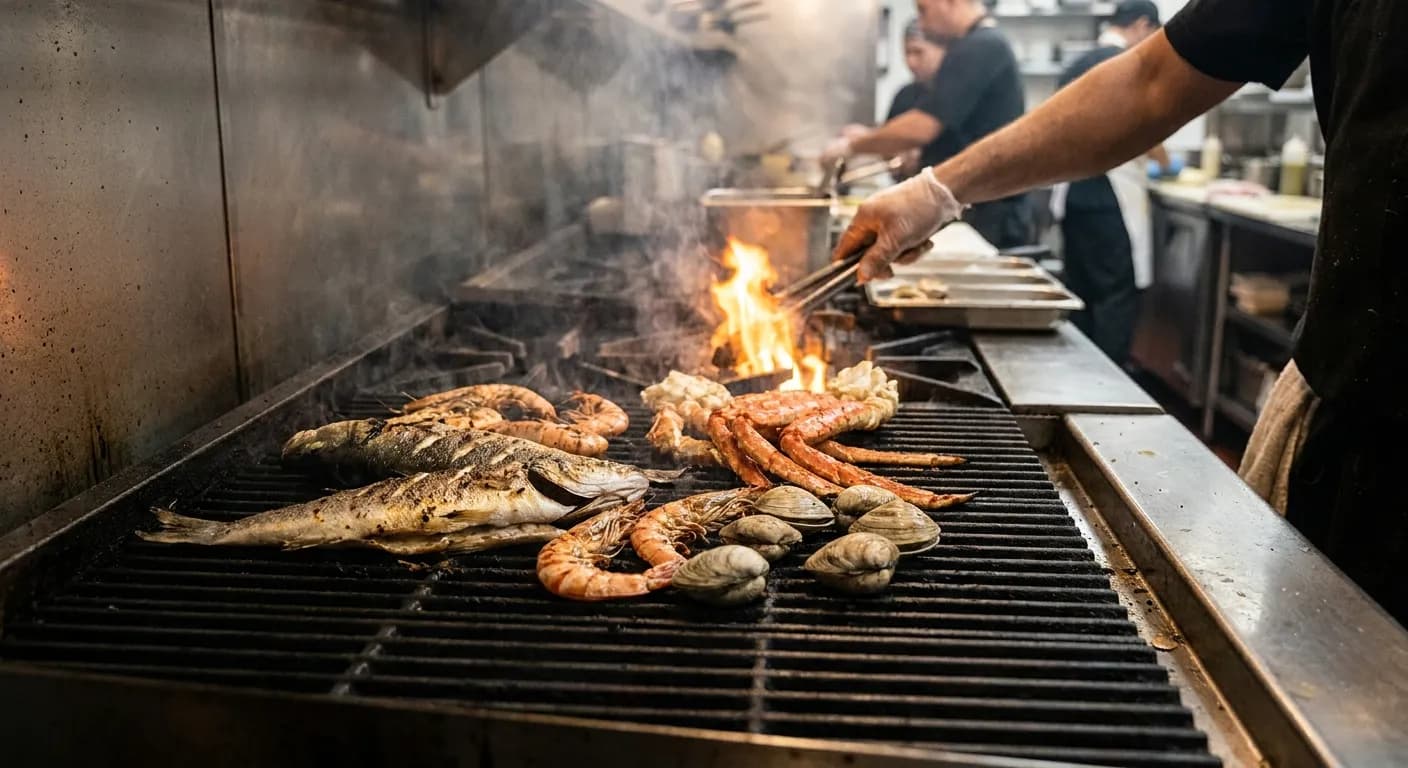
Astoria Seafood turns the selection process into the meal. Its current official site presents the familiar fish-market-to-grill setup: choose seafood, agree on preparation, and let the kitchen handle the fire. That works brilliantly for decisive eaters and poorly for groups that begin every order with a twenty-minute debate.
Before arriving, settle three things in the group chat: a rough per-person budget, whether whole fish is welcome, and whether fried food is part of the plan. At the counter, ask for guidance on quantity rather than ordering by visual enthusiasm. Whole fish, shrimp, clams, and crab legs can accumulate faster than anyone expects once the grill starts moving.
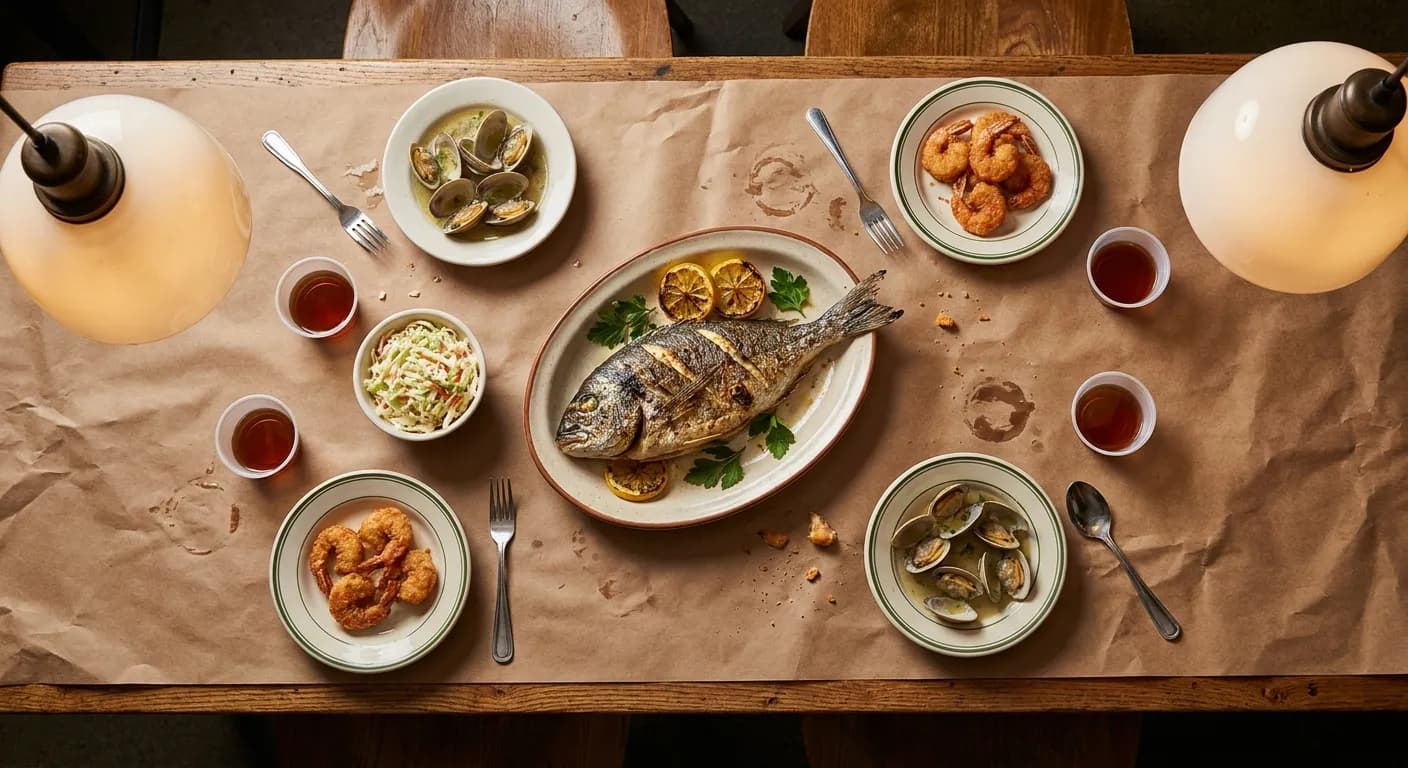
The best table strategy is contrast. Pair one clean grilled fish with one richer item, then add bright salad, lemon, and bread instead of ordering every protein in the same preparation. If someone has a shellfish allergy, treat that as a reason to choose another venue rather than assuming a busy seafood kitchen can fully isolate surfaces and tools.
Greenpoint Fish: the neighborhood version
Greenpoint Fish & Lobster Co. is the version for people who want expertise without turning dinner into a market expedition. The business describes itself around responsibly sourced seafood, and its market identity makes staff recommendations more useful than a static list. Use it when two people care about the fish and the rest mainly care that the night stays easy.
The strongest move is to ask a narrow question: what is best for two people tonight, and what needs the least intervention? That usually produces a more confident answer than asking what is 'fresh,' because a working fish market is built around freshness as the baseline. If you are cooking at home, mention your equipment. A small apartment broiler, cast-iron pan, and outdoor grill create very different recommendations.
Do not force all three counters into one crawl. They are spread across Manhattan, Queens, and Brooklyn, and seafood quality drops while logistics expand. Pick the version that fits the group: indoor variety, participatory grilling, or neighborhood guidance.
Practical notes
Check same-day hours and availability directly with each business. Bring a backup order that does not depend on one species. Ask for total weight and estimated cost before preparation begins. For raw or undercooked seafood, follow current health guidance and be especially cautious for pregnant diners, young children, older adults, and anyone with a compromised immune system. Keep the night geographically simple: choose one counter and one nearby walk, bar, or dessert stop rather than carrying seafood across boroughs.
A useful ordering script is short: name the number of diners, the budget range, the cooking plan, and one preference. Staff can work with 'three people, about sixty dollars before sides, one whole fish, nothing too oily' far more easily than 'what is good?' Photograph the receipt and species labels if you want to remember what worked. If the market is selling raw fish for home preparation, ask how it should be stored and how soon it should be eaten rather than assuming every purchase has the same window.
For a group, assign one person to speak at the counter and another to track cost. A crowded fish case is not the place for six simultaneous negotiations. Build in ten minutes for the order, and keep dessert flexible. The evening feels relaxed when the seafood decision is deliberate and everything after it is optional.
Tags: #NYCSeafood #SeafoodNearMe #ChelseaMarket #Astoria #Greenpoint #FishMarket #DinnerPlans #NYCRestaurants #FreshFish #GroupDinner #FoodGuide #Karpo
Sources consulted: Lobster Place Fish Market · Astoria Seafood · Greenpoint Fish & Lobster Co.
All trademarks are the property of their respective owners.
Ask Karpo first
Want to know what is actually available, when the counter is calmest, and which nearby plan still works if the case changes? Ask Karpo for the latest seafood-counter updates, a low-friction dinner route, and a same-neighborhood backup before you head out.


