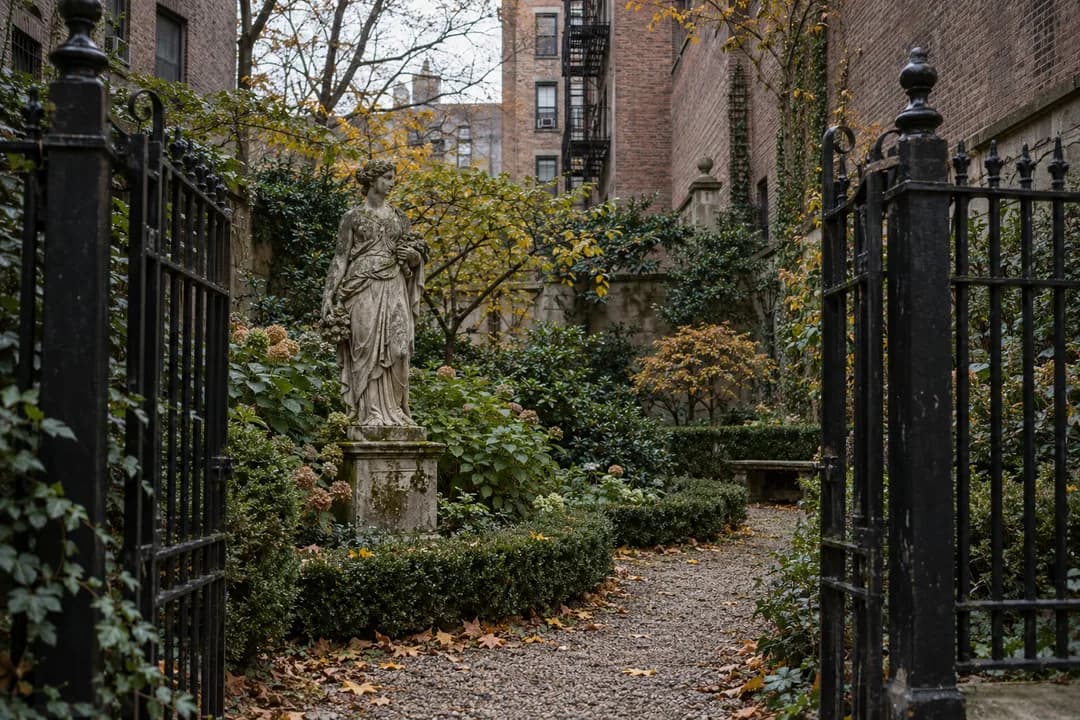
 Sculpture Garden Near Me in Nolita: Elizabeth Street Garden, Saved for Good
Free Things to Do
Sculpture Garden Near Me in Clinton Hill: Pratt Institute's Free Campus Sculpture Park
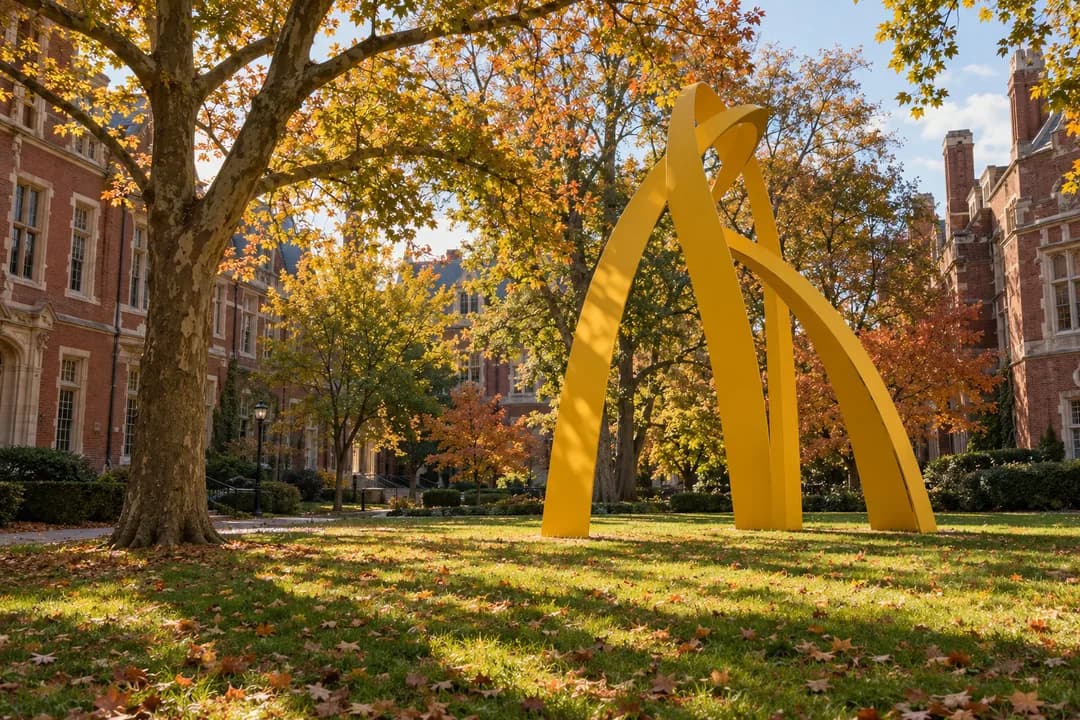
Pratt Institute's Sculpture Park spreads more than 70 works across its 25-acre Brooklyn campus at 200 Willoughby Avenue in Clinton Hill. It is free, the works rotate, and the lawns between the Library and DeKalb Hall hold pieces by Mark di Suvero, Santiago Calatrava and Kenneth Snelson.
Pratt Institute's Sculpture Park costs nothing and has no ticket desk: more than 70 sculptures stand on the lawns of the art school's 25-acre campus at 200 Willoughby Avenue in Clinton Hill, Brooklyn. If you want a sculpture garden near me that feels like a private estate rather than a museum, this is the one, with a yellow Mark di Suvero, a Santiago Calatrava from Park Avenue and dozens of quieter works under old trees.
How an Art School Became a Sculpture Park
Charles Pratt opened the Institute in 1887, and the campus still mixes heavy brick buildings from that era with newer studios. The sculpture program came much later. The Pratt Libraries guide credits David Weinrib as curator and creator of the park from 1998 to 2016, and quotes his rule for choosing pieces: "Our choices for the Sculpture Park are motivated by a search for the strongest of works, no matter the style. I liken the Sculpture Park to a symphony."
Pratt describes the exhibition as revolving and evolving. Artists, faculty and graduates lend most of the work, and pieces usually stay several years before rotating out. Robert Indiana's rusted steel LOVE once stood here, Untapped New York noted, and has since left. The school's own page calls it one of the largest sculpture parks in New York City.
The Pieces to Find First
Start between the Library and DeKalb Hall, where the densest cluster sits. Mark di Suvero's Paintbrush, from 2009, bows over the grass in a curve the library guide links to Matisse's paper cut-outs. Nearby, near Ryerson Walk, is Santiago Calatrava's S7, dated 2011, one of seven monumental works the architect installed along the Park Avenue median in 2015. Calatrava received an honorary doctorate from Pratt in 2012.
Close to Hall Street, look for Grace Knowlton's 6 Copper Spheres, made between 1990 and 1999, and Wendy Klemperer's Lions at the Gate from 2001, welded from salvaged steel and modeled on heraldic lions back to the lion gate of Mycenae. Kenneth Snelson's Black E.C. Tower from 2006, Beverly Pepper's Double Sbalzo from 2012 and Philip Grausman's Leucantha round out the headline names on the school's own list.
Stone, Books and Jazz South of the Library
Walk south of the library toward the old cannon and the mood changes from bright steel to stone. Boaz Vaadia's Sara, Rebecca and Meir, all from 2002, are stacked slate figures that read as a small family group. Martha Walker's The End Justifies the Means, Justifies the End sits nearby. West of the Main Building, Ilan Averbuch's The Book of Stone and Steel from 2005 turns an open book into a monument, and his earlier Leaf, from 1993, is west of Memorial Hall. Near the library's southeast corner, Richard Heinrich's trio is named after Thelonious Monk tunes: Epistrophy, Straight No Chaser and Round Midnight.
Benches You Are Allowed to Sit On
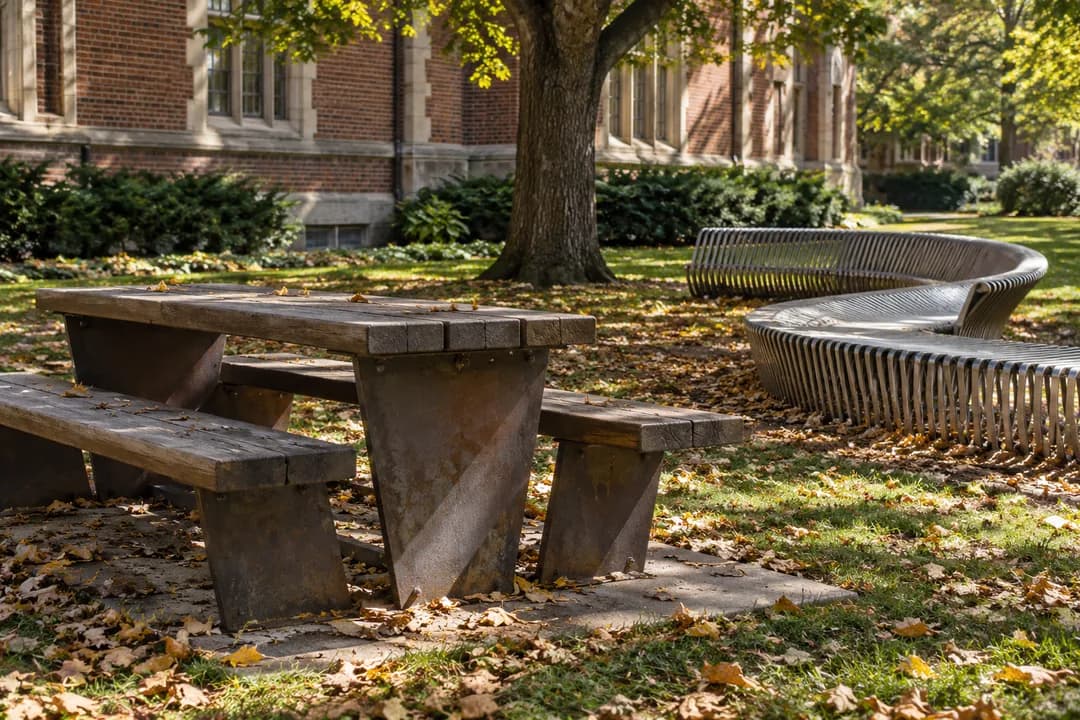
Part of the charm is that some sculpture here is also furniture. Siah Armajani's Picnic Table, from 1999, sits near the library entrance and blends in with the ordinary tables until you notice the proportions. Untapped New York counted bench works by Tony Rosenthal, the artist behind the Alamo cube at Astor Place, along with George Sugarman's Bench, Cathey Billian's Whispering Bench and Alan Wexler's Pratt Desk, a red desk hung from scaffolding.
Untapped New York's founder found a woman fully napping on the Sugarman bench during one visit, which tells you how relaxed the campus can feel on a weekday afternoon. Treat the functional pieces as seats, but keep feet and bikes off everything else.
Who You Will Share the Lawns With
This is a working campus first. Expect students carrying portfolios and foam-core models between studios, sketch groups parked in front of a single sculpture, and Clinton Hill neighbors walking dogs along the edges. Pratt's library calls the park an oasis for the Brooklyn community and the general public as well, and that mix is visible on any sunny day.
Be considerate around classes. Studio doors and building entrances are for students and staff, so stay on the paths and lawns, keep voices down near open windows, and skip drone flights entirely.
When to Go
Weekday mornings are calm, and the tree canopy keeps the lawns cooler than the surrounding streets in late summer. Fall is the strongest season: the leaves turn behind the brick facades and the bright steel works stand out against them. Skip the hour just after sunset, because the works sit in shadow and the campus lights are not designed for viewing art.
Come with the right expectation. This is a scatter of works across a campus, not a landscaped garden with a single loop, so plan on 60 to 90 minutes to find a dozen pieces. The library guide's By Sculpture page gives each work's location relative to campus buildings, and it is the best map you will find.
Getting In and Finding Your Way
The main address is 200 Willoughby Avenue, Brooklyn, NY 11205, and the switchboard is (718) 636-3600. Untapped New York pointed visitors to the corner of DeKalb Avenue and Hall Street, where a guard is posted, as an easy way in. The Pratt Libraries guide is updated regularly and lists each work by artist and by location, such as south of DeKalb Hall or west of Stabile Hall.
By subway, the G stops at Classon Avenue and at Clinton–Washington Avenues, both a short walk from campus. The B38 and B54 buses run along DeKalb Avenue and Myrtle Avenue.
Plan B and a Walk Around Clinton Hill
If the campus feels too busy on a class-change hour, walk ten minutes west to Fort Greene Park, where the Prison Ship Martyrs Monument rises over the lawn and the views reach Manhattan. If rain sets in, the Brooklyn Navy Yard and DeKalb Avenue restaurants are close.
Clinton Hill itself rewards a slow loop. Clinton Avenue, where Charles Pratt and his sons built their mansions, is lined with nineteenth-century houses from the neighborhood's industrialist era, and Myrtle Avenue on the north side of campus has cafes and casual counters for a break between sculptures.
Practical Notes
Address: Pratt Institute Sculpture Park, 200 Willoughby Avenue, Brooklyn, NY 11205, Clinton Hill. Admission is free with no ticket. Main number: (718) 636-3600. Library contact for the sculpture guide: (718) 636-3704. More than 70 works across 25 acres, rotating over the years. Nearest subway: G to Classon Ave or Clinton–Washington Aves. Stay on paths, keep off non-seating works, and respect class buildings.
Ask Karpo for more information.
Keep reading
- Sculpture Garden Near Me in Nolita: Elizabeth Street Garden, Saved for Good
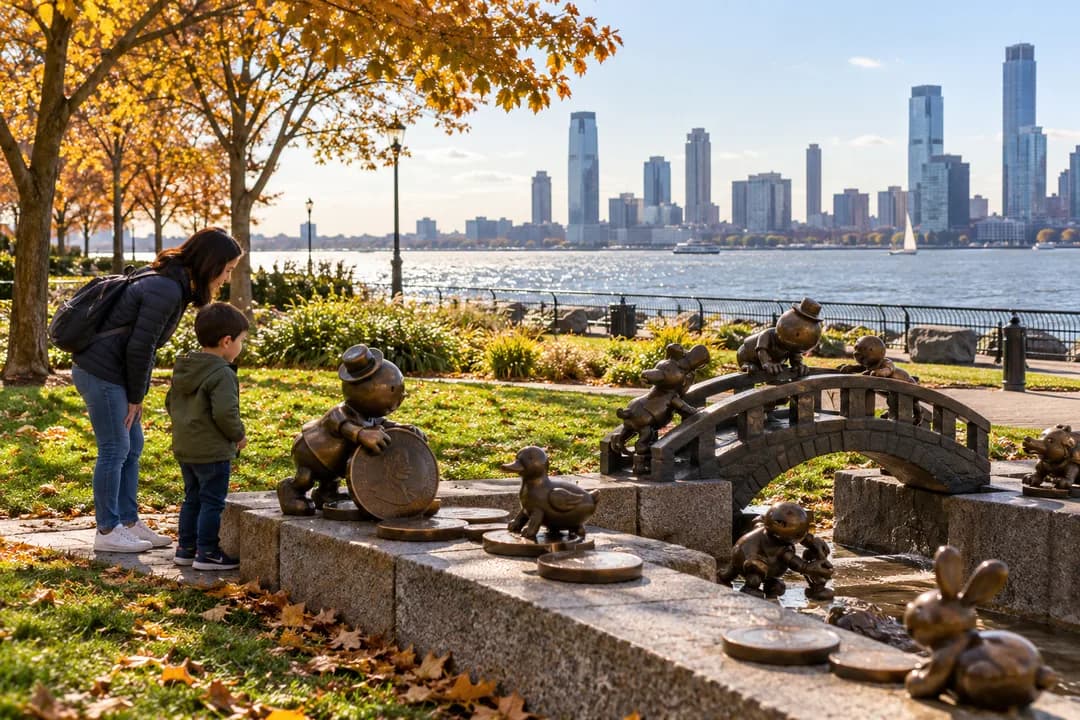 Sculpture Garden Near Me Downtown: Tom Otterness's Real World in Rockefeller Park
 Long Island City Art Walk Near Me in Queens