 Flatiron Holiday Window Walk Planner for Remote Teams
Free Things to Do
Sculpture Garden Near Me in Long Island City: Inside Noguchi's Own Garden
The Noguchi Museum at 9-01 33rd Road in Long Island City opens Wednesday to Sunday, 11 am to 6 pm, and its walled sculpture garden is the quietest outdoor room in Queens. General admission is $16, and half price through November 1, 2026. Here is how to see the basalt, the garden and the 2 pm tour without rushing.
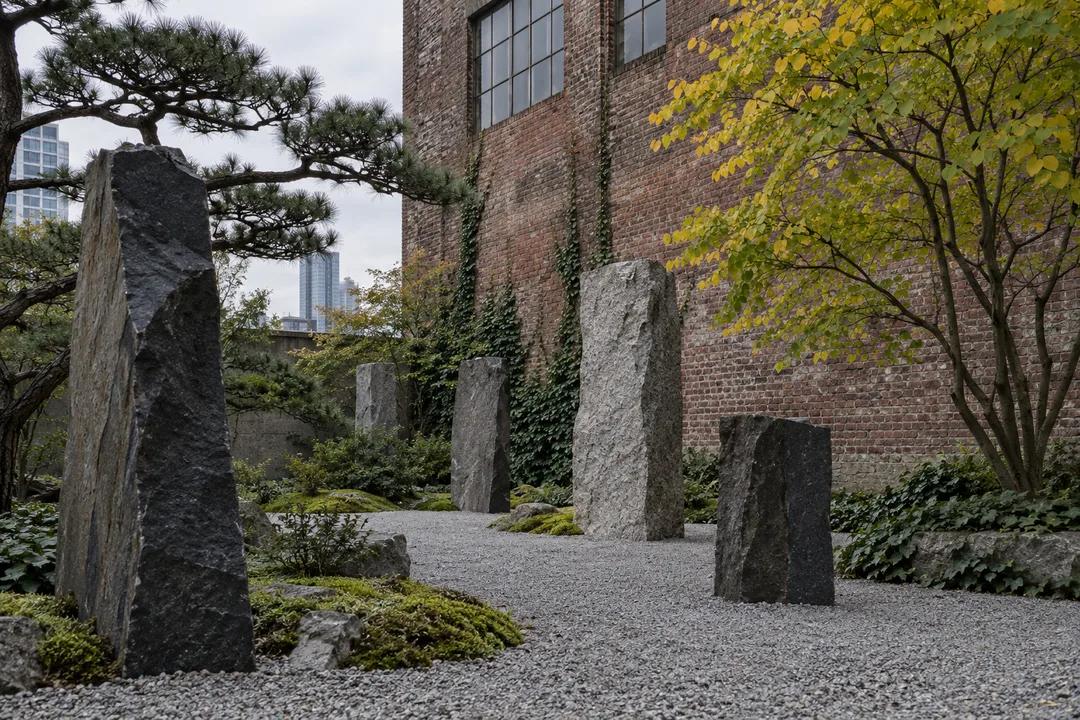
The Noguchi Museum sculpture garden is a walled patch of gravel, pine and stone at 9-01 33rd Road, on the corner of Vernon Boulevard in Long Island City, and it is open Wednesday through Sunday from 11 am to 6 pm. If you typed sculpture garden near me anywhere in western Queens, this is the one Isamu Noguchi designed himself. Tickets are sold only at the door, general admission is $16, and from September 16 to November 1, 2026 every ticket is half price.
A Garden Museum an Artist Built for His Own Work
Noguchi set up his studio in Long Island City in 1961, and by 1974 he had also bought an abandoned factory building and the vacant lot across the street. Over the next decade he turned them into the Isamu Noguchi Garden Museum, which opened on May 11, 1985. The museum describes it as the first museum in the United States established, designed and installed by a living artist to show their own work. Noguchi died in 1988, three years after the opening.
The building is a red-brick industrial structure from the 1920s, joined to a concrete pavilion that Noguchi built in the 1980s with the architect Shoji Sadao. Before Noguchi bought the corner lot it was a service station, and the entrance gallery, called Area 1, keeps that roadside feeling with concrete block walls and a corrugated steel ceiling. Until 1999 the museum opened only seasonally. A major renovation was completed in 2004, and it has been open year-round ever since.
What to Look at in the Garden
Noguchi called the garden a continuation of Area 1, the same idea under open sky. He chose every plant himself, and each species is native to Japan, the United States or both, which is why the space still reads as a Japanese garden while looking at home on a Queens block. Expect gravel walks, a few benches, large trees throwing shade over the stones, and late basalt and granite pieces placed so that you walk around them rather than past them.
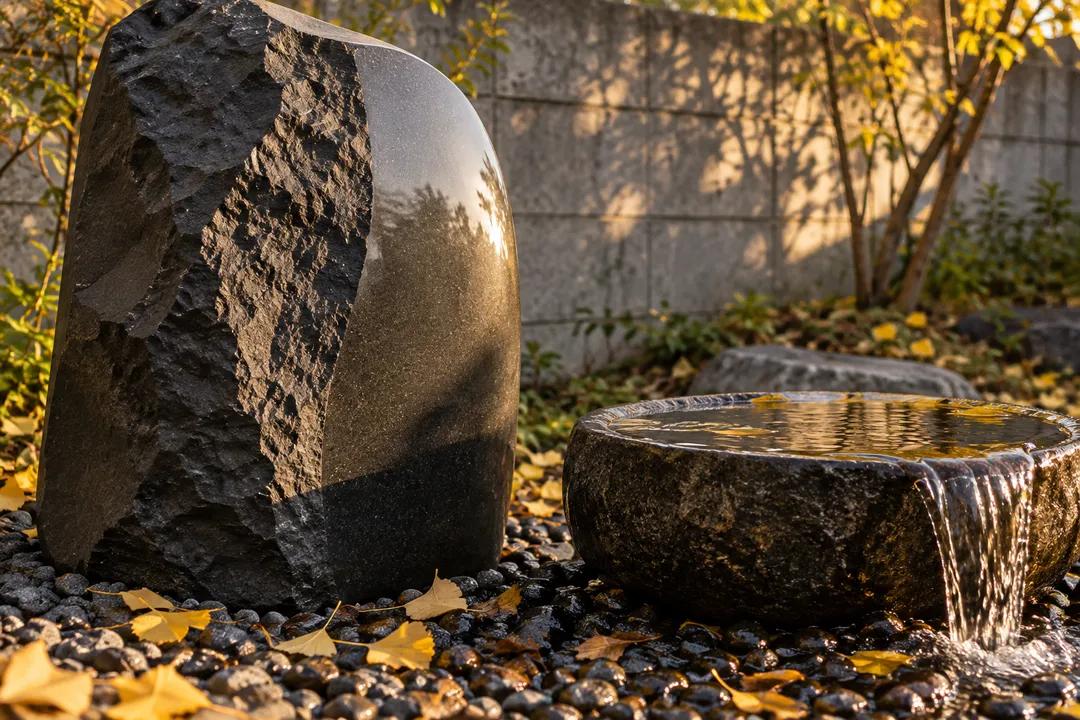
Spend time with the stones that are half finished. In many of the 1980s basalt works Noguchi polished one face and left the rest as quarried rock, so the chisel marks and the smooth surface sit side by side. Walk the gravel loop slowly once, then sit on a bench near the back wall and look back toward the pavilion. The sculptures line up differently from there. Works are shown without barriers or long labels, by design, so you are meant to come to your own reading.
Do not skip the ground-floor galleries on the way out to the garden. They hold Noguchi's work in stone, from 1960s marble to the late basalt and granite, installed the way he arranged it himself in the 1980s, in reverse chronological order starting in Area 1. Upstairs, the second-floor galleries normally hold rotating shows. Through November 1, 2026 they are closed while the museum installs No Ordinary Light: Akari at 75, about his paper Akari lamps. That closure is the reason for the half-price tickets.
Tickets, Free Days and the 2 pm Tour
Regular prices are $16 general and $6 for seniors 65 and over and for students with ID, so during the half-price window you pay $8 or $3. Entry is free for children under 12, NYC public school students, visitors with disabilities and their carepartners, SNAP and WIC cardholders, and active-duty military families. On the first Friday of every month admission is free for everyone with no reservation needed. In October and November those Fridays keep the normal 6 pm close, since the 8 pm late nights run only from May to September.
A free public tour starts every day the museum is open at 2 pm, with no sign-up, and it is the easiest way to hear how Noguchi's life shaped the rooms. There are Spanish-language tours at 1 pm on select Fridays and Sundays, Japanese tours on select Saturdays at 3 pm, and Mandarin tours on select Sundays at 3 pm.
House Rules Before You Walk In
Every bag is inspected on arrival. Large bags and backpacks go to coat check. Small bags must be worn at the front of your body or carried in hand. There is no eating or drinking anywhere on museum property, garden included, except water in a bottle with a lid, and glass containers are not allowed. Pets stay home, though leashed service animals are welcome. Shoes and shirts are required, and children under 12 must stay with an adult the whole visit.
Phone photos for personal use are fine in the galleries, the garden and the pavilion, but tripods, selfie sticks, gimbals and flashes are banned. The museum also forbids engagement shoots, headshots, product shoots, costume changes and long posing in front of the art. Photographing other visitors or staff without consent is not allowed either. The museum is wheelchair accessible, and a wheelchair and portable seating can be borrowed at the entry desk.
When to Go for an Empty Garden
The last entry is at 5:30 pm and the shop closes at 5:45 pm, so arrive by 4 pm if you want the garden and both floors without hurrying. Weekday openings at 11 am are the calmest. Free First Fridays tend to be the busiest days of the month, so if you want the benches to yourself, pay on a Wednesday instead. Because there are no advance reservations, a busy day means a short wait at the desk rather than a sold-out ticket.
Pencils are the only marking material allowed inside, so this is a good garden for sketching: paint, glue and adhesives are banned, but a pad and pencil on a bench are welcome. Anyone hoping for a picnic should plan it for the park across the street, since food stays outside. The honest call is to skip the shop on a short first visit. The Akari lamps and books are there year-round, while the garden light changes by the hour.
Getting There by Subway, Ferry or Bike
The nearest trains are the N and W to Broadway in Astoria, roughly a 15-minute walk west toward the river. On weekdays the M stops at 21 St–Queensbridge, and on weekends the F stops there instead. The 7 to Vernon Blvd–Jackson Av works if you do not mind a longer walk up Vernon. The NYC Ferry Astoria landing is the most scenic option and puts you within a short walk of the museum. Citi Bike docks are listed on the museum's directions page.
A Waterfront Walk After the Museum
Cross Vernon Boulevard to Socrates Sculpture Park, the free waterfront park that sculptor Mark di Suvero and local artists carved out of a former dump and landfill in 1986, a year after the Noguchi opened. Its large outdoor works change every season, so it makes the right contrast to Noguchi's fixed arrangement. From there, walk north along Vernon Boulevard to Rainey Park for an open lawn on the East River, with Roosevelt Island and the Manhattan skyline across the water.
If the museum desk line is long on a Free First Friday, start at Socrates instead and return after 4 pm, when many of the free-day visitors have moved on. On a rainy day the garden is still open as part of the visit, but the gravel gets slick and the benches stay wet, so spend more of your time in Area 1, which is covered but open-air, and the ground-floor stone galleries, then decide whether the garden is worth a damp loop.
Practical Notes
Address: The Noguchi Museum, 9-01 33rd Road at Vernon Boulevard, Long Island City, NY 11106. Hours are Wednesday to Sunday, 11 am to 6 pm, closed Monday and Tuesday, with last entry at 5:30 pm. Tickets are sold at the door only: $16 general, $6 seniors and students, half price through November 1, 2026, free on first Fridays. Free museum guides are on the Bloomberg Connects app, and printed walking guides to the permanent installation were updated in March 2026.
Ask Karpo for more information.
Keep reading
- Flatiron Holiday Window Walk Planner for Remote Teams
 SoHo Holiday Window Walk Planner for a Sketchbook Afternoon
 Upper East Side Holiday Window Walk Planner After a Museum