 Flatiron Holiday Window Walk Planner for Remote Teams
Free Things to Do
Scenic Walking Trail Near Me: Alley Pond Park Tulip Tree Trail in Queens
Alley Pond Park in Douglaston and Bayside has free color-coded trails, glacial kettle ponds and the Queens Giant tulip tree, open dawn to dusk all year.
When people in northeast Queens search for a scenic walking trail near me, the honest answer is a park that most of the city drives straight through. Alley Pond Park spreads across 655 acres between Bayside and Douglaston, sliced by the Long Island Expressway, the Cross Island Parkway and the Grand Central Parkway, and yet its woods hide kettle ponds left by a glacier and a tulip tree that may be the oldest living thing in New York City. The trails are free and open from dawn to dusk every day of the year.
How a Valley Called the Alley Became a Park
The name goes back to the colonial era. The valley along Alley Creek served as a passage between Little Neck Bay and the farms and ferries farther west, and an 18th-century commercial center along the creek, with mills built by Thomas Hicks and James Hedges, became known simply as the Alley. Long before that, the Matinecock people harvested shellfish from Little Neck Bay at the northern end of the valley.
In 1927 Queens Borough President Maurice Connolly proposed buying the land for a park, and the city acquired it on June 24, 1929. The park opened officially in 1935 with Mayor Fiorello La Guardia and Parks Commissioner Robert Moses at the ceremony. At opening it included the Alley Pond Park Nature Trail, described as the first of its kind in the city, a 23-acre bird sanctuary and bridle paths. A stretch of William Kissam Vanderbilt's private Long Island Motor Parkway, built through the valley in 1908, was later converted into a bicycle path.
The Queens Giant
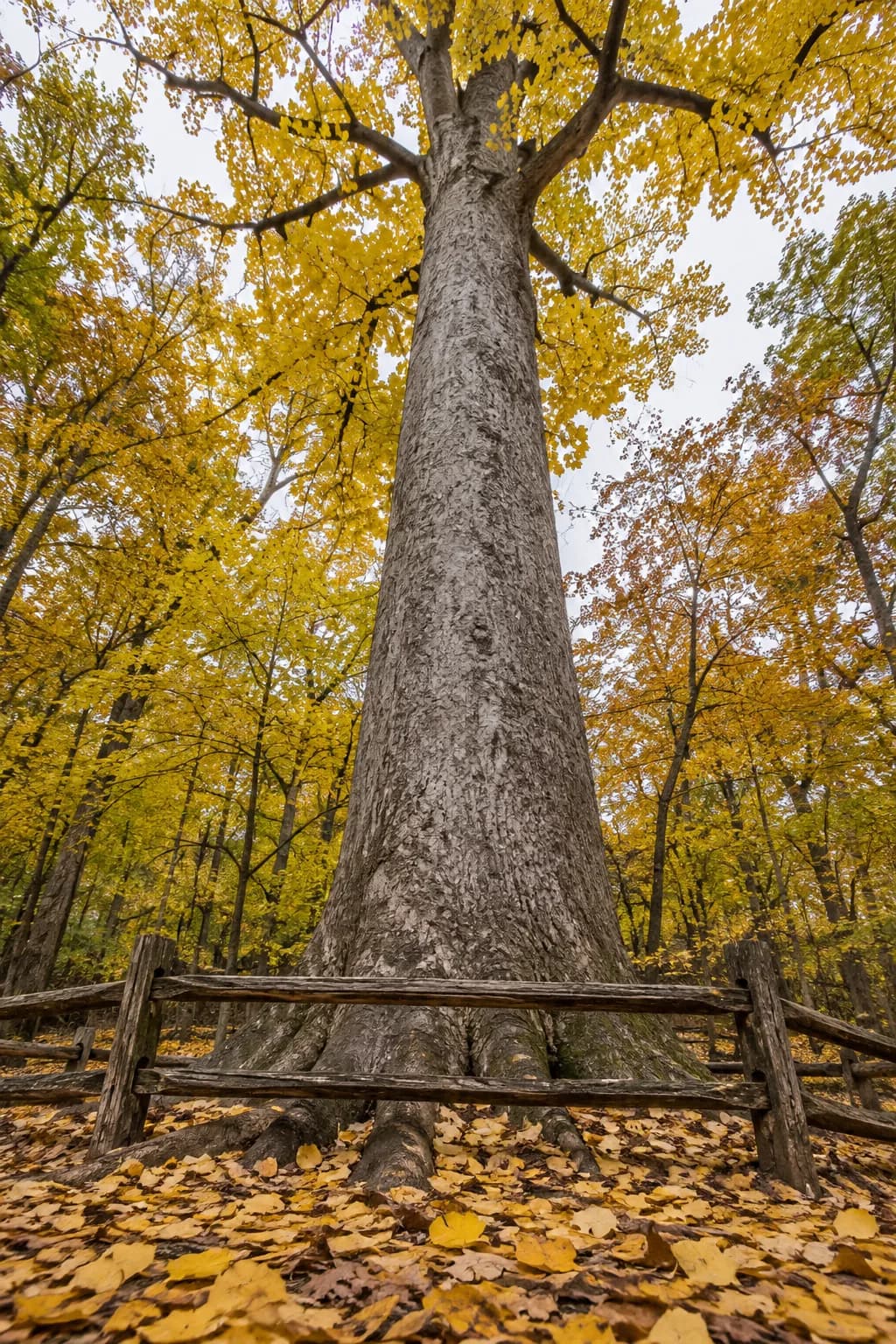
The reason many walkers come is a single tree. The Queens Giant, also called the Alley Pond Giant, is a tulip poplar measured at 133.8 feet tall and 18.6 feet around, the tallest carefully measured tree in the city. Its age is estimated at 350 to 450 years, which means it was likely a sapling when the Matinecock still fished the bay. Keep off the root zone, and look up: the trunk rises straight and clean for a long way before it branches.
To reach it, follow the Tulip Tree Trail, drawn in purple on the park map. On the 2025 NYC Parks trail map, it starts near 46th Avenue and East Hampton Boulevard and runs south along the wooded slope toward the Long Island Expressway, ending at the Giant. It is short and slightly hilly, and in late October the tulip poplars around it turn a clear butter yellow that makes the walk worth doing even if you have seen the big tree before.
Kettle Ponds and the Southern Woods
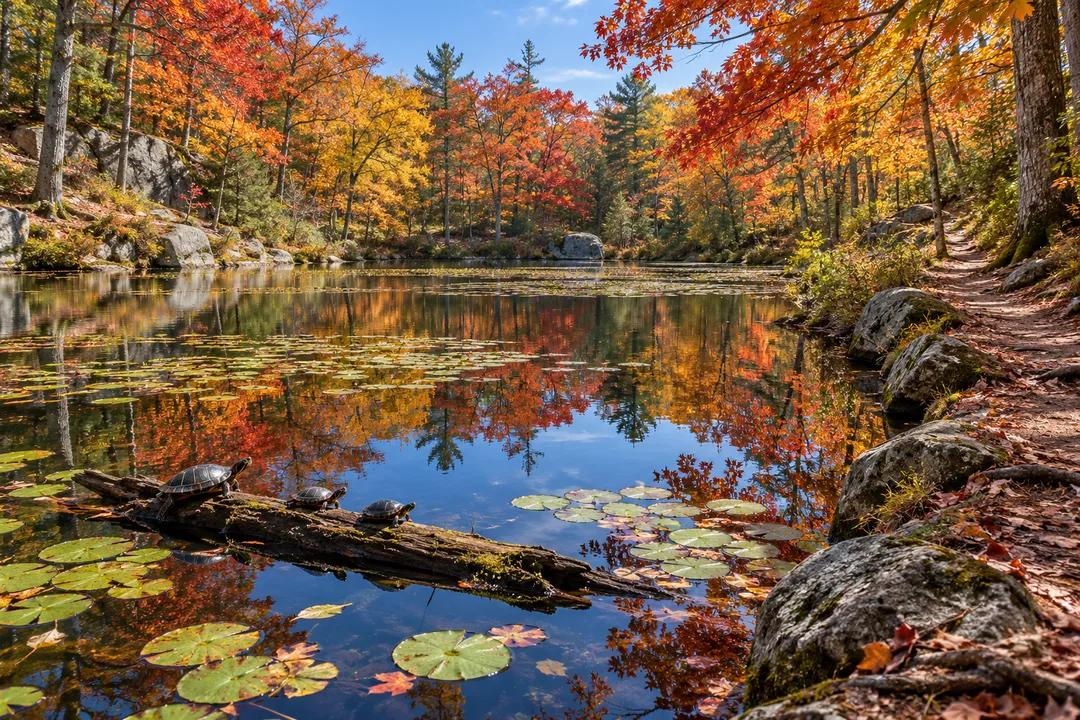
South of the expressway, the park changes character. About 15,000 years ago, the retreating ice sheet dropped boulders on these hillsides and left buried blocks of ice that later melted into a chain of kettle ponds. Turtle Pond is the best known of them, a spring-fed pond ringed by oak, beech and tulip trees, and on sunny days you may well see turtles stacked on half-sunk logs.
This is where the colored trails loop. The NYC Parks map shows a Red Trail, a Blue Trail and an Orange Trail circling around Turtle Pond, with a White Trail tying them together, and the Adventure Course and Little Alley Pond close to the southern edge. The paths are dirt, rooty in places and dotted with boulders, so wear shoes with some grip. Combining the Red and Blue loops gives a satisfying hour of up-and-down woodland walking without ever leaving the trees.
The Northern Meadows and APEC
North of the expressway, the Yellow Trail loops through salt meadows and wetlands along Alley Creek, starting beside the Alley Pond Environmental Center. APEC moved into its new building at 229-10 Northern Boulevard in Douglaston, and it runs nature programs for children and adults and cares for more than 80 animal ambassadors in its animal room. The building is free to enter, with a suggested donation of $5 per person that you can give at the front desk.
On most weekdays the center is open from 9:00 am to 4:30 pm, and on most weekends from 9:00 am to 1:00 pm, though it sometimes stays open longer for weekend events and closes on major holidays. Its parking lot and walking trails stay open from dawn to dusk all year, even when the building is closed. Parking there is limited, and on weekends extra parking is available along Northern Boulevard.
Rules and Safety on the Trails
Ticks are the main hazard. APEC reminds walkers to check themselves for ticks after every visit, especially after brushing through the meadow grasses on the Yellow Trail. Stay on marked trails; the woods are a designated nature preserve and the kettle pond edges are fragile. Highways border several stretches, so keep children close where the paths approach the Cross Island Parkway. Restrooms on the trail map are in the southern section near the ballfields, not along the wooded loops.
Combining the Walk with the Neighborhood
Douglaston and Bayside make the outing easy to extend. Bell Boulevard in Bayside, a short drive or bus ride west, is lined with bars, diners and restaurants for a meal after the woods. To the north, Little Neck Bay and the Joe Michaels Mile path along the Cross Island Parkway offer a flat waterfront walk if you want a contrast to the hilly trails. In late fall the APEC calendar usually fills with family programs, so check its program list if you are coming with kids.
Practical Notes
Address: Alley Pond Environmental Center, 229-10 Northern Boulevard, Douglaston, NY 11362, at the northern trailhead. Trails and APEC parking lot: open dawn to dusk year round. APEC building: most weekdays 9:00 am to 4:30 pm, most weekends 9:00 am to 1:00 pm. Admission: free; APEC suggests a $5 donation per person. The park covers 655 acres with the Tulip Tree, Yellow, Red, Blue, Orange and White trails shown on the NYC Parks map. Wear sturdy shoes and do a tick check afterward. To pick the best loop for your time and plan a Bell Boulevard dinner, ask Karpo in the Karpo APP.
Ask Karpo for more information.
Keep reading
- Flatiron Holiday Window Walk Planner for Remote Teams
 SoHo Holiday Window Walk Planner for a Sketchbook Afternoon
 Upper East Side Holiday Window Walk Planner After a Museum