 Upper West Side Free Indoor Weekend Plan Finder for Music
Free Things to Do
Scenic Viewpoint Near Me: Fort Tryon Park Hudson Overlook
A practical guide to Fort Tryon Park at 1 Margaret Corbin Drive, New York, NY 10040, with the best viewing angles, arrival timing, walking route, and neighborhood plan.
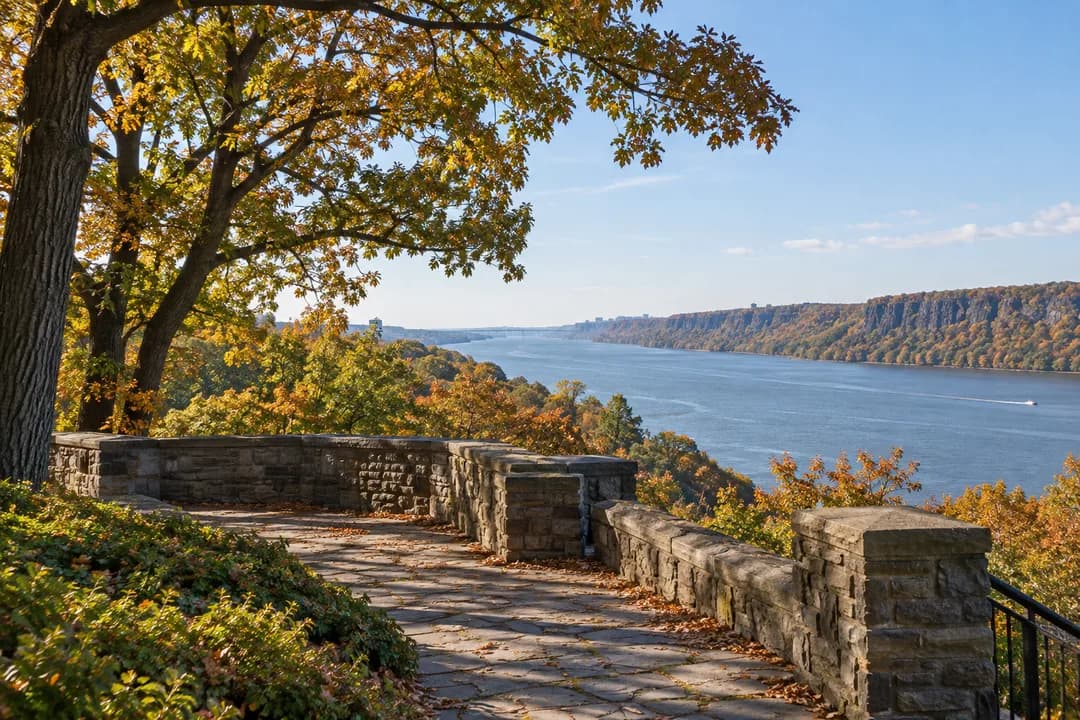
Fort Tryon Park is the scenic viewpoint near me for a greener, more elevated New York view, with the Hudson River and Palisades appearing through lawns, trees, and stone terraces. The park's main address is 1 Margaret Corbin Drive, New York, NY 10040, in Washington Heights. This is not a quick sidewalk lookout: paths slope, the landscape unfolds in sections, and the reward comes from combining the overlook with a deliberate park walk. Come for the river, but give the park enough time to show its architecture and terrain.
Why the Landscape Matters as Much as the Horizon
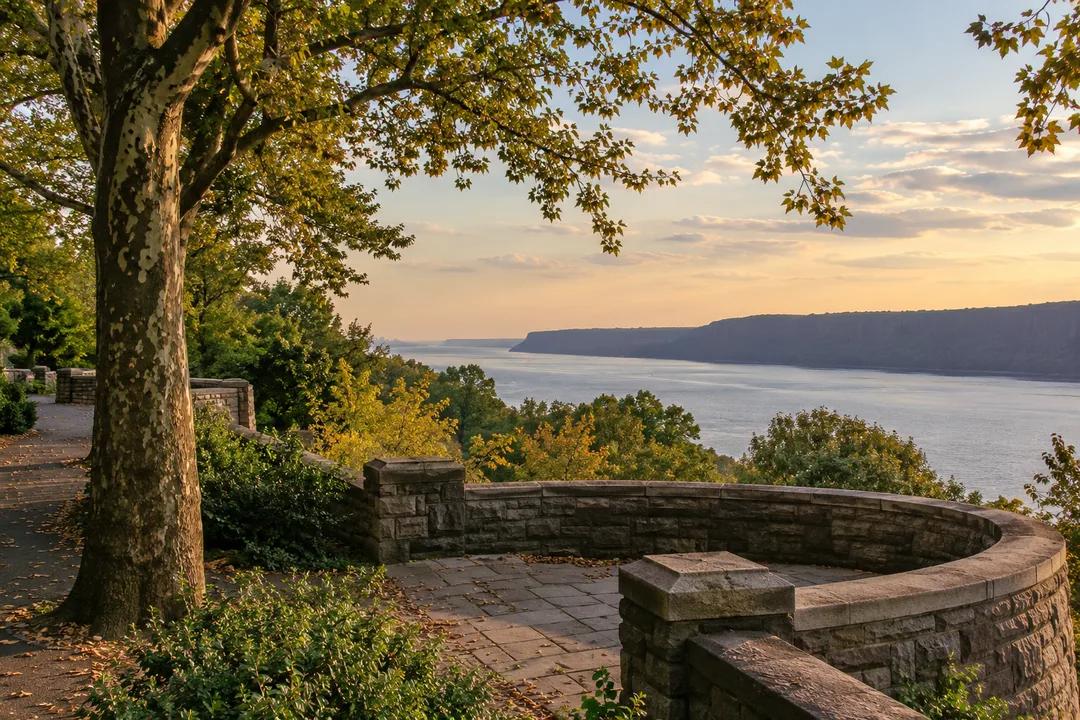
Fort Tryon makes a strong first impression because the view is framed by landscape rather than traffic. The Hudson and Palisades appear beyond lawns and mature trees, while stone walls and elevated paths give the scene a composed, almost estate-like quality. The perspective changes as you move through the park, so the first overlook is not necessarily the best one. Walk far enough to see how the park's curves, terraces, and openings create different relationships with the river.
The light is especially good in the morning and late afternoon, when the park's trees and stonework create depth without washing out the horizon. Autumn adds color; summer adds canopy and shade; winter can expose more of the underlying structure. A hazy day may reduce the distant detail but still make the river feel broad and atmospheric. Weather matters more here than at a simple paved plaza because the visit includes slopes, open sections, and a substantial amount of walking.
This is a place for visitors who enjoy a viewpoint with a route attached. Parents should account for hills and choose a manageable section instead of promising the entire park. Photographers should bring a compact setup and be prepared to change elevation rather than waiting for one clear opening. Comfortable shoes are essential, and a light layer helps when the river air moves through the park. The stone paths and lawns reward patience, but they do not reward rushing in formal shoes.
A Park of Slopes, Terraces, and Long Views
Use 1 Margaret Corbin Drive as the starting address, then follow the park signs and paths toward the higher overlooks. Transit is usually more practical than a last-minute car plan, especially when the visit is tied to a particular light window. The surrounding Washington Heights streets are part of the approach, so leave buffer time for the final walk. The park is best treated as a destination with internal distance, not as a pin where you step out, take one picture, and immediately leave.
Fort Tryon carries a layered history through its name, defensive position, designed landscape, and surviving structures. The park is also home to The Met Cloisters, which gives the area a strong cultural anchor even when your main goal is outdoors. You do not need to turn the visit into a museum day to appreciate the setting. It is enough to notice how the park's architecture, stonework, and high ground create a different New York from the dense blocks farther south.
A good route begins with the view, before fatigue or a museum schedule starts making decisions for you. Walk the terrace and lawn sections, pause at the river-facing openings, then choose whether to continue toward The Cloisters or return through the greener paths. The park's internal variety means a return route can feel different from the approach. If the group includes mixed walking abilities, choose one overlook and one nearby garden-like section rather than treating the full park as a required circuit.
How to Plan Around Walking and Weather
There is no admission line for the park viewpoint, but there can be a practical timing issue around weekends, museum visitors, and peak weather. Arrive earlier if you want the quietest landscape and more freedom to choose a bench or overlook. Late afternoon brings attractive light and more people. If a particular path feels too crowded, do not stop the whole outing; Fort Tryon has enough elevation changes and alternate routes to let you keep moving toward a different view.
Bring water, sun protection, and shoes with dependable grip. The park's open lawns can feel warm, while shaded paths and river-facing terraces can feel cooler. Food is easier to plan as part of the larger Washington Heights outing than as an assumption about every overlook. If you want to add The Cloisters, decide whether that is the main event or a secondary stop, because the museum and park together can occupy several hours. Keep the schedule open enough for the landscape to set the pace.
Skip Fort Tryon if you want a flat, concentrated skyline photo with minimal walking. Gantry Plaza or Brooklyn Heights will deliver that more directly. Choose Fort Tryon when you want a park that makes the view feel discovered through terrain, trees, and stone. The distant horizon is beautiful, but the reason to come north is the combination of view and setting. A visitor who only wants the river may leave before the park's strongest character appears.
A Washington Heights Day Built Around the Overlook
The neighborhood route can include Broadway shops and cafés before or after the park, but do not underestimate the time between the subway, the address, and the overlook. Washington Heights gives the visit a genuine city context rather than a detached attraction entrance. On the way back, a slower street walk can help reset after the park's hills. If the weather turns, shorten the outdoor route and make the indoor cultural stop the more substantial part of the day.
Fort Tryon works for several kinds of visitors because the park does not demand one pace. A couple can find a scenic bench, a family can use the open grounds, and a photographer can keep changing elevation. Runners and regular park users also share the paths, so do not spread equipment across a narrow route. The quietest experience comes from arriving early and moving beyond the first gathering point. The most social experience comes later, when the park becomes part of a weekend neighborhood day.
Fort Tryon Park gives the phrase scenic viewpoint near me a useful correction: the best view may be the one that asks you to walk for it. Start at 1 Margaret Corbin Drive, follow the landscape toward the Hudson, and let the Palisades appear through the park's designed openings. It is a destination for people who want scenery with texture, history, and elevation. Give it time, wear practical shoes, and let the route—not a single photo—define the visit.
Take the last look from the high ground before returning toward Broadway. The Hudson, Palisades, stonework, and tree canopy will have changed as you moved through the park, which is the point. Fort Tryon rewards visitors who let a viewpoint become a landscape walk instead of demanding one instant postcard.
Ask Karpo for more information.
Keep reading
- Upper West Side Free Indoor Weekend Plan Finder for Music
 Astoria Free Indoor Weekend Plan Finder for Visiting Parents
 Williamsburg Free Indoor Weekend Plan Finder With Kids