 SoHo Tailor Alteration Shop Finder for Sample Sale Finds
Neighborhood Guides
SoHo Scenic Pedestrian Stroll: Cast-Iron Streets at 9 am
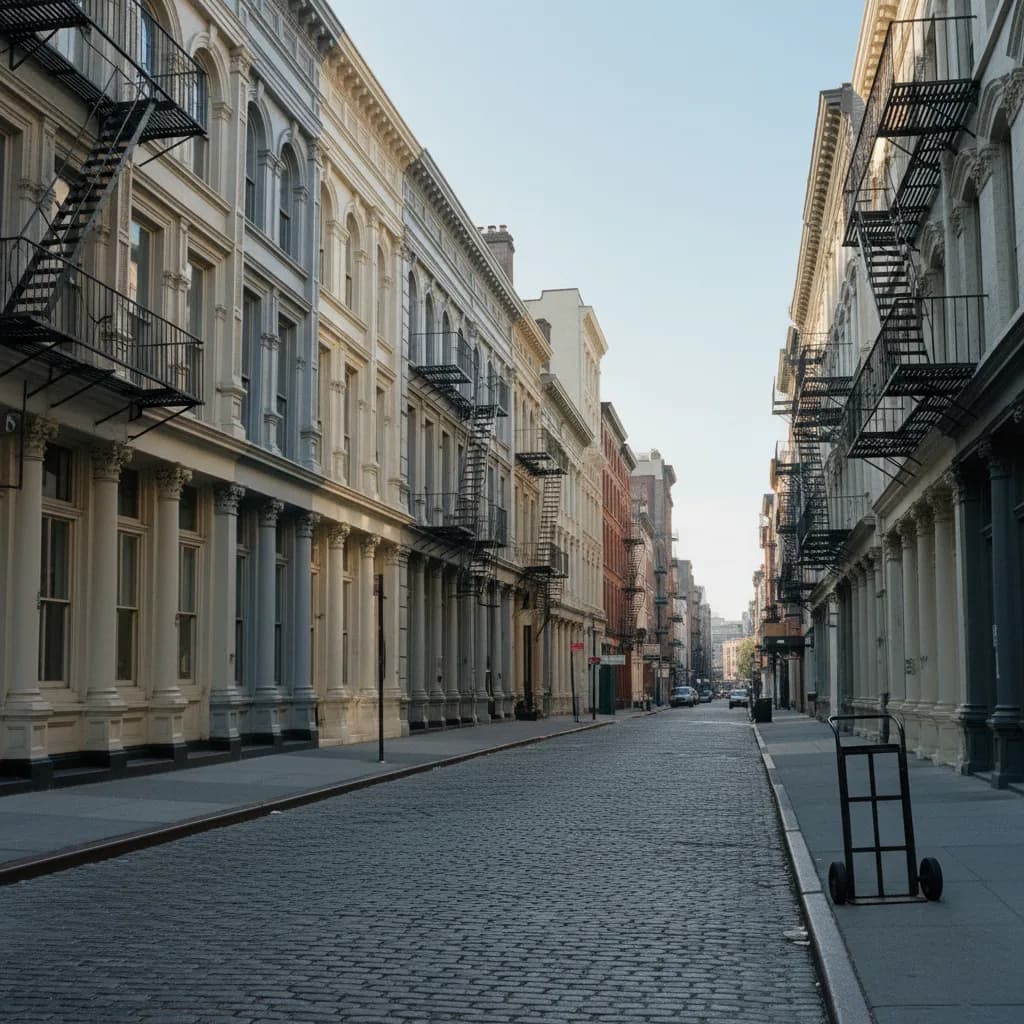
SoHo's scenic pedestrian stroll is free and best before 10 am, when Greene and Mercer Street cobbles are quiet and the cast-iron facades catch clean light.
SoHo is a scenic pedestrian stroll hiding inside a shopping district. Between Houston and Canal Streets sits the SoHo-Cast Iron Historic District, designated in 1973, with one of the largest concentrations of cast-iron building fronts in the world. Walking it costs nothing. The trick is timing: before about 10 am on a weekday, Greene and Mercer Streets are close to empty, and you can read the iron columns and cobbles without dodging shopping bags.
What Makes These Blocks Worth Walking
In the 1850s to 1890s, merchants needed big windows and fast construction. Cast-iron fronts were bolted together from foundry pieces, painted to imitate stone, and could carry huge panes of glass. The result is a streetscape of repeated columns, arches and cornices that looks almost theatrical in raking morning light. Tap a column lightly and you will often hear the hollow ring of metal rather than masonry.
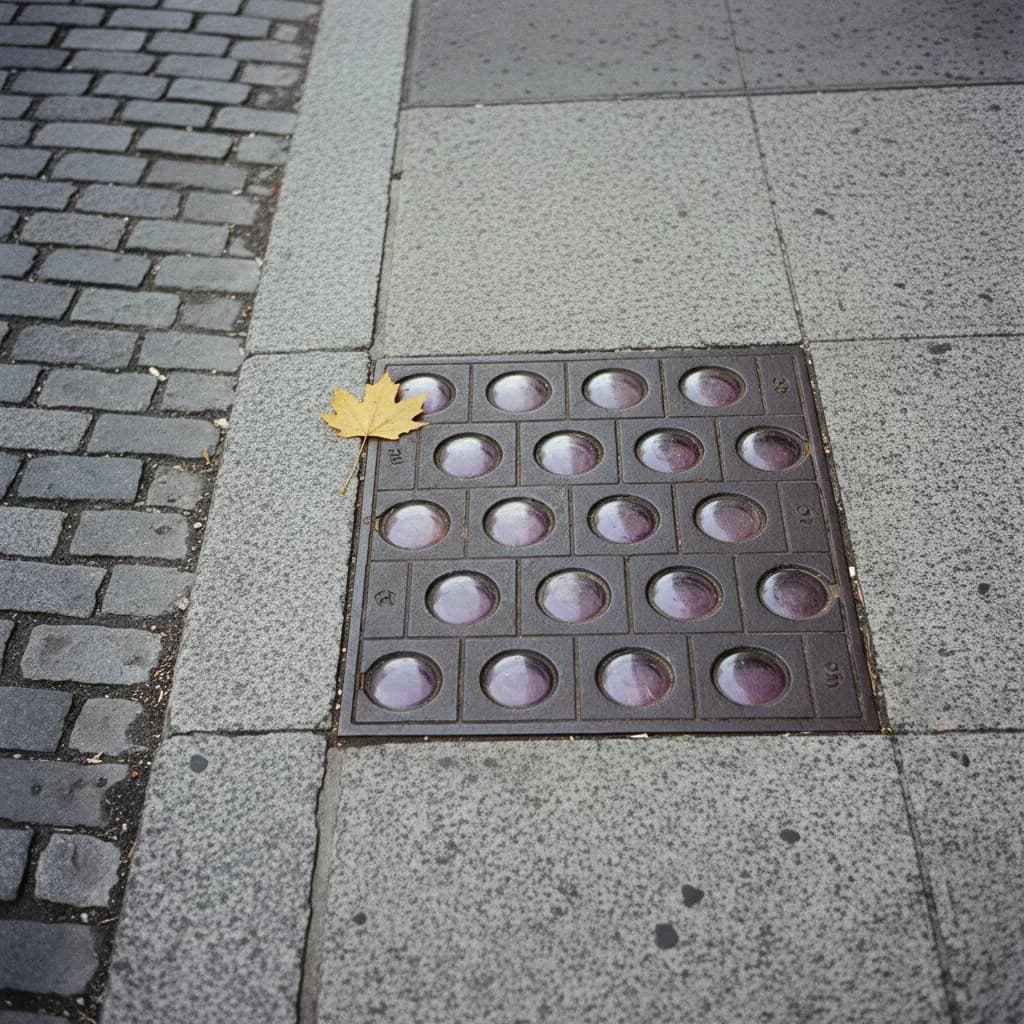
The other half of the scenery is underfoot. Several SoHo side streets still have Belgian-block paving, and many sidewalks are set with small round glass vault lights that once sent daylight into basement storerooms. Look for them at loading docks along Greene and Mercer. They are part of why this route photographs better at ground level than from a distance.
Start at Broadway and Broome
Begin at the corner of Broadway and Broome Street in front of the Haughwout Building at 488 Broadway. Completed in 1857, it is famous for housing the first commercial passenger elevator, built by Elisha Otis. Its facade repeats the same arched window bay dozens of times, a deliberate design that cast iron made affordable. Stand on the opposite corner to fit the whole front into one frame.
Broadway itself is loud, so treat this as the opening view rather than the walk. From the Haughwout corner, head one block west on Broome Street to Greene Street. The change in noise level is immediate, and the scale of the street narrows so the buildings close in around you.
Greene Street: The King and the Queen
Greene Street is the centerpiece. Walk south first, toward Canal, to find the building at 28-30 Greene Street, nicknamed the Queen of Greene Street, finished in 1872 with a steep mansard roof and ornate dormers. Then turn around and head north past Broome and Spring. Between Spring and Prince, look for 72-76 Greene Street, the King of Greene Street, a five-story Corinthian palace completed in 1873.
Keep to the shaded sidewalk and stop at each cross street to look back the way you came. The view south down Greene from Prince Street, with the iron fronts receding in a line, is the classic SoHo image. Early in the day, delivery trucks may block parts of the block; give them a minute and they usually move on.
Mercer Street and the Quiet Loop Back
From Houston Street, cross over to Mercer Street and walk south. Mercer has fewer flagship stores than Greene, longer stretches of cobbles, and more working loading docks, which makes it feel like the SoHo of the artist-loft era. It is the best stretch to simply walk without a destination for ten minutes.
A detour one block west on Spring Street brings you to 101 Spring Street, the 1870 cast-iron building where artist Donald Judd lived and worked. The Judd Foundation runs guided visits that need to be arranged through its official site, but the corner itself, with its large plate-glass windows, is worth a look from the sidewalk at any time.
Small Details to Hunt For
Once you slow down, SoHo turns into a scavenger hunt. Many iron columns still carry the cast nameplate of the foundry that made them, usually a few feet above the sidewalk at the base of the column. Painted ghost signs for long-gone textile and paper firms survive high on some side walls. Loading docks along Mercer and Greene are raised to truck-bed height, a reminder that these were warehouses before they were lofts.
The people are part of the scenery too. Early in the morning you will share Greene Street with shop staff hosing down sidewalks, photographers setting up fashion shoots against the iron fronts, and residents walking dogs from the loft buildings that artists converted in the 1960s and 1970s. A quick nod goes a long way; stepping around a photo shoot instead of through it is the unwritten courtesy here.
When Not to Do This Walk
Skip Saturday afternoons. From around noon, Prince, Spring and Broadway become a slow shuffle, and the side streets fill with shoppers and double-parked cars. If a weekend is your only option, start by 9 am on Sunday, or flip the route and walk the quieter western blocks toward Sixth Avenue instead. Rain is actually a reasonable time to come: the wet cobbles reflect the facades and the crowds thin out.
Planning It in Karpo APP
Before heading out, you can tell Karpo APP that you want an hour of architecture on foot in SoHo, starting near Spring Street, and ask it to arrange Greene, Mercer and the Haughwout corner into a loop with a coffee stop. It will draft a sequence you can save and adjust, along with suggestions for nearby spots that fit your taste.
Karpo cannot see live crowd levels or hold a table anywhere, so pair its plan with your own timing. If you want to go inside the Judd building, use the foundation's own channels to arrange that.
Getting There and Getting Around
The Prince St station on the R and W lines puts you a block from Greene Street, while Spring St on the C and E or the 6 line works for the western or eastern edges. The full loop, including both the King and Queen of Greene Street and the Mercer return, comes to roughly a mile and a half and takes about an hour with stops. Cobbles are uneven, so leave thin-soled shoes at home. Public seating is scarce, which makes a cafe the most practical rest point.
For a longer day, walk north from Houston into Greenwich Village, or east across Lafayette into Nolita. Either extension keeps you on foot and adds a completely different architectural mood to the morning. Nolita's Elizabeth Street and Mulberry Street blocks are lower and narrower, so they make a good contrast after the grand iron fronts.
Ask Karpo for more information.
Keep reading
- SoHo Tailor Alteration Shop Finder for Sample Sale Finds
 Williamsburg Tailor Alteration Shop Finder for Bike Riders
 Upper West Side Tailor Alteration Shop Finder for Kids