 SoHo Tailor Alteration Shop Finder for Sample Sale Finds
Neighborhood Guides
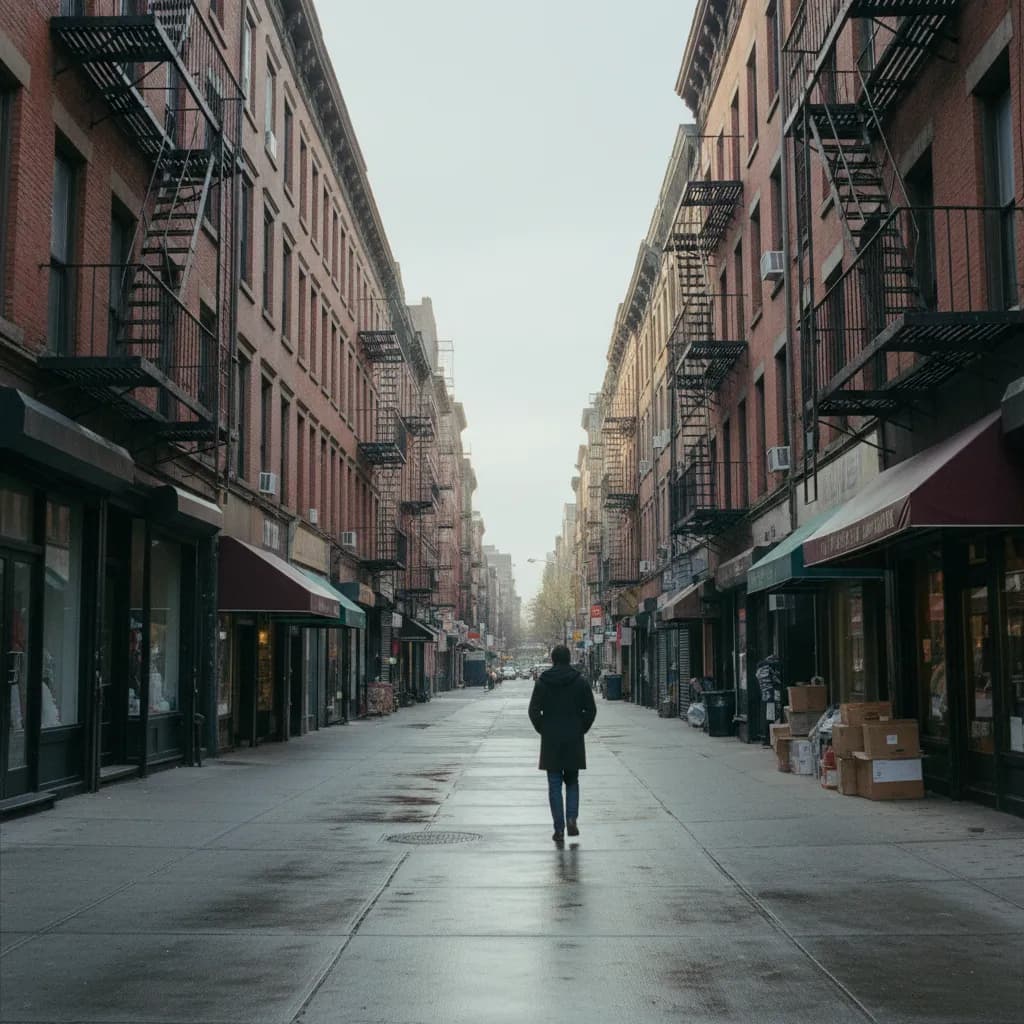
Lower East Side Scenic Pedestrian Stroll: Free 2-Mile Loop
A free Lower East Side scenic pedestrian stroll links Orchard Street tenements, Seward Park and East Broadway in about two miles. Go early for empty sidewalks.
The Lower East Side packs more surviving nineteenth-century tenement blocks into a few square blocks than almost anywhere else in Manhattan, and every street you need for a scenic pedestrian stroll is free to walk. A loop that starts at Orchard and Delancey, swings east to Seward Park, runs down East Broadway and returns past Eldridge Street covers roughly two miles. At an easy pace with a few photo stops it takes 75 to 90 minutes.
Why the Tenement Grid Rewards a Slow Walk
Most of the LES street grid was laid down long before cars, and it shows. Blocks between Allen Street and Essex Street are short, sidewalks are narrow, and building heights rarely climb past six stories, so the sky stays open overhead. The facades carry the area's immigrant history in plain sight: cast cornices, painted ghost signs, cellar doors that once led to sweatshops and bakeries. Walking slowly is the only way to read them properly.
The main thing to plan around is not distance but crowding. Orchard and Ludlow fill with brunch traffic from about 11 am on weekends, and Delancey Street carries heavy bridge-bound traffic all day. A weekday start between 8 and 9:30 am gives you near-empty sidewalks and long sight lines down Orchard, which is exactly the view the cover photo of this page tries to capture.
Orchard Street to Seward Park
Begin on Orchard Street just south of Delancey and walk toward Grand Street. This stretch was the heart of the old pushcart market, and the Tenement Museum operates from the restored buildings at 97 and 103 Orchard. You do not need a ticket to appreciate the block from the sidewalk; look up at the fire escapes stacked like ladders and the narrow lot widths that squeezed whole families into three-room apartments.
Turn east on Grand Street and continue to Essex Street, then head south. At East Broadway you reach Seward Park, which opened in 1903 and is often cited as the first permanent municipally built playground in the United States. The benches near the East Broadway edge are the natural first pause: shaded, a little removed from traffic, and facing the old Jewish Daily Forward building across the street.
That ten-story building at 175 East Broadway was finished in 1912 for the Yiddish-language newspaper, and its carved facade still shows portrait medallions of socialist thinkers above the entrance. It is now residential, so admire it from the park rather than the doorway. Facing the park on East Broadway, the Seward Park branch of the New York Public Library occupies a 1909 Carnegie-funded building that remains open to the public.
East Broadway and the Chinatown Edge
From Seward Park, walk west along East Broadway. Within a few blocks the signage changes from Yiddish-era stone lettering to Chinese storefronts, a reminder that the Lower East Side and Chinatown have always overlapped here. This is the liveliest part of the route on a weekday morning: produce crates on the sidewalk, delivery carts and people doing real errands, not sightseeing.
Keep your phone in your pocket on this stretch and simply watch the rhythm of the street. If you need a coffee or a snack, East Broadway and the side streets toward Division Street have plenty of small counters. Turn north at Eldridge Street and the noise falls away almost immediately; Eldridge is one of the quietest north-south streets in the neighborhood.
The Eldridge Street Synagogue Pause
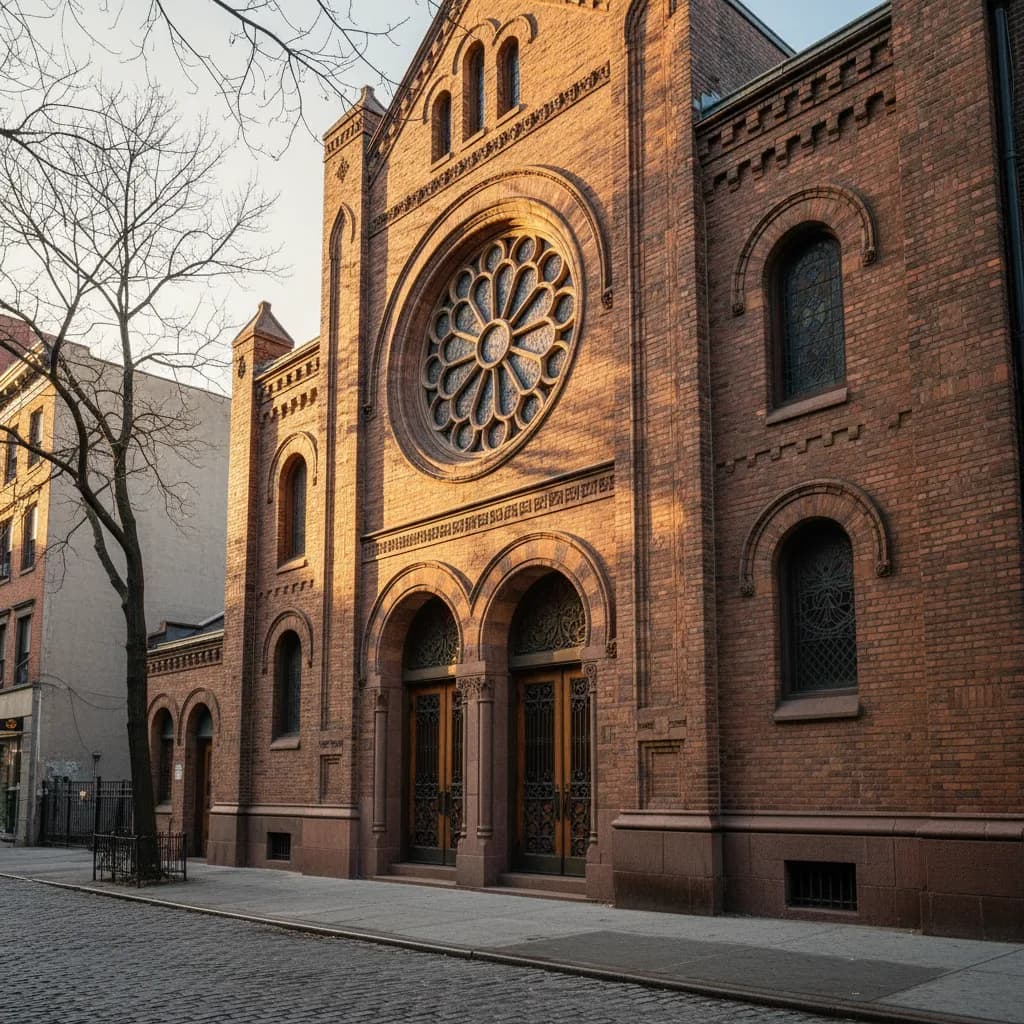
Near the southern end of Eldridge Street stands the Eldridge Street Synagogue, completed in 1887 by Eastern European Jewish immigrants and restored over two decades. Its brick and terracotta facade mixes Moorish, Gothic and Romanesque details, and the large circular window above the entrance is the photo most walkers stop for. Today the building houses the Museum at Eldridge Street, which offers tours inside for a fee.
Even from the sidewalk the synagogue makes the strongest single stop on this stroll. Stand on the west side of the street for the full facade, then walk a few paces north to see how it towers over the low tenements around it. Late afternoon light hits the front most directly, so walkers doing the loop in reverse may get the better picture.
Optional Extension: The Williamsburg Bridge Walkway
If you have energy left, return to Delancey Street and follow it east to Clinton Street, where the pedestrian path onto the Williamsburg Bridge begins. The bridge opened in 1903, and walking out to the first tower adds about a mile round trip. You get open views of the East River, the Manhattan skyline to the south and the rooftop water tanks of the neighborhood you just crossed.
The bridge path is shared with cyclists in places, so keep right and watch for bikes on the descent. Skip it on very windy or icy days; the deck is exposed and there is nowhere to shelter. On a clear weekday morning, however, it turns a neighborhood walk into a genuinely scenic one.
Using Karpo APP to Shape Your Loop
Karpo APP works best here as a planning companion before you leave. Tell it how long you have, whether you want the bridge extension, and what kind of stops you care about, such as architecture, a quiet bench or a coffee break, and it can suggest an order for the streets above and point out nearby places that match your interests. You can save the plan and follow it at your own pace on foot.
Karpo does not track crowds live or reserve museum tours for you, so treat its suggestions as a well-organized starting point. If you want to see the inside of the Tenement Museum or the Eldridge Street Synagogue, look up their official sites and arrange tickets directly with them.
Practical Notes for the Walk
Nearest subway stops are Delancey St–Essex St on the F, J, M and Z lines at the start, and East Broadway on the F near the halfway point, which makes it easy to cut the loop short. Wear shoes with grip: older sidewalks here are uneven, and cellar hatches can be slick after rain. Public restrooms are limited, so plan to use the library or a cafe. If it starts raining, Essex Market at Essex and Delancey is the closest indoor refuge with seating.
Ask Karpo for more information.
Keep reading
- SoHo Tailor Alteration Shop Finder for Sample Sale Finds
 Williamsburg Tailor Alteration Shop Finder for Bike Riders
 Upper West Side Tailor Alteration Shop Finder for Kids