 Tribeca Bowling Group Night Planner for Wedding Guests
Sports Social
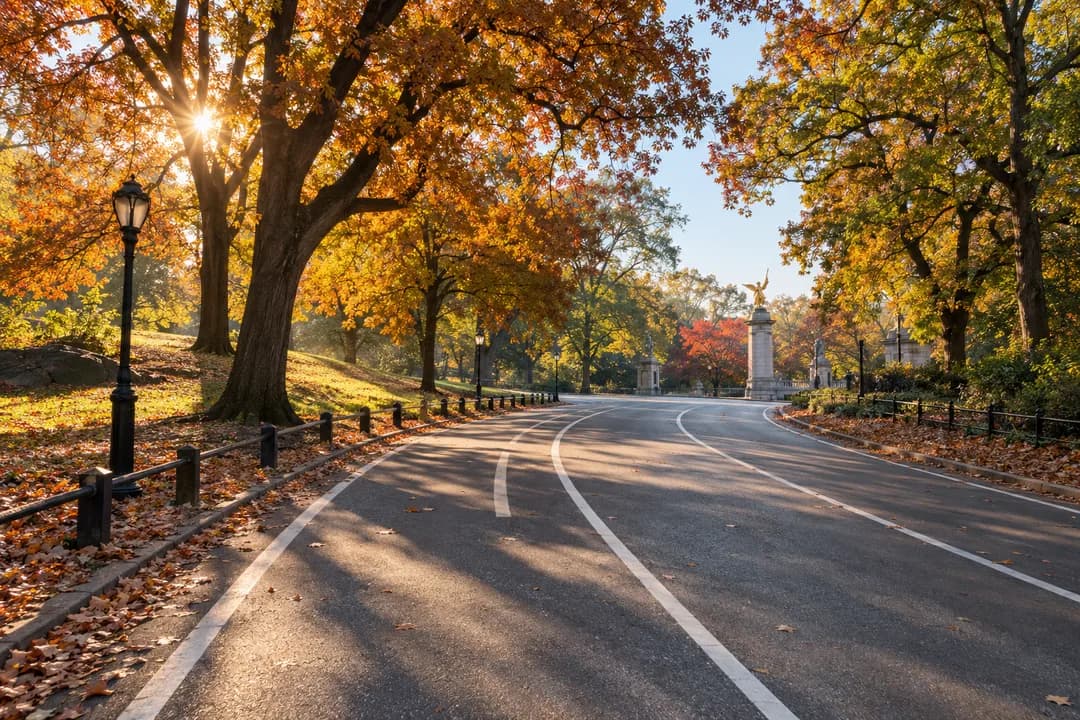
NYC Scenic Jogging Route: Free Prospect Park Loop Track
Jog the car-free 3.35-mile Prospect Park Drive loop for rolling wooded hills, sweeping Long Meadow views, and soft crushed cinder horse bridle trails.
Starting your morning run at the historic Grand Army Plaza entrance near Union Street and Flatbush Avenue immerses you immediately into the natural grandeur of Brooklyn's premier landscaped green sanctuary. Designed by visionary park architects Frederick Law Olmsted and Calvert Vaux in the late nineteenth century, Prospect Park's five hundred and eighty-five acres are encircled by a continuous three-point-three-five-mile roadway loop completely closed to motorized vehicular traffic. Runners entering the park at dawn pass beneath towering old-growth American elms, sweetgums, and red oaks, encountering a dynamic circuit of rolling forested hills, vast sunlit pastoral meadows, and protected freshwater shorelines that offer a deeply rewarding training ground for athletes of all skill levels.
Loop Layout, Surface Options, and Hill Elevation
The primary running circuit follows Park Drive, a wide asphalt road divided into clearly marked lanes for runners, walkers, and recreational cyclists. Traffic on Park Drive moves strictly in a counter-clockwise direction, guiding runners down the gentle eastern slope past the zoo, the historic carousel, and the LeFrak Lakeside center before climbing back north along the western ridge. Running on the inner pedestrian lane ensures ample physical clearance from faster-moving bicycle packs and paceline pelotons that gather during early morning workout hours, allowing runners to focus completely on their breathing and cadence.
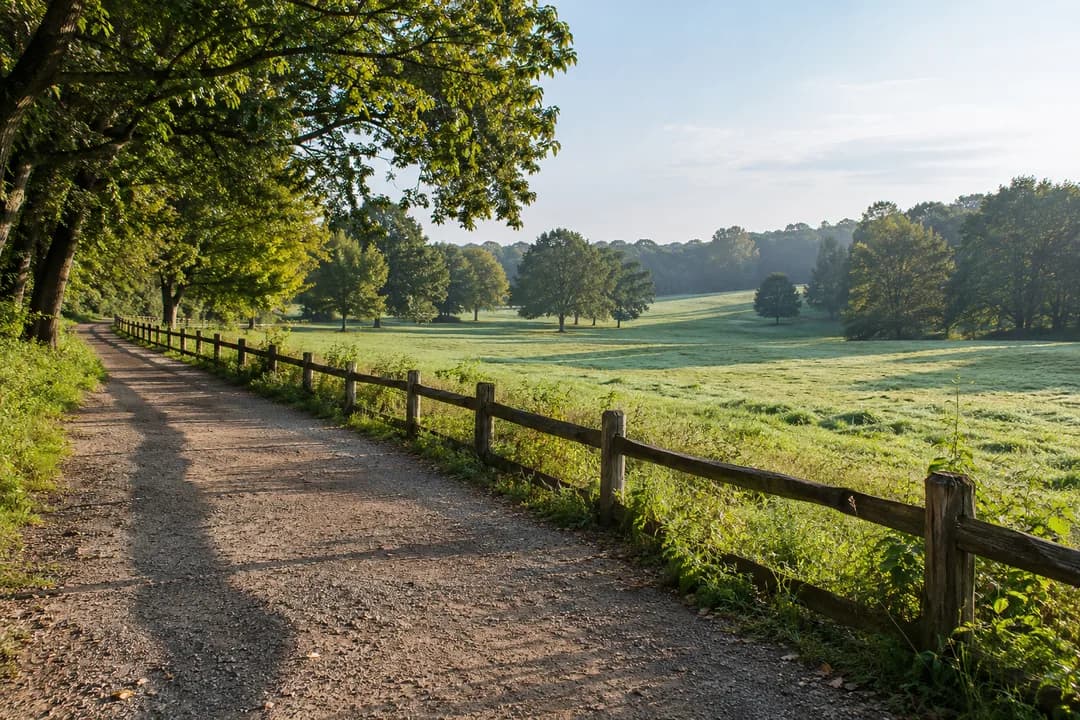
Unlike the relatively flat waterfront greenways of Manhattan, Prospect Park provides substantial aerobic elevation training. The signature workout challenge is the Center Drive hill, a steady half-mile climb with an eighty-foot vertical gain that tests cardiovascular stamina, quadricep strength, and forward running mechanics before cresting smoothly near Grand Army Plaza. Runners seeking softer surfaces underfoot can easily diverge onto the interior Bridle Path, a shaded two-mile ribbon of packed dirt, crushed cinder, and woodchips that runs parallel to the main drive along the eastern rim of the Long Meadow, dramatically reducing lower-leg joint fatigue.
Landmarks, the Ravine, and Lake Panoramas
Prospect Park's undulating terrain creates a rich progression of visual scenery across every mile of your workout. On the western stretch, the trail borders the Long Meadow, an unbroken expanse of rolling turf stretching nearly a mile that represents the longest continuous meadow in any urban park in the United States. In the early morning mist, runners view distant dog owners playing fetch, grazing geese, and flocking songbirds across the wide expanse of dew-covered grass, framed by the classic brownstone rooflines of Park Slope rising behind the perimeter trees.
As the loop dips toward the southern park boundary, runners pass through the Ravine, Brooklyn's only surviving native old-growth forest and watercourse gorge, where rustic stone bridges span cascading freshwater streams under dense hemlock and tulip tree boughs. Emerging from the forest canopy, the path curves around the sixty-acre Prospect Park Lake and the historic 1905 Beaux-Arts Boathouse on the Lullwater, where white glazed terra-cotta arches reflect in the still morning water. Continuing toward the southwest corner, the modern curved pavilion of the LeFrak Center at Lakeside provides a scenic transition point before beginning the gradual climb back toward Bartel-Pritchard Square.
Seasonal Changes, Running Conditions, and Best Hours
Prospect Park transforms dramatically through the seasons, altering running conditions and visual appeal throughout the training year. Spring brings dense pink and white cherry blossoms along Cherry Hill and the Grand Army Plaza berms, while autumn paints the dense forest canopy of Lookout Hill in rich tones of fiery amber, scarlet, and burnished gold. Because the park's mature trees provide extensive shade along both sides of the roadway, summer morning temperatures remain noticeably more comfortable than on open street asphalt, protecting runners from harsh direct sun exposure during warm-weather marathon blocks.
The most favorable window for logging quality training miles is between 6:00 am and 8:30 am on weekday mornings. During these peaceful hours, the park belongs almost exclusively to serious club runners, high school cross-country teams, and dedicated neighborhood joggers moving at brisk paces. On weekend afternoons, especially near the Picnic House, the 9th Street Bandshell, and the Harmony Playground, community gatherings and family outings increase pedestrian traffic across crosswalks, making dawn hours the premier choice for uninterrupted tempo runs and interval speedwork.
Water Fountains, Restrooms, and Park Regulations
Public amenities are conveniently positioned throughout Prospect Park to support athletic visitors during long workouts. Clean, heated public restrooms are situated inside the Picnic House along the Long Meadow, at the Boathouse visitor center on the Lullwater, inside the LeFrak Center at Lakeside, and near the Lincoln Road playground along the eastern perimeter. Outdoor drinking fountains with rapid bottle-filling nozzles are maintained at every major park entrance portal and near the outdoor fitness equipment zones along Center Drive, ensuring reliable hydration throughout the running season.
Adhering to park rules ensures safety for all recreation enthusiasts sharing the roadway. Runners should always stay inside the designated pedestrian lanes on the inside edge of Park Drive and look both ways before crossing bicycle lanes to reach interior dirt trails. Leashed dogs are permitted on park drives, but off-leash hours are strictly restricted to early mornings before 9:00 am in designated meadow zones. Solar-powered emergency call boxes, park ranger patrols, and well-maintained lampposts provide excellent security along the main loop after dusk.
Transit Access and Digital Route Navigation
Reaching Prospect Park via public transportation is remarkably straightforward from all corners of Brooklyn, Queens, and Manhattan. The 2 and 3 subway trains stop directly at Grand Army Plaza, while the B and Q express lines stop at Seventh Avenue and at the Prospect Park station along the eastern perimeter. On the western side, the F and G subway lines stop at 15th Street-Prospect Park, placing runners just steps from the southwest park entrance near Bartel-Pritchard Square without the headache of finding scarce street parking.
Karpo APP organizes scenic park running loops, distance breakdowns, and neighborhood access options to help runners structure their Brooklyn training workouts. Whether you want to plan hill repeats along Center Drive, connect your outer loop with the leafy historic brownstone avenues of Park Slope, or explore crushed-earth paths across the Long Meadow, Karpo APP helps you assemble route candidates and scenic waypoint ideas. Runners can evaluate distance benchmarks and entrance portals in advance, while park drive rules, seasonal water station status, and field maintenance announcements can be reviewed directly through Prospect Park Alliance publications before beginning their training session.
Ask Karpo for more information.
Keep reading
- Tribeca Bowling Group Night Planner for Wedding Guests
 Flushing Bowling Group Night Planner for Thanksgiving Break
 Bushwick Bowling Group Night Planner After Band Practice