 Tribeca Bowling Group Night Planner for Wedding Guests
Sports Social
NYC Scenic Jogging Route: Free Central Park Reservoir Loop
Jog the 1.58-mile Central Park Reservoir track and soft bridle path for skyline views, smooth dirt footing, and unhurried dawn miles away from traffic.
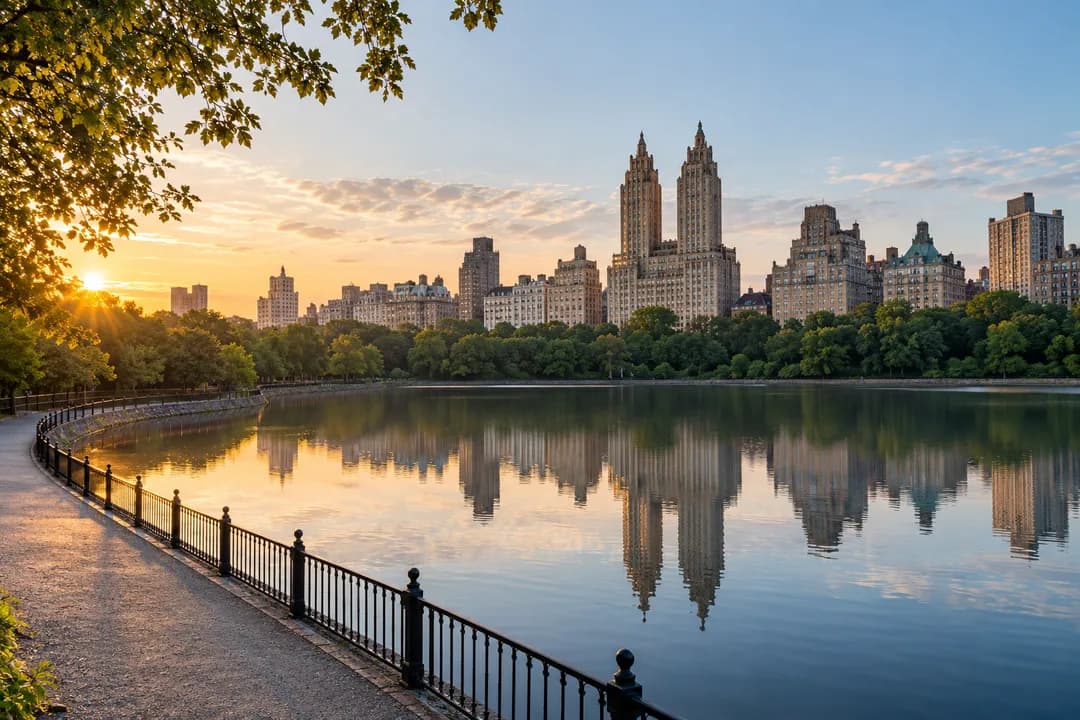
Entering Central Park through Engineers' Gate at Fifth Avenue and 90th Street brings you directly onto the crushed granite surface of the Jacqueline Kennedy Onassis Reservoir running track. Stretching exactly one and fifty-eight hundredths miles around forty billion gallons of calm open water, this elevated dirt loop provides one of New York City's premier car-free jogging corridors. Runners stepping onto the cinder surface at dawn encounter an uninterrupted panoramic vista where the Gothic spires of the El Dorado and the twin towers of Central Park West reflect across the water, completely insulated from crosstown traffic noise. The wide open sky above the basin creates an immediate feeling of natural sanctuary right in the geographic heart of Manhattan.
Track Layout, Distances, and Surface Conditions
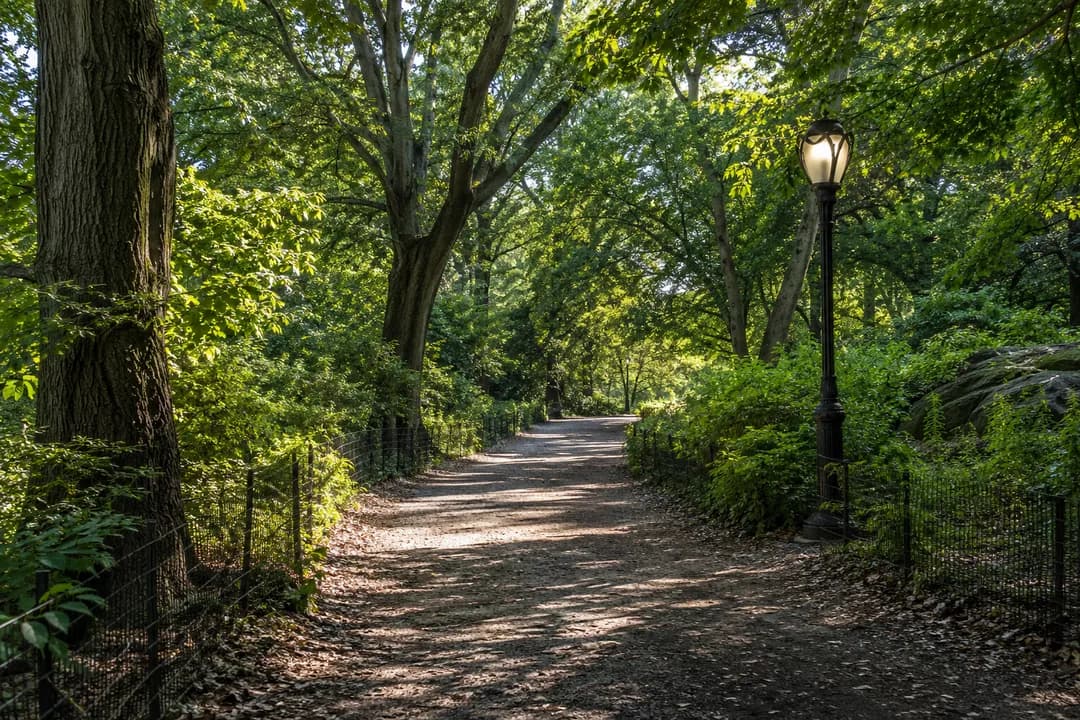
The Reservoir running path circles the basin in an exclusively counter-clockwise direction, strictly enforced by park regulations to keep pedestrian movement fluid during morning and evening rush hours. The main circuit measures exactly one point five eight miles, marked with quarter-mile distance posts that allow runners to monitor pacing accurately without staring down at GPS watches or phone screens. The running surface consists of fine crushed stone and decomposed granite graded weekly by the Central Park Conservancy ground crews. This forgiving dirt track dramatically absorbs foot-strike impact compared to the park's hard asphalt drives, making it the favorite workout loop for distance marathoners and casual morning joggers seeking relief from unforgiving city concrete sidewalks.
Directly below the raised reservoir fencing lies the Central Park Bridle Path, a wider secondary trail surfaced in packed earth, fine gravel, and soft pine mulch. Circling the reservoir while dipping through mature oak groves between 86th Street and 96th Street, the Bridle Path adds two and a half miles of rolling terrain with gentle climbs around the North Meadow and the steep rise behind the East Pumping Station. By linking the upper reservoir trail with the lower bridle loop, runners can construct seamless three-mile to six-mile training sessions without crossing a single vehicular roadway or waiting at traffic lights, enjoying soft-surface running under towering elms.
Landmarks and Changing Skyline Perspectives
Jogging the western perimeter between 86th Street and 94th Street reveals sweeping views toward the Upper East Side, where classic limestone pre-war cooperative buildings along Fifth Avenue catch the morning sunlight. Looking south from the North Gate House, the sharp silhouettes of Midtown Manhattan's Billionaires' Row and the Empire State Building rise above the park's dense tree canopy. Because the reservoir sits on a high natural bedrock ridge, you run higher than the surrounding park meadows, creating an expansive sense of open sky and fresh air rare anywhere else on Manhattan Island.
At the northeast corner near 96th Street, the historic Gothic revival South Gate House and adjacent weir bridge anchor the shoreline with nineteenth-century stone masonry. During late October and November, the weeping willows and pin oaks along the water's edge turn vibrant shades of russet, copper, and gold, shedding leaves onto the outer edge of the dirt path. On calm autumn mornings, the water acts as a giant natural mirror, reflecting double images of the San Remo twin towers as the sun climbs over the Museum Mile treeline.
Optimal Jogging Hours and Weather Preparation
The ideal window for jogging the reservoir path is between 6:00 am and 8:30 am on weekday mornings. During these early dawn hours, the track is populated by dedicated neighborhood runners, local high school track teams, and brisk stride-walkers who maintain a disciplined single-file or two-abreast flow. By 10:30 am on mild weekends, tourist foot traffic increases significantly around the 90th Street and 86th Street access gates, creating pinch points where joggers must adjust their stride or drop down to the wider Bridle Path to maintain steady continuous splits.
Because the reservoir is an exposed body of water, northwest winter winds can sweep across the open basin with biting chill, making temperatures feel five to eight degrees colder than on sheltered city streets. In cold months, wearing a wind-resistant outer shell, thermal base layer, and lightweight running gloves is essential for comfort. Conversely, during humid summer mornings, the water generates a gentle microclimate breeze that keeps the trail noticeably cooler and fresher than the baking asphalt of nearby Madison Avenue or Broadway.
Water Stations, Facilities, and Trail Etiquette
Public facilities along the loop are strategically placed near key entrance portals. Year-round drinking fountains with bottle-refill spouts operate directly adjacent to the Engineers' Gate entrance at East 90th Street and near the North Meadow Recreation Center just west of the reservoir. Heated public restrooms maintained by the Department of Parks and Recreation are situated inside the North Meadow Recreation Center at 97th Street and near the tennis center courts south of 96th Street, open daily from 7:00 am until dusk for public use.
Adhering to trail etiquette is crucial for an enjoyable run. Pedestrians must travel counter-clockwise around the reservoir fencing; running clockwise against the flow causes severe congestion at narrow bridge necks. Faster runners pass on the outside right shoulder while slower joggers and walkers hug the left railing. Bicycles, roller skates, strollers, and dogs are strictly prohibited from the upper reservoir running track, ensuring a safe, dedicated zone exclusively for people moving on foot without sudden wheel hazards.
Transit Connections and Neighborhood Navigation
Accessing the reservoir is remarkably straightforward from subway stops on both sides of Manhattan. On the East Side, take the 4, 5, or 6 subway train to 86th Street and jog three avenues west to Fifth Avenue and 90th Street. On the West Side, the B and C subway lines stop at 86th Street and Central Park West, positioning you just two minutes from the western reservoir steps. Street parking along Fifth Avenue is metered and limited, so taking public transit or jogging into the park directly from your neighborhood remains the most practical and stress-free approach.
Karpo APP compiles curated running route options, distance overviews, and landmark guides to help you organize a balanced workout. Whether you plan to combine the 1.58-mile reservoir loop with the hilly northern bridle paths toward the Harlem Meer or pair your morning jog with quiet Museum Mile side streets, Karpo APP helps you evaluate route options, surface conditions, and neighborhood access points. Runners can explore seasonal route suggestions and park layout notes in one organized place, while reviewing official park notices, seasonal water fountain activation, and daily grounds guidelines directly through the Central Park Conservancy before heading out for their run.
Ask Karpo for more information.
Keep reading
- Tribeca Bowling Group Night Planner for Wedding Guests
 Flushing Bowling Group Night Planner for Thanksgiving Break
 Bushwick Bowling Group Night Planner After Band Practice