 SoHo Tailor Alteration Shop Finder for Sample Sale Finds
Neighborhood Guides
Inwood Hill Scenic Hilltop Overlook Walk Along Forest Ridge
Follow the ridge trail through Manhattan's last natural forest to rocky overlooks above the river. Use the Karpo APP to explore unpaved trails and detours.
At the northernmost tip of Manhattan Island lies Inwood Hill Park, home to 196 acres of untamed topography and the borough's only surviving natural primeval hardwood forest. Rising steeply from Payson Avenue and Seaman Avenue, heavily wooded ridges ascend more than two hundred feet above the surrounding waterways. This rugged terrain sets the stage for an authentic scenic hilltop overlook walk, transporting hikers into an ancient landscape where soaring tulip trees, glacial caves, and rocky promontories overlook the confluence of Spuyten Duyvil Creek and the Hudson River.
Deep Woods and Primeval Ridges of Northern Manhattan
Unlike the manicured lawns and sculpted promenades found in Central Park, Inwood Hill preserves the wild, untamed character of pre-colonial Manhattan. The park encompasses dramatic geological folds created during the Taconic orogeny hundreds of millions of years ago, featuring massive formations of Manhattan schist interwoven with Inwood marble. Deep ravines shelter towering tulip poplar trees whose straight trunks reach nearly one hundred feet toward the forest canopy, creating a dense, shaded understory rarely found within city boundaries.
Walking into the forest from the trailhead at 218th Street and Indian Road, the sounds of urban sirens and traffic fade within minutes behind thick earthen embankments. The moist forest floor supports native ferns, wild ginger, and seasonal fungi, while the calls of red-tailed hawks and pileated woodpeckers echo through the timber. The trail immediately begins to climb, switching back across mossy rock faces where natural springs seep through subterranean fissures in the bedrock.
The Shaded Ridge Ascent and Glacial Rock Formations
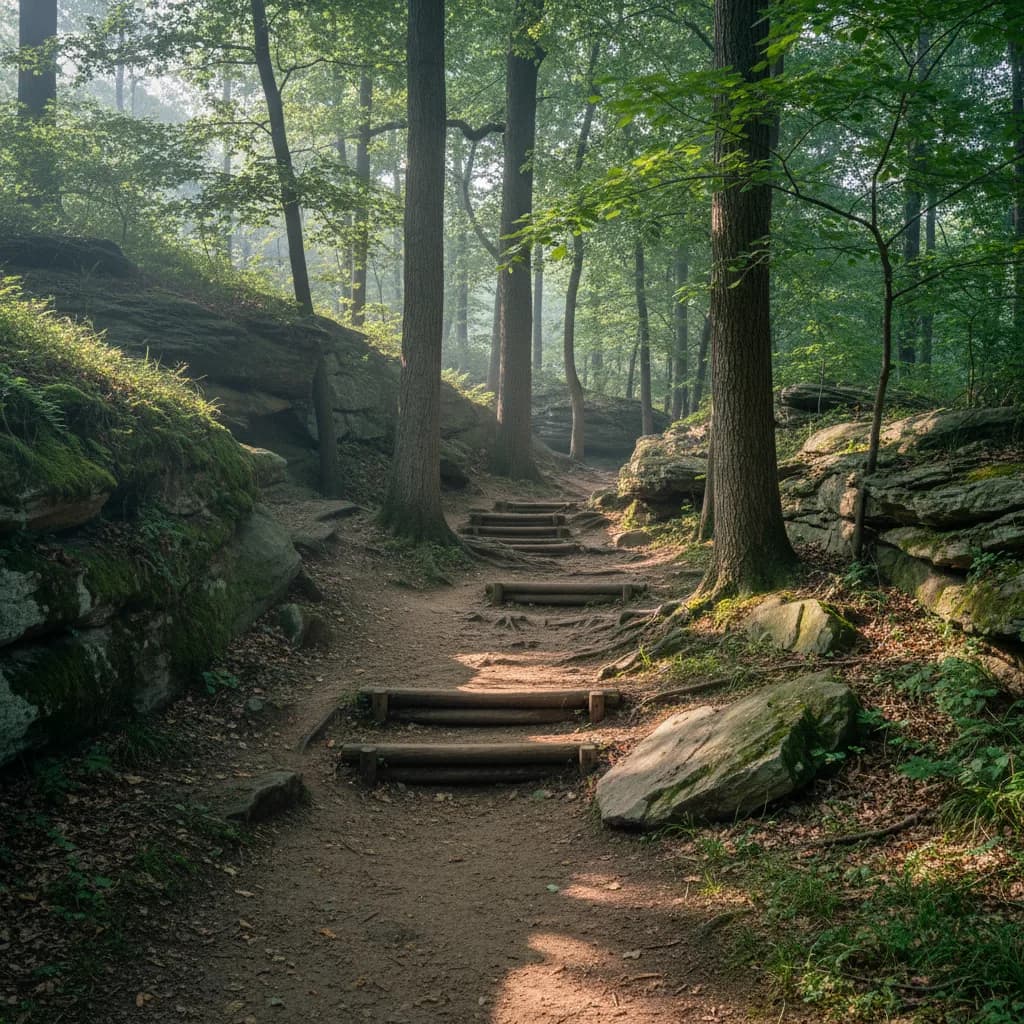
The unpaved Blue Trail leads hikers upward along the spine of the western ridge, traversing ancient rock shelters where indigenous Lenape people took refuge during seasonal migrations. Massive overhanging boulders form natural caves carved out by retreating Wisconsin glaciers over twelve thousand years ago, with deep glacial potholes worn into the solid schist. The trail features rugged stone steps built by the Civilian Conservation Corps during the 1930s, blending seamlessly into the surrounding wilderness.
As the elevation increases, the forest canopy opens slightly, allowing sunlight to dapple the dirt path and illuminate patches of mountain laurel and wild blackberry brambles. Hikers encounter steep earthen switchbacks that demand steady footing, particularly where exposed tree roots cross the trail like natural handholds. The physical exertion quickly separates the upper ridge trails from the casual walkers strolling around the lowland athletic ballfields below.
Spuyten Duyvil Overlook and Henry Hudson Bridge Panorama
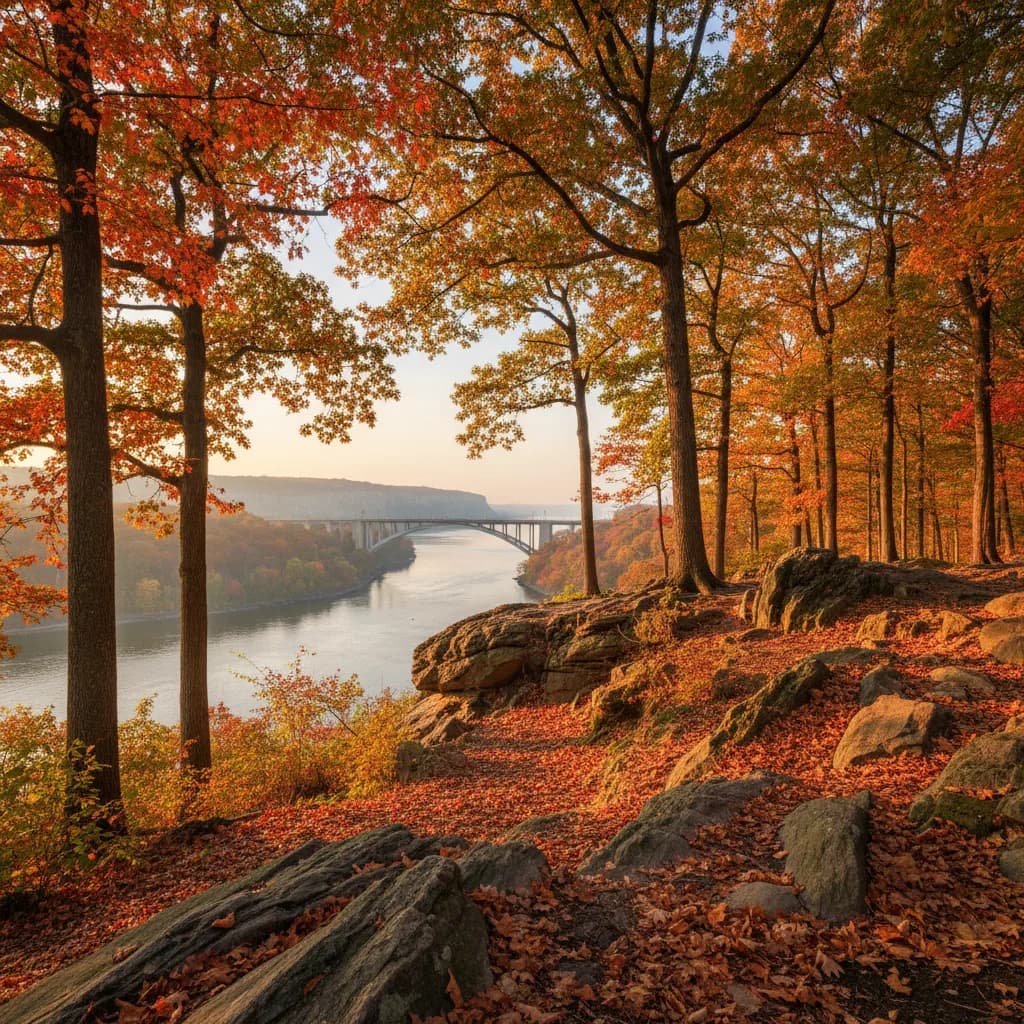
Reaching the summit of the ridge brings hikers to an exposed granite promontory that juts directly over the turbulent waters of Spuyten Duyvil Creek. From this elevated outcrop, an unobstructed northwest panorama unfolds, framing the soaring green steel arch of the Henry Hudson Bridge connecting Manhattan to the Bronx mainland. Directly across the tidal strait rise the wooded bluffs of Riverdale, while the wide channel of the Hudson River sweeps toward the north beneath the distant New Jersey Palisades.
The vantage point offers a rare overhead perspective on maritime traffic navigating the narrow water gap, with commuter trains on the Metro-North Hudson Line gliding along the water's edge below. Perched on the natural stone ledge, you feel the brisk maritime breeze funneling through the river gorge, carrying the salty scent of the tidal estuary. A single weathered timber bench provides a resting place beneath a spreading chestnut oak, offering a tranquil setting for quiet contemplation.
Seasonal Light Shifts and Trail Solitude
The hilltop trails experience dramatic seasonal transformations that reward visits at different times of the year. In early spring, before the canopy leafs out, hikers enjoy continuous river views through bare branches alongside carpets of ephemeral spring wildflowers like trout lilies and Dutchman's breeches. Autumn brings rich canopies of burnt amber, gold, and crimson oak leaves, with late morning sunlight cutting through the morning mist rising off the salt marsh.
To maximize your solitude, plan your hike for weekday mornings between 8:00 am and 10:30 am, when the upper dirt trails are virtually deserted except for occasional trail runners and local birdwatchers. Weekend midday hours tend to draw family picnickers to the grassy perimeter around the Indian Road inlet. If the main overlook ledge is occupied, simply continue along the ridge trail two hundred yards south to discover smaller, unnamed rock outcrops that deliver equally stunning western views in complete isolation.
Connecting to the Inwood Salt Marsh and Local Cafes
After descending the eastern trail slope, loop around the edge of Manhattan's last natural salt marsh, where snowy egrets, great blue herons, and green herons forage in the shallow reeds during low tide. The flat gravel path brings you back to the street grid at 218th Street, where Indian Road Cafe sits right at the park boundary. This beloved neighborhood gathering spot features outdoor sidewalk seating, hearty farm-to-table sandwiches, and freshly brewed organic coffee to recharge after your climb.
If you prefer a vibrant neighborhood scene, walk five minutes southeast along Broadway into the heart of Inwood, where family-owned Dominican panaderías serve fresh guava pastries and hot cafe con leche. Along Dyckman Street, local eateries like Mamajuana Cafe offer flavorful Caribbean fare and patio dining, providing a lively urban contrast to the quiet woodland ridge you just traversed.
Practical Guidance for Unpaved Trail Hikes
Inwood Hill Park is completely free and open to the public daily from 6:00 am until 1:00 am. Direct subway transit is available via the A express train to the Inwood–207th Street terminal station, followed by a pleasant four-block northward walk along Seaman Avenue directly to the park entrance. Alternatively, the 1 train stops at 215th Street, requiring a ten-minute walk west across Broadway and past Isham Park.
Because the ridge trails are predominantly packed dirt, loose gravel, and rugged stone steps, sturdy hiking shoes or trail sneakers with aggressive tread are essential, especially following seasonal rain when soil paths become slick. Bring a reusable water bottle, as water fountains are located primarily around the perimeter sports facilities rather than along the upper ridge. Navigating with the Karpo APP allows you to follow trail junctions, identify native trees, and locate scenic side paths effortlessly.
Ask Karpo for more information.
Keep reading
- SoHo Tailor Alteration Shop Finder for Sample Sale Finds
 Williamsburg Tailor Alteration Shop Finder for Bike Riders
 Upper West Side Tailor Alteration Shop Finder for Kids