 SoHo Tailor Alteration Shop Finder for Sample Sale Finds
Neighborhood Guides
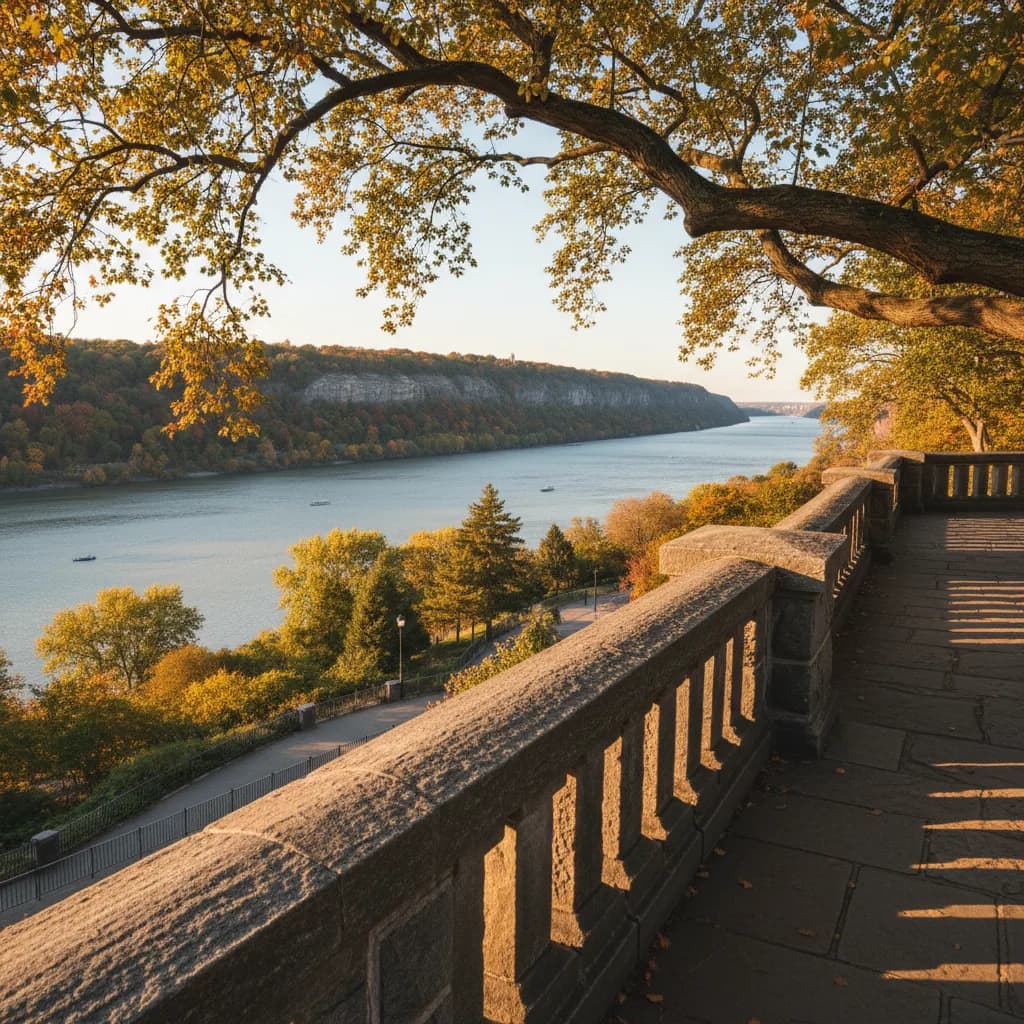
Fort Tryon Scenic Hilltop Overlook Walk on Cloister Ridge
Walk along Fort Tryon's granite ridge above the Hudson River with views of the Palisades cliffs. Use the Karpo APP to time sunset and plan nearby walks.
Fort Tryon Park crowns the highest natural ridge in Upper Manhattan, lifting walkers 268 feet above the tidal current of the Hudson River. Dedicated as a public park in 1935 after John D. Rockefeller Jr. acquired the former C.K.G. Billings estate and commissioned the Olmsted Brothers to shape its terraces, this 67-acre preserve offers New York's most dramatic scenic hilltop overlook walk. Entering at 1 Margaret Corbin Drive, flagstone promenades carve through native Manhattan schist outcrops, framing unbroken vistas across the water toward the towering basalt cliffs of the New Jersey Palisades.
The Granite Escarpment and Linden Terrace Panorama
Linden Terrace forms the architectural pinnacle of the southern ridge, shaded by a double canopy of European linden trees planted in the 1930s. The wide stone esplanade rests directly on massive retaining walls built from quarried local gneiss, cantilevered high over Henry Hudson Parkway below. On clear autumn mornings, the elevation delivers a sweeping westward panorama stretching from the George Washington Bridge northward past the broad expanse of the Tappan Zee, with crisp river breezes rising off the water.
Rockefeller deliberately purchased thousands of acres across the river along the Palisades to permanently safeguard this viewshed from industrial quarrying and billboard development. Standing at the curved balustrade of the terrace, you gaze upon an unspoiled green shoreline that looks virtually identical to how early river navigators saw it. Wooden park benches line the paved promenade beneath the lindens, offering quiet perches where neighborhood residents read and watercolorists set up portable easels before midday foot traffic arrives.
Tracing the Cloisters Ridge and Billings Estate Arcade
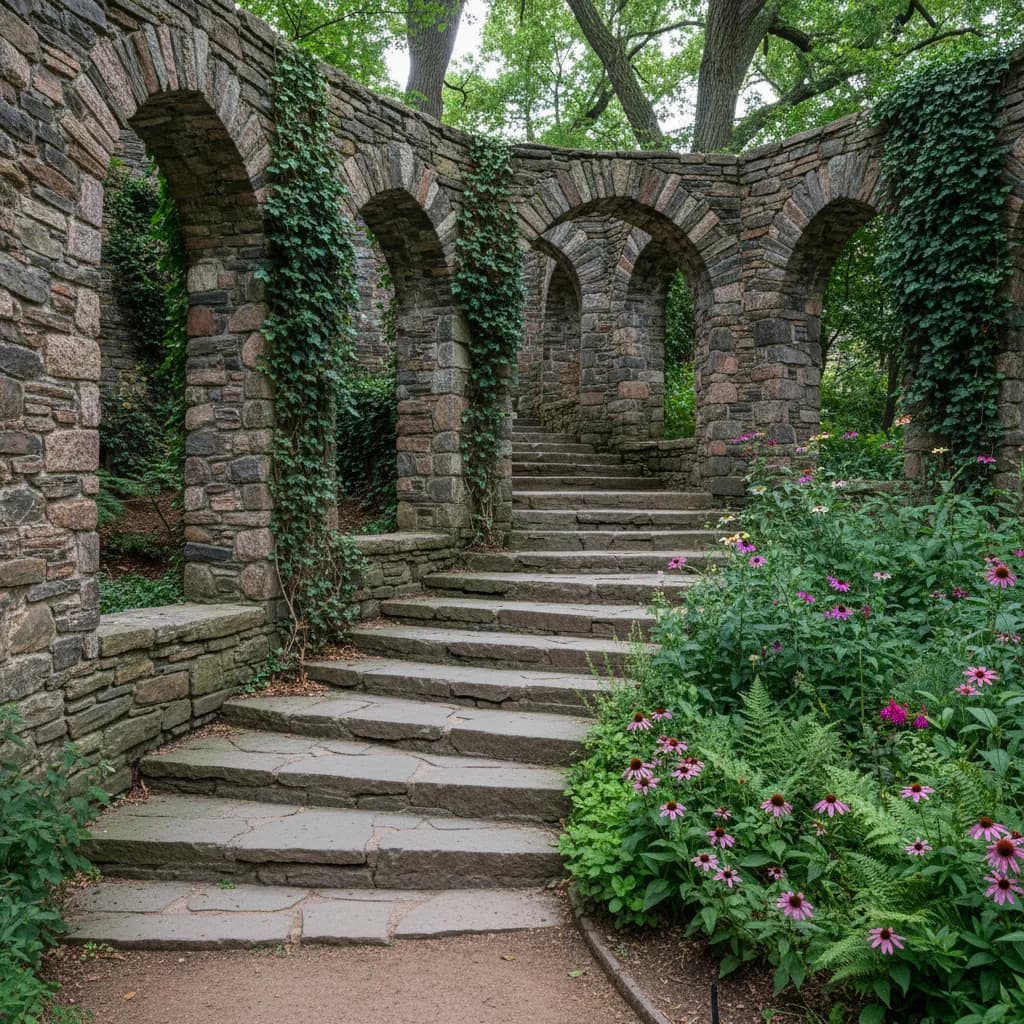
Heading northward along the western promenade, the paved trail traces the spine of the ridge toward The Cloisters museum. The path skirts the monumental granite remnants of Tryon Hall, the lavish mansion constructed in 1907 by industrialist C.K.G. Billings that was destroyed by fire in 1925. The surviving 50-foot Romanesque stone arcade, with its rugged round arches clinging to the hillside, creates an atmospheric passage where morning light filters dramatically through thick brick and rustic masonry.
The climb toward the northern crest follows winding flagstone stairs bordered by dense stands of pin oaks, black cherry trees, and flowering sumac. Stone staircases cut through natural rock fissures, requiring moderate quad effort but rewarding hikers with sudden glimpses of the river through the woodland canopy. The medieval-style ramparts of The Cloisters loom ahead like an authentic European fortress, anchoring the northern terminus of the hilltop trail amidst alpine gardens and gravel courtyards.
Wandering Through the Heather Garden Terraces
Just beneath Linden Terrace along the park's steep western flank lies the Heather Garden, one of the largest public heather installations in the northeastern United States. Designed by Frederick Law Olmsted Jr., the three-acre terraced slope incorporates more than 67 varieties of heaths and heathers alongside English lavender, blooming perennials, and ornamental grasses. The low stone retaining walls absorb radiant heat during crisp autumn afternoons, keeping the terraced pathways noticeably warmer than the exposed upper ridge.
Walking the winding flagstone lanes through the Heather Garden provides close-up botanical interest set against the panoramic backdrop of the river below. Handcrafted oak benches tucked into stone alcoves allow visitors to sit surrounded by buzzing pollinators and blooming calluna without blocking passing walkers. A smart route strategy is to explore the garden early in the day while the low sun backlights the floral terraces, saving the higher, breezy promontory above for late afternoon golden hour.
Timing Sunset and Avoiding Crowd Surges
Timing is everything when planning an overlook excursion along the ridge. The optimal light arrives approximately forty-five minutes before sunset, when the descending sun strikes the sheer red-orange face of the Palisades cliffs across the river. Long shadows stretch across the lawn, and the Hudson reflects deep copper tones as commercial barges and recreational sailboats glide beneath the high bluffs. The stone terrace walls retain midday warmth, creating a comfortable vantage point even as river winds stiffen.
Weekend afternoons frequently bring wedding photography parties and tour groups around the central lawns and the main Cloisters gates. To enjoy quiet reflection, skip the congested lawn beside the museum entrance and head instead to the lower stone balcony situated just north of the Billings arcade. This tucked-away stone terrace remains largely overlooked by casual sightseers, providing an unobstructed western viewpoint with ample space to lean against the parapet and take in the sunset in total peace.
Continuing South to Washington Heights Cafes
After completing the ridge circuit, exit through the southern gatehouse at Margaret Corbin Circle to transition seamlessly into the vibrant street life of Hudson Heights and northern Washington Heights. A five-minute stroll south along Fort Washington Avenue brings you to Cabrini Boulevard, where neighborhood spots like Kismat Indian and Tampopo Ramen provide hearty post-walk meals without the pretension of downtown dining rooms.
For artisanal pastries and warm espresso, stop into Dutch Baby Bakery on 187th Street, known for its small-batch seasonal tarts and welcoming neighborhood counter. If weekend crowds make Fort Tryon unusually busy, an easy backup is nearby J. Hood Wright Park at 173rd Street, which features its own dramatic stone overlook platform peering directly onto the eastern stanchions of the George Washington Bridge.
Practical Notes for the Ridge Hike
Fort Tryon Park is completely free and open to the public daily from 6:00 am until 1:00 am. The most direct transit access is via the A express train to the 190th Street station, where deep subterranean elevators whisk passengers up nearly two hundred feet through the solid schist bedrock directly onto the park entrance at Fort Washington Avenue. Alternatively, the 1 train stops at Dyckman Street, requiring an invigorating uphill climb up the northern stone staircases into the park.
Wear footwear with dependable rubber traction, as the historic slate steps and paved stone walkways can become slippery with fallen pine needles or wet morning dew. Steep grade changes between the river terraces and the upper ridge test your cardiovascular endurance, though accessible paved ramps loop around the major overlooks for those avoiding stairs. Opening the Karpo APP allows you to chart quiet walking routes, track sunset angles, and locate nearby dining spots right from the ridge.
Ask Karpo for more information.
Keep reading
- SoHo Tailor Alteration Shop Finder for Sample Sale Finds
 Williamsburg Tailor Alteration Shop Finder for Bike Riders
 Upper West Side Tailor Alteration Shop Finder for Kids