 Upper West Side Free Indoor Weekend Plan Finder for Music
Free Things to Do
SoHo Scenic City Overlook Trail: Iron Facades to the Bridge
SoHo's scenic city overlook trail is free and starts on Greene Street, then climbs the Brooklyn Bridge promenade. Arrive before 8 am to beat bridge crowds.
SoHo sits almost perfectly flat, so its scenic city overlook trail works in two halves: first you look up at the cast-iron facades of Greene Street, then you walk south to City Hall and climb the Brooklyn Bridge promenade for the big view. Both halves cost nothing. The neighborhood is served by the R and W trains at Prince Street and the 6 at Spring Street, and from Prince and Greene the bridge entrance is roughly a twenty-five minute walk down Lafayette and Centre Streets.
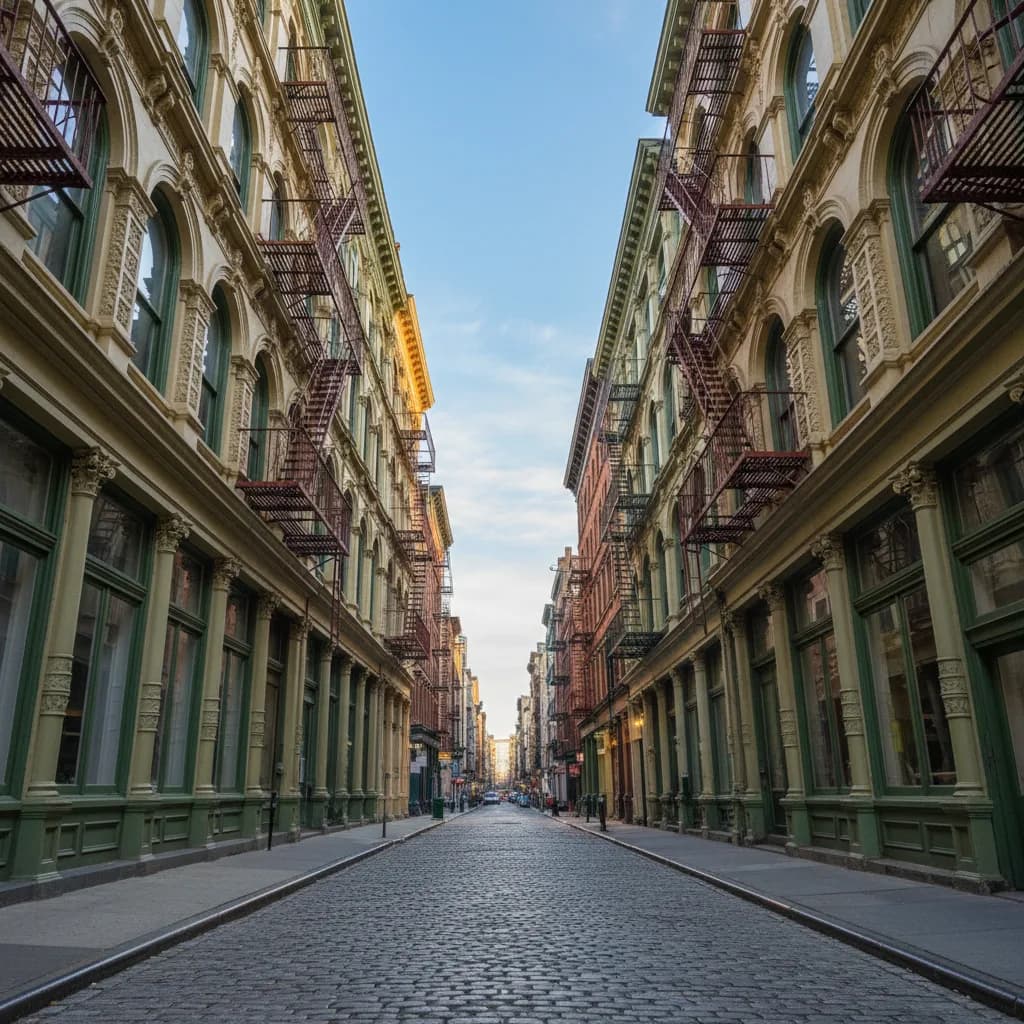
Reading the Facades on Greene Street
Greene Street between Canal and Houston holds one of the densest runs of cast-iron architecture anywhere, which is a large part of why the SoHo–Cast Iron Historic District was designated in 1973. Walk the cobblestones slowly and tilt your head back. The building nicknamed the King of Greene Street, at 72–76, shows off a five-story Corinthian front, while the Queen of Greene Street sits further south at 28–30. Iron was cast to imitate carved stone, so tap a column gently and you will hear the hollow ring of metal instead.
The Haughwout Building as a Warm-Up Stop
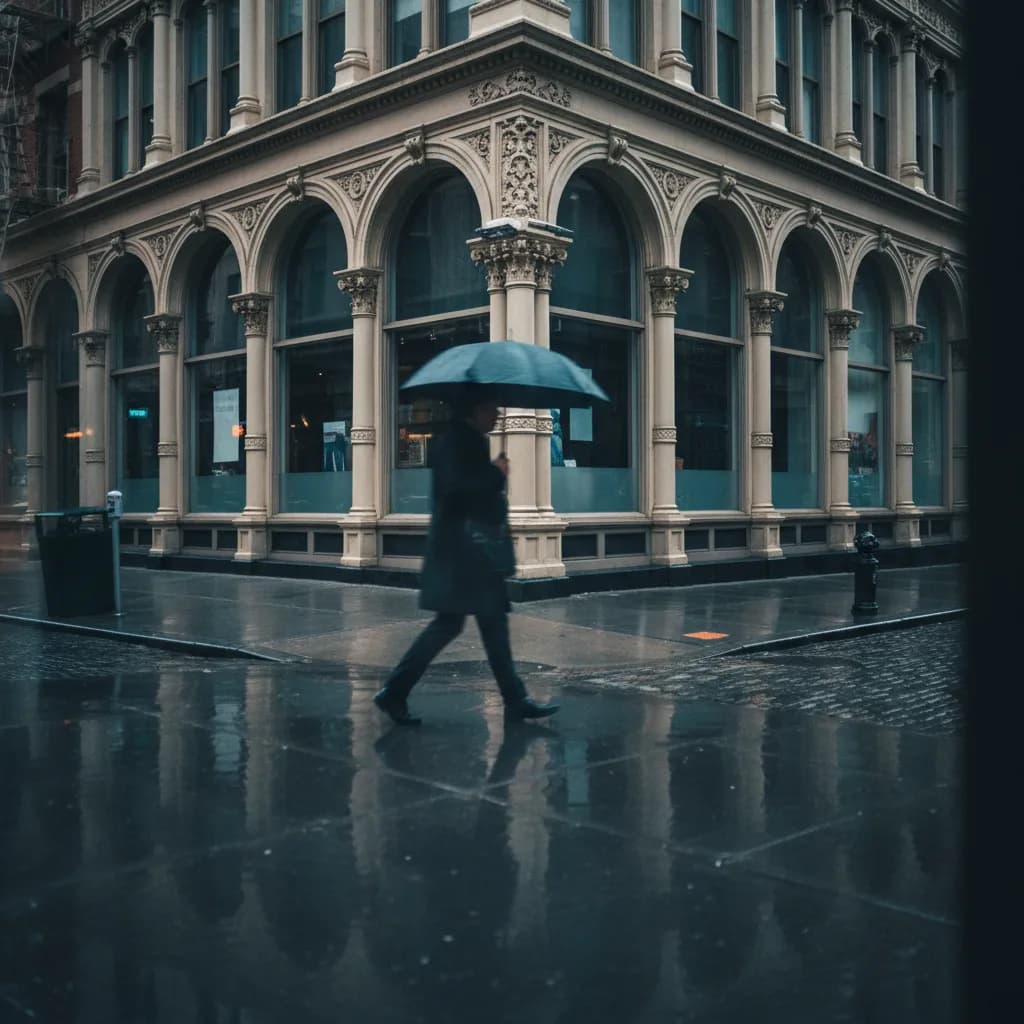
At the corner of Broadway and Broome Street, the Haughwout Building is worth a pause before you leave the neighborhood. Finished in 1857 for a seller of china and glassware, it was the first commercial building to install a passenger elevator from Elisha Otis, an invention that made the later skyline physically possible. That makes it a fitting first stop on a walk that ends high above the river. Stand across Broadway rather than beneath it: the repeating arched windows read best from the opposite curb, especially when rain darkens the pale facade.
Walking South Toward City Hall
From Broome Street, follow Lafayette Street south until it bends into Centre Street, passing the courthouses around Foley Square. This stretch is not pretty in the postcard sense, but it is honest New York: lawyers carrying file boxes, jurors on lunch breaks, and food carts parked along the curb. Skip the temptation to cut through Chinatown on the way down if time is short, because the side streets there are slow going at midday. Keep heading for the Municipal Building, whose tall colonnade marks the point where you turn toward the bridge entrance near City Hall Park.
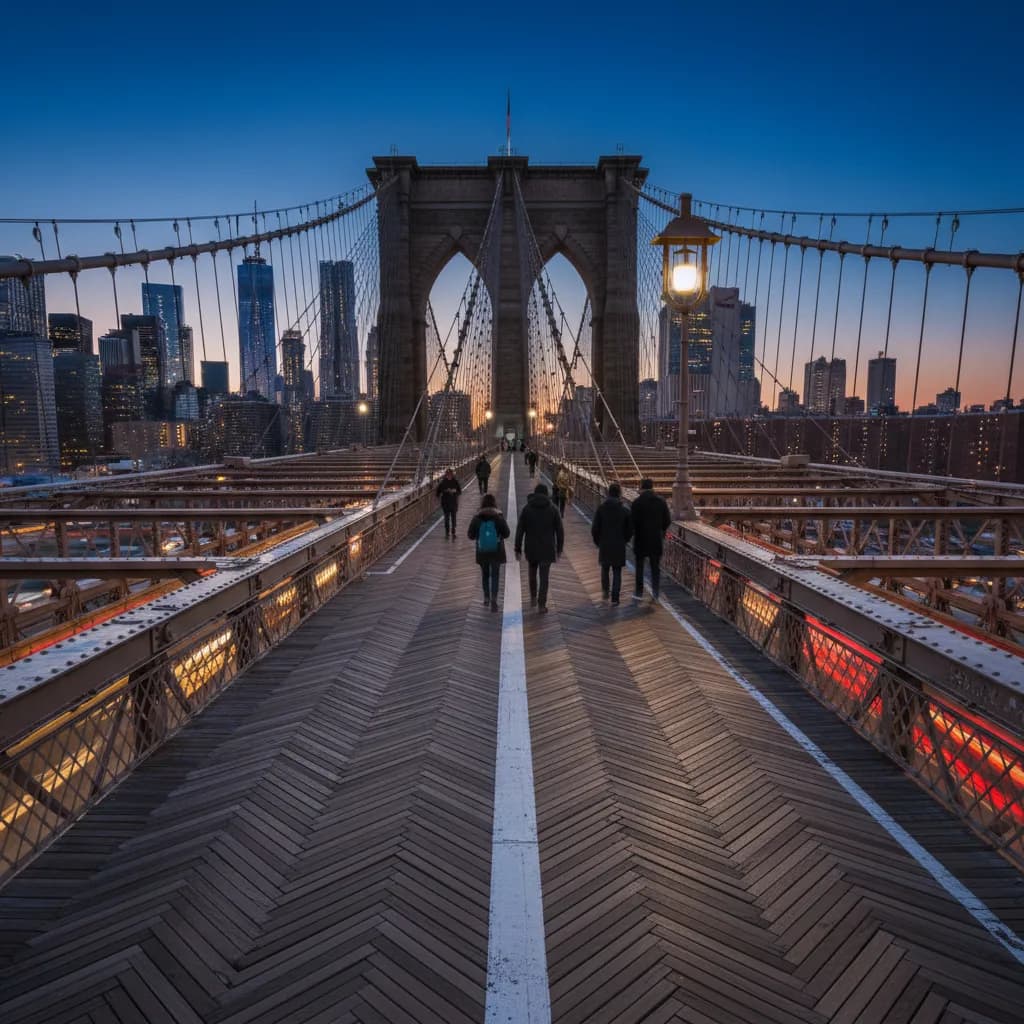
Climbing the Brooklyn Bridge Promenade
The Brooklyn Bridge opened in 1883, and its raised promenade runs above the car lanes, so you climb into open air with nothing but cables around you. Since a protected bike lane was added to the roadway in 2021, the wooden walkway has been reserved for people on foot. The first granite tower is the natural turnaround for a short trip; from there you can see the Statue of Liberty to the south, the Manhattan Bridge to the north, and the towers of the Financial District behind you. Continue to Brooklyn only if you have energy for the walk back.
If You Cross All the Way to Brooklyn
Committing to the full crossing puts you in DUMBO, where the payoff is a second set of views looking back at where you started. Head down to Brooklyn Bridge Park along the water for a ground-level panorama of the Lower Manhattan skyline, then walk a few blocks to Washington Street at Water Street, where the Manhattan Bridge appears framed between old warehouse buildings. That corner is crowded with photographers on weekends, so give it five minutes and move on. From DUMBO, the York Street F station gets you back to Manhattan without retracing the bridge.
When to Go and When to Skip It
The promenade is one of the busiest footpaths in the city, and between late morning and late afternoon on weekends it moves at a shuffle. Go before 8 am, when you share the planks with runners and a handful of photographers, or after dark, when the cables are lit and the crowds thin. A practical improvement arrived in January 2024, when the city banned vendors from the bridge, so the walkway no longer narrows around souvenir tables. Still, avoid sunny weekend afternoons entirely if you dislike crowds; the view does not change, but your patience will.
Who Shares the Route With You
Early on, the walk belongs to commuters crossing to jobs in Lower Manhattan, wedding photographers setting up shots near the towers, and runners logging miles before work. By evening the promenade fills with visitors who planned their whole trip around this crossing, plus locals heading home to Brooklyn Heights. The courtesy everyone expects is to stop only at the railings and keep the center moving. Selfie sticks are tolerated; tripods planted in the middle of the path earn glares from people trying to get to the office.
A Short Version for Tight Schedules
Not everyone has two hours. A compact plan is to walk Greene Street from Houston down to Canal, which takes about fifteen unhurried minutes, then hop on the 6 at Spring Street to Brooklyn Bridge–City Hall, the station beside the bridge entrance. That cuts the flat walk and leaves your energy for the climb. Turn back at the first tower and you can return to SoHo for dinner within ninety minutes of starting, having seen both the neighborhood's best street-level detail and one of the most recognizable river views anywhere.
Asking Karpo to Shape the Walk
If you are deciding between the full walk and the shortcut, describe your afternoon in the Karpo APP the way you would text a friend who knows Manhattan: how much time you have, whether you are wearing comfortable shoes, and where you want to end up. Karpo can suggest an order that fits, along with a place to eat near where you finish. It does not track crowds or weather in real time, so use what you see on the street to decide whether the promenade is worth the climb today.
Practical Notes Before You Set Out
Wear flat, grippy shoes, because Greene Street's Belgian blocks are uneven and the bridge planks have gaps. Carry water in summer; neither the cobblestones nor the promenade offer shade, and the bridge has no fountains. In winter the wind on the span can be bitter, so add a hat even if SoHo felt mild. Keep to the right on the promenade and watch for the line separating walkers going in different directions. If it starts to rain, the cast-iron half of the route still works, since many buildings have deep doorways you can wait in briefly.
Ask Karpo for more information.
Keep reading
- Upper West Side Free Indoor Weekend Plan Finder for Music
 Astoria Free Indoor Weekend Plan Finder for Visiting Parents
 Williamsburg Free Indoor Weekend Plan Finder With Kids