 Lower East Side Axe Throwing Group Night Picker: Bride Crew
Sports Social
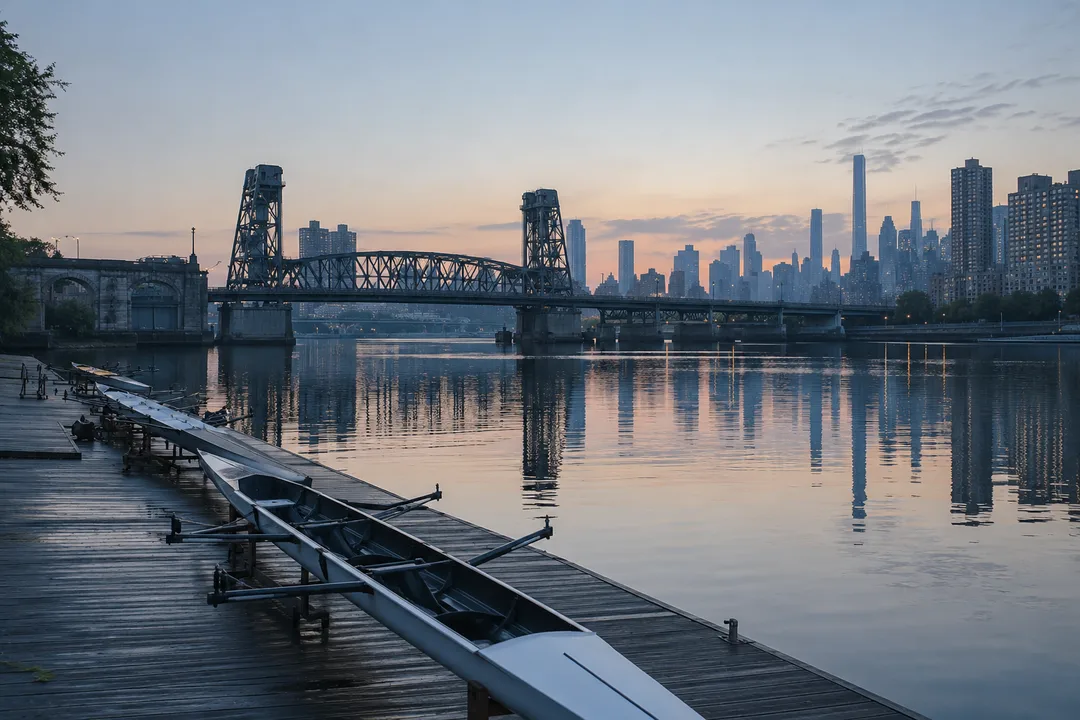
Rowing Studio in Harlem: Dawn Sessions at Row New York
Row New York launches from 3579 Harlem River Drive with free youth rowing and calm dawn water; arrive early for quiet dock time and coaching.
Row New York’s Manhattan rowing base is the Peter Jay Sharp Dock at 3579 Harlem River Drive, New York, NY 10034. The organization describes its rowing, wellness, and academic programs as free for New York City young people, so this is a community rowing studio rather than a drop-in boutique gym. In 2026, the dock remains a working launch point where student crews carry shells to the river, learn the catch, and practice moving together. The first thing you notice is the water: a narrow urban channel, bridges above it, and enough open space for a boat to find its rhythm before the city fully wakes.
Getting to the Dock
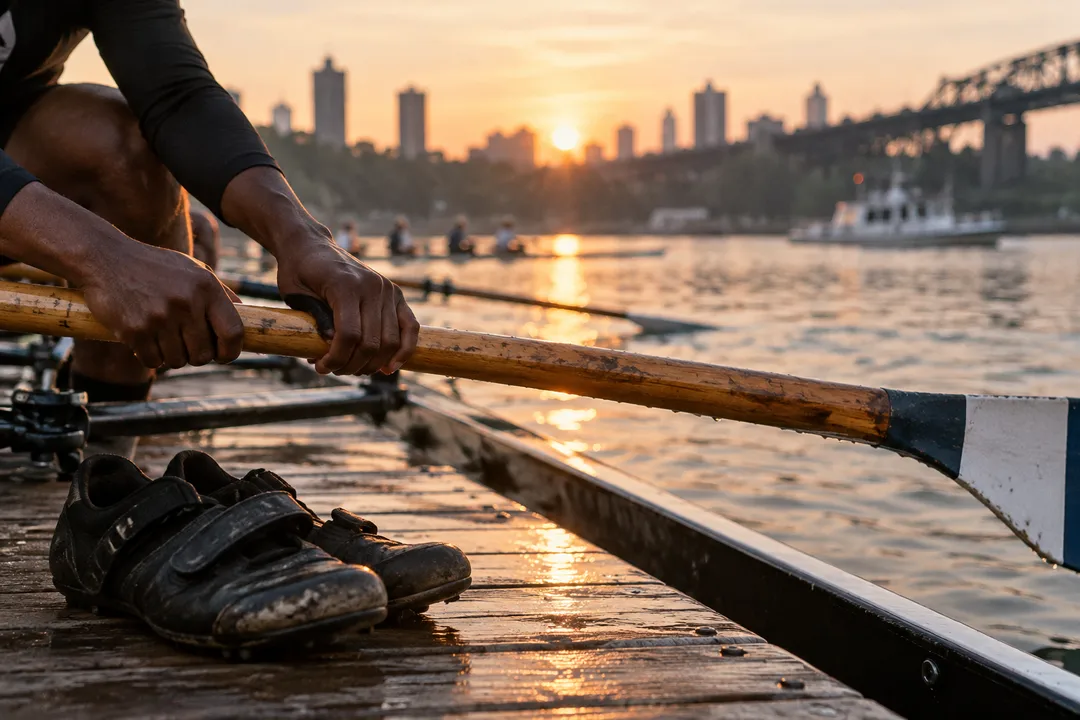
The Manhattan program is built around progression. A beginner starts by learning how the shell responds to a small change in blade angle, then adds leg drive, body swing, and a controlled finish. Coaches can see every seat from the dock, which makes the first session feel deliberate rather than chaotic. The unspoken rule is to listen when the launch area is busy; one person steadies the boat while another steps in, and oars stay parallel until the coxswain calls for movement. That choreography is why a rowing studio feels different from a room of individual cardio machines.
How the Session Works
Dawn is the most revealing time to visit. The river is flatter, the light catches the wake behind a shell, and the Harlem River Drive traffic has not yet filled every background sound. Row New York schedules its programs by cohort, so the practical move is to arrive with enough time to check in, stow a bag, and help carry equipment. There is no useful version of arriving as the boat is pushed off. Ten quiet minutes on the dock lets a new rower watch how the crew lines up and where the coach wants each person to stand.
When to Arrive
The workout itself alternates technical pieces with short efforts. Expect pauses to reset the boat, then a sequence where all eight rowers press together. The satisfying part is not a single sprint; it is the moment the shell runs silently after the drive. Coaches often call attention to the finish and recovery because rushing the slide makes the boat check. Bring layers that can move, shoes that tie securely, and water in a bottle that will not roll under a seat. A towel is useful, but loose headphones are a nuisance around shared equipment.
What the Coaches Watch
Row New York’s story is central to the experience. Its mission connects rowing with mentorship and academic support, and the website highlights student-athletes earning medals while preparing for college and careers. That changes the atmosphere: the boathouse has the focus of a team practice, but it is also a place where a first-time participant is expected to learn. You may see a younger athlete comparing split times with a teammate, a coach explaining why a boat stalled, and a volunteer sweeping the dock before the next launch. Those details make the site feel lived-in.
The People and the Place
There is no café counter or retail wall to distract from the river. Food is something to handle before or after the session, and a simple breakfast in nearby Harlem works better than trying to eat on the dock. If you need a short walk after rowing, follow the river-side paths toward Highbridge Park and pause near the stone arches. The neighborhood route is a useful cool-down because it keeps the morning quiet while adding a view of the bridges that framed the practice.
A Walk After Rowing
For a first visit, ask about the program level before you plan your day around a particular boat. Row New York serves different ages and experience levels, and the right fit depends on the current cohort rather than a universal class menu. The organization’s public-facing contact pages list the Manhattan dock and its office at 110 W 40th Street, Suite 602, New York, NY 10018. Use the dock address for arrival and the office address only for correspondence; They are not interchangeable meeting points. The honest limitation is that this is not a casual treadmill-style studio where you can walk in for a single unstructured hour. The rowing is coached, scheduled, and tied to a community program. That is exactly why the setting works for someone who wants instruction, teamwork, and a real boat instead of a screen-led workout. If you need an independent indoor session with no cohort commitment, choose a commercial fitness club instead. If you want to learn how an urban crew actually moves, the dock is the stronger choice. After practice, take the nearby river walk slowly rather than rushing straight to the subway. The changing angle of the shell racks, the sound of oarlocks, and the train crossing overhead give the session a clear ending. A small notebook can help you record one technical cue from the coach, such as keeping the hands level on recovery. Returning with that single cue in mind is more useful than chasing a personal-best number on day one. Practical notes: Row New York is at 3579 Harlem River Drive in Manhattan, and its official site identifies the dock as the Peter Jay Sharp Dock. Programs are organized by cohort and include rowing, wellness, and academic support; The organization says those services are free for NYC youth. Wear flexible layers, leave time for equipment handling, and treat the dock’s launch sequence as part of the class. For a dawn rowing studio experience with real water, team rhythm, and a clear mission, this is the Manhattan option worth planning around. A useful way to remember the Manhattan lesson is to watch the boat rather than the clock. The hull tells you whether the crew is connected: a clean run feels quiet, while a rushed recovery makes the bow check. After practice, write down the one correction that changed that feeling. The next visit becomes a continuation instead of a reset. The dock also teaches city geography. Bridges, traffic, and river walls are not scenery in the abstract; They are landmarks that help a crew hold a line and understand how far it has moved. That practical awareness makes an urban rowing studio memorable long after the muscles recover. Write down one technical cue before leaving; the quiet river makes it easy to remember what changed.
Ask Karpo for more information.
Keep reading
- Lower East Side Axe Throwing Group Night Picker: Bride Crew
 West Village Axe Throwing Group Night Picker: Quiz Rivals
 Carroll Gardens Axe Throwing Group Night Picker: Parents Off