 SoHo Tailor Alteration Shop Finder for Sample Sale Finds
Neighborhood Guides
NYC Route Stopover Planner: Books Before Your SoHo Arrival
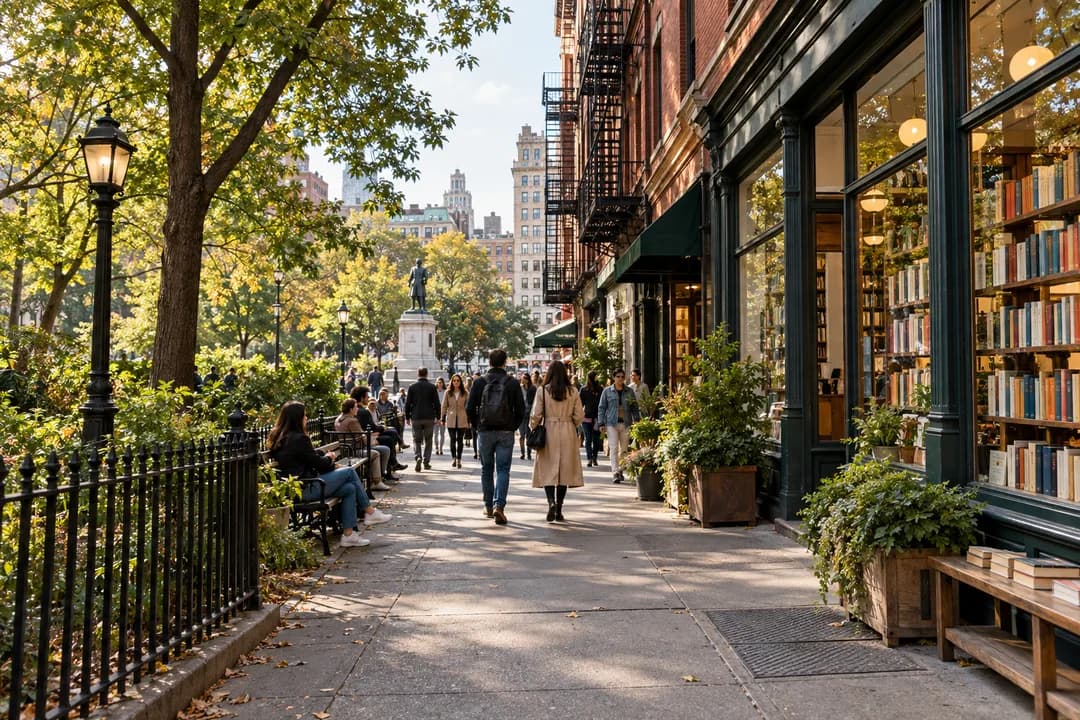
Use a forty-five-minute Union Square pause for books and pastry on your way from Williamsburg to SoHo, with one priority and a clear departure time.
A Williamsburg-to-SoHo trip can include a bookshop visit and a pastry without becoming an afternoon of wandering, provided you choose which part matters most. This NYC route stopover planner uses a forty-five-minute allowance around Union Square as a decision exercise. The aim is a satisfying browse with something good to eat, followed by a deliberate continuation to SoHo. Your budget starts when you interrupt the journey, not when you finally open the bookshop door, and ends when you are ready for the next leg.
Define the browse before choosing a shop
Think about what you would enjoy finding during a short visit. A table of recent fiction, a shelf of architecture books, or a children's picture book gives the browse a direction. “An interesting bookstore” leaves too much room for comparison once you arrive. Tell Karpo the subject you want and whether you hope to buy or simply look. A short stop is more rewarding when you enter knowing which section could make you forget the clock, then set a limit around it.
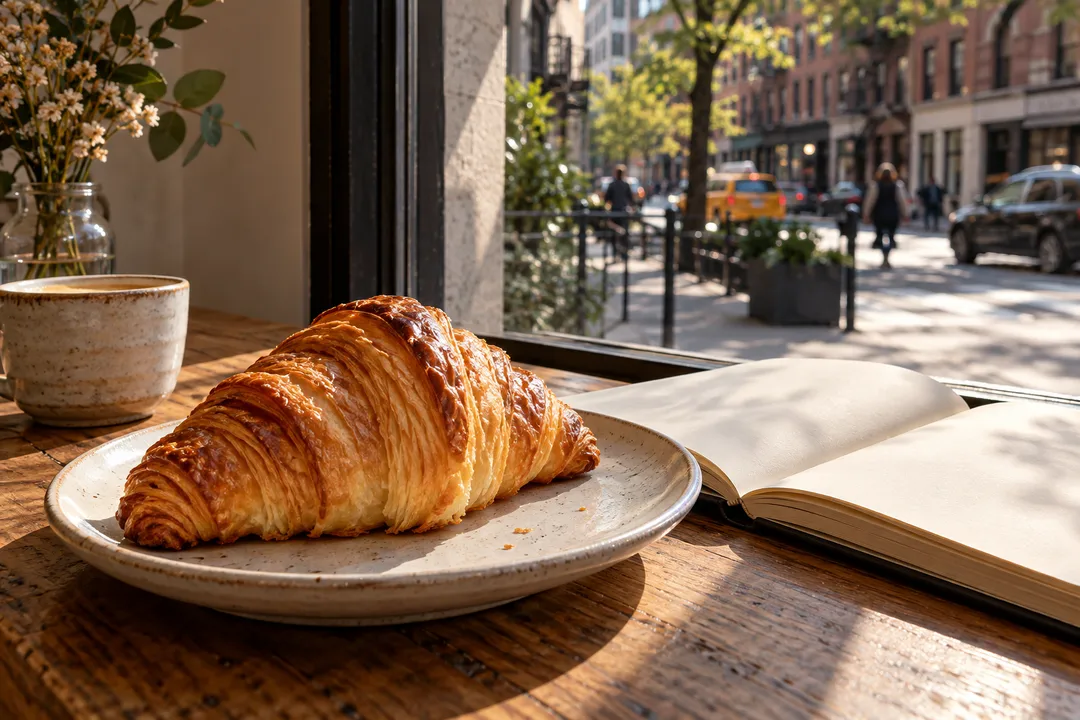
The pastry should have a similarly clear role. It can be the snack you eat before browsing, the thing you take onward, or the reason you sit down after a purchase. Decide whether you need a table. A seated cafe visit consumes a different kind of time from buying a portable pastry. If reading in a cafe is the main pleasure, make that the main stop and reduce the bookstore visit to a targeted look rather than trying to give both equal space.
Understand where the L train takes you
The MTA identifies the L as the 14 Street–Canarsie Local, and its line map includes 14 St–Union Sq. That makes Union Square a possible interruption to an L journey, not a direct L destination in SoHo. Plan the onward leg separately according to your actual SoHo endpoint. A meeting on the eastern side of the neighborhood and a shop on its western edge can lead to different choices. Keep “SoHo” as a description of the destination, then use its precise location for routing.
Read the transfer information with the whole party in mind. The MTA's Union Square entry distinguishes access by line, so a familiar interchange name is not enough to establish a step-free connection for every route. If stairs are a constraint, put that ahead of your preferred book genre in the request. A book-and-pastry detour should fit the journey you can comfortably make. There is no benefit in choosing a tempting shop whose approach makes the remaining trip unnecessarily difficult.
Spend the forty-five minutes deliberately
One illustrative split gives ten minutes to leaving and returning to the transit route, twenty to books, ten to a pastry purchase, and five to spare. It is an allocation you can adjust, not a claim about a particular store's service speed or walking distance. If your chosen entrances and crossings use more of the window, shorten the browse before you start. Protecting the time for your favorite activity works better than discovering at the counter that you have spent it on navigation.
Keep the bookstore and pastry choice within a compact loop. Two individually attractive places can make a poor pairing if visiting them sends you back across the same junction repeatedly. Ask for the order that reduces retracing, with the relevant station exit and onward connection included. Decide whether carrying a pastry bag would be awkward while browsing. That small preference can determine whether you eat first or buy food last, without requiring any claim about a shop's policies.
Give Karpo a request with a clear ranking
In Karpo APP, try: “I am taking the L from Williamsburg toward SoHo and can spend forty-five minutes around Union Square. Books are the priority, especially contemporary fiction. I also want one pastry, prefer a compact walking loop, and do not need a full meal. Suggest a pair that fits, with a shorter alternative.” Add the destination you must reach afterward. This is a request for a personalized suggestion, rather than a promise that any particular book or pastry will be available.
When reading the response, look for the reason behind the pairing. The bookstore should match your subject, the pastry choice should fit your desired pace, and the proposed order should respect your endpoint. Ask where the shop details came from if a suggestion depends on a particular collection or service. Do not treat a colorful description as evidence of stock. If finding a specific title is essential, that becomes a separate purchase question rather than the basis of a casual browse.
Let one stop win when the window shrinks
Suppose the first shop absorbs more time than expected. Choose between completing a second stop and enjoying the first one properly. If books were your priority, keep the browse and simplify the food to a portable item on the onward path. If the pastry was the real attraction, spend your unhurried minutes there and leave books for another day. Naming that preference in advance prevents the stopover from becoming two hurried errands that neither satisfy your curiosity nor provide a rest.
Use an actual departure time as the boundary. A timer can be a private reminder to finish your page, make the purchase, and move on. Leave a book you are considering with the bookseller only if you have agreed that arrangement with them. Avoid assuming a browsing visit gives you a reserved seat elsewhere or that a saved suggestion constitutes an order. Your plan is a sequence of choices, and each transaction remains something you make directly when you arrive.
Make room for a companion's different pace
If someone travels with you, agree on the kind of pause before stepping out. One person may love a deep shelf search while another wants a drink and a chair. Ask Karpo for a pairing that serves both interests without requiring either person to wait outside for most of the allowance. Set a clear meeting point within the chosen stop and keep the onward departure shared. A compact plan should reduce negotiation, rather than turning an interchange into an improvised separation.
Traveling with children changes the request again. Mention the age group, appetite, and whether a pushchair is involved, then favor a shorter browse with an easy finish. Do not count on a cafe providing changing facilities or a bookshop offering seating unless a source supports it. Those details can be useful, but they should enter the plan as established features. When they are unknown, design the pause around fewer needs instead of filling the gaps with assumptions.
Practical notes before continuing to SoHo
Keep your purchases small enough to carry comfortably for the rest of the day. A delicate pastry and a heavy art book call for different handling, so decide which one you want to carry onward before buying both. Use the MTA's route information for the final transit choice and orient yourself toward the destination entrance. An attractive detour is successful when its last movement makes sense, with your next stop still feeling easy to reach.
A useful final note has only the two chosen places, their preferred order, the latest departure, and the shortened version. Open Karpo APP with your book interest, appetite, and destination to ask for that specific plan. Union Square is the organizing point for this scenario, while the enjoyable part remains personal: a shelf worth looking through, a pastry you actually want, and enough attention left to appreciate arriving in SoHo.
Ask Karpo for more information.
Keep reading
- SoHo Tailor Alteration Shop Finder for Sample Sale Finds
 Williamsburg Tailor Alteration Shop Finder for Bike Riders
 Upper West Side Tailor Alteration Shop Finder for Kids