 SoHo Tailor Alteration Shop Finder for Sample Sale Finds
Neighborhood Guides
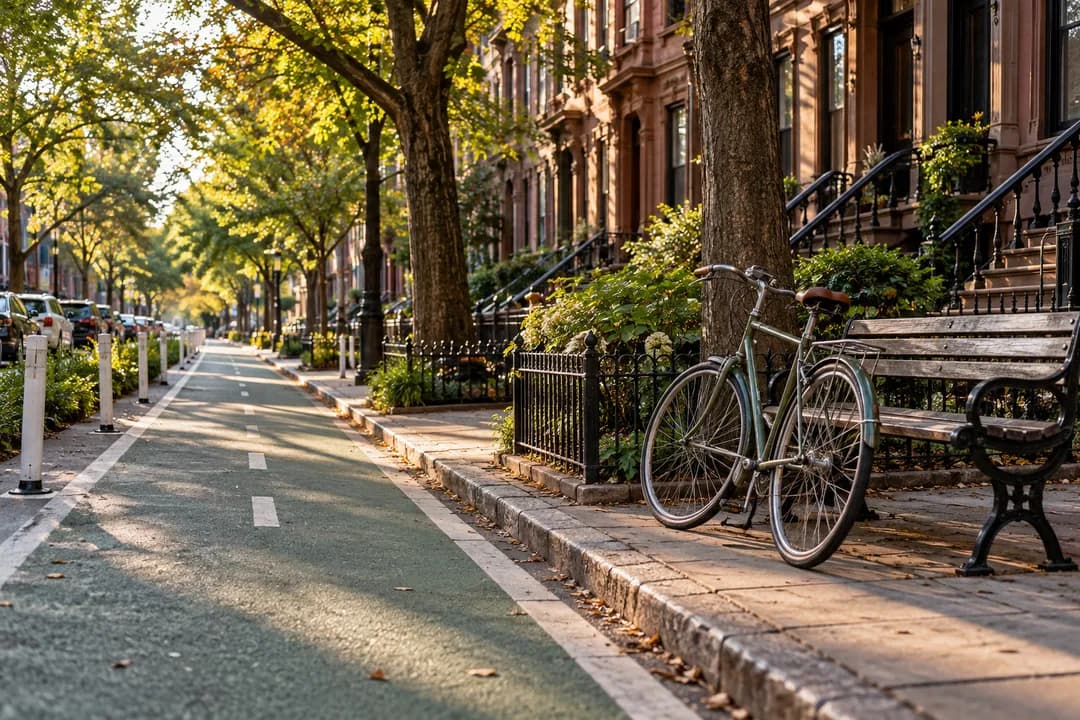
Brooklyn Route Stopover Planner: Shade Along Your Bike Ride
Shape a Prospect Park to DUMBO ride around short rests and water, with a route you can assess separately from any appealing place to pause along it.
A ride from Prospect Park toward DUMBO needs a different kind of pause from a walking tour. You want somewhere to get off the bicycle, drink water, and rest briefly without turning the commute into a chain of detours. This Brooklyn route stopover planner begins with the riding route, then considers shade and hydration along it. A good-looking bench is only useful when you can reach it comfortably, leave the moving traffic space, and resume your intended direction without adding a difficult crossing.
Describe the ride before asking for places
Choose the starting point you will actually use around Prospect Park and the destination you need in DUMBO. Those are areas, not single coordinates, and their names alone cannot define the route between them. Add the time you want to arrive and the kind of bicycle you ride. A heavy cargo bike, a folding bike, and a standard city bicycle create different practical needs when turning, parking, or walking a short section beside the bicycle.
State your comfort level directly. You might prefer separated bicycle facilities, want to avoid steep approaches, or be happy with a longer route that feels easier to navigate. These preferences belong ahead of the request for scenery. A stopover suggestion should not quietly overrule them because a waterfront photograph is appealing. Make the riding route an explicit selection task, with any proposed rest considered only after you understand how the streets and crossings connect.
Treat protection as a route question
Do not assume there is a continuous protected connection simply because both ends are popular cycling destinations. Examine the proposed segments on a bicycle map and use official street or traffic information for route decisions. Distinguish separated facilities from painted lanes and mixed traffic wherever those differences appear in your chosen routing source. This article does not prescribe a turn-by-turn path. It sets up a process for choosing pauses alongside a route you have assessed for your own riding ability.
A short detour can introduce a turn or crossing that matters more than its distance. Ask why a proposed bench belongs on your side of the journey and whether reaching it means doubling back. If the suggestion cannot explain the approach clearly, leave it out of the commute plan. A slightly less scenic rest on the route you understand can be more useful than a destination that requires you to improvise several unfamiliar movements while tired.
Define what shade means for your break
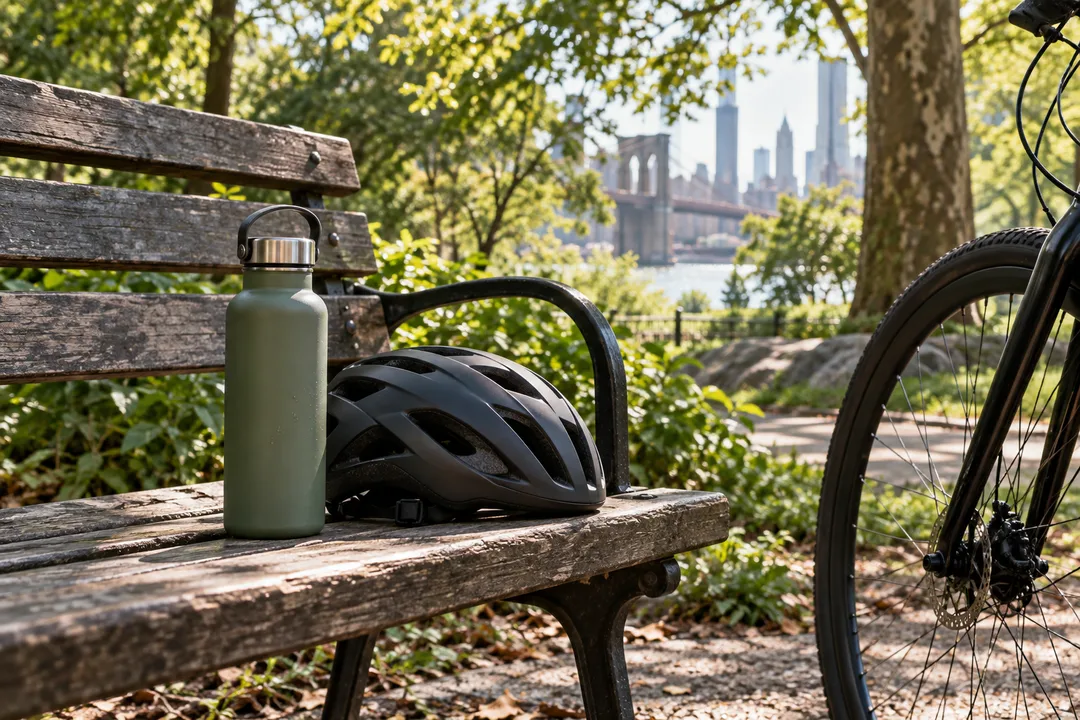
Decide whether you need shade for a brief drink or a longer seated recovery. A tree canopy, an awning, and a bench beside a tall building offer different kinds of shelter, and photographs cannot establish their conditions at your arrival time. Ask for candidate settings with visible vegetation or other relevant features, then judge the actual shade when you get there. Treat a shaded bench as a preference to assess, rather than a seat that has been held for you.
Put the bicycle in the picture too. You need room to stop without obstructing someone else's movement, and you need a way to keep the bike secure. If you would rather stay beside it, say so. If you plan to lock it while buying a drink, bring the lock and choose an appropriate place where that is permitted. The presence of a bench does not establish a bicycle rack, permission to attach a lock, or a suitable space for a cargo bike.
Carry the water that makes stops optional
Build the ride around water you already have, then ask about extra drink purchases only as a convenience. A planning suggestion should not be your sole basis for expecting an outdoor fountain to work. If you want a refill, request a source that establishes the facility and keep the ride viable without it. The same applies to a shop purchase: a business that sells drinks may not provide a public refill point or welcome a bicycle inside.
For a quick pause, reduce the handling you need to do. Put the bottle somewhere you can reach after you have stopped, keep small valuables together, and choose food that will not require a balancing act. These are ordinary preparation choices, but they shape the kind of suggestion that works. Someone who needs to buy a drink, find a seat, and park securely is requesting a more involved stop than someone who wants two minutes beside the bike with their own water.
Use Karpo to compare rest ideas
Open Karpo APP and try: “I am cycling from the Prospect Park area to DUMBO. I want to compare short rest ideas beside my chosen route, favoring shade and room to stand with my bike. I have water with me, prefer fewer difficult crossings, and want one optional drink purchase. Ask me for the starting entrance and destination.” Supply those endpoints and the route you are considering. This invites a conversation around your needs without implying a live cycling-navigation or hazard-monitoring service.
Ask for the suggestions in order along the proposed ride, with the reason each would help. One might favor a seated rest, another an uncomplicated drink purchase. You do not need to visit both. Ask which one to drop if the ride takes longer than expected, and keep the comparison tied to your actual destination. Avoid adding a final scenic stop beyond that destination merely because it looks attractive in a list of nearby places.
Pause without making the sidewalk a second lane
When you reach a candidate rest, stop in a suitable place before evaluating it. If approaching the bench requires moving through a pedestrian area, walk the bicycle and make room for people using that space. Do not weave through walkers to preserve a timetable. A rest that cannot accommodate your bicycle comfortably is a reason to move on by the route you already understand, not a reason to turn an occupied walkway into part of your cycling line.
Give the pause a purpose and an endpoint. Drink, settle anything loose on the bicycle, and decide whether you feel ready for the next section. If you are making a purchase, keep it within the amount of discretionary time you set before leaving. There is no obligation to add a scenic photograph or a second snack. The planned rest should support the ride you intended to take, especially when DUMBO is an appointment rather than an open-ended destination.
Practical notes for this Brooklyn trip
Keep the route and the stop suggestions in separate notes so that dropping a pause does not erase your way forward. Write down the starting entrance, the destination, the rest you would prefer, and the alternative of continuing. If riding with someone, agree whether the pause is for hydration, a seat, or food. A shared purpose prevents one person's two-minute drink from unexpectedly becoming another person's shopping stop.
Ask Karpo APP for a small comparison that reflects your bicycle, preferred street conditions, and available time. Evaluate the actual approach and shade when you reach each optional place, using the route information you trust for the riding itself. The result should make a familiar question easier to answer: where can I pause without making the rest of this ride harder? One useful rest and a straightforward continuation are enough to make the stopover worthwhile.
Ask Karpo for more information.
Keep reading
- SoHo Tailor Alteration Shop Finder for Sample Sale Finds
 Williamsburg Tailor Alteration Shop Finder for Bike Riders
 Upper West Side Tailor Alteration Shop Finder for Kids