 SoHo Tailor Alteration Shop Finder for Sample Sale Finds
Neighborhood Guides
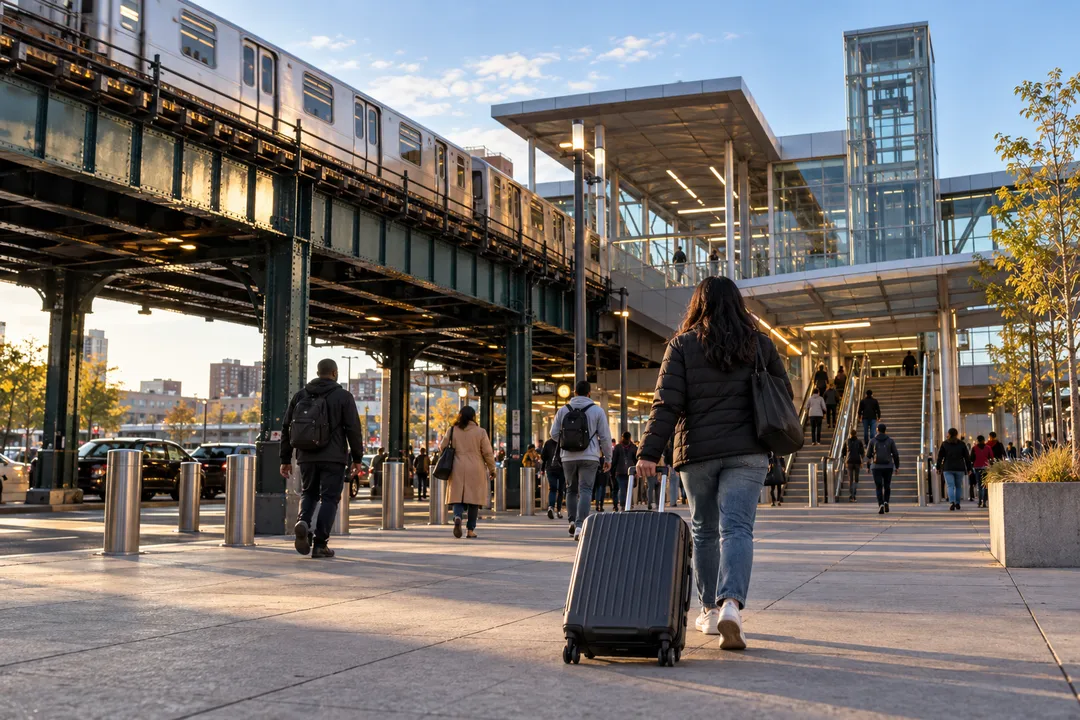
NYC Route Stopover Planner: Eat Before Your Jamaica Transfer
Build a forty-minute food break at Jamaica into your JFK journey, allowing for luggage, ordering and the return to your chosen LIRR train platform.
Landing at JFK hungry can make a simple transfer feel harder than it is. This NYC route stopover planner treats a forty-minute meal near Jamaica as an optional pause in an airport journey, with luggage and the onward train built into the decision. Start from the train you intend to take and work backward. A bowl you can eat comfortably is useful only if collecting it, finding a suitable place, and returning to the platform all fit the time you have chosen to spend.
Establish which part of the journey is fixed
Separate an arrival with flexibility from an appointment with a deadline. If you are simply traveling to your hotel, you might choose a later onward train to make space for food. If someone is meeting you or you have a timed commitment, that flexibility may disappear. Put the destination and the arrival requirement in the request before discussing cuisine. Forty minutes is a planning window for this article, not an assurance that any airport connection or meal can be completed within it.
JFK's official AirTrain information identifies connections to public transport at Jamaica and says travelers can connect there to the Long Island Rail Road. That is the transfer context for this scenario. Keep airport transport information with the airport operator and train selection with the MTA. A food recommendation has a different job: helping you decide whether a stop belongs in the available gap. It should never become the evidence that your chosen train is reachable or that an airport service is operating as planned.
Count the luggage before choosing the lunch
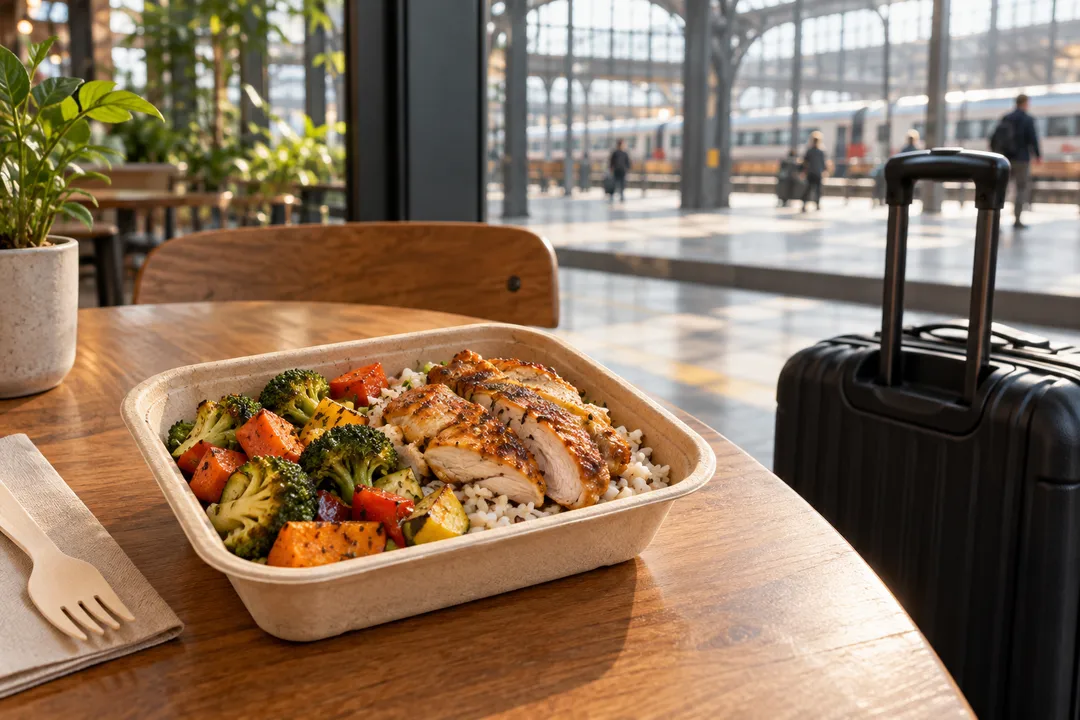
A backpack allows more freedom than two checked cases and a tired child. Tell Karpo how much you are carrying, whether the bags roll easily, and whether you can manage stairs. Those are useful constraints without requiring you to share flight or passport details. If you are traveling with someone, include the needs of the slower person. A meal plan should work for the whole group, rather than assuming everyone can keep pace with the person holding the navigation.
Avoid building the pause around leaving a bag somewhere. A restaurant table is not luggage storage, and a planning suggestion does not establish a secure place to put possessions. Choose a format you can manage while keeping your belongings with you. If the bag makes a crowded counter uncomfortable, ask for a different style of stop or continue to the destination before eating. Giving up the detour can be a sensible response to the journey you actually have.
Decide whether you need a seat or just food
Name the meal's practical purpose. You might want something warm after a flight, a substantial vegetarian lunch, or a small snack that will not be awkward on the next leg. Include any dietary requirement clearly. A category such as “a quick meal near Jamaica” is too broad to tell whether a sandwich, soup, or plated lunch will suit you. The most useful request explains how you want to eat as well as what you enjoy.
If a seat is essential, treat it as a selection criterion rather than an assumption. Ask for suggestions with evidence of the seating arrangement, and keep a fallback that does not depend on obtaining a particular table. Do not read a business's photographs as a live table count. Likewise, a menu description cannot establish how long a dish will take to prepare. The final decision depends on the situation you see when you arrive and the deadline you have already set.
Build a meal allowance backward from departure
For illustration, reserve twelve of your forty minutes for leaving and returning to the station route, eight for ordering and receiving food, fifteen for eating, and five as spare time. These numbers are a sample allocation, not researched timings for a particular vendor or entrance. Replace them with the route and pace that fit your baggage. If the approach alone would consume most of the allowance, remove the stop instead of pretending the eating time can absorb every delay.
Set the latest moment you will leave the food stop. Include the walk to the correct platform and any navigation you still need inside the station. Do not use “back at Jamaica” as the finish line if your real task is boarding an onward train. Identifying the destination station also matters: an LIRR choice should fit the place you intend to reach, rather than the first service whose departure appears convenient. Food is the optional part of this sequence.
Make a focused request in Karpo APP
Try this message: “I am arriving from JFK through Jamaica and want to eat before my onward LIRR journey. I can allow forty minutes, have one large rolling case, and want a warm vegetarian meal with seating. Suggest up to two nearby possibilities and explain which is simplest with luggage.” Add your destination and train plan when you have chosen them. The message asks for a comparison based on your preferences, without implying that Karpo has reserved a table or tracked your flight.
Ask the response to separate business facts from planning advice. A sourced menu item is different from an estimated duration, and a place that advertises seating does not promise an empty chair. Prefer an answer that explains the walking burden and the reason a format fits your situation. If the recommendation depends on information that is missing, remove that dependency from the plan. You can choose a simpler meal without inventing an assurance about service speed or accessibility.
Use a queue decision before committing
At the food stop, compare what you can see with the remaining allowance. A line, a crowded dining area, or an unfamiliar ordering system can change the decision. If the plan no longer works, choose the already-defined alternative: a portable item, a smaller purchase, or eating at the destination. This is easier when you have decided in advance what counts as a worthwhile meal. Hunger should not turn the detour into an open-ended search across several businesses.
After ordering, keep the departure boundary intact. If a purchase cannot fit the window, discuss your options directly with the business rather than relying on a planning app to alter the transaction. Avoid selecting food that needs more space or equipment than your journey provides. A container of soup and a rolling suitcase are a different combination from a wrapped sandwich and a shoulder bag. Think through the actual handling before the payment, when changing your mind is still straightforward.
Practical notes after a flight
Keep your transit information, destination, and chosen food suggestion easy to retrieve. Your phone battery has more jobs than finding lunch, so a short written note can reduce repeated browsing. Include the stop's identity, the reason you picked it, and the return deadline. Keep the station route legible enough to follow without balancing a meal and an extended conversation on the sidewalk. The pause should simplify the airport journey rather than add another set of decisions.
When you open Karpo APP, say whether the forty minutes are flexible, how much luggage you have, and what meal would make you feel ready for the city. Use official transport information to choose the train, then decide whether the food stop fits around it. An adequate stopover plan might contain a single suggestion and an instruction to continue if it feels impractical. Its value is a comfortable meal that respects the transfer, not a longer list of places you will never visit.
Ask Karpo for more information.
Keep reading
- SoHo Tailor Alteration Shop Finder for Sample Sale Finds
 Williamsburg Tailor Alteration Shop Finder for Bike Riders
 Upper West Side Tailor Alteration Shop Finder for Kids