 SoHo Tailor Alteration Shop Finder for Sample Sale Finds
Neighborhood Guides
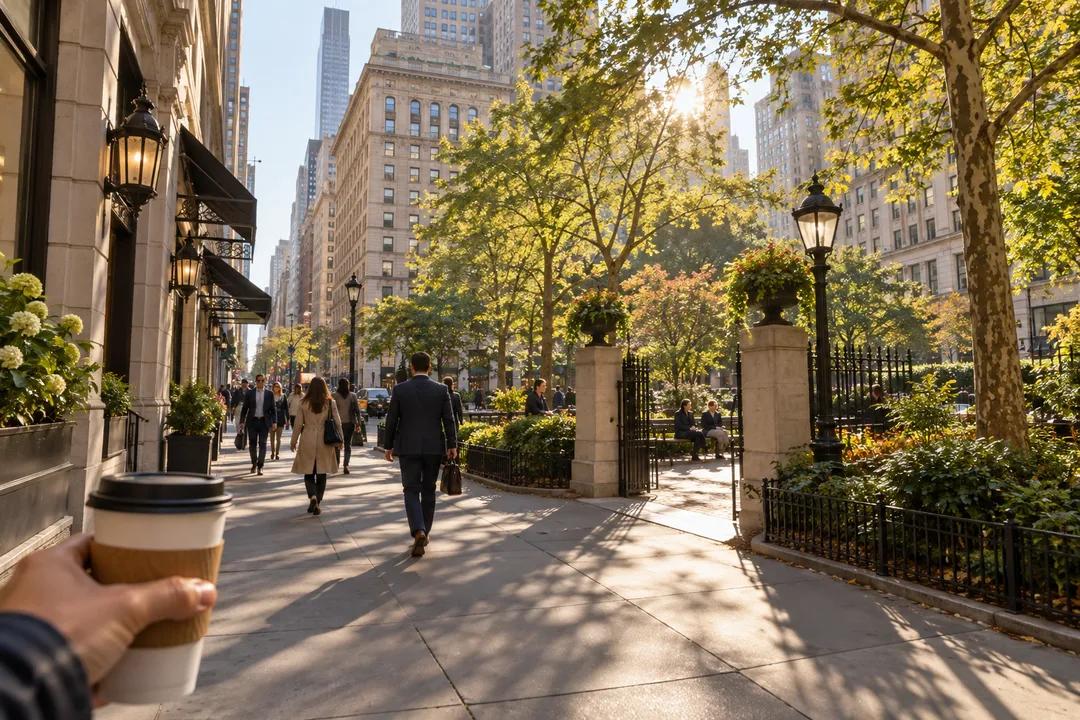
NYC Route Stopover Planner: 30 Minutes Between Meetings
Plan a thirty-minute coffee and park pause between Midtown and Wall Street meetings, with a firm return deadline and a simpler option if time runs short.
A half hour between a Midtown meeting and a downtown appointment sounds generous until you spend it choosing a subway exit. This NYC route stopover planner starts with a smaller ambition: one coffee, a quiet outdoor pause, and a clear return to the journey. Treat thirty minutes as your personal allowance for the entire detour, including leaving the station and getting back inside. A pleasant break should leave you composed for the next conversation, with neither a second purchase nor a complicated neighborhood tour attached.
Decide what the break must accomplish
Begin with the thing you actually need. If you are hungry, coffee alone will not solve the problem. If you have already been talking for three hours, a crowded cafe may feel like another meeting. Write down one priority in ordinary language: a good espresso, somewhere to sit outdoors, or ten minutes without conversation. Add a secondary preference only if it supports that priority. For this trip, a takeaway drink and a short park pause make a coherent pair because you can separate buying from resting.
Put the downtown appointment's actual entrance in your notes. Wall Street can describe a station, an office address, or a broader destination, and those are different endpoints for a time budget. Your destination is the building door, rather than a neighborhood label. Similarly, start the clock at the end of your Midtown commitment, including the walk from its lobby. This prevents a thirty-minute break from quietly borrowing the time already assigned to reaching either station.
Keep the subway corridor as the backbone

The MTA's 4 line map lists Grand Central–42 St, 14 St–Union Sq, and Wall St on the route. That gives this planning exercise a useful backbone without making every stop a candidate. Choose an intermediate station only when its exit and return make sense for your destination. Do not add a local-train transfer merely because a photograph looks inviting. Use the MTA route information for service decisions and the neighborhood shortlist for the optional pause, keeping those two jobs distinct.
Before comparing coffee choices, decide whether you are willing to exit and pay for another subway entry. Include that consequence in the decision rather than discovering it after you reach the sidewalk. An outdoor interlude is an optional addition to your trip. If preserving a single subway entry matters more than having fresh air, make the pause before entering at Midtown or after arriving downtown. The stopover planner should be allowed to recommend a different point in the journey when it better matches your priorities.
Give each minute a job
An example allocation is six minutes to reach the counter, seven to order and receive a drink, eight to sit, and nine to return to the transit journey. These are planning allowances, not measured walking or service times. They show why a short detour has little room for browsing several cafes. Replace the example with your own walking pace, the station's relevant exit, and the amount of seated time that would make the interruption worthwhile.
Choose a leave-by time before ordering. If the queue consumes the coffee allowance, take the simplest acceptable drink or use the no-purchase alternative. Do not move the deadline each time another small delay appears. A visible line is evidence you can act on, while an optimistic guess about how fast the barista works is not. The useful comparison is between a short, satisfactory pause and the uninterrupted journey, rather than between an ideal cafe visit and every cafe nearby.
Ask for a small, usable shortlist
Open Karpo APP and describe the trip as a request: “I am going from Grand Central toward a Wall Street meeting. I have thirty minutes for a detour, want specialty coffee and a quiet outdoor seat, and would rather skip the break than add a transfer. Suggest two possibilities and explain the tradeoff.” Include your meeting time and maximum comfortable walking distance. You are asking for conversational discovery and planning help, not reporting a reservation or requesting a guaranteed arrival.
Ask each suggestion to identify the reason it belongs on your route. A useful answer distinguishes the coffee choice from the seating choice, states which information supports them, and makes uncertainty visible. If a suggested bench or cafe cannot be grounded in a source, leave it out of the final plan. A shortlist with one well-supported possibility is easier to use than a long list whose first task is another round of research on the pavement.
Compare the return, not just the approach
A cafe can be close to a station entrance yet awkward for the direction you need next. Consider the whole loop: exit, counter, seat, and the intended return entrance. Read the transit operator's station information when stairs or step-free access matter. Tell Karpo about a knee injury, wheeled bag, or slower walking pace at the start. Do not infer accessibility from a broad station name or a photograph of one entrance, because your practical route depends on the specific access point.
Quiet is a preference rather than an availability guarantee. Ask for the kind of setting you find restful, such as a planted outdoor space away from a busy junction, and decide what you will do if it feels crowded on arrival. You can carry the drink to another suitable nearby place only if that move fits the same deadline. Otherwise, a brief standing pause or a direct continuation may serve the original purpose better than searching for the perfect bench.
Build an exit rule you will follow
Use a simple decision at street level. If the chosen purchase and outdoor pause still fit the allowance, continue. If either needs a new detour, drop that part. For example, keep the coffee and omit the park, or keep a few minutes outdoors and omit the purchase. Avoid treating the combination as a package you must complete. Your preference order should make it possible to remove something without restarting the whole planning conversation.
The same logic helps when the meeting finishes late. Subtract the delay from your discretionary time first. Once the remaining window is shorter than your minimum worthwhile break, resume the direct journey. A route stopover planner is useful when it gives you permission to skip a stop as well as when it finds one. Preserving a calm arrival is a concrete benefit, especially when the next appointment has a fixed start and a security desk.
Practical notes for the meeting day
Keep a compact note containing the chosen stop, the intended station return, the leave-by time, and the fallback. Put the office entrance alongside them so that the final walk remains part of the plan. Carry the coffee only where it is appropriate, dispose of the cup before your meeting, and leave room for a lobby check-in. None of those steps requires a second itinerary. They turn a good suggestion into a break you can actually finish.
When you open Karpo APP, lead with the constraint that would disqualify a recommendation: no extra transfer, a maximum walking distance, or an absolute arrival deadline. Then describe the coffee and quiet you want. Use the MTA for the subway leg, and make the optional pause earn its place in the journey. The resulting plan can stay small: a grounded choice, a reason to choose it, and an easy way to continue downtown when your thirty minutes are over.
Ask Karpo for more information.
Keep reading
- SoHo Tailor Alteration Shop Finder for Sample Sale Finds
 Williamsburg Tailor Alteration Shop Finder for Bike Riders
 Upper West Side Tailor Alteration Shop Finder for Kids