The tram deposits you in another century
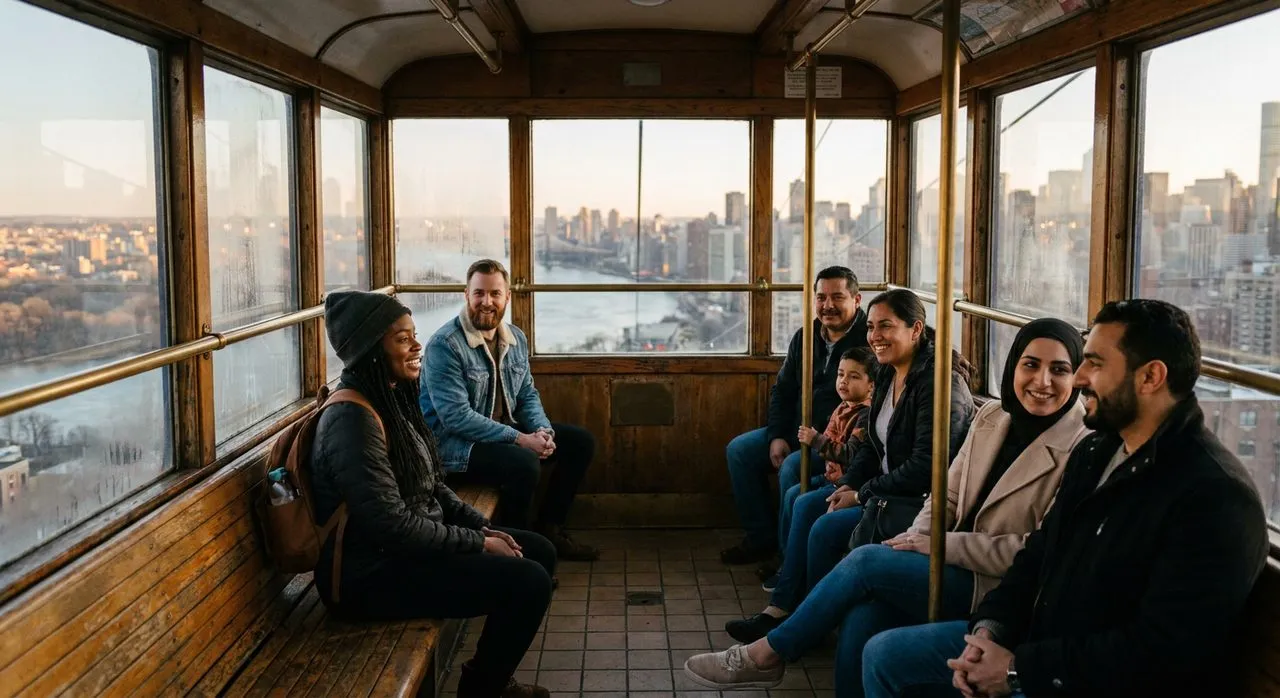
You board at Second Avenue and 59th Street, and within four minutes you're suspended hundreds of feet above the East River, watching the Queensboro Bridge's underbelly slide past your left shoulder. The Roosevelt Island Tramway—technically just a commuter line, fare identical to the subway—swings you across the water in a red cable car that creaks and hums. Locals read their phones. You press your face to the glass. The landing station sits at the island's center, and from here the perimeter walk begins in either direction. Most people turn south first, toward the ruins. The island stretches just two miles long, narrow enough to cross in minutes, but the full loop measures roughly 3.5 miles because you're tracing every curve of the shoreline. No cars allowed except service vehicles. The quiet feels pharmaceutical.
Updated August 2026: hours, prices, reservations, event dates, transit details, and venue policies can change. Use the linked official venue, city, or operator sources in the Sources section as the final reference before you go.
Southbound past the hospital that stopped accepting patients in the 1850s
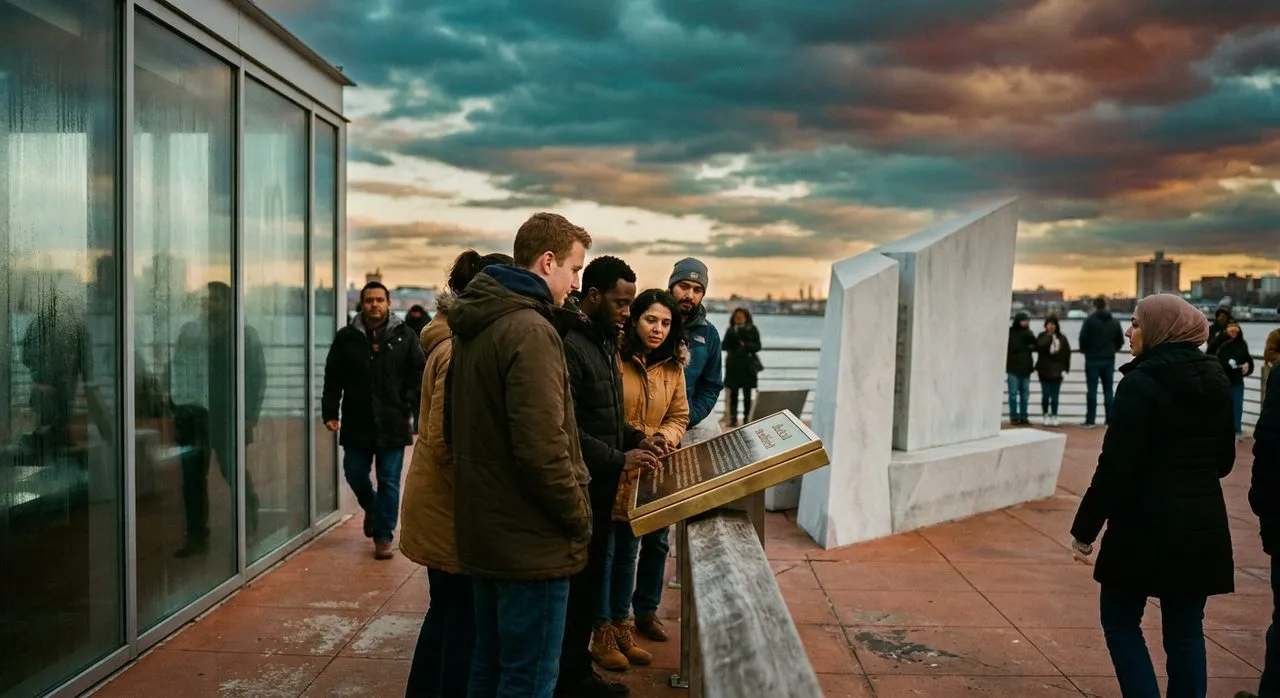
The path runs along Main Street briefly before peeling off toward the water. You'll pass the Chapel of the Good Shepherd—red brick, nineteenth century, still used for weddings—then the landscape opens to reveal the Smallpox Hospital's Gothic skeleton. James Renwick Jr. designed it in the 1850s, the same architect who gave us St. Patrick's Cathedral. Now it's a stabilized ruin, fenced but visible, its empty windows framing sky. Vines claim the southern wall each summer. The structure stands under federal protection but hasn't been restored. Photographers come at golden hour when the light hits the facade at an angle that makes the stonework glow amber. You can't enter, but you can circle it completely, noting how the East River laps close to its foundation. The isolation that made this a quarantine site now makes it a meditation point.
The FDR Memorial occupies the island's southern tip
Louis Kahn designed this monument, and it doesn't look like any other presidential memorial you've seen. No statue. Just a granite room open to the sky, with a massive bronze head of Roosevelt set into one wall. The space feels deliberately intimate. Kahn died before construction began; the memorial opened in the 1970s. Inscriptions from FDR's speeches run along the walls in sans-serif letters. You walk through the triangular entrance and the city noise drops away—acoustic design that Kahn obsessed over. On weekday mornings you might have it entirely to yourself. The southern promenade extends beyond the memorial, offering unobstructed views of the UN Headquarters across the water. Cormorants dry their wings on the rocks below. The path curves east here, beginning the return journey up the opposite shore.
The lighthouse stands where the island narrows to nothing
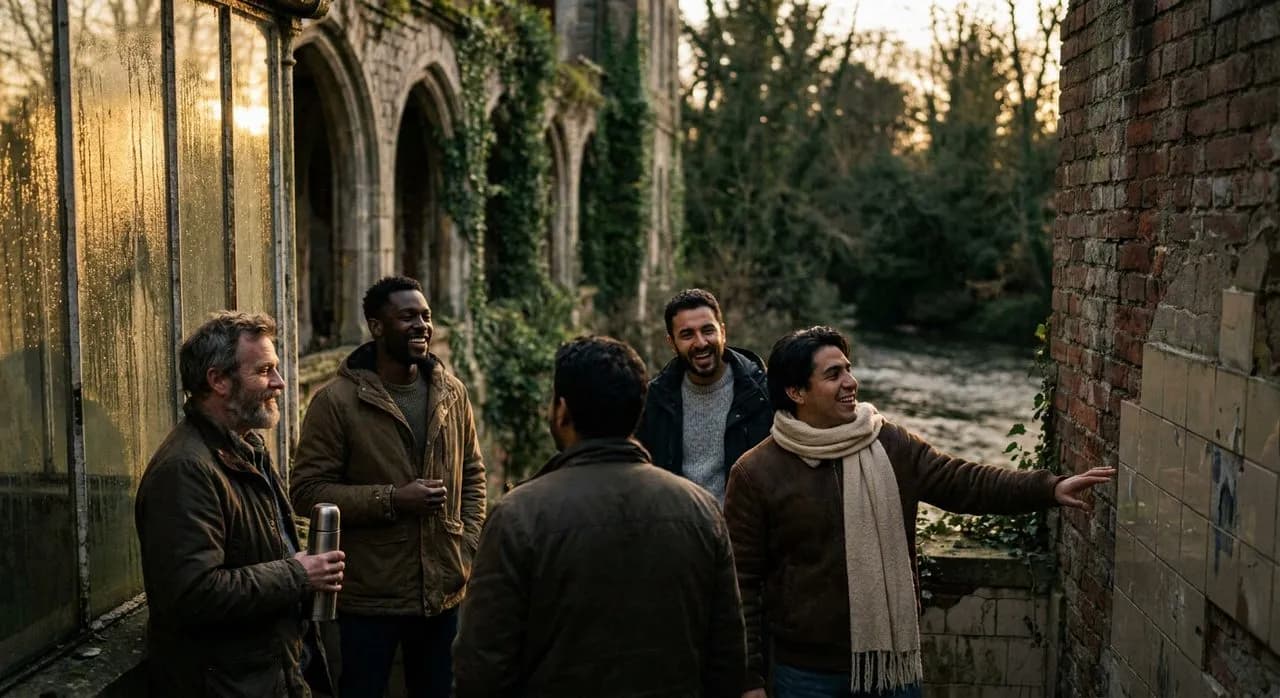
Now you're walking north along the eastern edge, Queens across the water, the power station's stacks visible in the middle distance. The path widens into a proper promenade near Octagon Park. Keep going. The island tapers as you approach the northern point, and suddenly there it is—a granite lighthouse built in the nineteenth century by island residents, many of them patients at the asylum that once operated here. James Renwick Jr. again, allegedly, though records conflict. The lighthouse hasn't functioned in decades, but the Parks Department maintains it. A small accompanying structure sits nearby, also abandoned, also attributed to Renwick. This northern tip, officially Lighthouse Park, feels like the end of something. Joggers use it as a turnaround point. You should sit on the bench facing the Hell Gate channel and watch the water traffic: barges, tugs, the occasional sailboat threading the current.
The western return traces the Manhattan skyline
The walk back down the western shore gives you the Midtown skyline in full array: the Chrysler Building's spire, the UN's glass slab, the residential towers of Sutton Place where diplomats keep apartments. This side of the island hosts most of the residential complexes—modernist towers from the 1970s that were supposed to represent urban renewal. They succeeded partially. The island's population hovers in the low five figures, and the vibe skews quiet, almost suburban. You'll pass the Blackwell House, the island's oldest structure, dating to the late eighteenth century, now a visitor center. The western promenade includes a small pier where fishermen cast for striped bass in spring. The path eventually loops back to where you started, near the tram station. Total walking time: seventy-five to ninety minutes at a steady pace, longer if you stop at every ruin and memorial.
Why the loop works when the subway doesn't
The F train also stops on Roosevelt Island—underground station, unremarkable—but you'd miss the approach, the aerial perspective that reframes Manhattan as an island too, not the center of everything but one landmass among several. The tram ride matters. It sets the tone. And the loop itself functions as a reset, a perimeter walk that lets you process whatever you carried onto the island. No shops, no traffic, no buskers. Just the path, the water, the ruins. Runners do it for training. Architects do it for Renwick. You do it because sometimes you need to walk in a circle around a small island to remember that New York contains multitudes, and some of them are quiet.
Practical notes
The Roosevelt Island Tramway departs from Second Avenue and 59th Street in Manhattan. The ride takes approximately 4–5 minutes across the East River to Roosevelt Island. Standard subway fare applies (MetroCard or OMNY). The full perimeter loop around the island is approximately 3.5–4 miles on paved paths. The island itself is roughly 2 miles long. FDR Four Freedoms Park is located at the southern tip of the island. The Smallpox Hospital ruins are viewable from the exterior path. A lighthouse stands at the northern tip. Bring water and plan accordingly for facilities and dining options.
Tags: #RooseveltIsland #NYCWalks #TheLongWayHome #EastRiver #FDRMemorial #SmallpoxHospital #RooseveltIslandTramway #LouisKahn #JamesRenwickJr #LighthousePark #UrbanHiking #NYCSecrets #PerimeterWalk #CarFreeNYC #HiddenNYC
Sources consulted: rioc.ny.gov · mta.info
All trademarks are the property of their respective owners.