The golden hour ritual
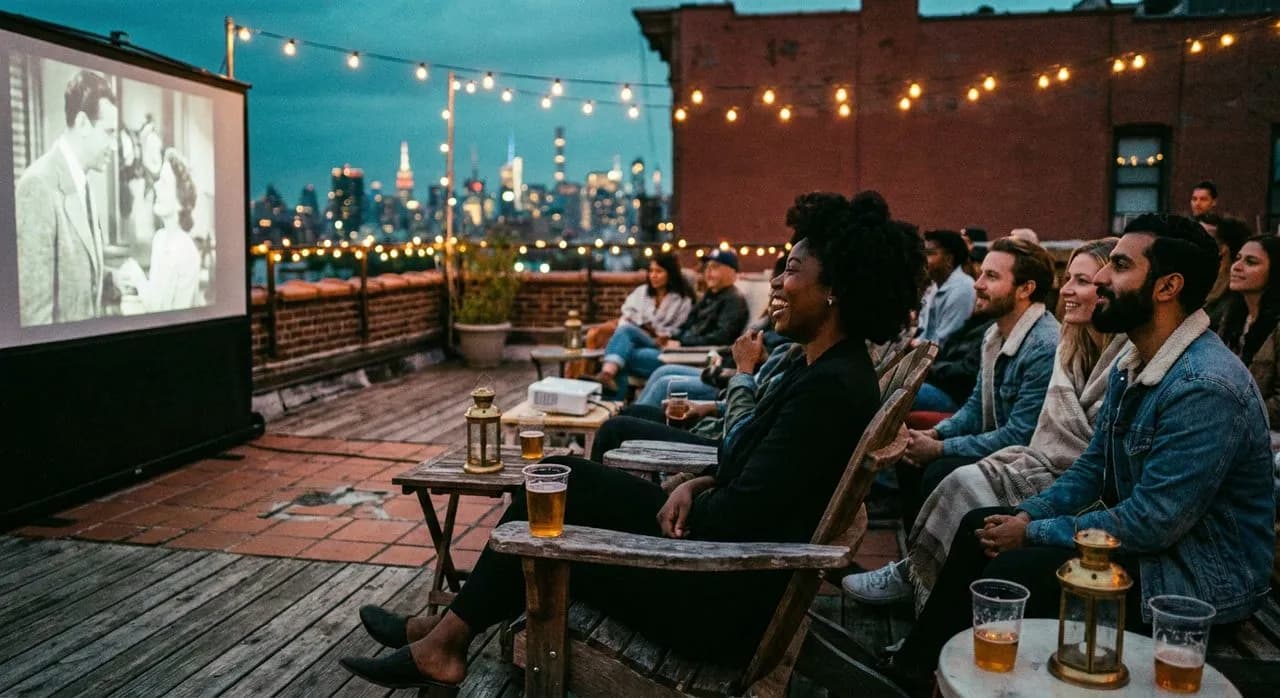
You learn quickly that Rooftop Films operates on a different clock than the multiplexes. The official start hovers around 8:30 PM—when dusk cooperates—but the real action begins at 6:30 when gates crack open and the first arrivals stake claims on prime real estate. By 7 PM, the Old American Can Factory rooftop in Gowanus already hums with pre-show energy: a drummer setting up near the projector booth, couples unfolding camping chairs they've schlepped from Park Slope, someone's friend-of-a-friend selling homemade paletas from a cooler.
The venue rotates throughout summer—one week you're on a Bushwick warehouse watching Greenpoint's industrial spine glow orange, the next you're in Sunset Park with the Statue of Liberty small enough to pinch between your fingers. But the rhythm stays consistent. Arrive at 8 PM and you're already negotiating for floor space behind the chair rows, craning your neck at odd angles all night.
Claiming your coordinates
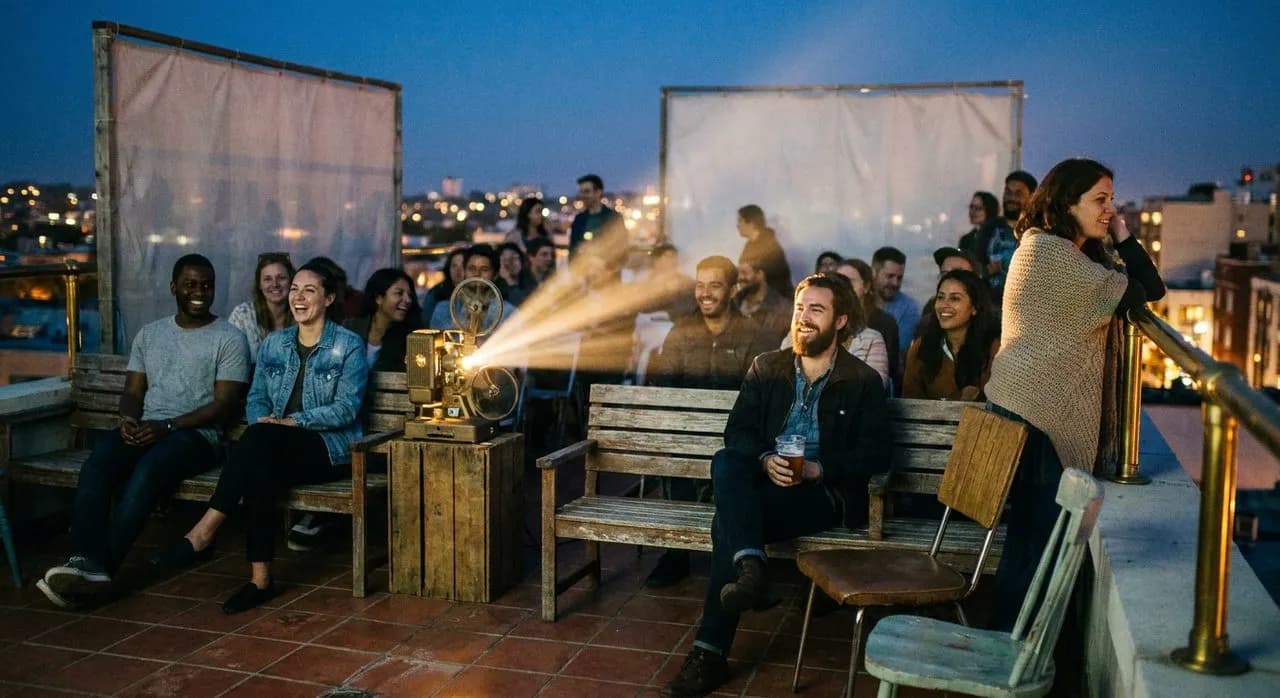
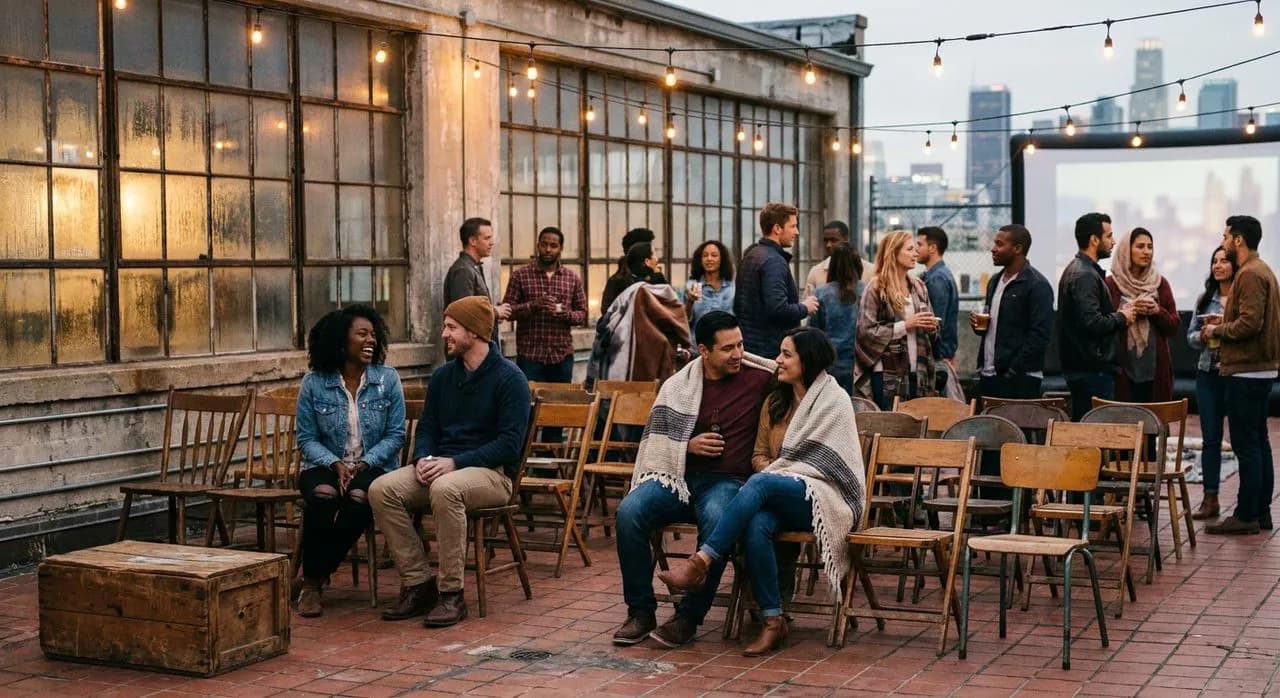
The veterans know the geometry. At the Industry City courtyard, rows 4 through 6 offer the sweet spot—close enough to read subtitles without squinting, far enough back that you're not staring straight up at a 40-degree angle. The metal folding chairs appear around 7 PM, set in neat lines that dissolve into chaos within thirty minutes. Some screenings provide them; others require BYOC (bring your own chair), announced in the event details that everyone skims but nobody reads carefully.
The regulars arrive with low-back beach chairs that don't obstruct views, plus fleece blankets that seem excessive at 7:30 but feel prophetic by 10 PM when the wind off the harbor cuts through your denim jacket. One couple I've seen at four different screenings always claims the left end of row 5, spreading a Moroccan rug and unpacking a Tupperware situation that suggests they've never heard of the on-site food trucks.
The pre-show ecosystem
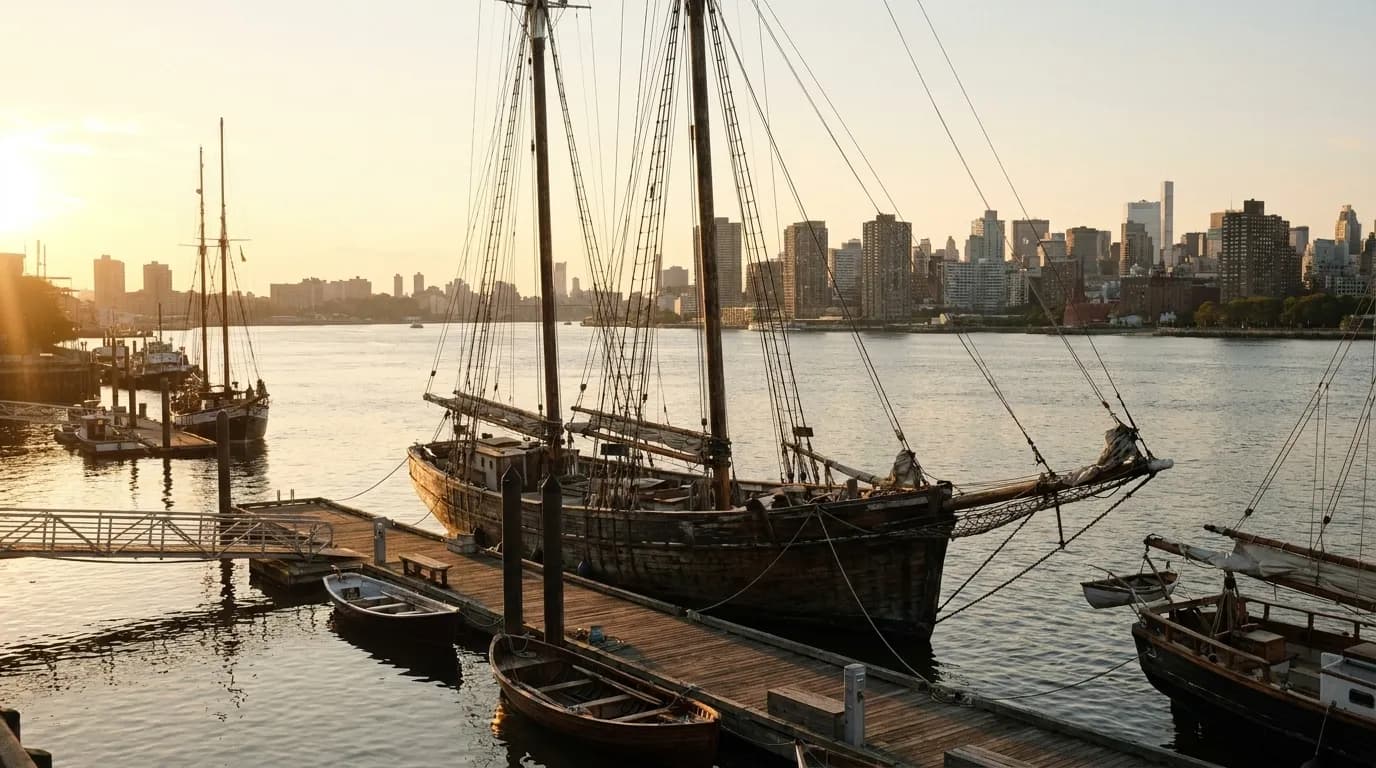
Between 7 and 8:30, Rooftop Films becomes a micro-festival. The programmers book live music acts—often experimental, occasionally genius, sometimes both—that perform as the sky shifts from blue to purple to that specific Brooklyn gold that only exists in July. At the Brooklyn Army Terminal, I once watched a cellist loop her own recordings while container ships slid past in the background, the whole scene feeling almost too cinematically composed.
The food situation varies by venue. Industry City brings the built-in advantage of Sahadi's and Colson Patisserie within walking distance, but most locations host two or three trucks: tacos, dumplings, the inevitable artisanal ice cream. Prices run food-truck standard—$12-15 for dinner, $6 for a beer. The bar setup is always cash-friendly but card-capable, pouring wine into plastic cups and stocking a rotating selection of Brooklyn Brewery cans. Smart attendees eat beforehand and arrive with a backpack of snacks, because the lines at 7:45 PM stretch fifteen deep.
When the projector warms up
The actual start time flexes with sunset, which means late June screenings might not begin until 9 PM, while late August shows can roll by 8:15. The organizers announce the schedule on their Instagram stories day-of, but you're still gambling. The projectionist—usually the same bearded guy in Carhartt overalls—starts testing around 8 PM, throwing test patterns onto the screen while making micro-adjustments that only he can perceive.
This liminal period is when the crowd reaches critical mass. Latecomers weave through the seated sections, whispering apologies, searching for gaps that don't exist. The music fades. Someone inevitably applauds when the Rooftop Films bumper appears, that hand-drawn logo that's remained unchanged since the series started in 1997. Then the feature begins—usually a documentary that premiered at Sundance, or a restored international classic, or an experimental short program that will make you question what constitutes narrative.
The unspoken codes
Certain behaviors mark you as a first-timer. Talking during the film, obviously, but also: bright phone screens (everyone glares), arriving after 8:15 and expecting accommodation (you're sitting on gravel behind the chairs), leaving before the Q&A when a filmmaker is present (mild social crime). The regular attendees have developed a silent language of nods and chair-saving, a temporary community that dissolves when the credits roll.
The bathrooms—usually porta-potties tucked near the roof access—develop lines around 8:45, right before showtime. Plan accordingly. Some venues like the Open Road rooftop in Times Square offer actual restrooms in the building below, a luxury that elevates the entire experience. The sound system occasionally battles with ambient noise: helicopters, distant sirens, someone's car alarm twelve stories down. You learn to accept this as part of the texture.
The post-credits exodus
When the lights come up—or rather, when the projector clicks off and the city's ambient glow reasserts itself—the crowd disperses with surprising speed. By 11 PM, the roof is nearly empty except for volunteers folding chairs and the projectionist coiling cables. The stairwell descent always feels slightly surreal, returning from a temporary world where a Senegalese drama or a Polish animation held everyone's attention for ninety minutes.
Some screenings include after-parties at nearby bars, listed in the program but rarely attended by more than twenty people. The real after-party happens on the L train platform or in the bodega line, strangers who just shared the same rooftop discussing whether the ending worked, whether the director's previous film was stronger, whether next week's screening in Red Hook is worth the trek.
Practical notes
Rooftop Films runs May through September at rotating venues across Brooklyn, Manhattan, and Queens. Tickets cost $18 general admission, $15 for members, available online or at the door (cash/card). Gates typically open 6:30-7 PM; screenings begin at dusk, roughly 8:15-9 PM depending on season. Check their website day-of for exact timing and whether to bring your own chair. Most venues are accessible via subway—Industry City (D/N/R to 36th St), Old American Can Factory (F/G to Carroll St), Brooklyn Army Terminal (R to 59th St). Bring layers; rooftop temperatures drop 10-15 degrees after sunset. Outside food permitted; alcohol sold on-site only. Select screenings include filmmaker Q&As. Season passes ($150) pay for themselves after nine films.
Tags: #RooftopFilms #NYCcinema #outdoormovies #Brooklynsummer #indiefilm #rooftopscreening #summerinNYC #filmculture #BushwickNights #Gowanusviews #IndustryCity #cinematicexperience #NYCevents #alfresco #citylife
Sources consulted: Time Out New York · NYC Parks · Atlas Obscura
Please drink responsibly. Must be of legal drinking age.
All trademarks are the property of their respective owners.