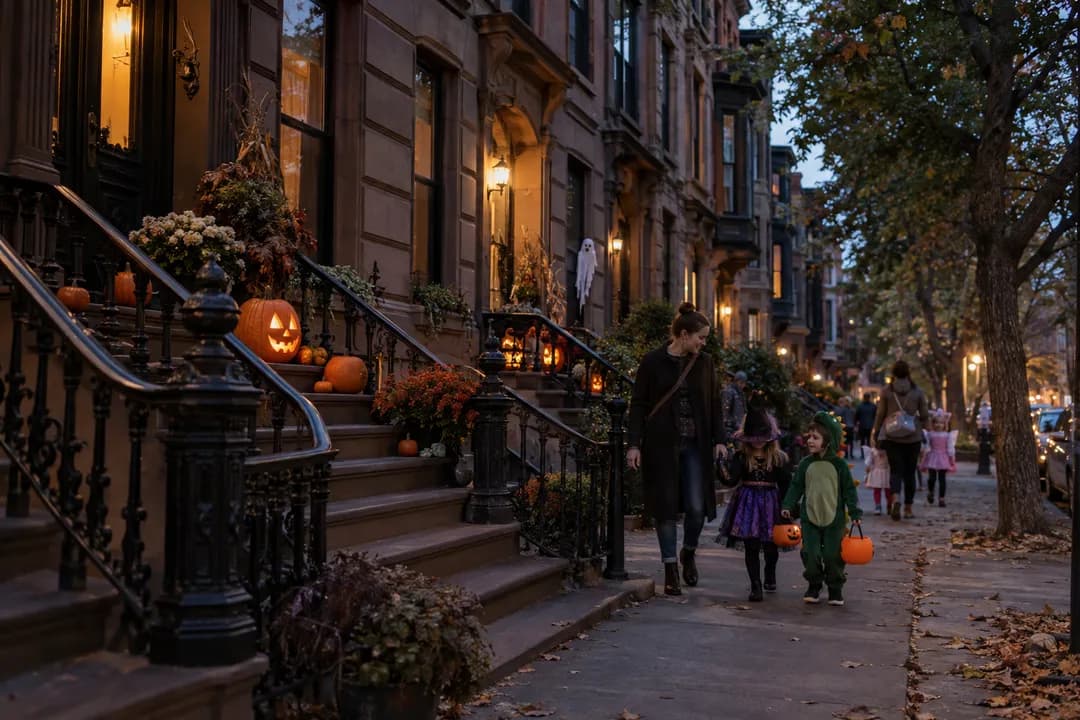
 Best Trick or Treating Neighborhoods Near Me: Park Slope
Neighborhood Guides
Riverside Park at Dusk: The Upper West Side's Hidden Hudson Promenade
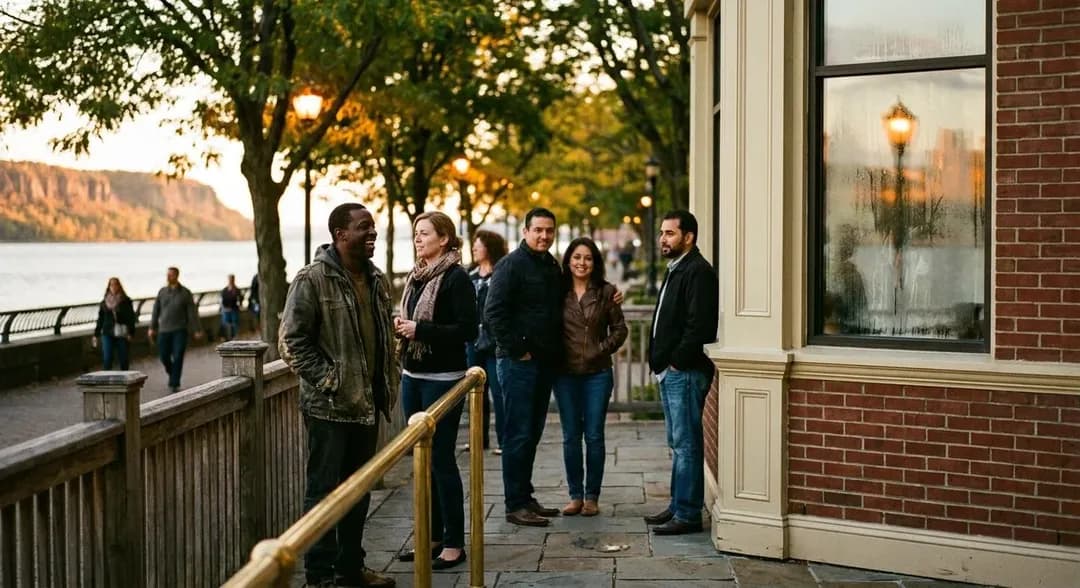
Between 72nd and 79th Streets, a ribbon of pavement runs along the Hudson where the city forgets itself. The cliffs across the water turn copper, and the joggers thin out, leaving only you and the last light.
The descent at 72nd
You take the stairs down from Riverside Drive at 72nd Street—the western set, closest to the river, not the main park entrance everyone uses. Thirty-two steps, if you're counting. At the bottom, the traffic noise cuts away and you're on the lower promenade, a paved path that runs right along the Hudson's edge. Most visitors to Riverside Park stay up on the main lawn level, closer to the dog runs and playgrounds. This lower track belongs to the regulars: the 6 a.m. power-walkers, the evening runners doing their river loops, the Columbia grad students who've learned that this is where you come when your studio apartment feels like a closet. Around 6:45 in October, 7:15 in summer, the light starts to slant. That's your window. The path curves gently north, following the shoreline, and the city recedes behind a screen of plane trees and chain-link. Ahead, the George Washington Bridge hangs in hazy distance.
The Palisades at golden hour
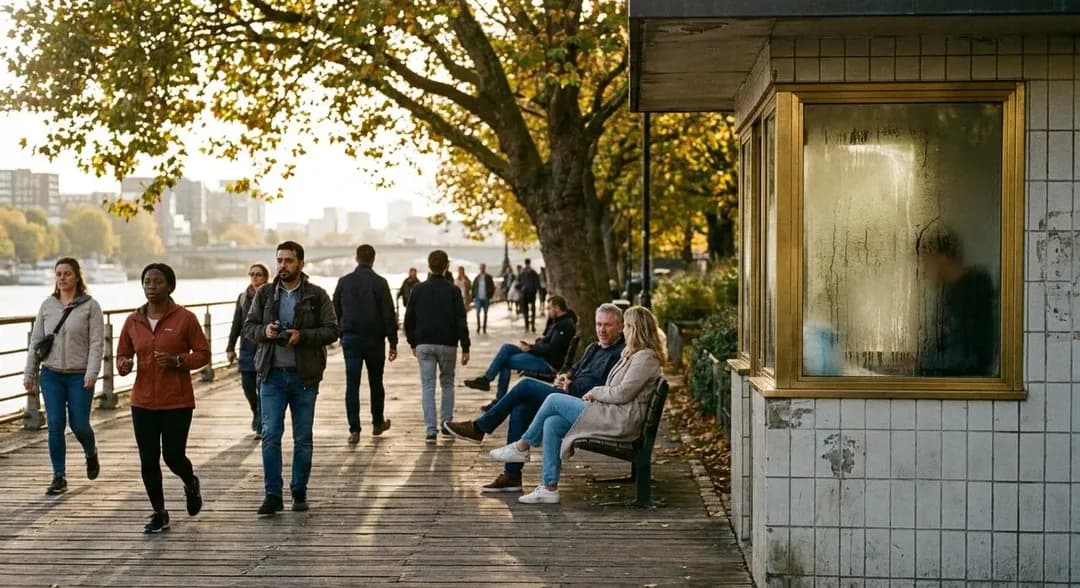
The New Jersey cliffs across the water—the Palisades—catch the dying sun like a stage set. You've passed them a thousand times on the Henry Hudson Parkway without really seeing them, but from down here, at water level, they're suddenly geological, ancient, worth stopping for. The rock face runs russet and amber as the light drops. Barges push slowly upriver. A lone kayaker paddles south, probably heading back to the 72nd Street marina launch. The promenade widens and narrows as you walk north, sometimes squeezing between the water and the old railway embankment, sometimes opening onto small piers where people sit on benches and watch the river traffic. Around 75th Street, there's a break in the fence where fishermen set up—locals who know the striped bass run in spring and fall. One regular, an older Dominican man everyone calls Manny, fishes here four evenings a week, May through November, and will tell you the best bait (bunker) and worst time (full moon high tides) if you ask.
The rotunda at 79th
At 79th Street, the path delivers you to the Rotunda, a circular stone pavilion that once served as the entrance to a long-defunct ferry terminal. Most people blow past it on their way to the Boat Basin, but the Rotunda itself is worth a pause—its interior arcade is cool even in August, and the acoustics turn casual conversation into a strange, churchy echo. On the south side, there's a small bronze plaque, easy to miss, commemorating Edgar Allan Poe, who supposedly walked this shoreline when it was still farmland and rocky outcrops. The plaque's been there since 1913. Someone, regularly, leaves a penny on the ledge below it. You're close to the Boat Basin now—you can smell it before you see it, that particular mix of teak oil, river water, and diesel. The path curves west and suddenly you're in the marina, surrounded by houseboats and sailboats bobbing against their moorings.
The Boat Basin Cafe
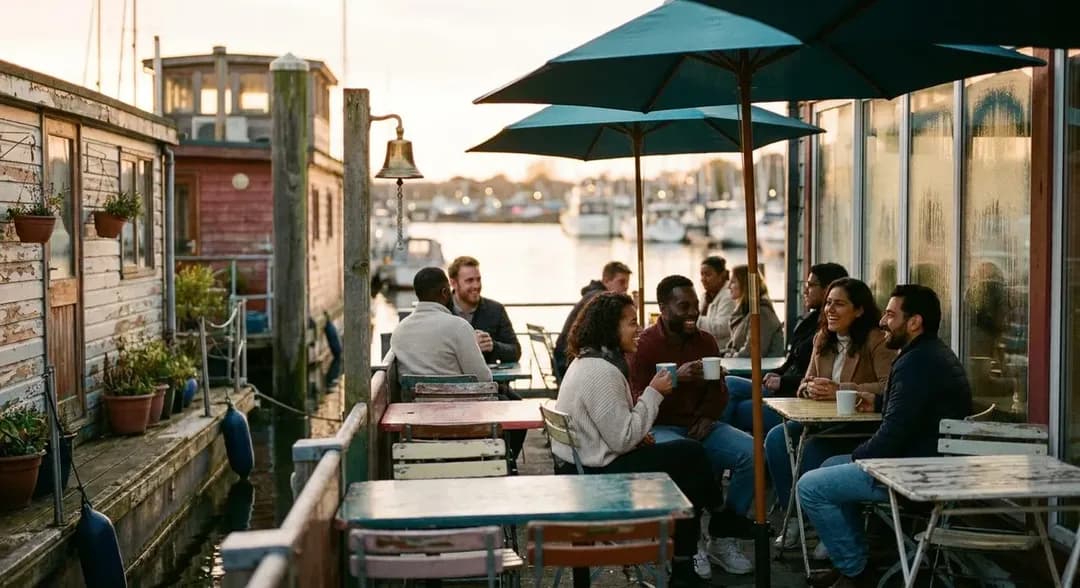
Tucked into the marina's northwest corner is the Boat Basin Cafe, a seasonal outdoor spot that opens in April and closes when the weather turns mean, usually late October. It's not hidden in the sense that it's hard to find—there are signs—but it exists in a different psychic zone from the rest of Manhattan, a place where the grid system and the uptown-downtown logic don't apply. You're sitting at a picnic table under string lights, twenty feet from the water, watching the sun finish its work on the Palisades. The menu is aggressively unremarkable—burgers, fish tacos, a Caesar salad that comes overdressed—but that's not the point. You're here for the last drink, the boundary moment between day and evening. Order the house margarita, which is better than it has any right to be, or a beer from the short list. Sit at table 7 or 8, the ones closest to the rail, if they're free. The staff, mostly NYU students and actors between gigs, are practiced in the art of benign neglect. They'll leave you alone until you signal.
The houseboat community
The boats themselves are worth studying while you wait for your drink. The Boat Basin is one of the last residential marina communities in Manhattan—about a dozen houseboats, lived in year-round by a peculiar cross-section of river devotees, artists, and people who made one unconventional choice thirty years ago and stuck with it. You can't just buy a slip here; there's a waiting list, and turnover happens mostly through inheritance or attrition. The boats range from meticulously maintained wooden cruisers with polished brass fittings to floating shacks held together by optimism and marine epoxy. One houseboat, a green-hulled cabin cruiser near the north end, has a rooftop garden—actual tomato plants in buckets, a small herb spiral, solar lights. Another, closer to the cafe, has been painted entirely in chalkboard paint, and the owner changes the exterior murals seasonally. In October, it's covered in Día de los Muertos skulls. The houseboat residents are protective of their privacy but generally tolerant of gawkers, as long as you don't photograph them directly or treat the docks like a petting zoo.
The walk back in blue hour
When you're ready to leave—and you'll know when; the light will have dropped to that deep blue that only lasts fifteen minutes—retrace your steps south along the promenade. The path feels different now. The joggers are gone. The Palisades have turned into a dark silhouette. The city lights are starting to prick on behind you, and the river has gone from copper to slate to near-black. This is the payoff for the long way home: the slow transition, the gradual re-entry. You're not trying to get anywhere quickly; you're letting the evening settle around you as you walk. Around 76th Street, there's a small pier that juts out about twenty feet—not marked, easy to miss if you're moving fast. Stand at the end of it for a moment. The bridge lights to the north, the downtown glow to the south, the river sliding past in the middle. Then the stairs back up to 72nd, the thirty-two steps in reverse, and Riverside Drive waiting at the top with its taxis and brownstones and the rest of the evening ahead.
Practical notes
Riverside Park's lower promenade runs continuously from 72nd to 125th Street, but the 72nd-to-79th stretch is the most maintained and scenic. Access stairs are at 72nd Street (west side of Riverside Drive) and at the 79th Street Rotunda. The Boat Basin Cafe (West 79th Street at the Hudson River) operates seasonally, typically April through October, weather-dependent; hours are roughly 11 a.m. to 11 p.m., but call ahead after Labor Day. Expect to spend $15-25 per person for a drink and snack. The promenade itself is free, open dawn to 1 a.m., well-lit after dark. Nearest subway: 1 train to 72nd or 79th Street, then a ten-minute walk west. Bike racks available at both entry points. The path is paved and accessible, though some sections narrow considerably. Best visited on weekday evenings or weekend mornings to avoid crowds. Sunset times vary widely by season—check before you go if you're chasing the light.
Tags: #RiversidePark #UpperWestSide #HudsonRiver #NYCparks #TheLongWayHome #BoatBasin #Palisades #NYCsunset #hiddennewyork #manhattanwaterfront #NYCwalks #riversidepark #urbanexploration #nycatdusk #hudsonriverpark
Sources consulted: MTA · NYC Parks · Time Out New York
Please drink responsibly. Must be of legal drinking age.
All trademarks are the property of their respective owners.
Ask Karpo for more information.
Keep reading
- Best Trick or Treating Neighborhoods Near Me: Park Slope
 Best Trick or Treating Neighborhoods Near Me: Carroll Gardens
 Best Trick or Treating Neighborhoods Near Me: West Village