The Curiosity: PGA Championship Sunday Travels Slowly
Most bars in New York do not run PGA Championship Sunday. This fact surprises no one. The sport itself moves at a pace that demands either genuine interest or the kind of idle Sunday afternoon most people spend elsewhere. But the bars that do carry the feed—that have the satellite package, the bandwidth, the willingness to keep a screen on the back nine for four hours—these places exist in a specific register. They are not sports bars in the conventional sense. They are clubhouses, simulators, neighborhood corners where golf happens to be the Sunday narrative.
The PGA Championship payout structure—the prize money climbing through the leaderboard, the gap between first and second growing wider each year—creates a particular kind of watcher. These are not casual fans. They know the course setup, the weather window, the names of the players on the back nine. They arrive early, they stay late, and they understand that a major championship Sunday is not entertainment in the usual sense. It is a transaction. Money moves. Reputations shift. A three-shot lead at the turn can evaporate by the seventeenth hole.
Midtown East: The Clubhouse Bar on Lexington
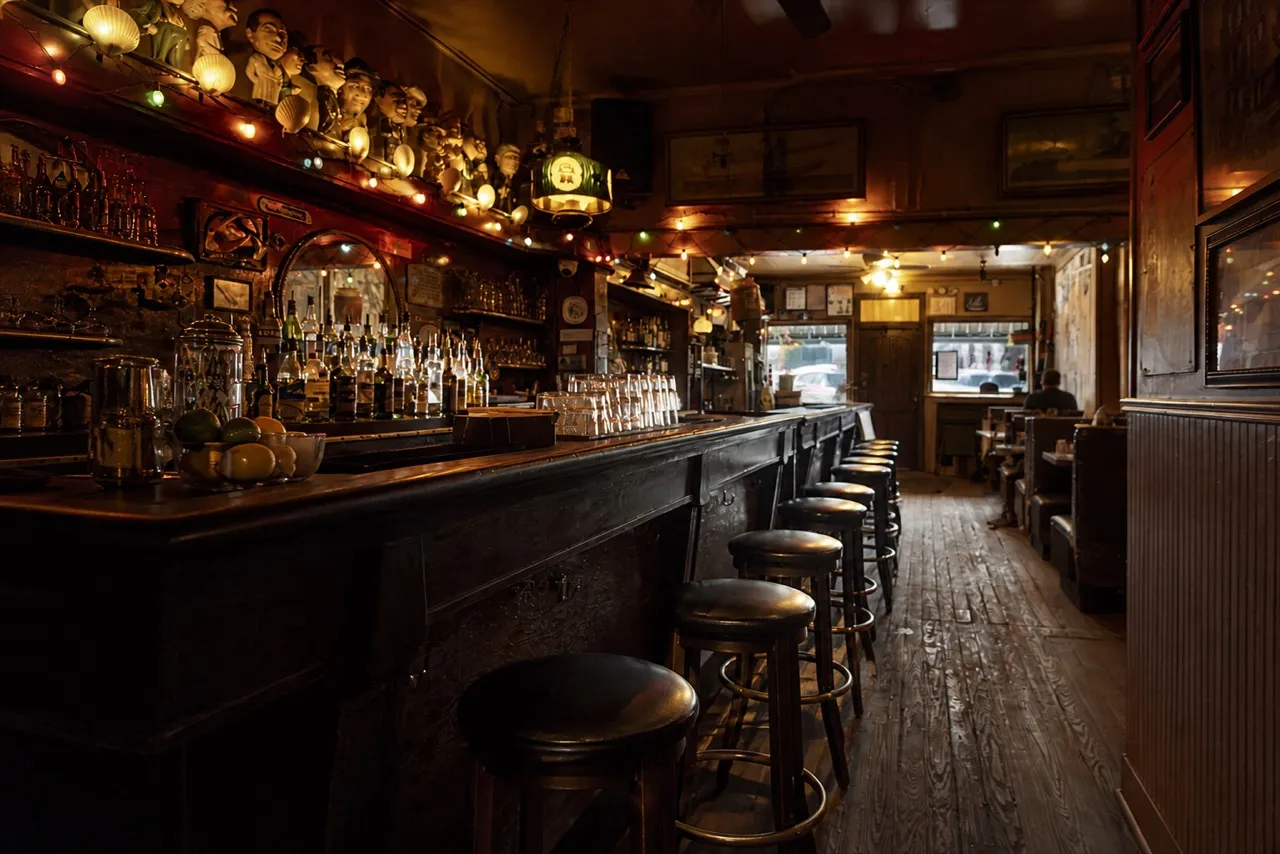
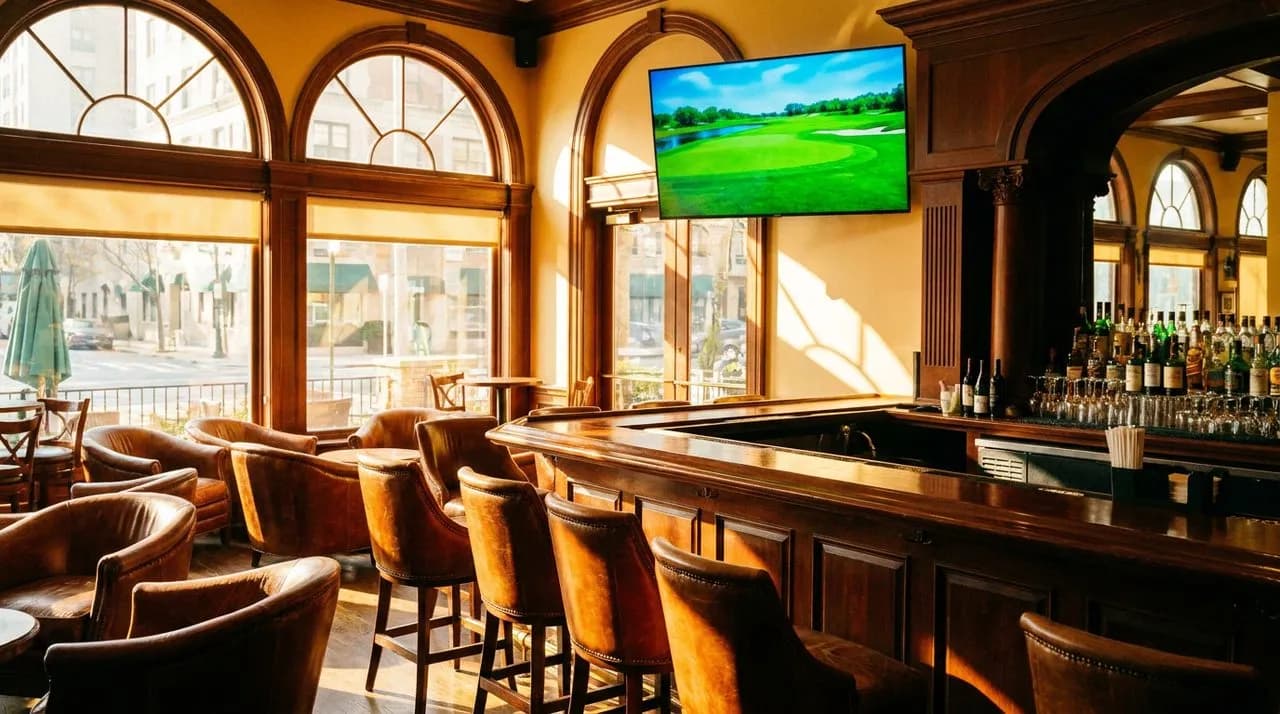
Lexington Avenue between 52nd and 54th Street holds a bar that looks like it was designed for exactly this moment. Dark wood paneling, leather club chairs arranged around a central bar, the kind of brass fixtures that suggest money spent without irony. The screen above the bar—a flat panel mounted in what appears to be a custom frame—carries the PGA Championship feed without commentary from the bartender. No one asks for the volume to be raised. The crowd here is quiet, methodical, mostly men in their fifties and sixties who order a single drink at noon and nurse it until the final putt drops.
The bartender knows the regulars by their usual order and their usual seat. On PGA Championship Sundays, the bar fills by 1 p.m., which is early enough to catch the leaders on the front nine but late enough that the first wave of decision-making on the course has already happened. The crowd watches Aaron Rai work through his round with the kind of attention that suggests they have money on the outcome, or at least that they understand what the PGA Championship payout means to a player ranked outside the top ten. A birdie here, a bogey there. The margins are small. The attention is total.
Murray Hill: The Simulator Bars That Run the Major Live
Murray Hill, the neighborhood between Park Avenue South and Third Avenue below 34th Street, has accumulated a particular density of golf simulator bars in the past five years. These are not traditional establishments. They are indoor golf facilities that serve alcohol, which is a different proposition entirely. The technology is current—high-definition projectors, accurate ball-tracking systems, the ability to play courses that exist only as data. But on PGA Championship Sunday, the simulators go quiet. The screens that usually display Pebble Beach or Augusta National switch to the live feed from the actual championship course.
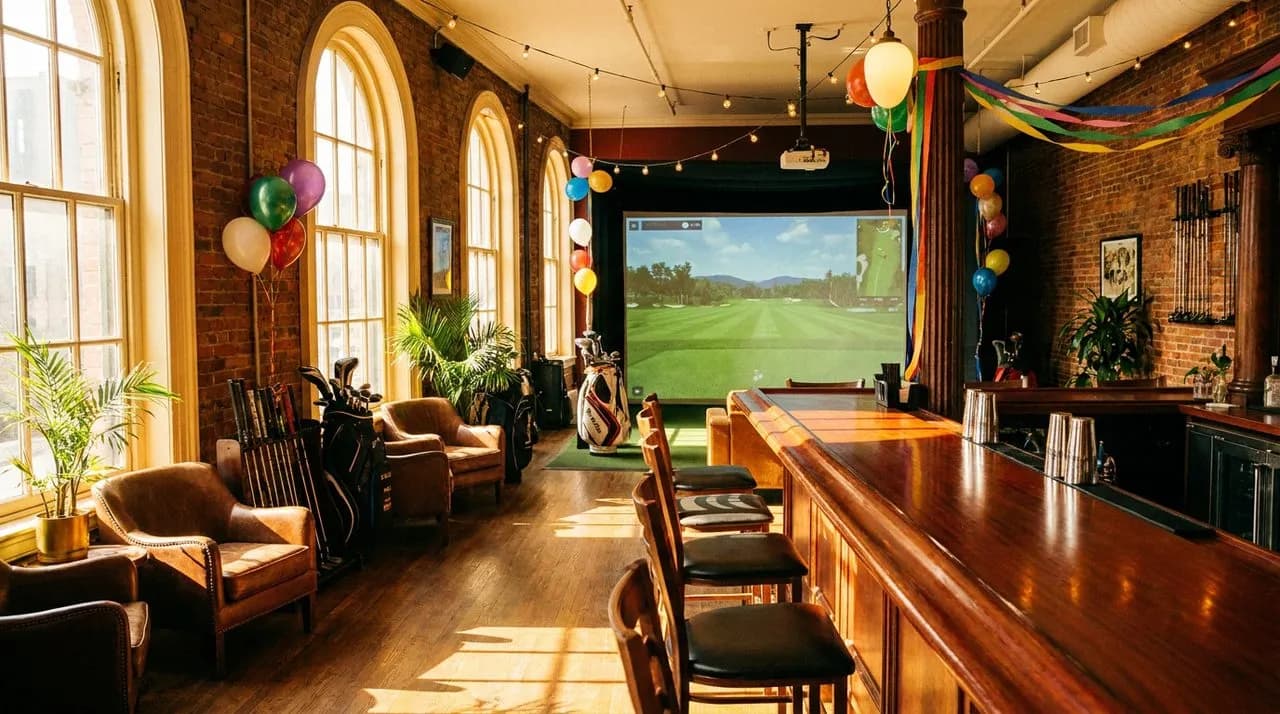
The crowd here is younger, more casual, but no less engaged. They arrive in groups, order beer and wings, and settle in for the afternoon. The simulator bays remain available for those who want to play, but most people stay at the bar, watching the leaderboard update in real time. The PGA Championship payout draws a specific kind of attention from this crowd—they understand that the money is significant, that the players on screen are operating under pressure that translates into visible tension in their swings, their pace, their body language between shots. By the back nine, the bar has usually filled with people who work in finance or tech, people for whom Sunday is a day to monitor, not to rest.
Park Slope: The Brooklyn Bar That Loops the Leaderboard
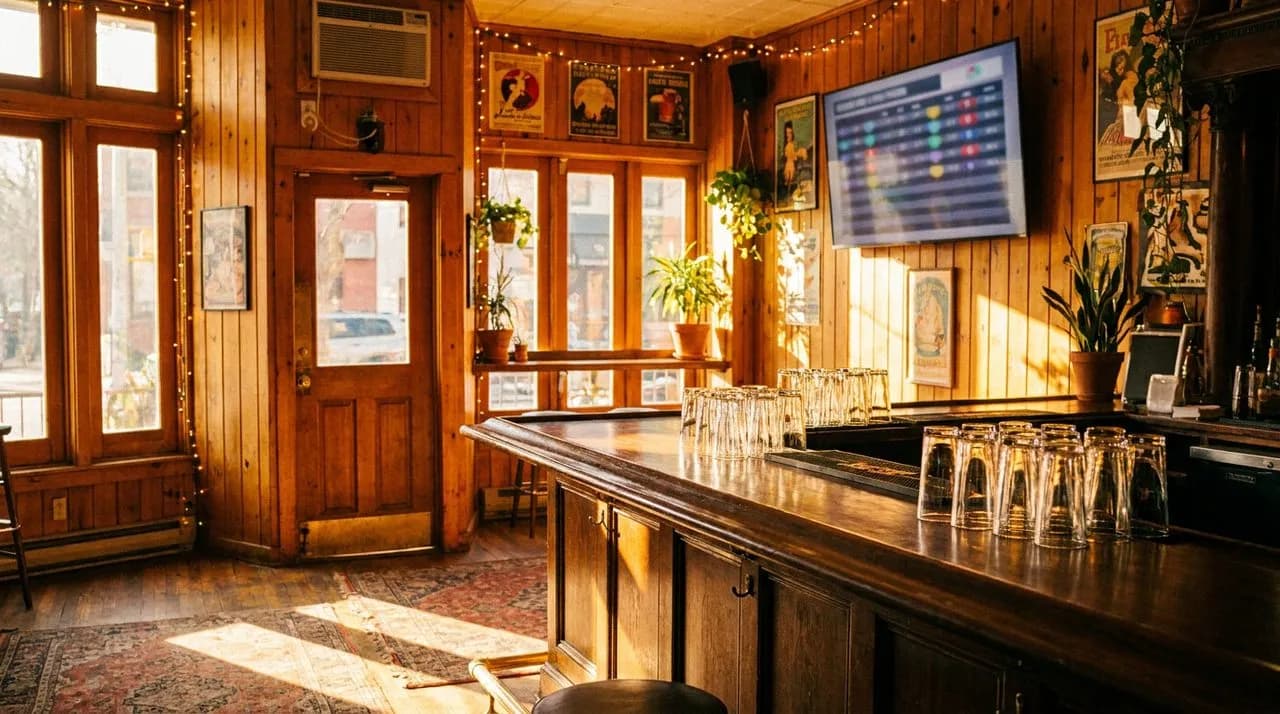
The corner bar at Seventh Avenue and 9th Street in Park Slope operates on a different principle entirely. This is a neighborhood bar, the kind of place where the bartender knows everyone's name and the regulars have occupied the same stools for years. The television is mounted high in the corner, and on most Sundays it shows whatever game is in season. But on PGA Championship Sunday, the bar makes a deliberate choice to run the feed. The leaderboard scrolls across the screen in a constant loop, updated every few minutes as scores come in from the course.
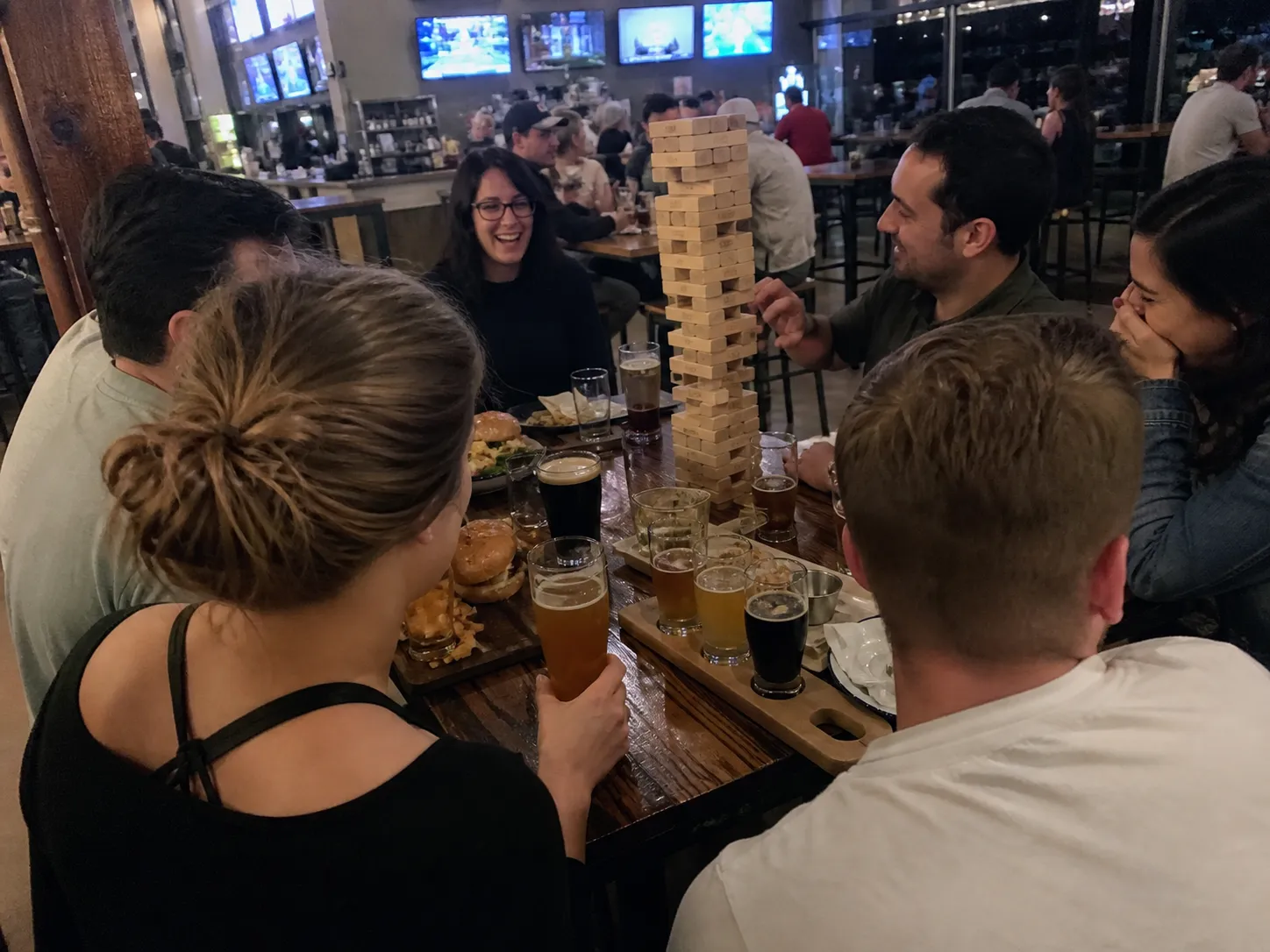
The crowd here is mixed—older men who grew up watching golf, younger people who arrived in Brooklyn in the past decade and have adopted the bar as their Sunday refuge, a handful of women who understand the game better than most of the men. The conversation is not about golf specifically, but about the PGA Championship payout, about whether the prize money structure makes sense, about whether the players on the back nine are playing for glory or for the check. Aaron Rai's name comes up when he makes a move, when he birdies a hole or drops a shot. By the seventeenth hole, the bar has usually developed a collective opinion about who should win, and that opinion is based almost entirely on the money involved.
Why the Payout Crowd Watches the Back Nine Differently
The back nine of a major championship is where the PGA Championship payout becomes tangible. The difference between a top-five finish and a top-ten finish can be six figures. The difference between winning and second place can be millions. This mathematics changes how people watch. The casual fan wants drama, wants to see the best player win. The payout crowd wants to see the money move. These are not incompatible desires, but they produce different kinds of tension in a bar.
In Midtown East, the tension is quiet and concentrated. In Murray Hill, it is louder, more social, punctuated by cheers and groans. In Park Slope, it is conversational, a running dialogue between people who have known each other for years about what the outcome means. But in all three places, the focus is the same: the leaderboard, the players on screen, the accumulating pressure of a major championship Sunday. Aaron Rai's position on the board matters not because he is a household name, but because his finish determines his payout, and his payout is a real number that changes hands on Monday morning.
How Karpo Tracks NYC's Major Sunday Golf Bars
Identifying the bars that actually run PGA Championship coverage requires a specific methodology. Most bars will not commit to the satellite package for a single weekend. The bars that do are usually either dedicated golf establishments or upscale venues with the infrastructure and clientele to justify the cost. Karpo's tracking process begins with identifying neighborhoods that have demonstrated consistent golf viewership, then narrowing to specific establishments that have run major championships in previous years. The Midtown East clubhouse has carried every major for at least a decade. The Murray Hill simulators are newer, but their commitment is consistent. The Park Slope bar is a recent addition to the rotation, a consequence of neighborhood gentrification and the arrival of younger professionals who care about golf.
The editorial approach is straightforward: show up, observe, listen to the crowd, note the details. How early do people arrive. What do they order. How do they react to significant moments on the course. Do they care about Aaron Rai specifically, or only about his position relative to the leaders. What is the ratio of people watching for sport versus people watching for the PGA Championship payout. These observations accumulate into a picture of how New York watches a major championship, and that picture is more specific and more interesting than most people assume.
Practical notes
- Midtown East clubhouse bar: Lexington Avenue between 52nd and 54th Street. Opens at 11 a.m. on championship Sundays. Arrive by 1 p.m. for a seat. Jacket recommended but not required. Single drinks, quiet atmosphere, no food service.
- Murray Hill simulators: Multiple locations between Park Avenue South and Third Avenue, south of 34th Street. Open by noon. Food and full bar service. Casual dress. Groups of four or more should call ahead to reserve simulator bays if desired.
- Park Slope corner bar: Seventh Avenue at 9th Street. Opens at 10 a.m. Opens at 10 a.m. on Sundays. Arrive anytime after 1 p.m. Casual atmosphere, full menu, beer and cocktails. Regulars occupy the same seats; sit at the bar or at high-top tables.
- PGA Championship Sundays occur once per year, typically in May. Check official PGA Tour schedule for exact dates and course locations.
- Leaderboard updates in real time on all three venues. Ask the bartender for current scores if the screen is not clearly visible from your seat.
- Tipping is standard at all three venues. Cash or card accepted everywhere.
The bars that run PGA Championship Sunday in New York are not accidents. They are deliberate choices made by owners and bartenders who understand that a major championship is a specific kind of event, requiring specific infrastructure and a specific kind of crowd. The leaderboard matters. The payout matters. Aaron Rai's position on the back nine matters because it is a real outcome with real financial consequences. These bars exist to witness that outcome, and the people who fill them on Sunday afternoon understand exactly what they are watching and why it matters.
Tags: #karponyc #pga #majors #golf #leaderboard #payout #aaronrai #championship #midtown #murrayhill #parkslope #brooklyn #manhattan #golfers #sunday #rightontime
Sources consulted: PGA Tour Official Schedule · PGA Championship Prize Money · New York Sports Bars Directory
All trademarks are the property of their respective owners.