 Chelsea Consignment Shop Crawl Planner for Your First Studio
Hidden Gems & Odd Finds
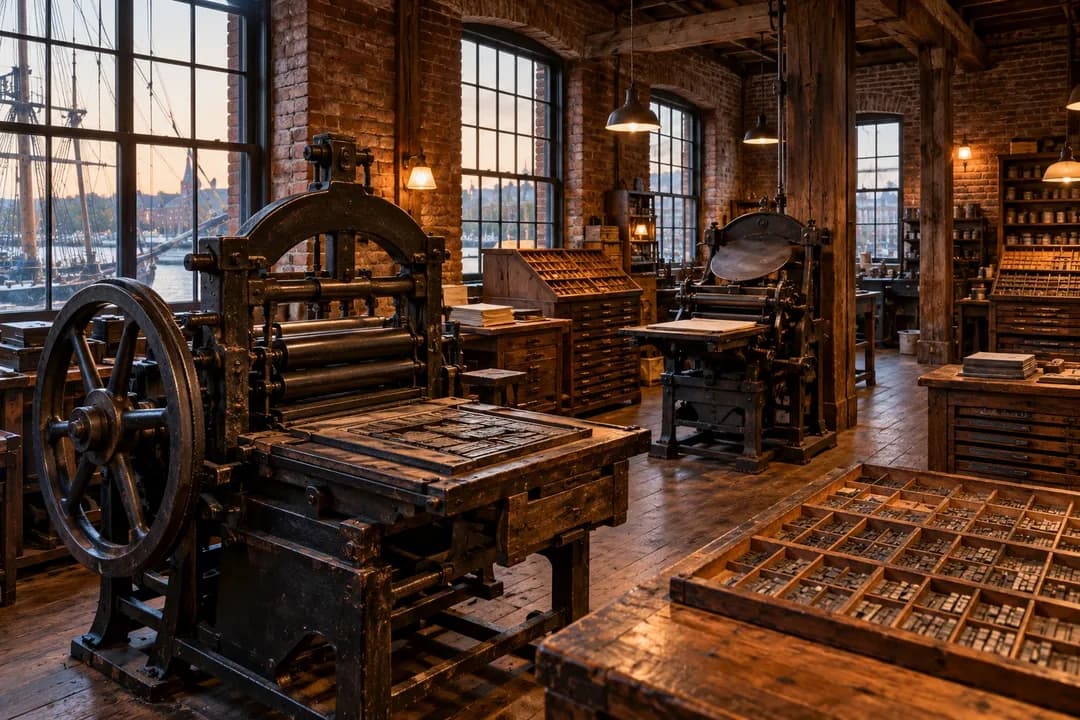
Seaport Retro Graphic Print Shop for 19th-Century Type
Explore historic letterpress printing and hand-set wood type broadsides at Bowne and Company on the cobblestone streets of New York South Street Seaport.
Tucked along the cobblestone corridors of South Street Seaport, Bowne and Company stands as a living monument to nineteenth-century printing and maritime graphic design. Founded in 1775 to print cargo manifests and financial documents for merchant vessels, the shop remains an active letterpress studio where master printers set movable lead and wood type by hand. For collectors of authentic typography, vintage broadsides, and historic book arts, this unique retro graphic print shop offers an encounter with working cast-iron presses and time-tested craftsmanship. Exploring the shop reveals how historic typography shaped the visual identity of New York harbor. Stepping across its threshold connects visitors to over two centuries of American printing history on the Manhattan waterfront.
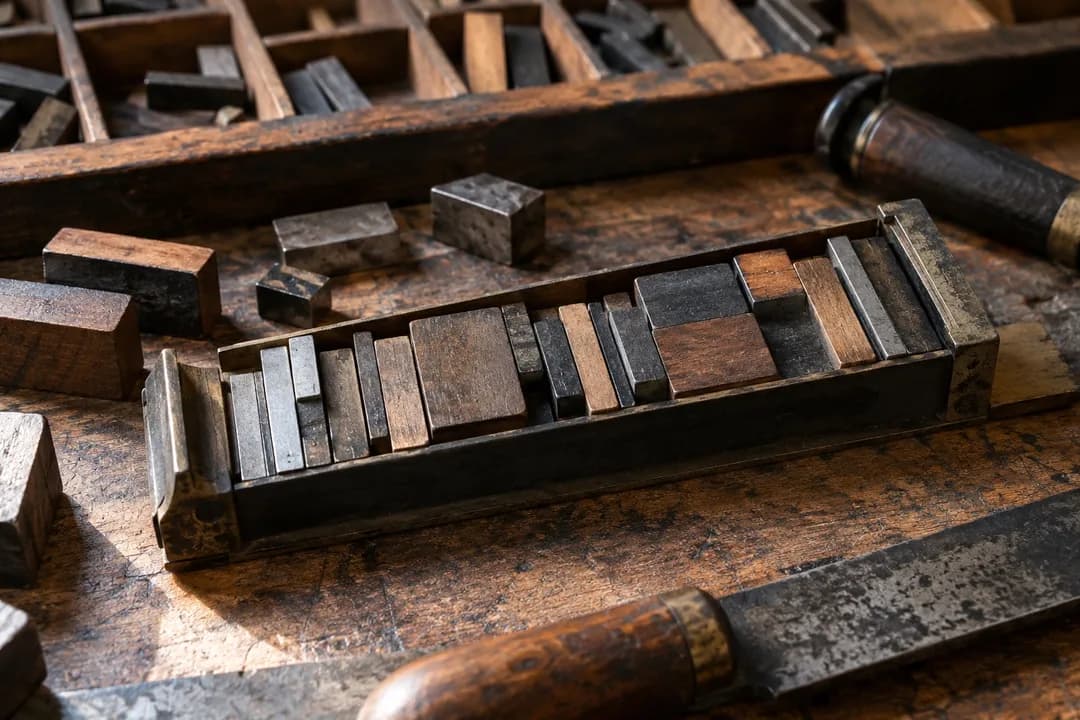
Maritime Trade and 1775 Printing Roots
The origins of Bowne and Company trace directly back to the birth of American maritime commerce in Lower Manhattan. Robert Bowne founded the firm in 1775 on Queen Street, which is modern-day Pearl Street, establishing a commercial printing house to serve merchant ships docking along the East River. During the eighteenth and nineteenth centuries, New York harbor bustled with tall ships arriving from London, Canton, and the Caribbean. Captains, shipping merchants, and marine insurers required vast quantities of printed legal forms, bills of lading, cargo manifests, and auction broadsides on tight turnarounds. Bowne and Company met this demand through skilled compositors who set individual lead letters by hand. As maritime commerce expanded throughout the nineteenth century, the shop evolved into a vital pillar of the waterfront economy, providing fast, accurate typographic impressions for transatlantic trade. Today, operating in partnership with the South Street Seaport Museum at 211 Water Street, the shop preserves this maritime legacy as a functioning nineteenth-century letterpress printer, offering visitors a vivid window into early American graphic communications.
Hand-Set Movable Type and Cast-Iron Presses
Walking through the doorway of Bowne and Company feels like stepping directly into an authentic nineteenth-century printing office. The shop houses thousands of antique fonts stored in wooden California job cases, ranging from delicate lead Roman faces to bold hand-carved wood type crafted from end-grain rock maple. Compositors assemble text character by character in brass composing sticks, adjusting spacing with metal leads and slugs before locking the form into a heavy steel chase with wedges called quoins. The pressroom features working cast-iron machinery, including nineteenth-century Vandercook cylinder proofing presses and Golding Pearl platen presses powered by foot treadles. Master printers still use traditional ink brayers and leather inking balls to distribute dense, oil-based ink across the raised metal face of the type. Under the powerful mechanical pressure of the press, the ink transfers into damp cotton rag paper, creating a distinct, tactile relief impression that is the hallmark of traditional letterpress printing. The rhythmic clanking of cast-iron flywheels and the distinct scent of linseed oil and paper sizing create an unforgettable sensory atmosphere.
The Tangible Impression of Letterpress Broadsides
The visual character of antique letterpress printing comes from its physical dimensionality and mechanical imperfections. Unlike modern smooth offset or laser printing, letterpress broadsides possess a sculptural quality known as the bite, where metal or wood type physically embosses the surface of heavy mould-made paper. Large wood type display fonts often exhibit subtle grain patterns, worn corners, and slight variations in ink coverage that reveal their century-old working history. Bowne and Company continues to produce graphic broadsides, nautical charts, literary quotations, and custom stationery using these historic methods. Master printers carefully calibrate ink viscosity and cylinder packing to ensure crisp letterforms without punching through the paper sheet. In addition to standard typographic compositions, printers frequently incorporate antique printer ornaments, engraved flourishes, and decorative borders cast in foundry lead. Collectors prize these broadsides for their rich typographic balance, historical authenticity, and the subtle warmth of hand-mixed oil inks that age gracefully over decades.
Selecting Collectible Broadsides and Stationery
Collectors visiting South Street Seaport have the rare opportunity to acquire genuine letterpress works produced directly on vintage shop presses. Look through the retail drawers for limited-run typographical posters, reproductions of historic New York harbor announcements, and classic maritime broadsides. In addition to wall art, the shop stocks hand-printed stationery sets, bookmarks, notebooks, and gift cards crafted on archival cotton stock. When choosing a print, inspect the crispness of the hairline serifs and the depth of the impression across the sheet. Each print carries subtle individual nuances caused by slight variations in hand-inking, paper moisture, and manual press pressure, ensuring that no two impressions are completely identical. Staff printers are often on hand to discuss the specific font families used on a given print, explaining whether a display face was carved in upstate New York in the 1880s or cast in an English type foundry. These prints serve as both functional graphic art and physical artifacts of New York City's commercial publishing heritage.
South Street Seaport Cobblestones and Tall Ships
Visiting the letterpress shop offers an ideal opportunity to wander through the historic South Street Seaport historic district. Stroll along Water Street and Front Street, where restored nineteenth-century brick counting houses and granite piers recall the era when New York was the primary port of entry for transatlantic trade. Just steps away along the cobblestones of Fulton Street, you can see historic commercial architecture dating back to Schermerhorn Row from 1811. Walk toward Pier 16 to take in views of the historic tall ships Wavertree and Ambrose moored along the East River with the Brooklyn Bridge rising in the background. Along the waterfront, historic lampposts, granite bollards, and timber piers evoke the maritime commerce that once defined Manhattan's eastern shoreline. The maritime breezes and pedestrianized brick walkways create a peaceful, contemplative contrast to the towering glass skyscrapers of the nearby Financial District, making the Seaport an exceptional neighborhood for historic discovery.
Visiting Tips and Studio Planning with Karpo
Plan your Seaport visit for a clear morning or afternoon when you can easily combine indoor typographic exploration with outdoor waterfront walking. The Seaport is readily accessible via the Fulton Street subway transit hub, connecting the 2, 3, 4, 5, A, C, J, and Z trains. The retail shop at Bowne and Company welcomes visitors exploring the waterfront, offering scheduled printing demonstrations and workshops on designated museum dates. Allow extra time to examine the retail letterpress cards, as examining the subtle tactile qualities of different paper weights is best done without rushing. In the Karpo APP, travelers and graphic design enthusiasts can set filters for historic crafts, waterfront districts, and artisanal stationery to plan personalized cultural routes across Manhattan. The two visual illustrations accompanying this guide are AI-generated conceptual images designed to reflect the workshop's historic ambiance, rather than documentary photographs of current inventory.
Ask Karpo for more information.
Keep reading
- Chelsea Consignment Shop Crawl Planner for Your First Studio
 East Village Consignment Shop Crawl Planner: Leather Jackets
 Harlem Consignment Shop Crawl Planner for a Jazz Night Look