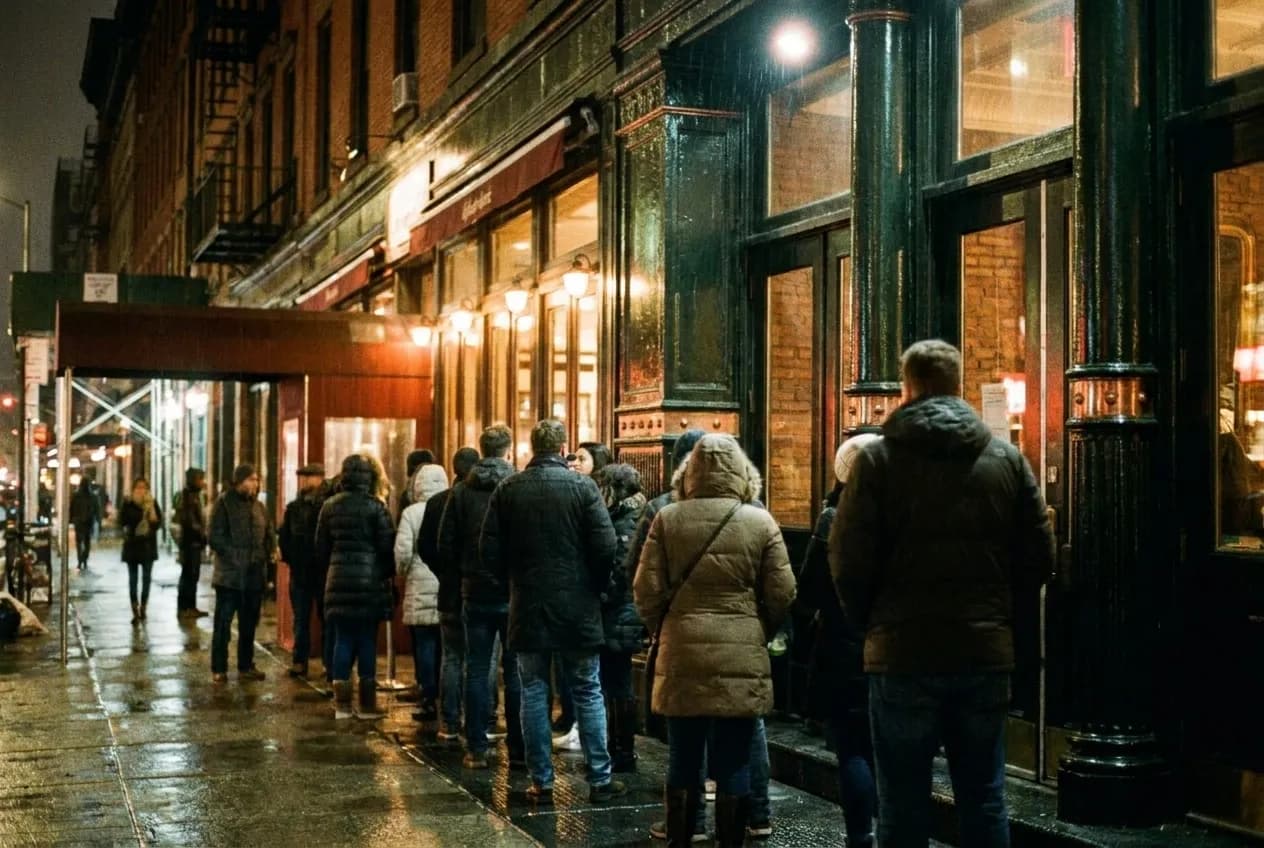
You are standing outside a restaurant in New York and the host has just said ninety minutes. Most people treat this as a binary — wait or leave — and both are usually wrong. A quoted wait is a managed number produced by a host balancing several competing pressures, and once you understand what is actually going on behind it you have three or four moves available that are all better than standing on the pavement for an hour and a half.
Ninety minutes is a negotiation, not a verdict. Ask Karpo what is seating right now within a five-minute walk, so you have a real alternative before you decide to hold.
What a quoted wait actually is
Hosts deliberately over-quote, and it is good practice rather than deception. If they say ninety and seat you in sixty, you are pleased; if they say sixty and seat you in ninety, you are angry and the front of house absorbs it all evening. The inflation is typically in the range of twenty to forty per cent on a busy night. So a ninety-minute quote frequently means somewhere between sixty and seventy-five in reality, and a thirty-minute quote often means fifteen.
The quote also assumes your full party arrives together. A great many restaurants will not seat an incomplete party, which means the clock people think is running is not running at all until the last person turns up. If you are two of four and the other two are twenty minutes away, your ninety just became a hundred and ten.
The four questions that change the number
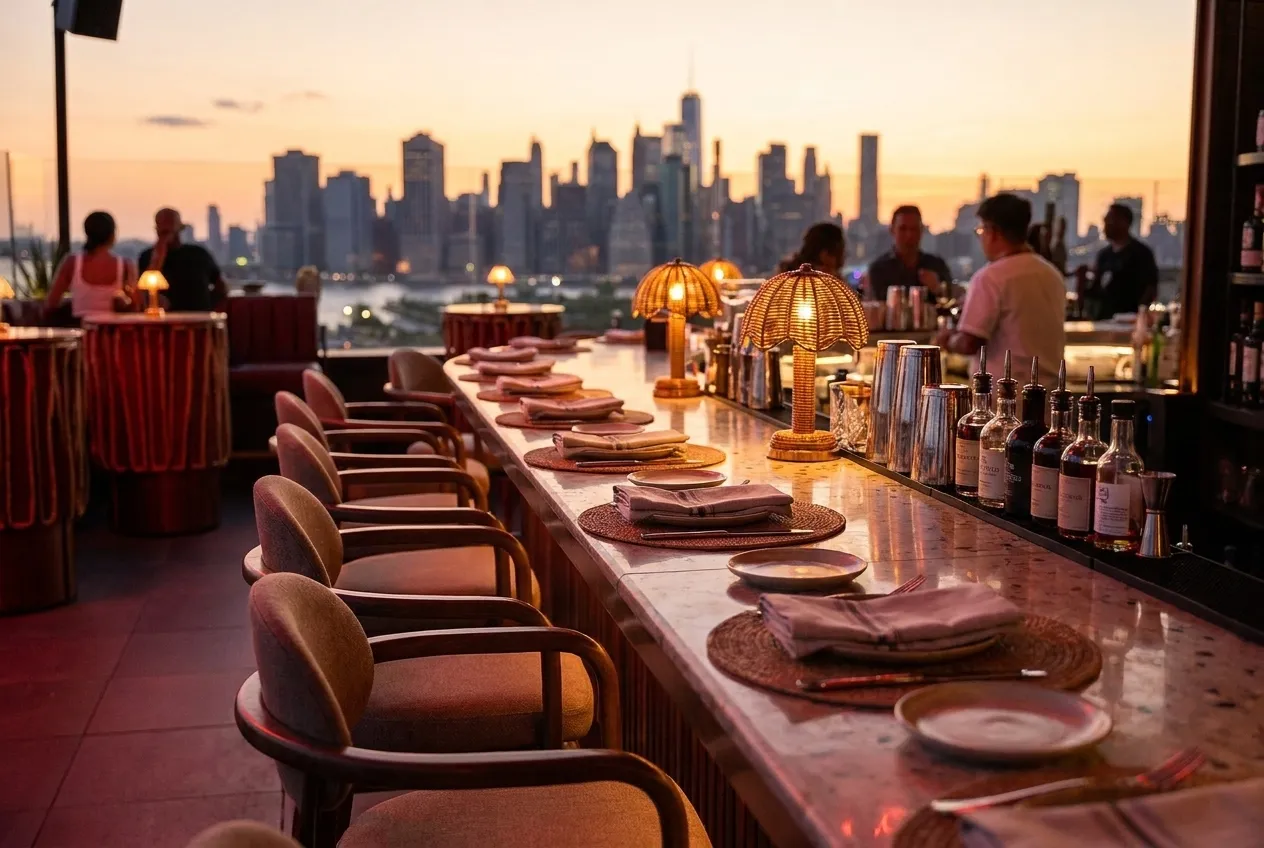
Ask whether bar seating is available for walk-ins, because at a very large number of New York restaurants the bar is first-come, serves the full menu, and has a wait a fraction of the dining room's. Ask whether they take a phone number and text, which frees you to go and have a drink instead of standing there. Ask whether the wait is shorter for a smaller party, and be willing to split a group of six into two threes at the bar. And ask what time the wait typically drops, because most hosts know their own curve and will tell you honestly if you ask directly.
That last question is the highest-value one. Most New York dining rooms have a distinct trough somewhere between the first and second sittings, usually around eight-fifteen to eight-forty-five, and a host who has worked six months in the room can predict it to within ten minutes.
Six kinds of room that do not have a wait
The first is the counter. Restaurants built around a single counter — noodle bars, omakase counters at the lower end, sandwich shops with stools, diner counters — turn over far faster than table rooms and frequently seat solo diners and pairs immediately, because a single seat opens up constantly whereas a four-top does not.
The second is the second location. Any restaurant popular enough to generate a ninety-minute wait has usually opened a second branch, and the second branch almost never has the same queue, because the queue is partly a reputation artefact attached to the original address. The food is made by the same operation.
The third is the old room. A restaurant that has been open thirty years in a neighbourhood that is now fashionable is generally not the one with the queue outside it, and it is frequently better. New York's waitlists track novelty far more tightly than they track quality.
The fourth is the outer-borough equivalent. The dish you are queueing for in Manhattan almost always has a version in Queens, Brooklyn or the Bronx that does not take bookings because it does not need to. The fifth is the hotel dining room, which locals systematically underrate and which almost always has a bar seat. And the sixth is lunch — the same kitchen, the same food, a third of the demand.
When it is genuinely worth waiting
Three situations justify holding. When the room is small and the format is unrepeatable — a fifteen-seat counter doing one thing — there is no equivalent, so the wait is the price of the thing itself. When you are a party of two, because two-tops turn over fastest and a quoted ninety for two is very often forty-five. And when the restaurant has a proper bar you can drink at while you wait, because then the wait is not dead time, it is the first hour of the evening.
It is not worth waiting when you are a group of five or more, when there is no bar, when the queue is on the pavement in bad weather, or when the restaurant is under six months old — that last one because the room is still calibrating and you are paying an hour and a half for a kitchen that has not settled.
The move most people never make
Put your name down, ask them to text you, and go and eat something small somewhere else within two blocks. A snack and a drink at a nearby counter costs less than the frustration, and it changes your position entirely: you are now choosing between two dinners instead of waiting for one. About a third of the time, the second place turns out to be good enough that you release the first table when the text arrives. That is not a failure. That is how people find the restaurants nobody is queueing for.
Tags: #RestaurantsNearMe #NYCDining #NoReservation #WalkIn #BarSeating #NYCRestaurants #HiddenGems #WhereToEatNYC #NewYorkCity #RestaurantWait #CounterDining #Queens #Brooklyn #DiningTips
All trademarks are the property of their respective owners.
Ask Karpo first
Standing outside a full room right now? Ask Karpo what has open seats within a five-minute walk, which nearby places have walk-in bar seating, and whether the one you wanted usually clears around the second sitting.