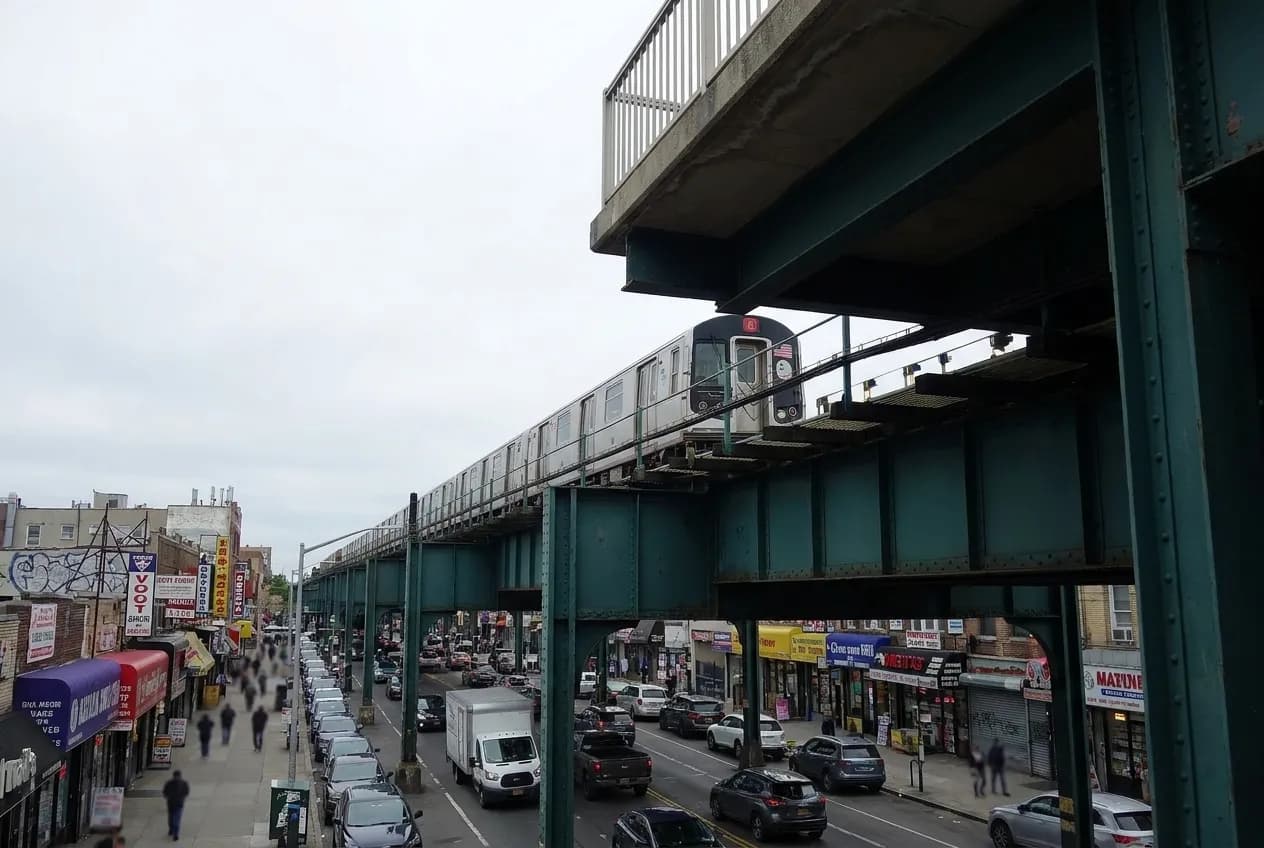
The 7 train runs from Hudson Yards under the river and then climbs onto elevated track along Roosevelt Avenue, and from that point until Flushing it passes through what is plausibly the densest concentration of distinct national cuisines anywhere in the United States. The mistake people make is treating it as one destination. It is four, they are twenty minutes apart, and each one rewards a completely different kind of evening.
Four stops is three too many for one night. Ask Karpo which single stop fits what you are actually in the mood for, and what is open by the time you would get there.
Why nothing here takes a reservation
Almost every room worth eating in along this corridor is a walk-in house, and that is not an oversight. These restaurants are sustained by people who live within a few blocks and decide to eat out forty minutes before they do it. A booking system would add cost and staff for a demand pattern that does not need managing. The practical consequence is that you should not plan this line the way you plan Manhattan — you turn up, and if there is a wait you walk two doors down, because there is always a two doors down.
The second consequence is timing. Kitchens here are busiest between seven and nine, and a lot of the smaller counters close earlier than you would expect on a weeknight. Arriving at six is a strictly better plan than arriving at nine.
Woodside: the Filipino and Thai stop
Woodside, at 61st Street and again at 69th, is the first real stop on the corridor and is anchored by two long-established communities. The Filipino presence along Roosevelt Avenue here is the oldest concentrated one in the city, which means turo-turo counters — point-and-pick steam tables — alongside sit-down rooms doing sisig, kare-kare and pancit. It is also historically an Irish neighbourhood, and the old bars that survive from that era sit on the same blocks, which is a genuinely strange and pleasant adjacency.
Woodside is the stop to choose if you want to eat well and be home early. It is the closest to Manhattan on the corridor, the least crowded of the four, and the least likely to involve a wait.
Jackson Heights: the one with five regions in six blocks
Jackson Heights at 74th Street–Roosevelt Avenue is the densest and most famous stop, and the reason is that several distinct food cultures occupy adjacent blocks without blending. Seventy-fourth Street north of Roosevelt is South Asian — Indian, Bangladeshi, Pakistani — with sweet shops and sari retailers. The blocks along Roosevelt itself run Colombian, Ecuadorian, Mexican and Peruvian. And there is a substantial Himalayan population — Nepali and Tibetan — whose momo counters and dining rooms are concentrated around 37th Avenue.
The way to do Jackson Heights is not to try to see all of it. Pick one of the three registers, eat properly in it, and then get a dessert or a coffee from a different one on the walk back to the train. Attempting a full crawl here is how people end up eating four mediocre snacks instead of one very good dinner.
Elmhurst: Thai, Malaysian and Indonesian
Elmhurst, around the 82nd Street and Elmhurst Avenue stops, is where the corridor's South East Asian weight sits. Broadway through Elmhurst carries the city's most serious concentration of Thai cooking outside of a handful of Manhattan rooms, and the Malaysian and Indonesian restaurants nearby are doing food that has essentially no equivalent in Manhattan at any price. It is also where Queens' Chinese population overlaps with all of that, which produces some genuinely unusual neighbouring menus.
Elmhurst is the correct choice if you want heat and you want it authentic rather than adjusted. The convention that you can ask for Thai spice level and be taken seriously holds here in a way it does not west of the river.
Flushing: the terminus and the biggest jump
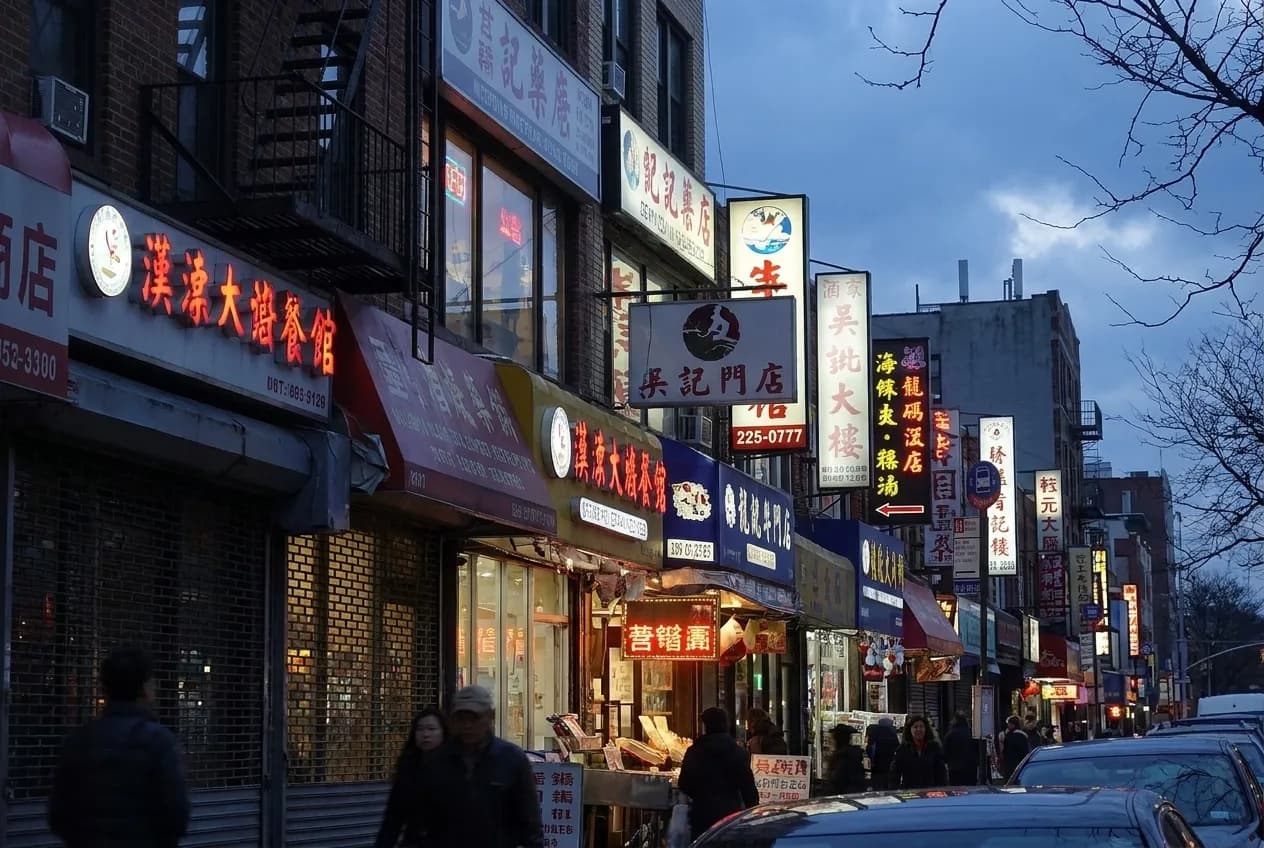
Main Street, Flushing is the end of the line and the largest of the four by a wide margin — it is a full downtown, not a strip. What separates it from Manhattan's Chinatown is regional range: Sichuan, Dongbei, Shanghainese, Xi'an, Taiwanese, Fujianese and Korean all operate here at scale, alongside food halls in basements and malls where a dozen specialised counters sit side by side. It is the only stop on this list where you could eat for a week and not repeat a region.
Flushing is also the stop where the express-versus-local distinction on the 7 actually matters. The express skips a large number of stations and the time difference to Main Street is significant, so check which train you are boarding rather than taking the first one that arrives.
How to plan the evening
One stop, one cuisine, one proper meal. Go at seven rather than nine. Carry some cash, because a meaningful minority of the best counters here still prefer it. Expect to walk between the station and the room rather than arriving at the door. And if the place you wanted has a queue, take the queue as a signal and eat next door instead of waiting forty minutes — on this corridor, next door is very rarely a downgrade.
Tags: #RestaurantsNearMe #7Train #QueensFood #JacksonHeights #Flushing #Elmhurst #Woodside #RooseveltAvenue #NYCNeighborhoods #WhereToEatNYC #NewYorkCity #NeighborhoodGuide #WalkIns #QueensNY
All trademarks are the property of their respective owners.
Ask Karpo first
Not sure which of the four stops fits tonight? Ask Karpo which one matches what you feel like eating, how long the ride actually takes from where you are, and which rooms near that station are still serving at the hour you would arrive.