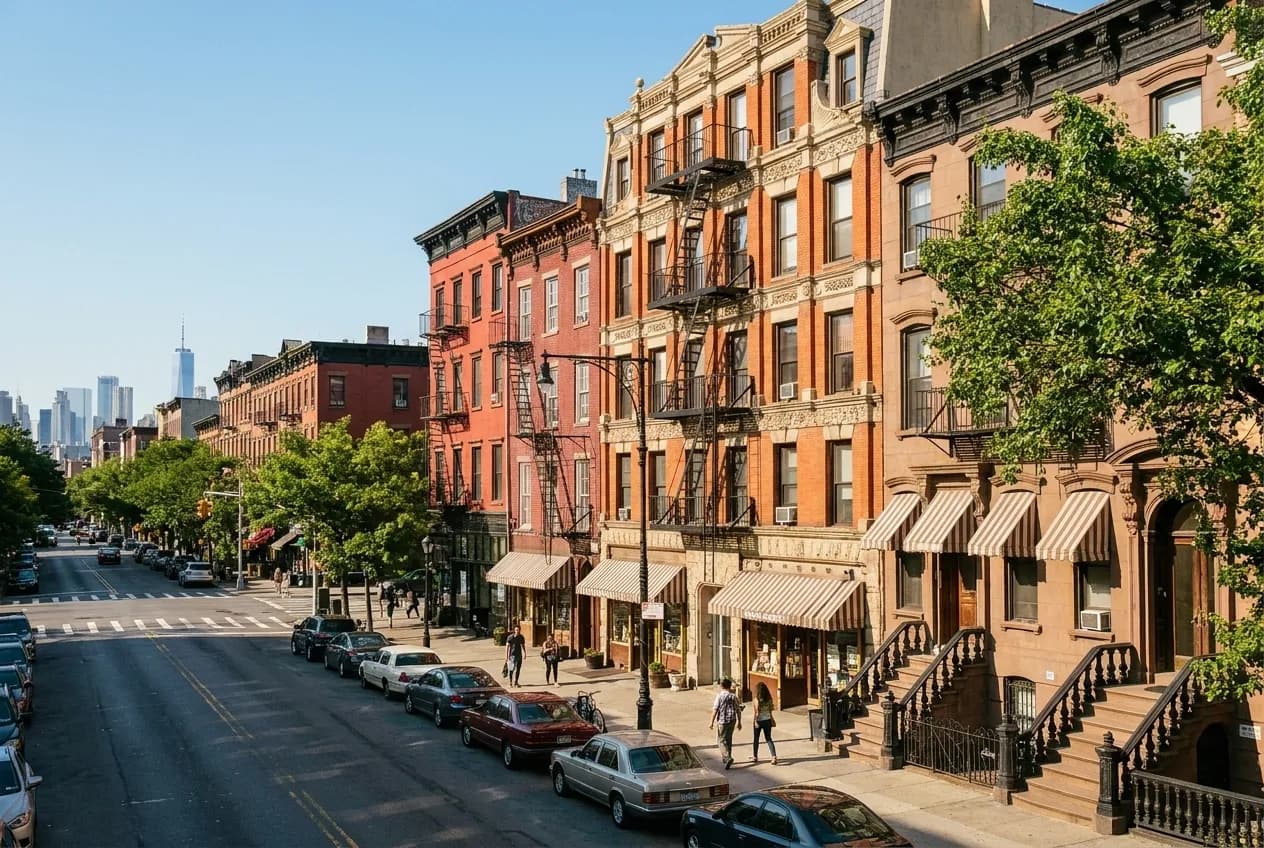
Atlantic Avenue between Brooklyn Heights and Boerum Hill has been a Middle Eastern commercial street for over a century, which most restaurants near me searches will not tell you, because the algorithm has no way to encode a hundred years of a neighbourhood's shopping habits. Al Badawi at 151 Atlantic Avenue is a Palestinian restaurant on that street, and the first thing you notice walking in is not the dining room — it is the domed oven just inside the door, with bread coming off it continuously.
Ask Karpo what to order alongside the bread, whether the room is full at the hour you are walking over, and what else on Atlantic Avenue is worth the same trip.
The bread is the anchor, not the side
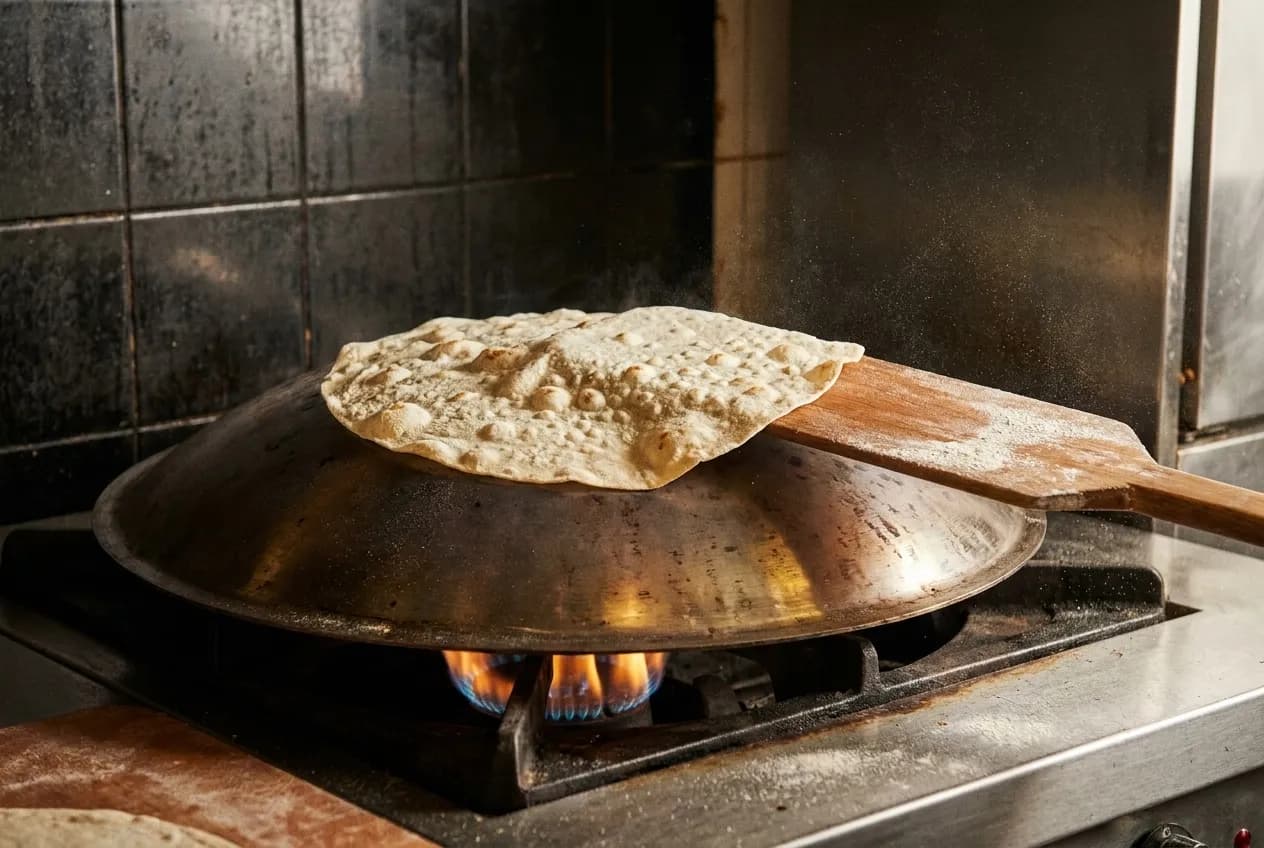
Saj bread is baked on a convex metal dome rather than in an oven cavity, which produces something extremely thin, blistered in patches and pliable rather than crisp. Taboon bread is its thicker relative. Both are built to carry other things, which is why the menu keeps returning to them: this is a cuisine where bread is cutlery, plate and dish all at once.
Because the oven is at the front rather than hidden in the kitchen, you can watch the bread being made while you wait. That placement is not decoration — it means the bread reaching your table is minutes old, and it changes the whole meal.
Musakhan is the dish to order first
If there is one plate that explains Palestinian cooking to someone who has not eaten it, it is musakhan: roasted chicken heavily seasoned with sumac and slow-cooked onions, served over taboon bread that soaks up everything underneath. Sumac is sour rather than hot, and the combination of that sourness with sweet onion and olive oil is the central flavour of the whole region.
Beyond that, look for the rice dishes with shredded chicken and garlic tahini, and the bone-in lamb with fermented yoghurt. The menu does not hedge toward a generic Middle Eastern middle ground, which is precisely its value on a street full of restaurants that do.
The hours are unusually forgiving
The kitchen runs 11am to 10pm Sunday through Thursday and 11am to 11pm on Friday and Saturday, with no closure between lunch and dinner. In a city where the 3pm to 5:30pm dead zone defeats an enormous number of plans, an eleven-hour continuous service is a genuine convenience.
That makes mid-afternoon the strategic slot. The room is quiet, the bread is still coming off the dome, and you are eating the same food you would at eight o'clock without the wait.
Walk the avenue afterwards
The stretch of Atlantic around this block holds spice merchants, bakeries and grocers that have been trading for generations, alongside newer furniture and design shops. Buying a bag of sumac or za'atar within a few doors of eating a dish built on it is the sort of thing that only works on streets with this kind of continuity.
Brooklyn Heights Promenade and its harbour view are about ten minutes west on foot, and the subway options at Borough Hall and Hoyt–Schermerhorn are close. Come by train and walk the avenue in one direction; it is the whole point of the address.
Ordering a mezze table without over-ordering
The trap with this kind of menu is treating the small dishes as starters and then ordering a main each on top, which produces twice the food anyone wanted and a table with no room on it. The shape that works is to build around the bread: two or three cold dishes to spread and scoop, one hot vegetable dish, and then one large plate for every two people rather than one each. The bread does the work that a side of rice or potatoes would do elsewhere.
Order the cold dishes first and let them sit on the table while the rest comes. That is how the food is eaten at home in the region — everything arrives in the middle, nobody has their own plate for long, and the meal is a slow accumulation rather than a sequence of courses. If you are two people, this is genuinely a case where ordering less and adding later beats deciding everything up front.
A hundred years of Atlantic Avenue
The Middle Eastern commercial stretch here dates to the early twentieth century, when Syrian and Lebanese families displaced from lower Manhattan's Little Syria resettled along Atlantic Avenue and opened the groceries, bakeries and import shops that anchored the street for generations. Much of that first wave has gone, and the rents have changed what the block looks like, but the spice merchants and bakeries that survive are direct descendants of it rather than a revival.
Walking west from the restaurant takes you towards Brooklyn Heights, the Promenade and the harbour view; walking east takes you deeper into Boerum Hill and a longer run of shops. The Promenade at dusk is the obvious after-dinner move and it is about ten minutes on foot. Borough Hall, Hoyt–Schermerhorn and Atlantic Avenue–Barclays Center between them put nearly every subway line within reach, which makes this one of the easiest addresses in Brooklyn to reach from anywhere.
Practical notes
Al Badawi is at 151 Atlantic Avenue in Brooklyn, open 11am to 10pm Sunday through Thursday and 11am to 11pm on Friday and Saturday, with no break between services. Order bread with everything — saj and taboon come off the domed oven by the door — and start with musakhan, the sumac chicken over bread. Mid-afternoon is the easiest slot. The spice shops and bakeries on the surrounding blocks are part of the trip.
Tags: #RestaurantsNearMe #AtlanticAvenue #BrooklynHeights #AlBadawi #PalestinianFood #BrooklynFood #NYCNeighborhoods #WhereToEatNYC #BrooklynEats #Musakhan #NYCFoodGuide #SajBread #MiddleEasternFood #BoerumHill
All trademarks are the property of their respective owners.
Ask Karpo first
Want to know what to order alongside the bread, whether the room is full at the hour you are walking over, and which shops on Atlantic are still open afterwards? Ask Karpo for current Brooklyn Heights hours, a table order that covers the menu properly, and a short walk to finish the afternoon.


