 Chelsea Consignment Shop Crawl Planner for Your First Studio
Hidden Gems & Odd Finds
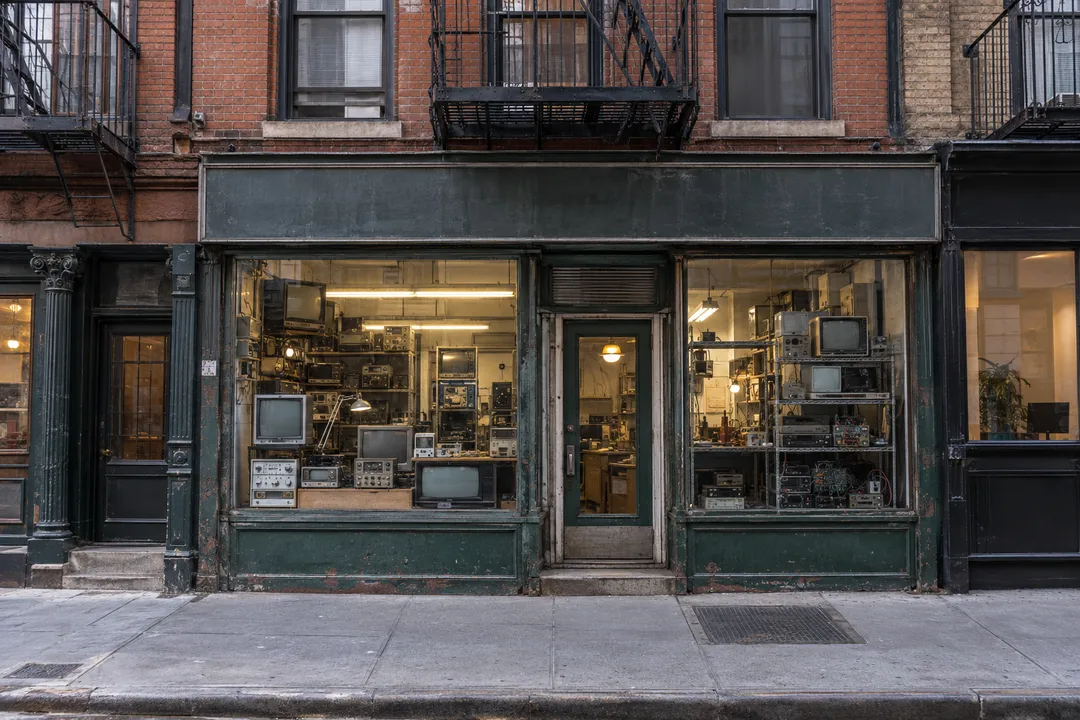
Canal Street Record Player Repair and Tune-Ups: New Hi-Tech
Visit New Hi-Tech on Canal Street in Lower Manhattan for vintage turntable motor restoration, phono cartridge alignment, and belt-drive mechanical servicing.
At 47 Canal St, New Hi-Tech operates as one of Lower Manhattan's most enduring vintage electronics workshops and independent record player repair destinations. Situated where the vibrant pulse of Chinatown meets the historic tenement streets of the Lower East Side, this humble ground-floor repair shop founded in 1983 by owner Alex, has spent more than four decades restoring vintage stereo receivers, classic cassette decks, and delicate analog turntables. While trendy boutique audio outlets often decline to service older consumer models, the seasoned bench technicians here take pride in resurrecting mid-century Marantz, Pioneer, Sansui, Technics, and Dual turntables that collectors and local families have treasured for decades. Stepping into the workspace surrounds you with shelves of vintage chassis, glowing vacuum tubes, and an authentic ethos of master analog craftsmanship.
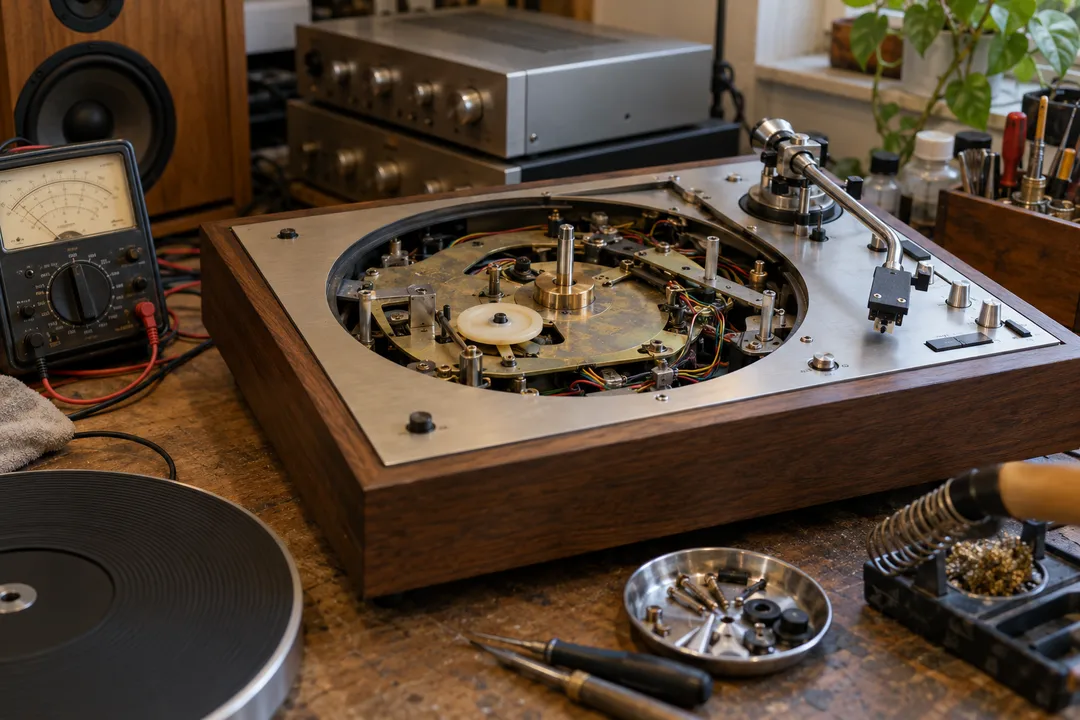
Vintage Belt-Drive and Idler-Wheel Turntable Restoration
Classic turntables manufactured throughout the nineteen-sixties and nineteen-seventies utilized mechanical drive systems that rely on precise physical friction and balanced rotational momentum. Belt-driven decks from Pioneer, Sansui, and Yamaha rely on precision-ground rubber belts stretched around balanced cast-aluminum sub-platters. Over decades of household storage in warm New York apartments, these organic rubber belts dry out, stretch, or dissolve into sticky petroleum residue, causing erratic playback speeds and audible pitch flutter.
Technicians at New Hi-Tech thoroughly clean motor pulleys and inner platter drive rims with technical-grade alcohol before fitting precision-sized replacement belts matched to exact original tensions. For classic European idler-wheel record players like Dual 1219, Dual 1229, and Garrard changers, the technicians inspect rubber drive wheels for surface hardening, flat spots, or glazing. Using specialized bench lathes, they carefully re-true rubber edges or install newly vulcanized replacement wheels to restore whisper-quiet mechanical power transfer.
In addition to drive assemblies, mechanical linkages beneath automatic turntable decks frequently freeze when original petroleum grease hardens into waxy lacquer. The technicians dismantle seized control levers, remove hardened grease in sonic baths, and lubricate sliding plates with high-viscosity synthetic oils that remain fluid and stable across changing seasonal temperatures.
The workshop also services synchronous AC drive motors, disassembling motor housings to clean sintered bronze sleeve bearings. Infusing dried bronze bushings with fresh high-grade synthetic oil under controlled vacuum pressure restores smooth rotational inertia, eliminating mechanical motor hum and mechanical vibration from reaching sensitive phono cartridges.
Phono Cartridge Setup and Stylus Precision Geometry
A record player functions as an ultra-sensitive micro-mechanical transducer where mechanical groove vibrations generate minute electrical voltages measured in millivolts. Even minor misalignment between the diamond stylus and vinyl groove walls introduces harmonic distortion, sibilance, and accelerated record wear. The bench at New Hi-Tech offers comprehensive cartridge mounting, overhang adjustment, and azimuth alignment using mirrored protractors and calibrated magnifying scopes.
Whether you are mounting a vintage Shure V15 Type III cartridge or installing a modern Audio-Technica moving-magnet stylus, the technicians dial in exact vertical tracking forces with digital jeweler scales. Anti-skating mechanisms are calibrated to counterbalance inward skating forces, ensuring equal physical pressure against both the left and right groove walls for optimal stereo separation and panoramic acoustic imaging.
When vintage tonearm wiring degrades or breaks inside miniature headshell collars, the workshop re-threads ultra-fine multi-strand conductors, soldering fresh gold-plated terminal clips to eliminate intermittent channel dropouts. Corroded external RCA interconnect cables are replaced with low-capacitance shielded cables, banishing persistent hum and radio-frequency interference from vintage stereo setups.
For customers running vintage Japanese receivers with dedicated moving-magnet phono stages, the staff inspects ground lug integrity and tests signal continuity across both audio channels using calibrated audio test oscillators. This comprehensive signal verification ensures that both frequency response curves and channel balances meet original studio specifications.
Shop Hours and Intake Procedures on Canal Street
New Hi-Tech maintains welcoming neighborhood hours six days a week on Canal Street between Ludlow Street and Orchard Street. The shop opens Monday through Friday from 10:00am to 6:00pm, and Saturday from 10:00am to 5:00pm, remaining closed on Sunday. Arriving during weekday midday hours between 11:30am and 1:30pm allows you to consult directly with senior repair technicians without feeling rushed by late-afternoon intake queues.
When preparing a record player for transport to Canal Street, remove the counterweight and unscrew the cartridge headshell, placing both components into a padded protective container. Secure the tonearm wand tightly to its cradle with a soft wire tie, and lift off the metal platter and rubber mat to prevent accidental damage to center motor bearings while walking or riding the subway.
Upon intake, the staff logs your turntable's brand, model number, and reported symptoms on a written service intake slip. The technicians perform bench evaluations to determine whether your unit requires simple belt and lubrication maintenance or more involved motor overhaul and circuit recapping, providing clear, straightforward communication before undertaking detailed bench labor.
Lower East Side History and Seward Park Surroundings
Dropping off vintage audio gear on Canal Street places you in one of Manhattan's richest historical and cultural corridors. Walking two blocks north along Orchard Street brings you to the Lower East Side Tenement Museum at 103 Orchard St, where preserved historic apartments tell the moving stories of immigrant working families across the nineteenth and twentieth centuries.
Across the avenue to the south, Seward Park at Essex Street and Canal Street offers shaded park benches, towering London plane trees, and historic library architecture. Strolling through the surrounding blocks reveals a charming mix of traditional Chinese herbal shops, neighborhood dim sum bakeries, and contemporary art galleries, making your repair errand a rewarding cultural exploration.
Subway Access via the F, B, and D Train Corridors
Accessing 47 Canal St is convenient from across Manhattan, Brooklyn, and Queens via nearby subway lines. The East Broadway station on the F train is located just around the corner along Rutgers Street, offering an effortless two-minute walk to the repair counter. Commuters can also use the Grand Street station serving the B and D trains, walking four short blocks south along Chrystie Street or Forsyth Street.
Riders traveling on the J or Z trains can exit at the Bowery or Canal Street stations and walk east past vintage lighting storefronts. Combining classic neighborhood character with decades of hands-on electronic problem-solving, New Hi-Tech provides an invaluable neighborhood haven for vinyl music enthusiasts keeping vintage record players running smoothly in New York City.
Ask Karpo for more information.
Keep reading
- Chelsea Consignment Shop Crawl Planner for Your First Studio
 East Village Consignment Shop Crawl Planner: Leather Jackets
 Harlem Consignment Shop Crawl Planner for a Jazz Night Look