 Chelsea Consignment Shop Crawl Planner for Your First Studio
Hidden Gems & Odd Finds
Argosy Book Store: Midtown Rare Bookstore Guide
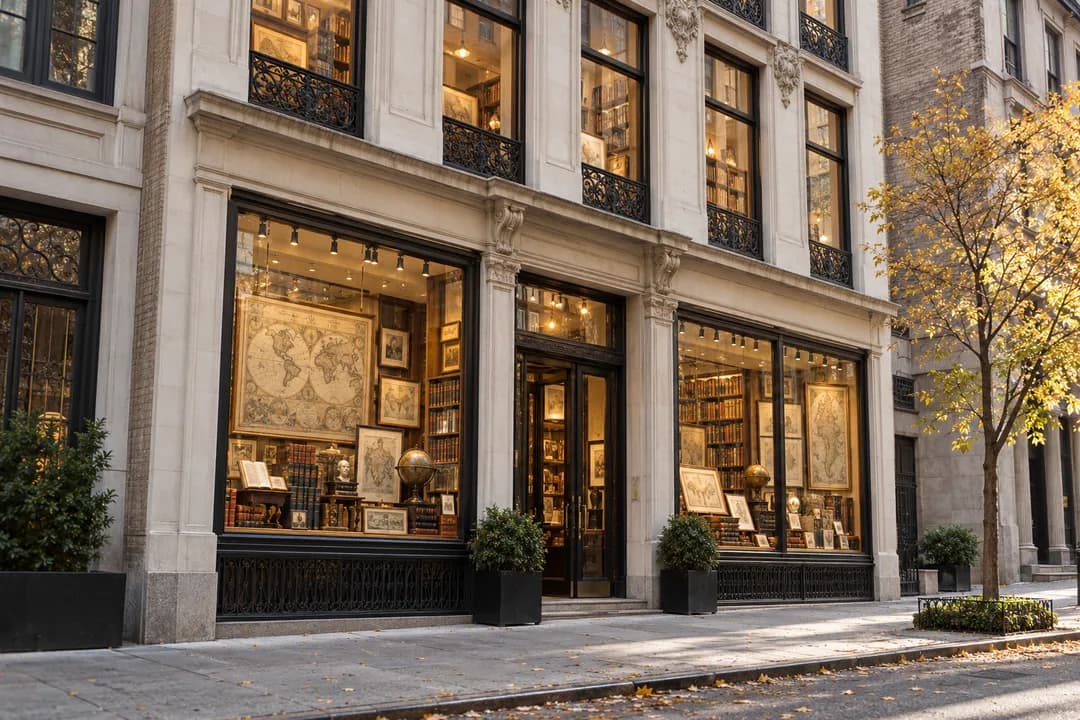
Argosy Book Store at 116 East 59th Street is a Midtown rare bookstore with six floors of antiquarian books, maps, prints, and literary finds.
If you are searching for a rare bookstore near me in Midtown, Argosy Book Store gives the phrase a wonderfully literal answer: walk into 116 East 59th Street and keep going upward. The family-run shop occupies six floors of antiquarian books, prints, maps, photographs, and paper history, so the experience feels closer to a small museum with a sales counter than to a single-room used-book shop. It is a place for a planned hunt, a lunch-break detour, or the happy accident of finding a subject you did not know you wanted.
Start With the Six-Floor Wander
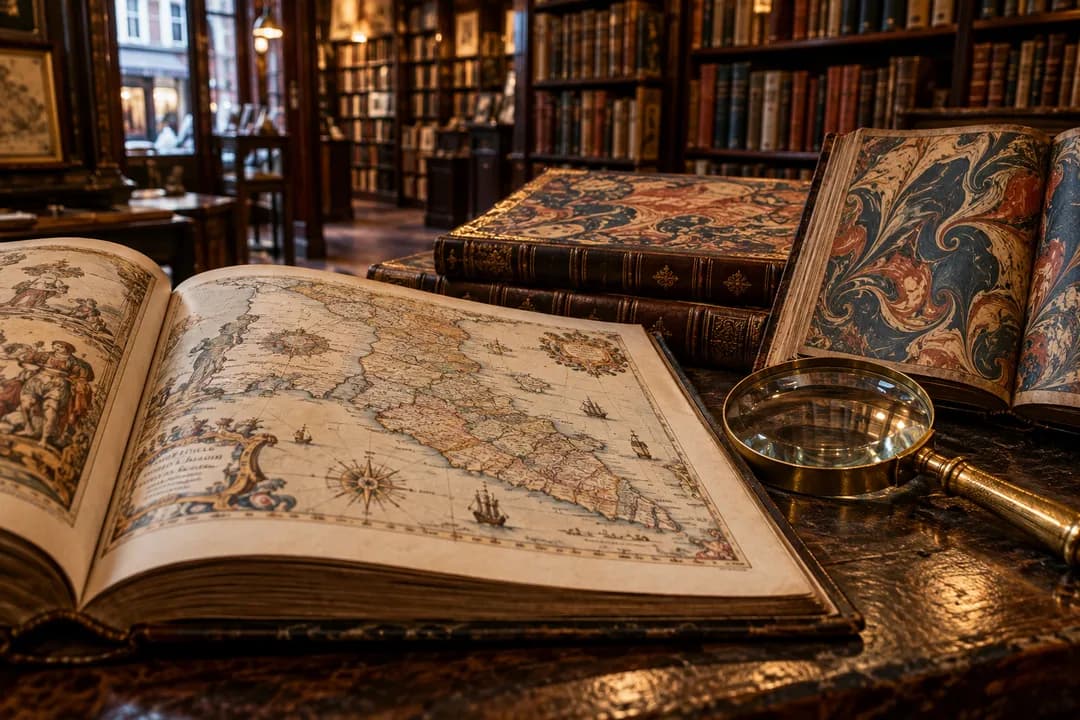
The first useful decision is not what title to search for, but how much time to give the building. Argosy's shelves reward a slow vertical route. Start by orienting yourself at the entrance, then let the categories pull you upward: art and architecture, travel, history, literature, and the visual material that sits between book and object. A quick lap can reveal the shop's scale, but an hour lets you notice the small groupings that make a dealer's stock feel curated rather than dumped into bins.
Argosy's identity comes from range. A collector can move from a nineteenth-century travel volume to an illustrated children's book, then stop at a portfolio of prints or a map that changes the sense of a familiar city. The shop is particularly good for browsing across formats: signed books, first editions, photographs, posters, and maps all sit inside the same antiquarian conversation. That mix is why the store works for both a serious collector and a visitor who wants one memorable object with a story.
What Argosy Does Better Than a General Bookstore
There is a quiet etiquette to the visit. Handle fragile material with both hands, keep drinks outside, and ask before opening anything that is boxed, wrapped, or displayed behind glass. Staff are accustomed to questions about editions and condition, so describe the author, subject, period, or visual detail you remember instead of apologizing for not knowing the exact title. If a particular shelf is busy, step aside and make a note; the store is dense enough that another floor usually offers a productive detour while you wait.
The best browsing strategy is to combine one precise request with one open-ended question. Ask for a specific writer, city, or historical subject, then ask what has arrived recently in a neighboring category. That second question is where Argosy becomes more than a search box. You may be shown an illustrated volume, a map, or an association copy that would never appear in a normal keyword search. Carry a short wish list, but leave room for the shelf to change your plan.
How to Browse Without Missing the Good Stuff
Argosy sits in Midtown East, close enough to Central Park and the Museum of Modern Art for a compact afternoon loop. After the shop, walk west toward Fifth Avenue and enter the park at the southeast corner if you want air and scale; the transition from tightly packed shelves to open paths is part of the pleasure. If you prefer architecture, continue around the blocks near Park Avenue and the Seagram Building, where the mid-century streetscape makes a fitting counterpoint to Argosy's older paper world.
A bookish route can also move north toward the library and museum corridor without turning into a checklist. The point is not to stack five attractions after one bookstore. It is to give your eyes another kind of visual material: a building facade, a park map, a gallery wall, then the illustrated pages you saw at Argosy. Midtown East is unusually good for that rhythm because several neighborhoods meet within a few long blocks and the subway connections are straightforward.
A Midtown East Walk After the Stacks
The shop lists hours of 10 a.m. to 6 p.m. Monday through Saturday, and the address is 116 East 59th Street, New York, NY 10022. The nearest practical subway choices are the Lexington Avenue lines at 59th Street and the N, R, W, and Q trains at nearby 59th Street–Lexington Avenue connections. Wear comfortable shoes: the vertical layout is part of the visit, and standing at a shelf for ten minutes is more useful than trying to rush every floor.
Do not arrive expecting a self-guided museum with every item priced like a souvenir. Rare books are evaluated as individual objects, and staff attention is part of the shopping experience. If you are buying, ask about condition, edition points, provenance, and whether the item comes with a protective enclosure. If you are only looking, be clear and respectful; a focused question usually gets a warmer response than taking photographs of every shelf without context.
Practical Notes for a Useful Visit
Argosy also works well as a repeat stop because its inventory changes. On a first visit, learn the geography and notice which floors match your interests. On a second, come with a narrow theme such as New York history, illustration, exploration, or modern poetry. That approach keeps the store from becoming overwhelming and makes the next discovery feel earned. The family-run character is visible in that continuity: this is a working book business, not a display frozen for visitors.
For a rare bookstore near me search that should end somewhere tangible, Argosy is a strong Midtown answer. Set aside enough time to climb, ask one good question, and let an unexpected map or binding interrupt your original plan. Save the address in the Karpo APP before you leave, then build the rest of the afternoon around the object you found rather than around a generic list of nearby stops.
One final habit makes Argosy easier to remember: record the floor, category, and reason an item caught your eye, not only its title. A map may matter because of its place names, a binding because of its material, or a signed book because of the person who owned it. Those notes turn a pleasant browse into a useful personal catalogue. They also give you a better starting point when you return, contact the shop about a subject, or ask the Karpo APP to suggest another bookish stop in the city. The building also makes a good test of attention. Notice how a narrow Manhattan address can hold distinct rooms for art, travel, and paper ephemera, then compare that interior variety with the single visual language of 59th Street outside. Argosy is worth visiting even when you have no purchase in mind because it teaches you to look at books as objects with geography, material, and memory. That lesson travels well to every other antiquarian shop on a future New York itinerary.
Ask Karpo for more information.
Keep reading
- Chelsea Consignment Shop Crawl Planner for Your First Studio
 East Village Consignment Shop Crawl Planner: Leather Jackets
 Harlem Consignment Shop Crawl Planner for a Jazz Night Look