 Upper West Side Hot Chocolate Cafe Crawl on Balloon Eve
Coffee & Dessert
Williamsburg Quiet Coworking Cafe Finder: Loft Desks
Explore Williamsburg's industrial brick warehouses and Grand Street side blocks to find low-noise laptop cafes, sunlit tables, and riverfront breaks.
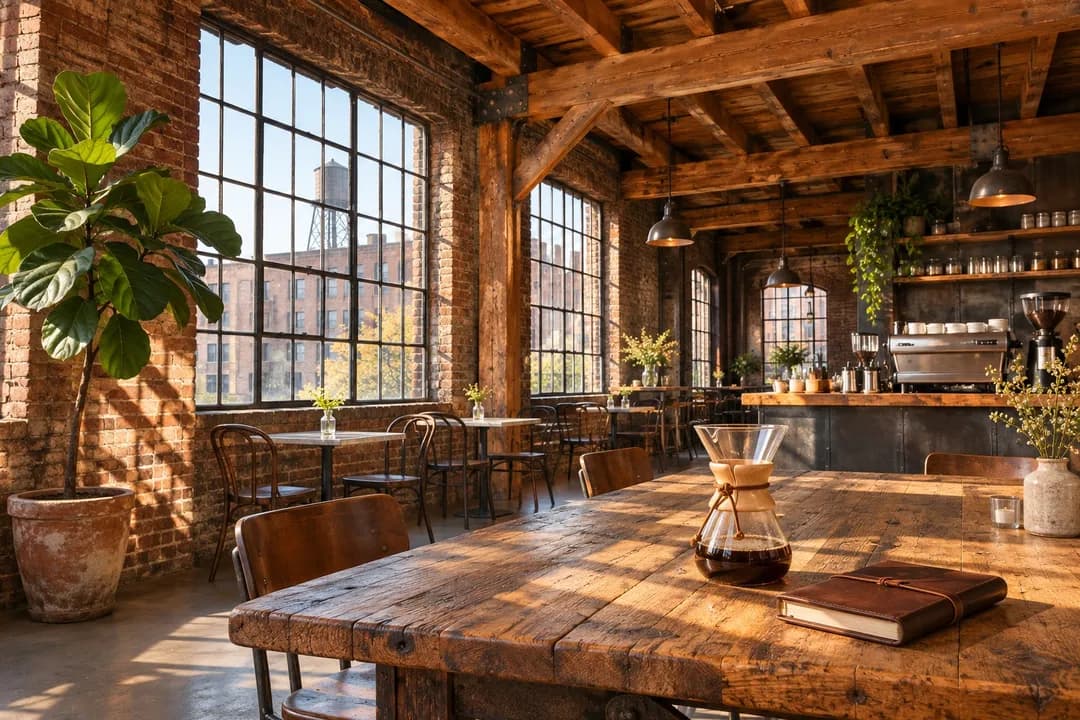
The adaptive reuse of the 1882 Havemeyer & Elder Filter, Pan, and Finishing House along Kent Avenue—reopened in 2023 inside the Domino Park waterfront campus—epitomizes how Williamsburg transformed nineteenth-century maritime manufacturing into spacious creative workspaces. Freelancers using a quiet coworking cafe finder in North Brooklyn quickly realize that proximity to the Bedford Avenue L-train staircase determines noise levels more than any other variable. While narrow espresso bars right off North 7th Street pulse with morning commuter lines, the converted brick carriage houses and timber-beamed roasteries along Wythe Avenue, Berry Street, and Grand Street offer deep floor plates where solo focus thrives. Launching the Karpo APP before crossing the East River lets you map a calm Brooklyn work loop that links industrial coffee halls with waterfront esplanades and Carnegie reading rooms.
Timber-Truss Roasteries And South Side Acoustic Pockets
Williamsburg divides naturally into three distinct acoustic zones for daytime laptop work: the North Side warehouse grid between Kent and Berry Streets, the South Side residential blocks below Grand Street, and the east-side artisan corridor toward Lorimer and Graham Avenues. Former spice mills, ironworks, and breweries near Wythe Avenue retain twelve-inch masonry walls and heavy timber roof trusses that absorb the clatter of commercial espresso knock-boxes. When you claim a bench along a back wall near North 3rd Street or South 4th Street before 9:00 AM, the sheer cubic volume of the room prevents nearby conversations from bleeding into your headphones. Many Brooklyn roasteries also separate their rapid takeaway counters near the street entrance from elevated rear seating platforms designed specifically for long-session readers and designers.
Daylight angles across the East River shape screen visibility throughout the day. Storefronts facing west along Kent and Wythe Avenues enjoy soft, indirect morning illumination while Manhattan's skyline sits across the water, then receive intense golden-hour glare after 2:30 PM. Conversely, cafes tucked beneath the steel approaches of the 1903 Williamsburg Bridge on South 6th Street or Broadway benefit from diffused northern shade all afternoon. If your workday requires reviewing high-contrast architectural drawings or editing video timelines, pick an interior booth along Grand Street or Metropolitan Avenue where multipane factory transoms cast even overhead light without reflections.
Navigating The Bedford Avenue Midday Surge And Patio Transitions
Between 8:00 AM and 11:15 AM on weekdays, Williamsburg's coffee rooms operate at a measured, library-like tempo as remote software engineers, music producers, and illustrators settle into their first two hours of deep work. By 12:00 PM, creative studios around Berry Street—where New York City's Open Streets program calms through-traffic during daytime hours—spill out for lunch, turning front tables into lively social hubs. Rather than losing momentum when lunch crowds gather, seasoned Brooklyn regulars shift their workflow to sheltered rear garden courtyards or transition four blocks east toward the quieter residential corners around Lorimer Street and Devoe Street.
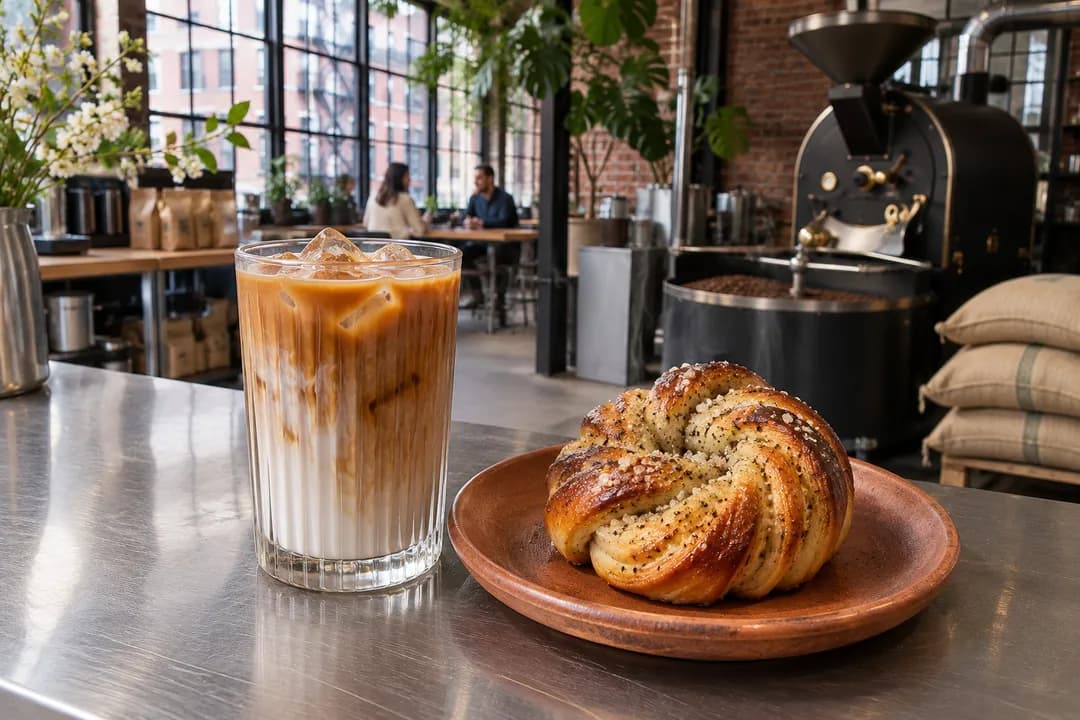
Fueling a four-hour Brooklyn work block calls for substantial, tidy counter fare that pairs well with small-batch roasting profiles. Local Nordic-inspired and Polish-heritage bakeries across Williamsburg and neighboring Greenpoint supply rye sourdough toast with whipped ricotta, braided cinnamon-cardamom buns, and savory egg-and-chive brioche rolls that stay contained on ceramic plates. Ordering a freshly brewed V60 pour-over or a cold-steeped cascara tea alongside your mid-morning pastry establishes a respectful rhythm with baristas, especially in independent shops that reserve half their wooden tables for laptop users and half for Laptop-Free dining.
Battery Strategy, Roastery WiFi Loads, And Division Avenue Library Backups
Converted industrial lofts in North Brooklyn often run exposed steel conduit along brick walls, yet power receptacles remain concentrated near communal center tables rather than perimeter two-tops. Bring a fully charged laptop and a high-capacity portable power brick so you can sit wherever the acoustics and posture feel best instead of crowding a single floor outlet strip. During peak 10:30 AM hours, twenty simultaneous video calls can saturate a neighborhood cafe's router; keeping offline copies of active documents and switching to a personal 5G hotspot along wide corridors like Bedford Avenue or Roebling Street keeps your git pushes and cloud saves instantaneous.
Whenever you need absolute silence for final proofreading or dense research, the Brooklyn Public Library's Williamsburgh branch on Division Avenue between Marcy and Rodney Streets stands as one of the borough's grandest civic anchors. Opened in 1905 and designed by architect Richard A. Walker in the Beaux-Arts style, it is the largest Carnegie library in Brooklyn, featuring a soaring central reading room, tall arched windows, and newly restored study tables following its comprehensive renovation. Walking ten minutes south from Metropolitan Avenue into that landmark brick hall guarantees a peaceful, non-commercial study desk where high plaster ceilings and brick fireplace surrounds create an unmistakable atmosphere of scholarly focus.
East River Reset Walks Through Domino Park And Marsha P. Johnson State Park
Stepping away from your keyboard for twenty minutes in the middle of the afternoon restores focus far more effectively than a third espresso shot. Walk west toward the five-acre riverfront promenade of Domino Park along River Street, where elevated catwalks, salvaged syrup tanks, and eighty-foot gantry cranes trace the history of Brooklyn's nineteenth-century sugar trade against sweeping views of the Williamsburg Bridge. Five blocks north along Kent Avenue, the seven-acre waterfront meadow of Marsha P. Johnson State Park offers open cobble beaches, native plantings, and breezy benches where you can clear your head while watching East River ferries dock at the North 6th Street pier.
If you are working further inland near Lorimer Street or Graham Avenue, stroll north to McCarren Park's thirty-five acres of mature shade trees and historic 1936 brick pool house arches designed during the Works Progress Administration era to stretch your legs before your final afternoon sprint. The park's perimeter running track and shaded benches along Driggs Avenue provide an ideal ten-minute reset between morning coding blocks and afternoon editorial reviews. As 4:30 PM approaches and neighborhood coffee bars begin setting out wine glasses or evening acoustic gear, open the Karpo APP to save your favorite Williamsburg loft tables and plan an effortless return via the L train at Bedford Avenue or Lorimer Street, the G train at Metropolitan Avenue, or the J, M, and Z elevated platforms at Marcy Avenue.
Ask Karpo for more information.
Keep reading
- Upper West Side Hot Chocolate Cafe Crawl on Balloon Eve
 Park Slope Hot Chocolate Cafe Crawl After a Snow Day Sled
 Upper East Side Hot Chocolate Cafe Crawl With a Grandparent