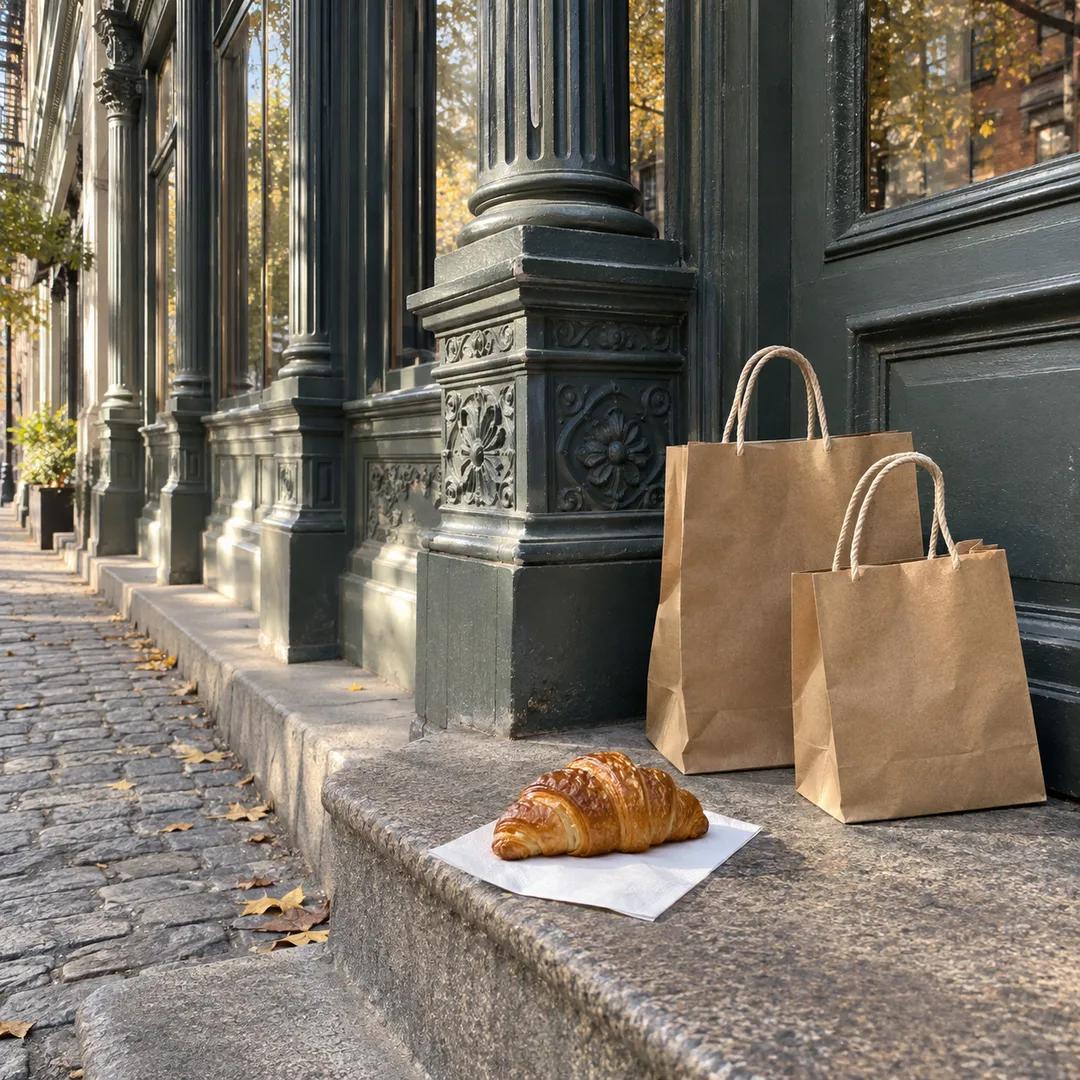
 SoHo Croissant Bakery Crawl Planner Between Shopping Stops
Coffee & Dessert
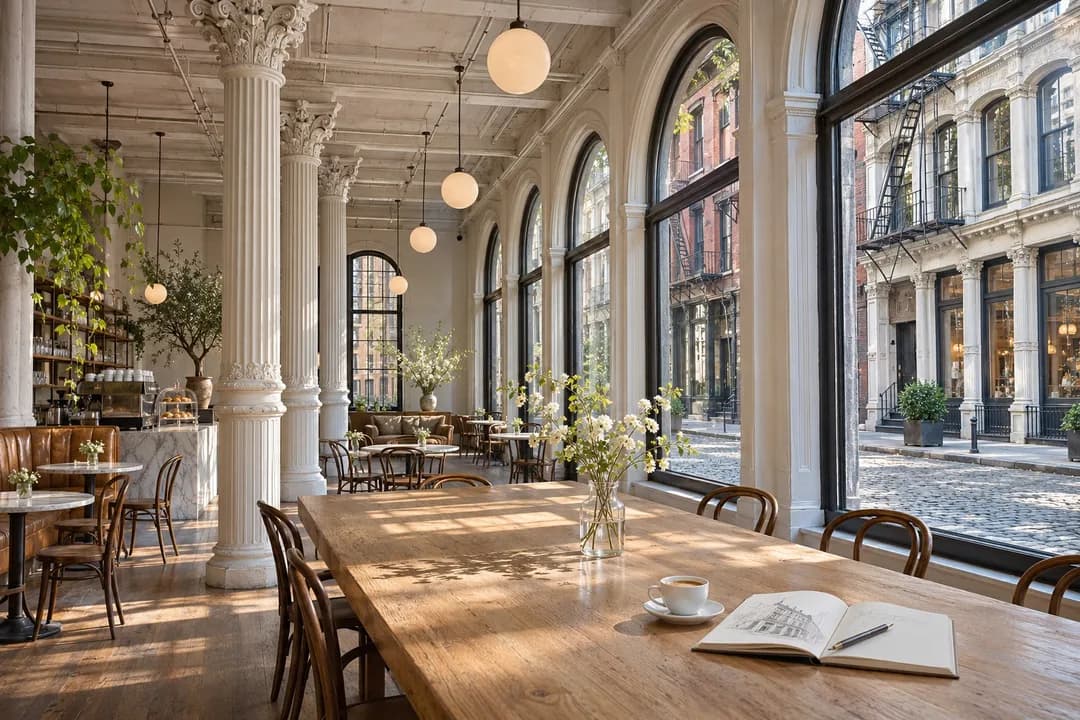
SoHo Quiet Coworking Cafe Finder: Cast-Iron Study Lofts
Explore SoHo's historic cast-iron district between Crosby and Mercer Streets to find calm laptop coffee lofts, skylit tables, and courtyard benches.
The SoHo-Cast Iron Historic District, designated by the New York City Landmarks Preservation Commission in 1973, preserves roughly five hundred nineteenth-century mercantile facades bounded by Canal Street, Houston Street, Crosby Street, and West Broadway. Anyone using a quiet coworking cafe finder in lower Manhattan quickly learns that SoHo operates on two completely separate acoustic planes. Along Broadway and Prince Street, weekend flagship retail queues and delivery vans create relentless sidewalk congestion. Step one block east onto Crosby Street or one block west onto Mercer and Greene Streets, however, and the vaulted ground-floor lofts of the 1870s and 1880s open into remarkably hushed, high-ceilinged coffee rooms. Opening the Karpo APP as you exit the 6 train at Spring Street or the N, Q, R, and W trains at Prince Street lets you chart a low-noise path through side-street espresso bars, public plazas, and historic library rooms.
Vaulted Cast-Iron Ceilings And Side-Street Seating On Crosby And Mercer
The architectural bones of SoHo's former dry-goods warehouses give remote professionals an acoustic advantage rarely found in modern glass office towers. Built between 1860 and 1895 with ornamental cast-iron facades engineered by foundries like James Bogardus and Daniel Badger, these lofts feature fourteen-foot ceilings, wide structural column bays, and deep floor plates that swallow conversational echo. When you enter a coffee room tucked inside a Crosby Street hotel lobby or a Greene Street gallery storefront at 8:30 AM, sound disperses upward into the rafters rather than bouncing directly across neighboring tables. Solo editors, fashion buyers, and architectural consultants gravitate toward the long oak refectory tables positioned beneath rear skylights where street rumble off Broome Street barely registers.
Window geometry is equally important when selecting a morning seat across the Cast-Iron District. The famous floor-to-ceiling arched windows along Mercer Street and Wooster Street admit generous daylight even on overcast November mornings, reducing eye strain during long spreadsheet or manuscript reviews. Because Belgian-block paving stones reflect bright midday sun between 11:30 AM and 1:30 PM, sitting two rows back from the storefront glass prevents harsh glare across your laptop screen while still keeping you connected to the visual rhythm of the street. Avoid the narrow stools wedged beside espresso grinders near the entrance, where milk steaming and courier pickups interrupt deep focus.
Timing The Gallery And Boutique Rush Between Broome And Houston
Weekday foot traffic in SoHo follows the cadence of creative agencies, design showrooms, and contemporary art spaces rather than traditional Wall Street market bells. From 8:00 AM until 10:30 AM, side-street cafes remain serene refuges filled with neighborhood residents and early-bird founders. Around 11:00 AM, when showrooms along Wooster Street and West Broadway unlock their doors, small coffee bars near Spring Street experience a noticeable surge in standing meetings and casual client catch-ups. If your afternoon schedule demands uninterrupted concentration for coding or financial modeling, use that late-morning shift to relocate toward the quieter northern blocks near Jersey Street or the western perimeter along Thompson and Sullivan Streets.
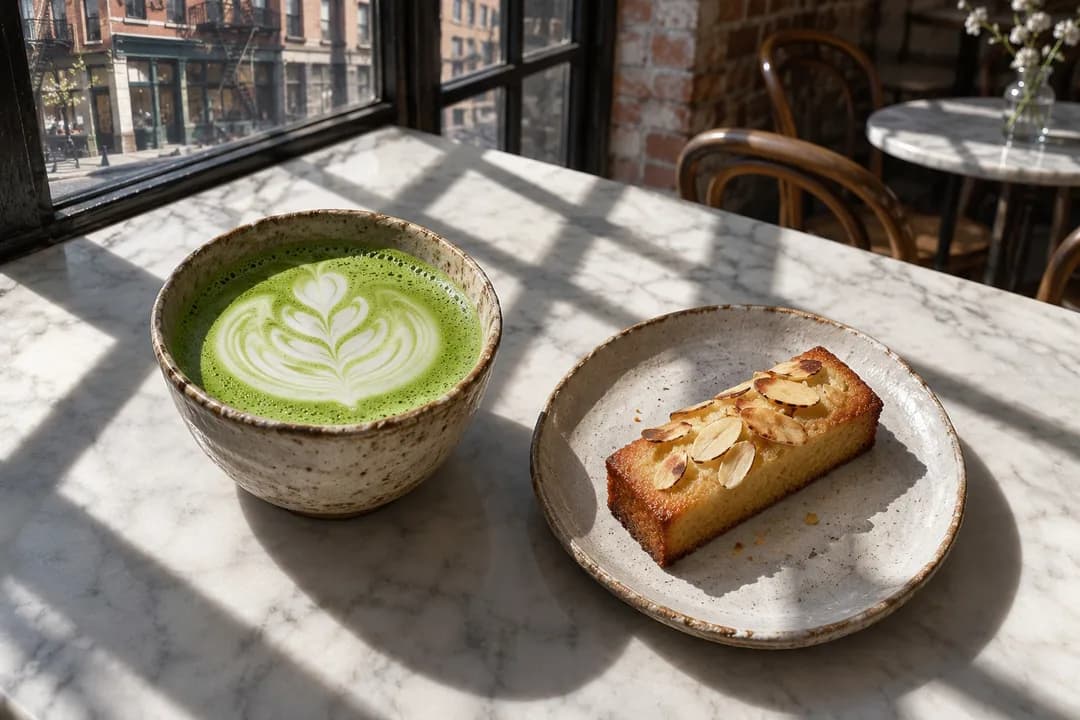
Ordering strategically helps sustain a three-hour loft session without crowding a compact table. SoHo pastry counters excel at Franco-Japanese and Viennese baking traditions, offering crisp kouign-amann, matcha almond financiers, and savory gruyere scones served on compact stoneware saucers. Pairing a slow-extraction Ethiopian filter coffee or a ceremonial-grade hojicha latte with a clean pastry keeps your keyboard free of sticky syrups. When occupying a four-person table during a quiet 9:00 AM hour, slide your backpack beneath your chair and angle your screen toward the edge so a second solo worker can comfortably share the opposite corner when mid-morning traffic arrives.
Hardware Readiness, Historic Masonry Signal, And Mulberry Street Backups
Preserved landmark interiors across SoHo rarely allow café operators to cut new electrical conduits into historic cast-iron pilasters or exposed brick walls. As a result, accessible wall outlets are scarce along Greene Street and Howard Street, often limited to a single baseboard receptacle near the rear banquette. Arrive with a fully charged laptop and a high-output portable battery pack tucked into your work bag so your seating choice depends on lighting and posture rather than outlet proximity. Thick nineteenth-century masonry walls and subterranean vault spaces—originally built to store coal and textiles beneath the sidewalk—can also attenuate 5G signal in basement or rear-alcove lounges, making a quick speed test near the front window wise before downloading heavy media archives.
When every cafe table between Prince and Canal Streets fills up on a brisk weekday afternoon, SoHo workers have an exceptional public reading room right on the neighborhood's eastern edge. The New York Public Library's Mulberry Street branch inside the historic 1895 Hawley & Hoops candy factory building on Jersey Street (entered off Mulberry Street between Prince and Houston Streets) spans three sunlit levels with arched factory windows and quiet study tables. Stepping into that landmark brick interior gives you a zero-cost, silent environment to finish editing a presentation before rejoining the street. Because the building retains its heavy timber structural beams and deep brick window reveals, even the ground-floor periodical room stays insulated from delivery scooters along Lafayette Street.
Mid-Afternoon Decompression Walks Along Jersey Street And Petrosino Square
Breaking up a five-hour screen block with a brisk fifteen-minute walk through SoHo's micro-corridors sharpens visual focus and relieves shoulder tension. Stroll through the narrow, ivy-draped passage of Jersey Street between Crosby and Mulberry Streets, one of Manhattan's shortest and quietest historic lanes, then continue south to Lieutenant Joseph Petrosino Square at the triangular junction of Lafayette, Cleveland Place, and Kenmare Streets. Created in its expanded pedestrian form in 2009, this triangular pocket park offers shaded benches and public art installations where you can rest your eyes away from glowing monitors while watching neighborhood cyclists pass through the north end of Little Italy.
Alternatively, walk west across West Broadway to Vesuvio Playground at the corner of Thompson and Spring Streets, where the neighborhood's nineteenth-century cast-iron warehouse scale gives way to low-rise Italian-American brick tenements, independent bookbinders, and old-school bread ovens. Taking ten minutes to observe the architectural shift between Greene Street's monumental industrial columns and Sullivan Street's intimate stoops clears mental fatigue before your final afternoon sprint. Before the 4:30 PM retail wave spills out onto Spring Street, open the Karpo APP to bookmark your most productive Crosby and Mercer Street work corners and plan a smooth walk to the A, C, and E trains at Canal Street or the B, D, F, and M lines at Broadway-Lafayette Street.
Ask Karpo for more information.
Keep reading
- SoHo Croissant Bakery Crawl Planner Between Shopping Stops
 SoHo Tea Room Afternoon Picker: A Shopping Day Rest Stop
 Williamsburg Croissant Bakery Crawl Planner by Bike