The parking lot economy
Flushing Meadows Corona Park transforms every Saturday evening from April through October, its open field behind the New York Hall of Science becoming a temporary city of folding tables and propane burners. You'll find it at 47-01 111th Street in Corona, where the 7 train deposits crowds who've learned that five or six dollars represents both ceiling and common language. The price cap isn't a gimmick—it's the market's founding principle, established in 2015 to keep vendors accessible and customers adventurous. By 7pm, when the light starts its slow fade over the park, the first wisps of charcoal smoke begin threading through the field. The vendors who've been setting up since afternoon finally flip their signs to face outward. You're watching an economy boot up in real time.
Updated August 2026: hours, prices, reservations, event dates, transit details, and venue policies can change. Use the linked official venue, city, or operator sources in the Sources section as the final reference before you go.
What the price ceiling does, practically speaking, is eliminate your ability to judge quality by cost. A lamb skewer costs roughly the same as a mango smoothie costs the same as a serving of dumplings. You're forced to rely on other signals: line length, vendor confidence, the structural integrity of someone's paper boat. The playing field levels in strange ways. A grandmother selling her family's recipe stands beside a culinary school graduate testing a concept, both charging similar prices, both subject to the same brutal meritocracy of Saturday night foot traffic.
The reconnaissance loop
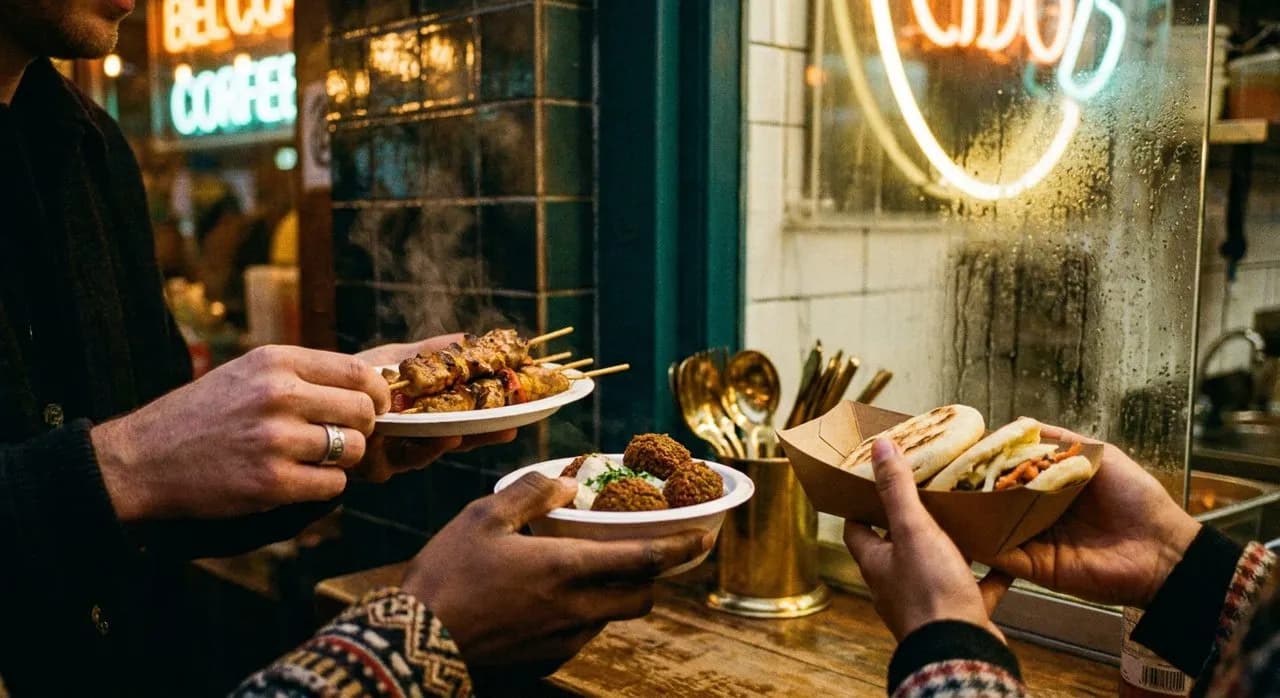
Here's what regulars know: you walk the entire perimeter before committing to anything. The market sprawls across the field in a rough rectangle, vendors arranged in rows with walking lanes between them. It takes twenty minutes to complete a full circuit at a purposeful pace, longer if you're stopping to read every hand-lettered sign. This initial loop isn't optional—it's intelligence gathering. You're noting which stalls have lines, which vendors are cooking to order versus serving from warming trays, where the vegetarian options cluster, which operations look like they're running low on ingredients.
One corner tends to draw the newest vendors each season. They're testing concepts, working out logistics, sometimes gone by mid-summer if the model doesn't hold. Another section houses the veterans—stalls that have returned season after season. These vendors have their systems refined: prep stations arranged for maximum efficiency, backup propane tanks already connected, cash boxes organized by denomination. You can identify them by their calm during the evening rush when everyone else is drowning.
What five or six dollars actually buys
The price cap forces creativity in portion engineering. Vendors have become experts at calibrating value: three tacos versus four smaller ones, a generous scoop of curry over rice versus a more modest portion with an extra condiment. Some stalls offer combination plates that feel like minor miracles of spatial reasoning—how did they fit that much food into one container while staying under the cap, including the cost of the container itself?
Certain vendors have mastered the art of the plate that feels like it should cost twice as much. Tea leaf salads arrive with enough components—fried garlic, peanuts, dried shrimp, cabbage, tomatoes—that you're still discovering new flavors several bites in. Venezuelan arepas come stuffed to structural failure. The combinations change, the creativity remains constant.
The 8:30pm window
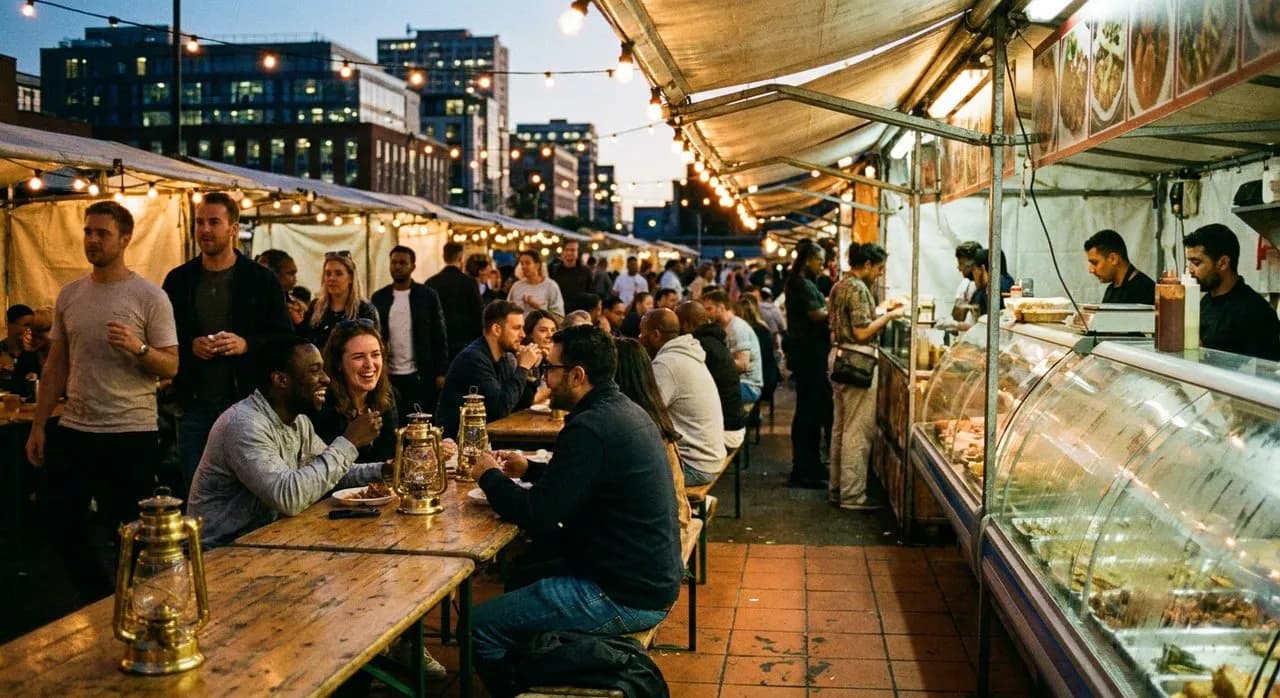
Crowd dynamics shift throughout the evening. The 7pm arrivals are strategic eaters doing their reconnaissance loops. By 8pm, the market hits capacity—the main walking lanes become stop-and-go traffic, and getting from one end to the other requires patience and peripheral vision. This is when vendors move fastest, when the rhythm of ordering-cooking-serving achieves its highest tempo.
But 8:30pm is when things get interesting. Some vendors are running low on prepared ingredients. Others have hit their groove and are cooking with the confidence of people who've made the same dish dozens of times that evening. The crowds thin slightly as early arrivals finish eating and head out. You can actually stand at a stall and have a conversation with the person cooking your food. This is the window when vendors experiment—when they'll add that extra ingredient they've been thinking about, or let something caramelize a minute longer than usual, or suggest a combination they wouldn't have time to explain during the rush.
The non-food calculations
The market isn't just eating—it's the infrastructure around eating. Seating is a competitive sport. The picnic tables fill first, but veterans know about alternative perching spots along the edges. They're positioned to catch whatever breeze manages to move through the park on humid August nights. Bring napkins. The market provides them, but not in quantities that match the reality of eating soup dumplings while standing.
Cash is king, though more vendors each year add phone payment options. The nearest ATMs charge varying fees—plan accordingly, since transaction costs can represent a significant fraction of a dish. Factor bathroom locations into your arrival time calculations as well.
The October urgency
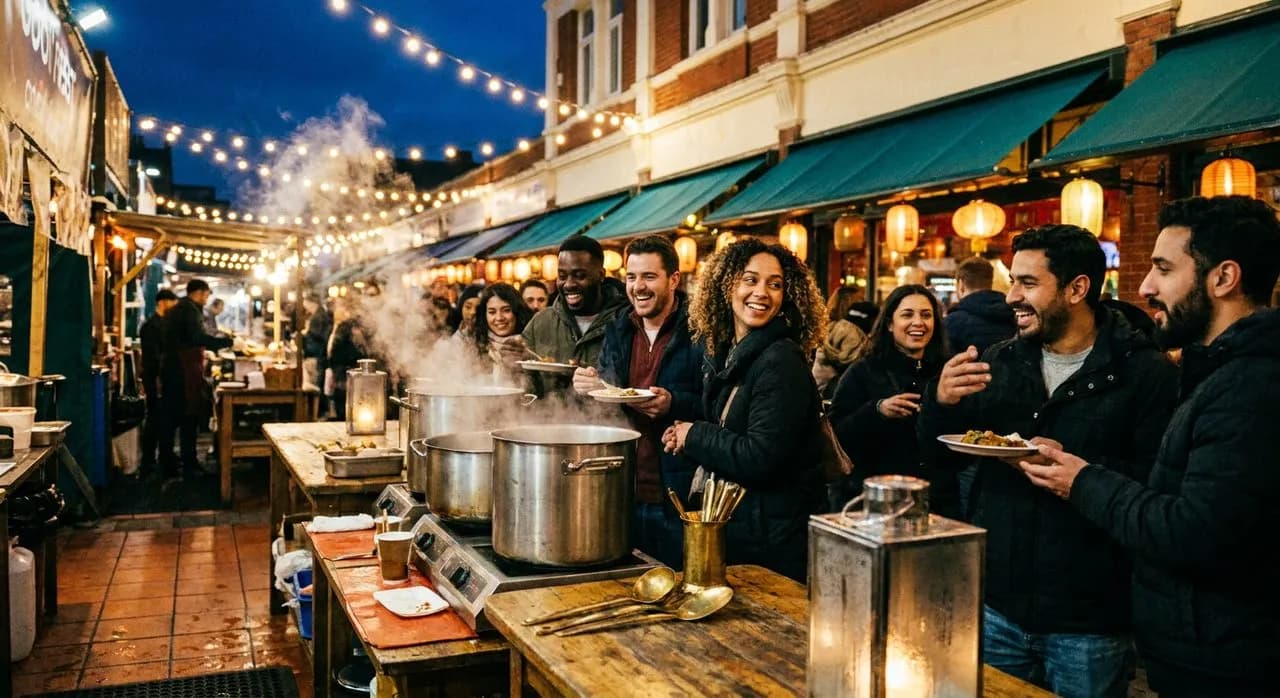
The market's season runs April through October, which means the final weeks carry a different energy. Vendors know they're approaching the end of their revenue window. Regular customers are making their last visits until spring. There's a compression of time that makes everything feel slightly more urgent, slightly more precious. The late October nights when you need a jacket create their own atmosphere—steam rising from cooking stations becomes visible, the cold makes hot food more appealing, crowds pack tighter for warmth.
Some vendors use the final weeks to test next season's concepts. Others run through their remaining inventory with special combinations or larger portions. The market's social media accounts start posting countdown updates. And then, sometime in the last week of October, the field empties out for the winter. The park returns to its usual quiet, and the vendors disperse to other gigs, other markets, other revenue streams until April brings them back.
Practical notes
Queens Night Market operates Saturday evenings, roughly 4pm to midnight, from mid-April through late August and mid-September through late October (2026 season runs approximately April 18–August 22 and September 19–October 31). Located at 47-01 111th Street, Corona, in Flushing Meadows Corona Park behind the New York Hall of Science. Take the 7 train to Mets-Willets Point station. Admission is free once the regular season begins. Around 100 independent vendors price most items at $5–$6. Cash preferred though digital payments increasingly accepted. Arrive early for full selection; later evening offers shorter lines. Seating is limited. The market is outdoors and operates in most weather conditions—check social media @queensnightmarket for updates.
Tags: #QueensNightMarket #FlushingQueens #NYCFoodMarkets #StreetFoodNYC #QueensEats #FreeNYC #SixDollarDinner #NYCNightMarket #7Train #RooseveltAvenue #NewWorldMall #OutdoorDining #NYCOnABudget #QueensFood #FoodieNYC
Sources consulted: queensnightmarket.com · qns.com
All trademarks are the property of their respective owners.