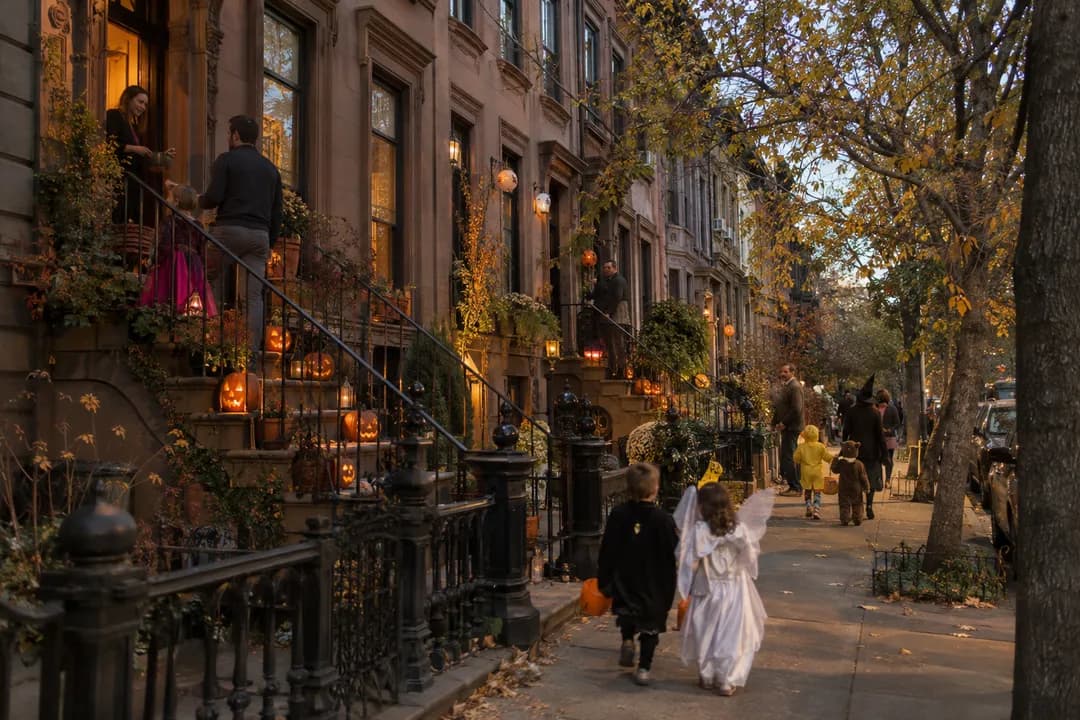
 Best Trick or Treating Neighborhoods Near Me: Park Slope
Neighborhood Guides

The Q Train Over the Manhattan Bridge: The View That Makes You Late
Between DeKalb Avenue and Canal Street, the Q train crosses the Manhattan Bridge for exactly ninety seconds. In that minute and a half, you get three of New York's most iconic views through a rattling subway window—and a reason to miss your stop on purpose.
The commuter's secret theater
You board the Q at DeKalb Avenue, and for the first few seconds, nothing distinguishes this ride from any other subway journey. The doors close with their familiar chime. Someone's playing music through phone speakers. A student hunches over a textbook. Then the train lurches forward, climbs the incline, and suddenly you're suspended above the East River on the Manhattan Bridge's north track. The car fills with light. For about a minute—maybe a bit longer—you're riding through the best free cinema in New York. The locals know: you don't read your phone during this crossing. You look up.
The Manhattan Bridge carries the Q, B, D, and N trains, but only the Q and N use the north tracks, which means only these lines get the unobstructed view. The B and D run on the south side, facing Brooklyn—perfectly fine, but not what you're here for. The north track windows frame Lower Manhattan, the Brooklyn Bridge, and the open expanse of the East River, all in sequence. It's the difference between watching a film and watching behind-the-scenes footage. Choose your train accordingly.
The three-act structure

The view unfolds in three distinct movements. First, as you leave Brooklyn, you catch sight of Lower Manhattan's southern tip through the western windows. The harbor opens up beyond, and on clear days you can spot landmarks in the distance. You're not a tourist here. You're just someone going to work who happens to pass some of the world's most recognized views twice a day.
Then the Brooklyn Bridge fills the eastern windows. You're close enough to see the cable patterns, the pedestrians crossing, sometimes cyclists stopped to take photos. The bridge runs parallel to you for a stretch, and in winter, when the sun hits it in the morning, the whole structure glows orange against blue sky. The stone towers look impossibly solid compared to your rattling steel car.
Finally, Lower Manhattan rises ahead: the Financial District's towers, One World Trade catching light, the dense accumulation of buildings that somehow still surprises you with its scale. The train descends toward Canal Street, and the show ends. You're underground again. You check your phone. A minute or so has passed.
The window seat economy
Regulars know the optimal viewing position: north-side windows, middle of the car, standing. Sitting limits your angle. The first and last cars offer less stable platforms—more sway, harder to keep your sight line. The middle cars of the train give you the smoothest ride and clearest frames. During morning rush, you won't get a seat anyway, but you can position yourself at the window between the doors. Plant your feet wide. Hold the pole with one hand. Keep your other hand free for your phone camera, though the scratched windows and motion blur mean your photos will never quite capture what your eyes see.
The best time is winter weekday mornings in the early commute hours. The sun rises behind you, lighting up Manhattan. The bridge is less crowded with pedestrians. Summer sunset crossings run a close second, though the timing depends on the season. Avoid midday—flat light, harsh shadows, too many tourists on the Brooklyn Bridge blocking your sightline. Weekend mornings work if you're patient with the reduced train frequency.
The missed stop phenomenon
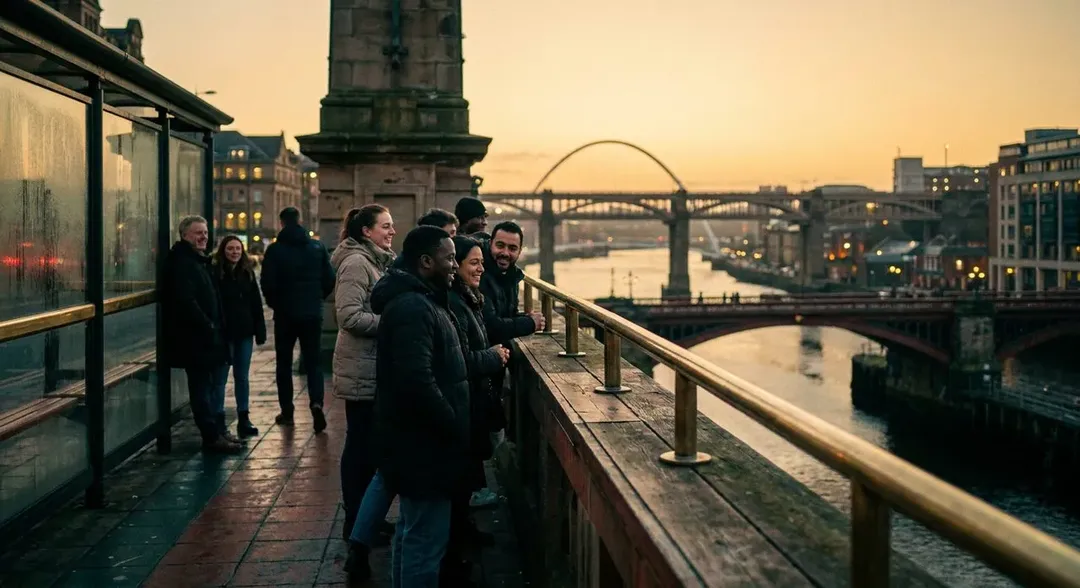
Ask any regular Q rider and they'll admit it: they've missed their stop watching this crossing. You get absorbed in the view, the train descends into the Canal Street station, and suddenly you're at Prince Street wondering what happened. It's a common enough occurrence that it's become a private joke among daily commuters. People have their stories—multiple missed stops over the years, all during the Manhattan Bridge crossing, all worth it, they say.
The trick is to set a mental timer. The crossing takes about a minute. If you're getting off at Canal, start moving toward the doors as soon as you emerge onto the bridge. If you're going further into Manhattan, you can watch the whole show. But that moment when the train enters the tunnel and you realize you've been staring out the window instead of preparing to exit—that's the tax you pay for beauty during your commute. Most people pay it willingly.
What the bridge knows
The Manhattan Bridge has carried trains for over a century, which means some version of this view has existed for generations. The Q train runs this route now, crossing between Brooklyn and Manhattan twice a day for anyone with a MetroCard. The view has remained constant even as the city around it has changed. Markets crash, neighborhoods gentrify, restaurants close, but twice a day, if you take the Q, you get this same stretch of river and skyline and steel.
On the Brooklyn-bound trip, the view reverses. You see Manhattan receding, Brooklyn approaching. The Brooklyn Bridge appears on the opposite side. The harbor spreads out from a different angle. It's the same elements rearranged, like a song played backwards. Some commuters prefer the Brooklyn-bound crossing—they say it feels like coming home rather than leaving. Both directions offer the same minute-plus of elevated track. Both make you late if you're not careful.
Practical notes
The Q train crosses the Manhattan Bridge between DeKalb Avenue (Brooklyn) and Canal Street (Manhattan). The Q and N trains run on the bridge's north side, offering open views of the East River, the Brooklyn Bridge, Lower Manhattan, and to the north, the Empire State Building. For the optimal view, board at DeKalb Avenue or earlier Brooklyn stops and position yourself at north-facing windows in the middle cars. The above-ground crossing lasts roughly a minute or slightly more. Standard subway fare applies. The best viewing times are weekday mornings and summer evenings when the light is favorable. Both the Q and N trains use the north tracks; check current schedules for service patterns.
Tags: #QTrain #ManhattanBridge #NYCSubway #SecretViews #TheLongWayHome #CommuterLife #BrooklynBridge #EastRiver #SubwayViews #LowerManhattan #NYCTransit #HiddenNYC #DailyCommute #UrbanBeauty #TrainWindows
Sources consulted: mta.info
All trademarks are the property of their respective owners.
Ask Karpo for more information.
Keep reading
- Best Trick or Treating Neighborhoods Near Me: Park Slope
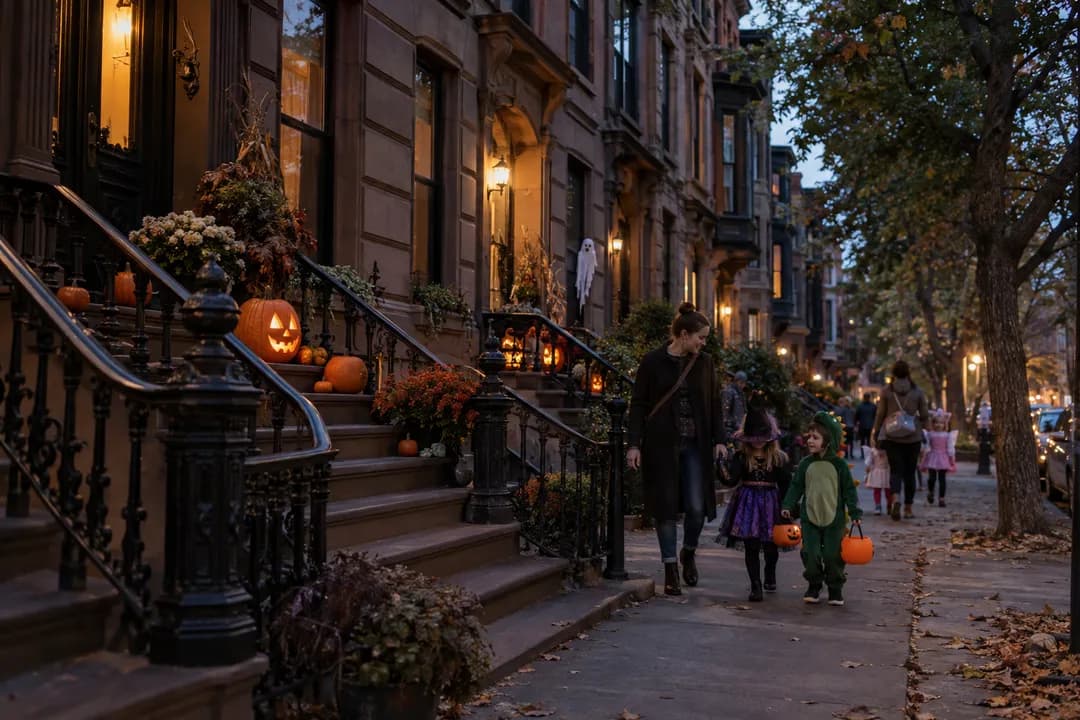 Best Trick or Treating Neighborhoods Near Me: Carroll Gardens
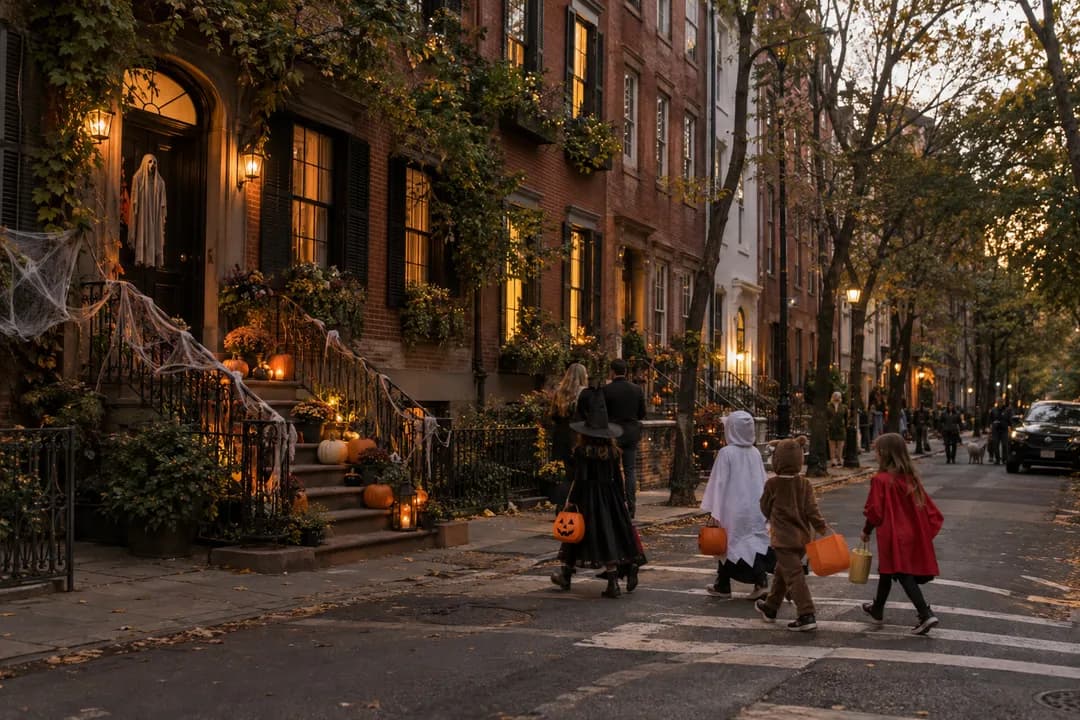 Best Trick or Treating Neighborhoods Near Me: West Village