 Long Island City Empanada Spot Picker: Stock the Freezer
Restaurants
Greenpoint Pupusa Spot Picker for Curious Pierogi Lovers
Greenpoint knows stuffed dough from its Polish bakeries, so pick a pupusa spot the same way: watch the comal, order a revuelta and bring curtido to the park.
A Greenpoint pupusa spot picker has a fun advantage: this neighborhood already understands stuffed dough. Anyone raised on the pierogi from Manhattan Avenue bakeries knows the pleasure of a pocket that hides cheese, potato or meat inside a soft wrapper. The Salvadoran pupusa plays the same game with corn masa. It is patted thick by hand, filled, sealed and cooked on a flat griddle called a comal until the outside blisters and the cheese inside turns molten. Greenpoint itself is not a pupusa hub, so this page is about choosing well when you ride or walk out to find one, and about how to eat it once you have it.
Pierogi Logic Applied to Masa
Start with what you already know. A good pierogi has a wrapper thin enough to taste the filling and sturdy enough to hold it, and the same balance matters with pupusas. The difference is the dough. Masa is nixtamalized corn, slightly sweet, a little earthy, and it browns rather than boils. A great pupusa shows dark freckles on both faces and a thin ring of crisp cheese where some of the filling escaped onto the comal. Pierogi people tend to love that crunchy edge, the same way they fight over the pan-fried ones.
Fillings follow a short, classic list. Quesillo is a soft, stretchy Salvadoran cheese. Frijoles are refried red beans. Chicharrón in a pupusa means pork cooked down and ground almost to a paste, not crunchy rinds. Loroco is an edible flower bud with a green, slightly floral taste that pairs with cheese. A revuelta mixes cheese, beans and chicharrón, and it is the closest thing to a house standard. If you would order the mixed plate at a Polish counter, order the revuelta here.
How to Read a Pupuseria in Thirty Seconds
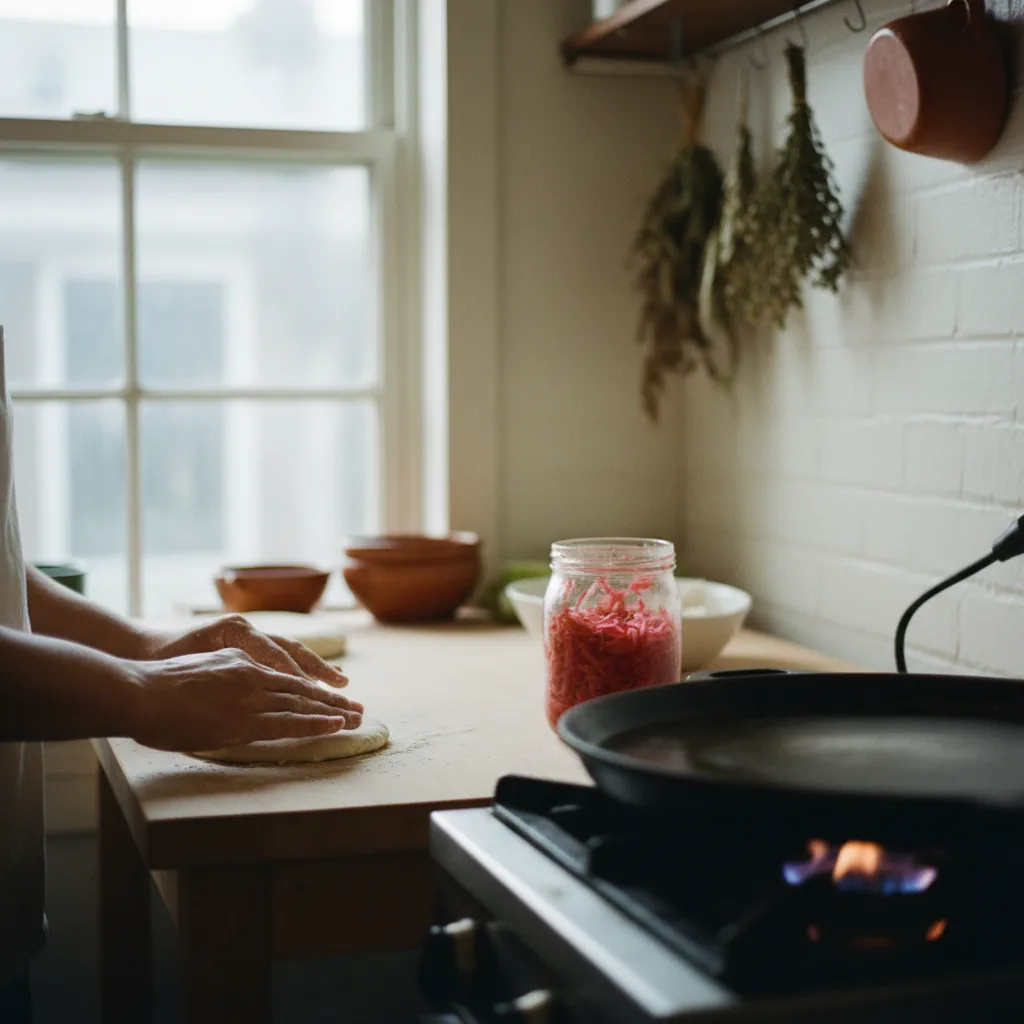
The best signal is the comal itself. Look for someone patting dough to order, the soft clap of masa between palms that you can hear from the door. A stack of pupusas waiting under foil is fine on a rush day, but the ones that land straight from the griddle onto your plate are the ones worth crossing the river for. A crowded room speaking Spanish on a weekend afternoon tells you the regulars approve.
Then look at the curtido. This is the lightly fermented slaw of cabbage, carrot and onion, often with oregano and a little chili, and every kitchen makes it its own way. It should be bright and tangy, never limp. It usually sits in a big jar on the counter or arrives with the plate along with a thin red tomato salsa. If both look fresh, you are in good hands. Pierogi fans can think of curtido as sauerkraut's tropical relative.
Ordering Like a Regular
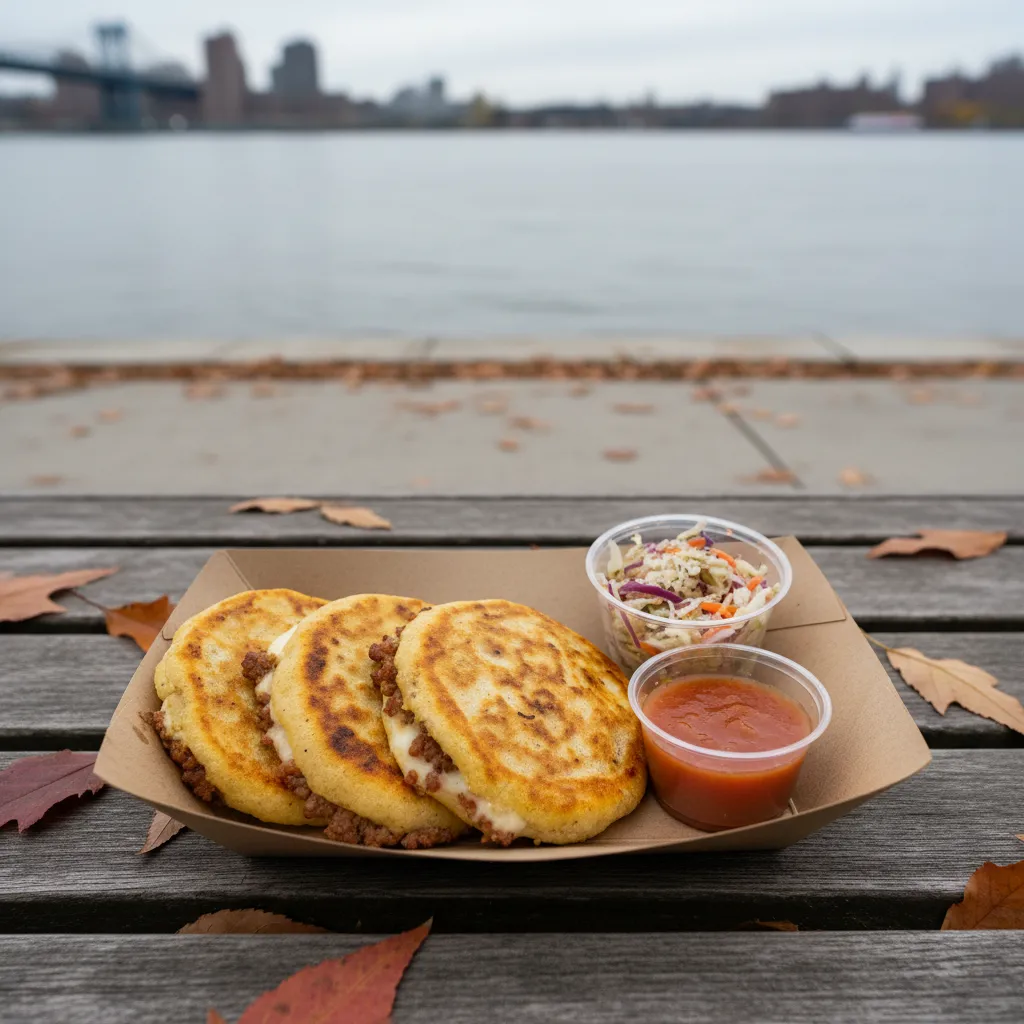
Pupusas are eaten with your hands, and nobody will judge you for it. Tear off a piece, pile on curtido, spoon on salsa and eat it in one bite. Forks are offered for the shy. Two pupusas make a light lunch for most adults and three make a full meal, but plan on a fourth to share if you are new and want to try a loroco or bean and cheese alongside your revuelta.
Ask whether the kitchen offers rice-flour pupusas, called pupusas de arroz. They come from a different tradition in El Salvador, with a chewier, lighter texture that some people prefer. Ask too about a drink. Horchata in Salvadoran kitchens is often made with ground morro seeds and spices, so it tastes nutty and different from the Mexican rice version. Ensalada, despite the name, is a fruit drink with chopped fruit floating in it.
Timing matters more than people expect. Weekend afternoons are when families gather and the comal runs nonstop, which means the freshest pupusas and the liveliest room. Weekday lunches are calmer and better for a first visit, when you can watch the cook work and ask questions without holding up a line. Either way, order everything at once rather than in rounds, because each batch takes a few minutes on the griddle and the kitchen likes to fire a table together.
Where Greenpoint Fits Into the Trip
Greenpoint sits at the top of Brooklyn on the G train, which links you to neighborhoods with deeper Salvadoran roots. The fun part is turning the meal into an outing: ride, eat, then come home with a box for later. Pupusas hold up surprisingly well, much like pierogi, and they reheat best in a dry skillet over medium heat, a few minutes per side, until the edges crisp again. Skip the microwave, which turns masa gummy.
If you are carrying pupusas home, ask for the curtido and salsa in separate containers. That keeps the dough from going soggy on the ride. Back in the neighborhood, a takeout box tastes best on a bench in McCarren Park or at Transmitter Park, where the river breeze and the Manhattan skyline make an ordinary lunch feel like a small event.
A Side-by-Side Tasting Night at Home
For a fun night with friends, put both traditions on one table. Pick up pierogi from a Greenpoint bakery and pupusas from your chosen spot, then taste them in pairs: potato and cheese pierogi beside a cheese and loroco pupusa, meat pierogi beside a revuelta. Set out sauerkraut and curtido next to each other and let people decide which pickle wins. It is a great conversation starter for a neighborhood that has absorbed so many food cultures over the years.
Keep the tasting honest. A cheese-only pupusa is the clearest test of a kitchen because there is nothing to hide behind. If the masa tastes like fresh corn and the quesillo stretches, that spot earns a return visit. If the dough is dry or the edges are pale, try a different place next time rather than blaming the dish.
When Not to Bother
Skip any place where the pupusas sit pale and thick under a heat lamp, or where curtido comes from a sealed plastic cup that tastes only of vinegar. You will get a far better meal by riding a few extra stops. Skip ordering five fillings for one person, too. The fun of pupusas is eating them hot, and a crowded plate means the last two go cold before you reach them.
Finding Your Spot With Karpo APP
When you are standing on Manhattan Avenue wondering where the closest good comal is, open Karpo APP and ask for Salvadoran kitchens and pupuserias near you or along the G line. Karpo can suggest places that match what you want, whether that is a sit-down family room or a quick counter for takeout, so you can spend less time scrolling and more time eating. Save your favorites so the next tasting night is easy to plan.
Ask Karpo for more information.
Keep reading
- Long Island City Empanada Spot Picker: Stock the Freezer
 East Village Food Truck Lunch Finder Between Classes
 Greenpoint Empanada Spot Picker: Order a Party Dozen