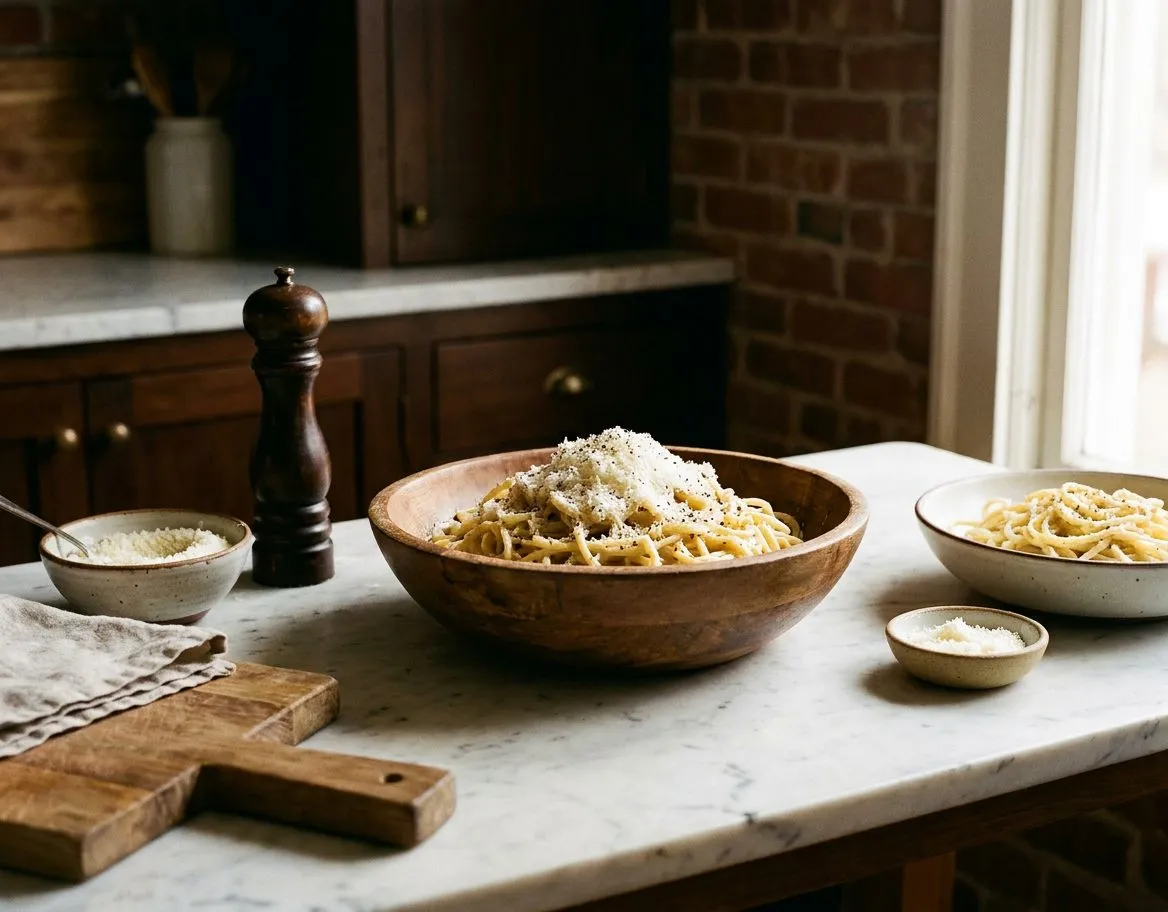
There are restaurants where the kitchen hides behind swinging doors, and then there are places where the kitchen is the dining room. This tiny pasta counter on Bleecker Street belongs firmly to the latter camp. Six stools line a marble surface; behind it, a chef boils water, grates cheese, and tosses noodles in sauté pans while you sit close enough to hear the sizzle. Three pastas rotate daily—usually cacio e pepe, carbonara, and a seasonal ragù—and each takes five minutes from start to finish. It's the sort of setup that turns strangers into accidental dinner companions and makes solo dining feel less like a concession than a choice.
The counter and its rhythm
The space is narrow enough that you could touch both walls if you stretched. Overhead, a single brass fixture casts warm light across the marble; below, a shelf holds wine glasses and a small stack of linen napkins. The chef works without flourish, moving between burners with the economy of someone who has made the same three dishes hundreds of times. Water boils in a tall pot. Pecorino sits in a ceramic bowl, already grated. A pepper mill rests within arm's reach.
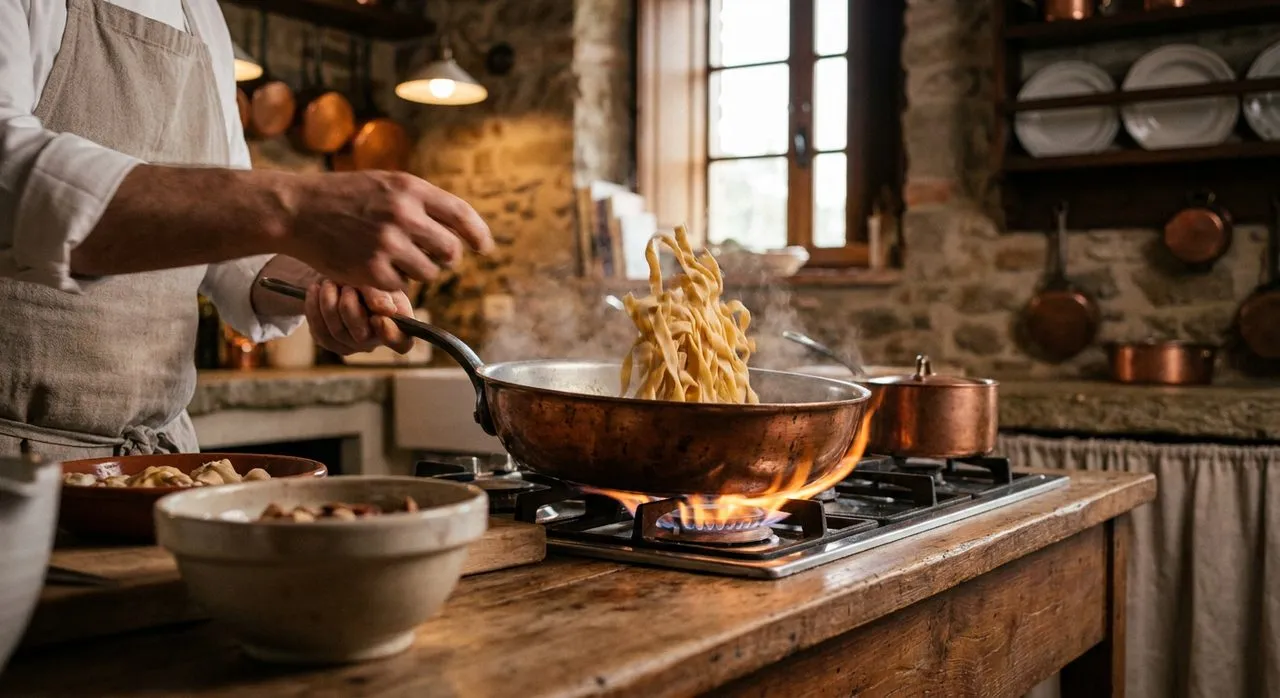
Orders come in waves. A couple sits down at six-thirty, a solo diner at six-forty, another pair at six-fifty. The chef nods, ladles pasta water into a pan, adds cheese and cracked pepper, and begins the slow toss that turns starch and fat into sauce. By the time the third order arrives, the first two diners are already twirling forks. The rhythm is hypnotic, almost meditative. You watch the same motions repeat with minor variations—more pepper for one guest, an extra splash of pasta water for another—and the small adjustments feel significant.
What lands in front of you
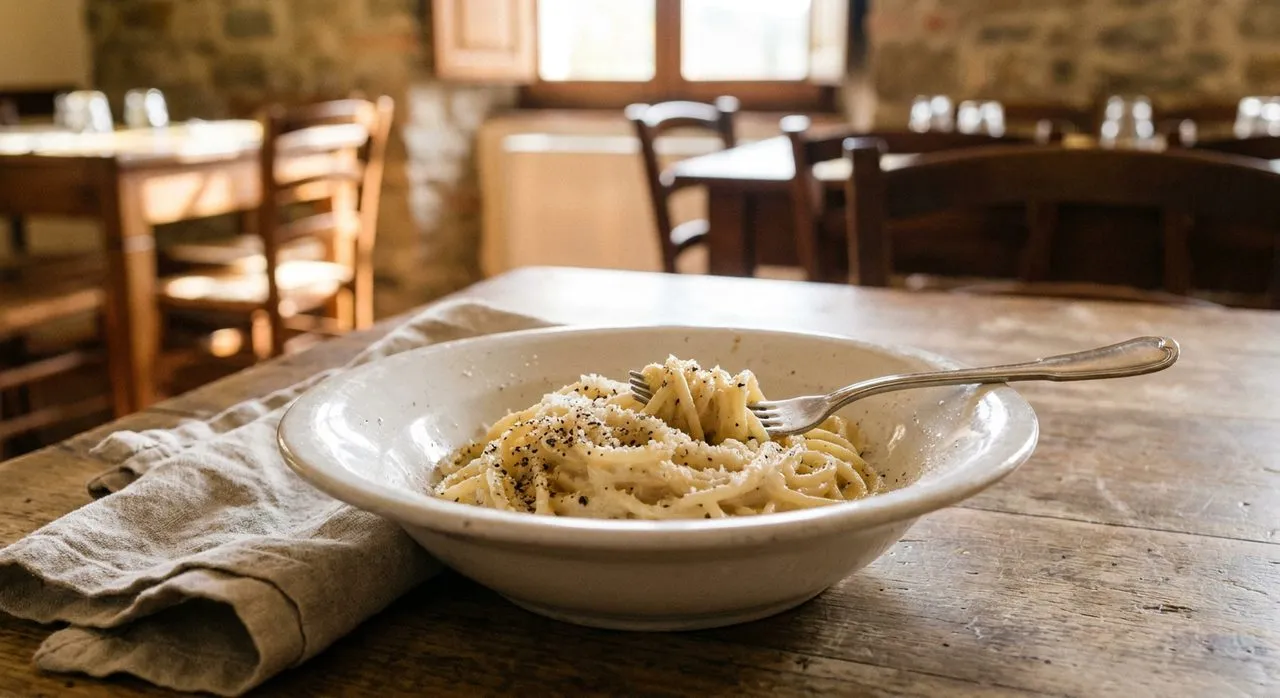
The portions are small but satisfying, the kind that leave you content rather than stuffed. Cacio e pepe arrives in a shallow bowl, glossy and steaming, the sauce clinging to each strand. The carbonara is equally restrained—guanciale cut into thick lardons, egg yolk folded in off-heat so it stays creamy rather than scrambled. The seasonal ragù changes depending on what's available; in late May 2026, it might be lamb with spring peas, or a lighter veal preparation with lemon zest and herbs.
The pasta itself is made elsewhere—the shop doesn't have room for a sheeter—but it's fresh, delivered daily, and cooked precisely. Texture matters here. The noodles have enough bite to hold their shape, enough surface to catch the sauce. You finish a bowl in ten minutes, maybe fifteen if you're pacing yourself, and the brevity feels intentional. This isn't a place for lingering over a second bottle or stretching a meal into an event. It's built for efficiency without feeling rushed.
The mechanics of the wait
No reservations means you arrive, put your name on a list, and wait. On a Tuesday evening in spring, the line might be three or four people deep; by Friday, it stretches onto the sidewalk. The wait rarely exceeds twenty minutes, though, because turnover is quick. Diners finish, pay, and vacate their stools; the next group slides in. The shop doesn't rush anyone, but the format discourages dawdling.
While you wait, you can watch through the window. The chef's movements are visible from the street—steam rising from the pasta pot, the flick of a wrist as noodles fly in the pan. It's theater without pretense, the kind of transparency that builds appetite. By the time a stool opens, you've already decided what you want.
Wine, neighbors, and the problem of proximity
Wine is available by the glass—a short list that skews Italian, leaning toward lighter reds and crisp whites that won't overpower the pastas. The pours are generous, the selection curated without being fussy. You won't find rare natural vintages or lengthy tasting notes, just solid bottles that pair well with cheese and pepper.
Proximity is part of the deal. Six seats means your elbow might brush your neighbor's when you reach for your glass. Conversation is inevitable, or at least audible—you'll overhear debates about the best subway route home, weekend plans, whether the carbonara needs more guanciale. Some diners embrace the communal vibe; others keep their eyes on their bowls. Either approach works. The space accommodates both the chatty and the reserved, though it favors those who don't mind a little closeness.
When to go and what it costs
Open Tuesday through Saturday, with evening hours that should be verified directly before visiting. The early window—between five and six-thirty—tends to be quieter; by seven, the line builds. Weeknights move faster than weekends. Solo diners fare well here; the counter setup means you're never staring at an empty chair across the table. Couples work too, provided neither objects to sitting hip-to-hip on adjacent stools.
Prices are reasonable for the West Village—each pasta is priced in the mid-range, with wine by the glass at a moderate price. Cash and card both accepted. No corkage, no outside food, no substitutions. The menu is what it is, and the limitations feel like features rather than bugs. You're not here to customize; you're here to eat what the chef is making tonight.
Practical notes
The counter sits on Bleecker Street in the West Village, a few blocks west of Sixth Avenue; verify the exact address and current hours directly before visiting. A nearby subway stop is the West 4th Street–Washington Square station; street parking is scarce, so public transit or a walk from a nearby hotel makes more sense. The space is small and not wheelchair accessible—two steps lead down to the entrance, and the narrow layout leaves no room for mobility devices. No restrooms on-site, though neighboring cafés may accommodate. Bring cash if you prefer it, though cards work fine. Expect to stand briefly while you wait, and dress for a casual setting—this is counter seating, not white tablecloths.
Tags: #PullUpAChair #WestVillage #PastaCounter #CacioEPepe #NYCDining #BleeckerStreet #SoloFriendly #CounterSeating #SpringInNYC #SmallPlates #ItalianSimplicity #CozyEats #NYCFood #WestVillageEats #Spring2026
Sources consulted: Cacio e Pepe · West Village · Time Out New York Restaurants · NY Times Food · West Village NYC
All trademarks are the property of their respective owners.


