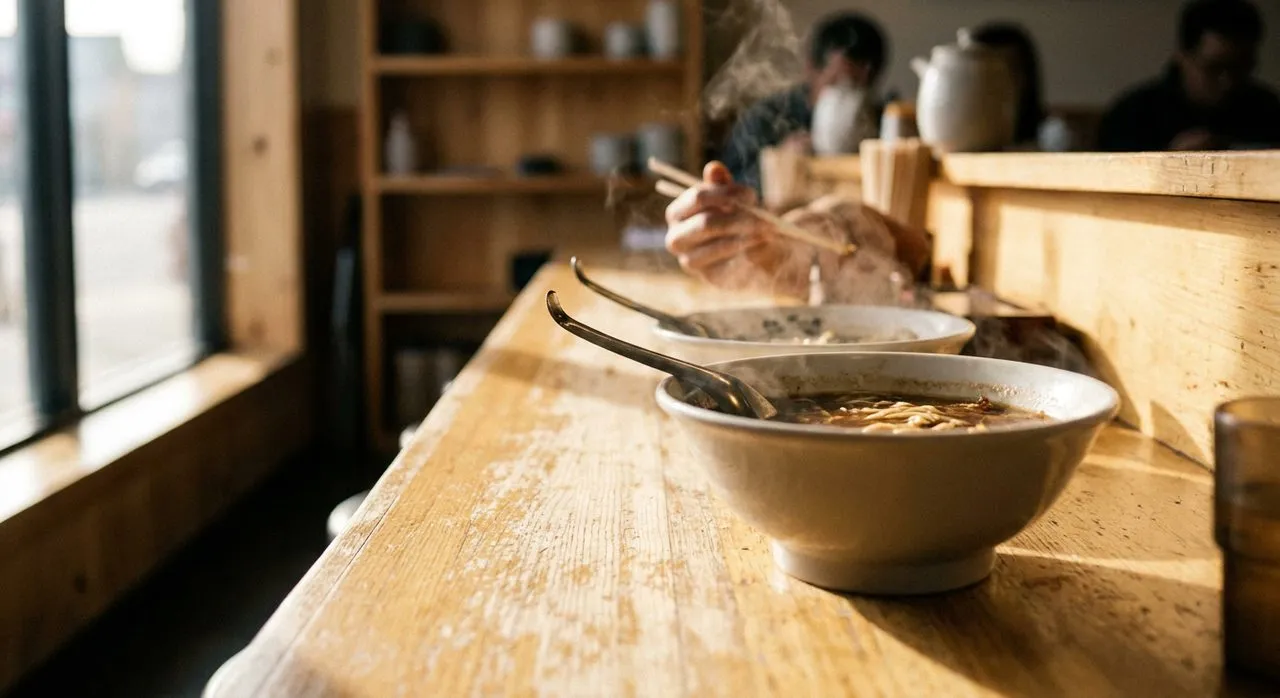
The best seats in the East Village this spring might be the ten stools lined up along a blonde-wood counter on 1st Avenue, where the air smells of pork bones simmered for sixteen hours and the only soundtrack is the rhythmic clatter of ladles against steel. There are no reservations, no phones allowed at the counter, and no room for anything but you, your bowl, and the kitchen six feet in front of you. The line forms before noon most days, snaking past the single window onto the sidewalk, but turnover is brisk—most diners finish their bowls in under twenty minutes—and the wait rarely stretches past half an hour even on Saturday afternoons when the late-May sun slants low across the pavement.
The counter and the kitchen are the entire show
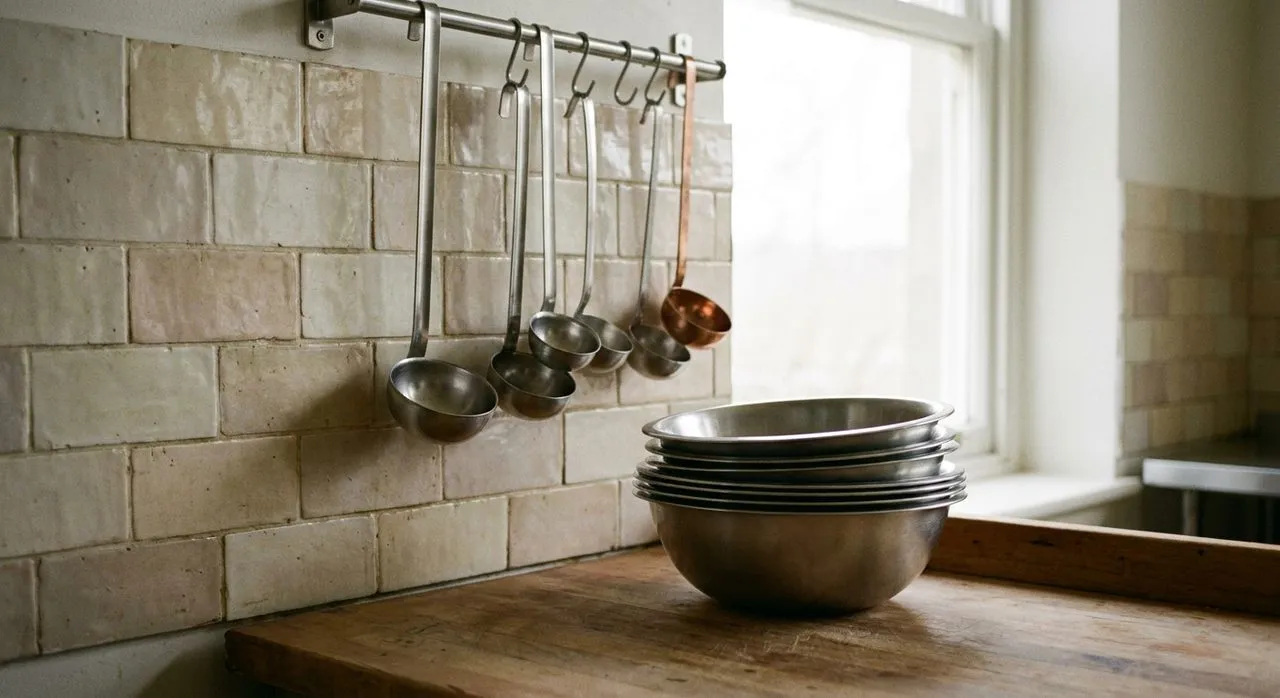
Step inside and the space reveals itself immediately: ten stools, the counter, the kitchen. That's it. No dining room, no back tables, no place to hide. The blonde wood glows under warm pendant lights, and the open kitchen runs the length of the narrow room, separated from diners by nothing but eighteen inches of counter and the occasional spray of steam. The chef and one assistant work in near-constant motion, assembling bowls with the economy of a pit crew, every gesture deliberate. You watch noodles drop into boiling water, watch broth ladle into bowls, watch chashu sliced and ajitama halved and bamboo spooned into place.
It's intimate in the way only a counter can be—close enough to hear the chef answer a diner's question about the miso blend, close enough to catch the scent of sesame oil as it hits hot broth. The lack of phones isn't enforced by surveillance or scolding; a small sign by the door asks diners to keep devices away while seated, and everyone complies, drawn into the rhythm of the kitchen and the particular focus that comes with eating something this good in a space this small.
Three broths, plus one that changes
The menu is a single laminated card: tonkotsu, shoyu, miso, and a rotating seasonal mazemen that shifts with whatever the chef finds interesting. The tonkotsu is the anchor, a milky pork-bone broth with the kind of richness that coats your lips and makes you slow down despite yourself. The shoyu leans lighter, soy-forward and clear, with a backbone of chicken and dashi that doesn't shout but lingers. The miso splits the difference, earthy and round, the kind of bowl you crave on the first cool evening of autumn even though it's only late spring now and the air outside is thick with humidity.
The mazemen—brothless ramen—is where the chef experiments. In early May it was a cold sesame-and-chili number with cucumber and ground pork; by month's end it had shifted to something involving smoked mackerel and pickled radish. You can ask about it at the counter and the chef will explain between orders, usually while his hands are doing three other things. Noodles are made in-house every morning, and you can taste the difference—springy, toothsome, with enough chew to stand up to the broths without turning sodden halfway through the bowl.
Toppings that earn their place
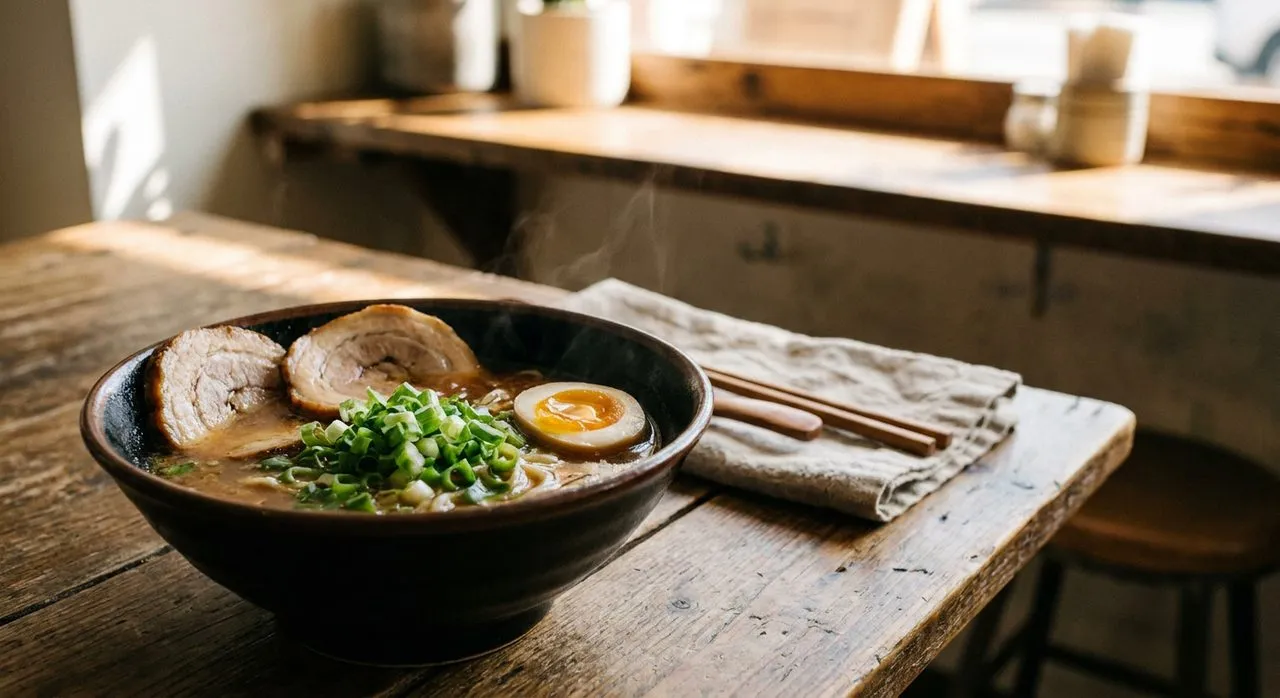
The chashu is exemplary: pork belly braised until it threatens to collapse, edges caramelized, fat rendered to the point of translucence. The ajitama—soy-marinated soft-boiled egg—arrives with a yolk that's just set, still creamy, the white stained amber from its bath. The fermented bamboo adds a funky, slightly sour note that cuts through the richness of the tonkotsu, a reminder that not everything in the bowl is there to comfort you.
You can add extra toppings—an additional egg, more chashu, a tangle of woodear mushrooms—but the base bowls are calibrated carefully enough that most diners leave them alone. There's a confidence in the restraint, a sense that the chef has thought through every element and doesn't need you to gild the lily. It's the kind of cooking that makes you trust the person doing it, even if you've never met them before you sat down twenty minutes ago.
The wait, the line, the unspoken rules
The line is part of the experience, though not in the performative way some restaurants manufacture scarcity. This is a ten-seat shop on the ground floor of a walk-up between 9th and 10th Streets; there simply isn't room for more people. The line moves steadily, and the staff keeps an eye on it, sometimes bringing out cups of cold barley tea on especially warm afternoons. You'll stand on 1st Avenue watching buses rumble past and delivery bikes weave through traffic, and then suddenly you're inside, hanging your bag on a hook beneath the counter, settling onto a stool.
The unspoken rules are simple: order quickly, eat without distraction, pay in cash, and vacate your stool when you're finished so the next person can sit down. It's not rushed—no one hovers or hustles you out—but there's a shared understanding that this is a small space and other people are waiting. Most diners finish their bowls in fifteen to twenty minutes, linger for a last sip of broth, and slide off their stools. The turnover feels natural, almost meditative, a small choreography of arrival and departure that repeats itself all afternoon and evening.
Why it works
There's something clarifying about a restaurant that does one thing and does it without apology. No apps, no reservations, no sprawling menu, no compromise. Just ramen, made carefully, served quickly, in a space barely large enough to contain the kitchen and the people eating from it. The shoebox dimensions force a kind of focus—you can't scroll through your phone or carry on a sprawling conversation, so you eat, you watch the kitchen, you taste each element of the bowl in front of you.
It's the kind of place that reminds you why you moved to New York, or why you visit, or why you still believe that a city this big can feel this intimate when you find the right ten stools on the right block at the right hour. The chef will catch your eye between orders and nod, a silent acknowledgment that you're here, that you waited, that you're part of the rhythm now. And then you're back outside on 1st Avenue, the humidity settling over your shoulders, the taste of tonkotsu still on your lips, already wondering when you'll come back.
Practical notes
The shop is on 1st Avenue in the East Village. Nearest subway: the L to 1 Av, or the 6 to Astor Place. Street parking is scarce; if you're driving, budget extra time for circling or plan to use a lot a few blocks west. Verify hours directly, but expect lunch and dinner service most days. Cash only—there's no ATM inside, so come prepared. The entrance is small and may have limited accessibility. Accessibility is limited by the tight quarters; if you have specific mobility needs, call ahead. Bring patience for the line, cash for your bowl, and an appetite for something that doesn't compromise.
Tags: #PullUpAChair #NYCRamen #EastVillageEats #RamenCounter #TonkotsuLife #NYCDining #FirstAvenue #NoReservations #CounterCulture #SpringInNYC #CashOnly #NYCFoodScene #RamenLovers #SmallPlatesBigFlavor #ManhattanEats
Sources consulted: Ramen · East Village · Time Out New York Restaurants · NYC East Village · MTA Transit Info
All trademarks are the property of their respective owners.