The Counter-Only Revival
By late spring 2026, the oyster bar NYC landscape has quietly bifurcated. Midtown and downtown Manhattan demand reservations weeks out, while a handful of Greenpoint and Astoria rooms have doubled down on counter seats and walk-ins only. These four spots share a common philosophy: no tables, no bookings, and menus that shift twice weekly to match what the boats bring in.
The appeal is immediate. You walk past on a Wednesday evening in May, see three empty stools, and twenty minutes later you are elbow-to-elbow with a regular who knows which Pemaquid arrived that morning. The turnover is brisk, the shuckers work in full view, and the rhythm feels more like a Tokyo standing bar than a Brooklyn dining room.
Shell & Marble on Franklin Street
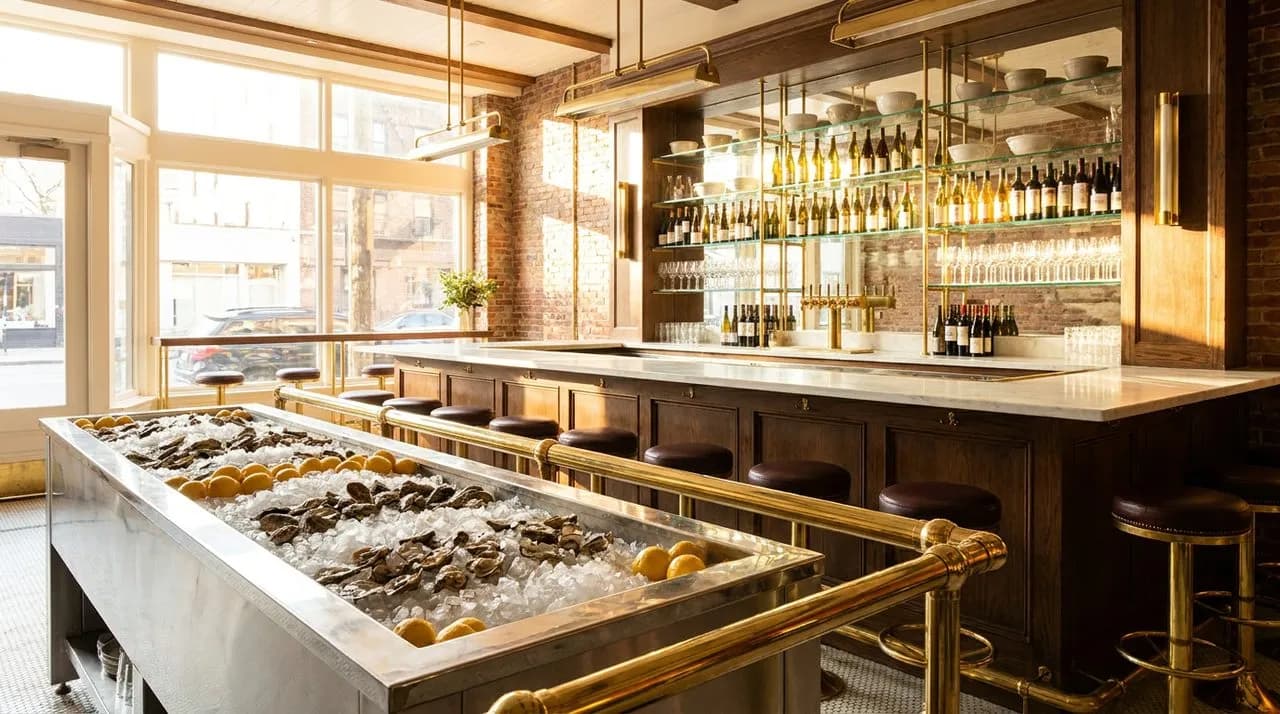
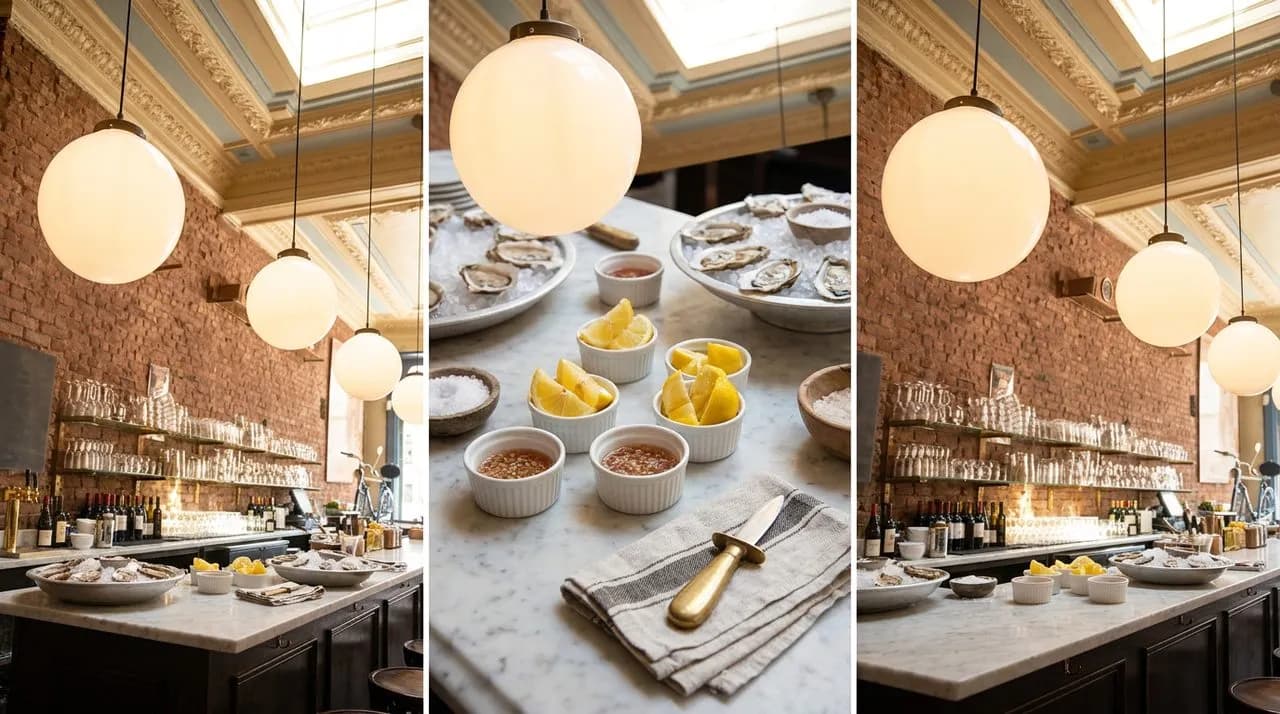
Shell & Marble occupies a narrow Greenpoint storefront between Franklin and West streets, fourteen stools wrapped around a horseshoe marble counter. The menu board changes every Monday and Thursday at noon, hand-chalked with whatever the Montauk and Cape Cod suppliers delivered that week. Regulars know to arrive before six or after nine; the seven-thirty rush can mean a forty-minute wait on the sidewalk.
The house mignonette leans heavily on shallot and champagne vinegar, and the kitchen sends out a single hot dish each night—grilled oysters with garlic butter on Mondays, a smoked bluefish pâté on Thursdays. The stools turn fastest here, averaging thirty-eight minutes per guest according to the owner's own count. That pace suits the neighborhood: quick enough for a weeknight stop, slow enough to taste five varieties and a glass of Muscadet.
Astoria's Ditmars Counter
Ditmars Counter sits two blocks south of Ditmars Boulevard on Thirty-First Street, an eight-seat operation inside what used to be a Greek pastry shop. The tile floor and pressed-tin ceiling remain; the pastry cases now hold crushed ice and littlenecks. The menu rotates on the same Monday-Thursday schedule as Shell & Marble, and the owners admit they coordinate with the same Long Island distributor.
What distinguishes this Astoria spot is the sake list—twelve bottles, all under forty dollars, all chosen to pair with briny East Coast oysters. The shuckers work behind a low counter, and conversation flows easily between guests and staff. Turnover is slower here, closer to fifty minutes, but the room feels less hurried. Late spring evenings see the front door propped open, and the sound of the N and W trains rumbling overhead becomes part of the atmosphere.
The Greenpoint Secret
Locals refer to it simply as Noble Street, though the official name is Noble Street Oyster. It occupies a basement space near McGolrick Park, no sign outside, entry through a green door next to a locksmith. The ten counter seats fill by word of mouth alone, and regulars guard the address with surprising fervor. The room operates Thursday through Sunday only, opening at five and closing when the last oyster is gone—sometimes eight-thirty, sometimes past eleven.
The menu does not rotate on a fixed schedule. Instead, the owner buys opportunistically from day-boat fishermen texting from docks in Connecticut and Rhode Island. A chalkboard lists the day's selection by harvest location and date, nothing more. Prices are lower than the other three rooms, and the vibe skews toward industry workers and writers nursing a half-dozen oysters and a beer for an hour or more. This is the slowest turnover of the four, and no one seems to mind.
Broadway Oyster Stand
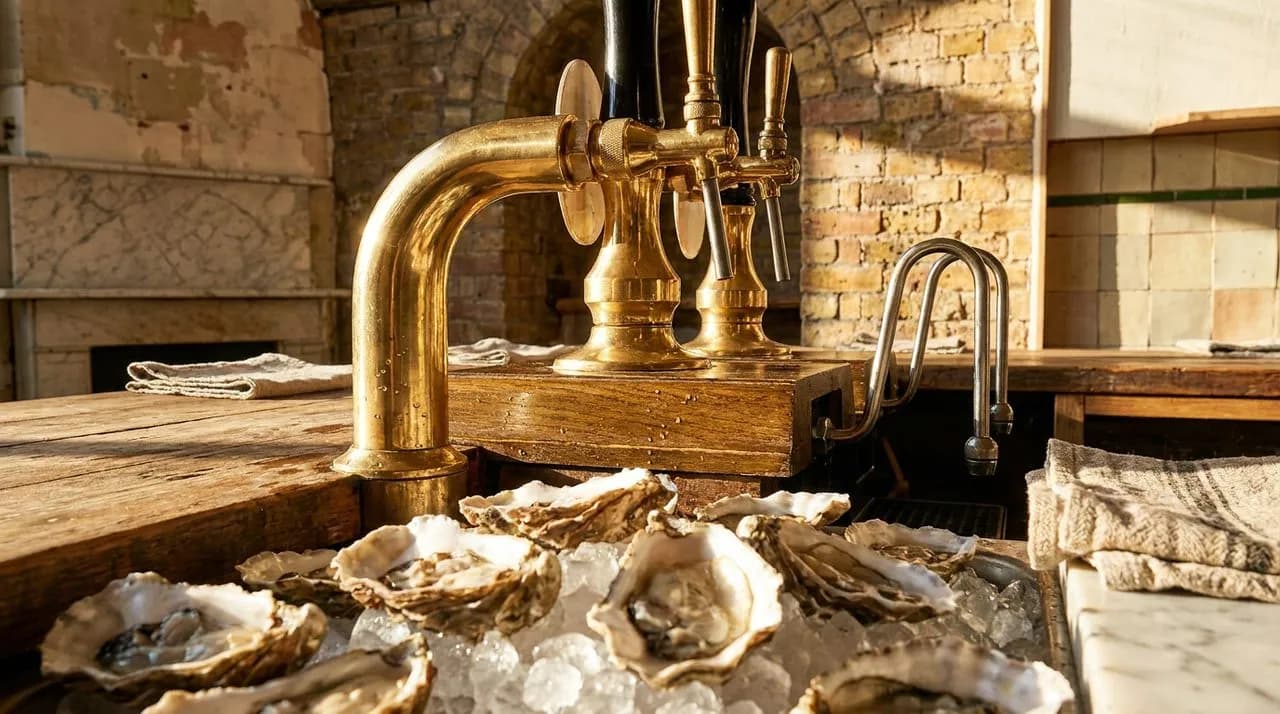
Broadway Oyster Stand anchors the Astoria end of this circuit, a twelve-seat counter on Broadway between Thirty-Fourth and Thirty-Fifth avenues. The space is bright and white-tiled, almost clinical, and the focus is purely on the oysters themselves. The menu board lists variety, origin, harvest date, and price—no flourishes, no tasting notes. Monday and Thursday deliveries arrive at ten in the morning, and the board is updated by eleven.
The kitchen produces no hot food. Instead, three house-made sauces rotate weekly: a classic mignonette, a yuzu-kosho blend, and a fermented chili oil that regulars either love or avoid entirely. Turnover here rivals Shell & Marble, often under forty minutes, and the staff politely encourage guests to settle up when their last shell is cleared. The efficiency feels European, and the quality is consistent enough that the lack of ceremony becomes its own appeal.
Practical Notes for Late Spring
All four rooms operate on a first-come basis, and none will hold a stool or take a name for a callback. Late spring 2026 has seen wait times lengthen as word spreads, particularly on Thursday evenings when the new menus debut. Arriving before five-thirty or after nine offers the best odds of an immediate seat. Cash is accepted everywhere; cards work at three of the four, with Noble Street remaining cash-only.
Transportation is straightforward. The G train serves Greenpoint, with the Nassau Avenue and Greenpoint Avenue stops both within a ten-minute walk of Shell & Marble and Noble Street. The N and W trains reach Astoria, and the Ditmars Boulevard and Broadway stations place you within five minutes of the two Queens counters. Street parking exists but fills quickly on weekends. Citi Bike docks cluster near all four locations.
- Shell & Marble: Franklin Street near West, Greenpoint; Monday–Thursday menu changes at noon
- Ditmars Counter: Thirty-First Street south of Ditmars Boulevard, Astoria; sake-focused, slower pace
- Noble Street Oyster: basement near McGolrick Park, Greenpoint; Thursday–Sunday, no sign, cash only
- Broadway Oyster Stand: Broadway between Thirty-Fourth and Thirty-Fifth, Astoria; clinical efficiency, three rotating sauces
Why Counter Seats Matter Now
The return to counter-only service reflects a broader fatigue with reservation algorithms and cancellation fees. These four oyster rooms reject that system entirely, and the trade-off—uncertainty and occasional waits—feels minor compared to the spontaneity regained. You can decide at six o'clock on a Tuesday that you want oysters, and by six-thirty you are eating them. That simplicity has become rare enough to feel radical.
The twice-weekly menu rotations also matter. Oyster farming is seasonal and weather-dependent, and a menu that changes Monday and Thursday can reflect what actually arrived that week rather than what was printed a month ago. The result is better oysters, more variety, and a reason to return. Regulars at Shell & Marble and Broadway Oyster Stand will visit twice in the same week just to compare the Thursday selection against Monday's. That kind of repeat business, built entirely on walk-ins, suggests the model works.
Sources consulted: MTA – Metropolitan Transportation Authority · NYC.gov – Official City of New York Website · NYCgo – Official NYC Tourism Site · Eater New York – Dining News and Guides
All trademarks are the property of their respective owners.