Why the counter matters
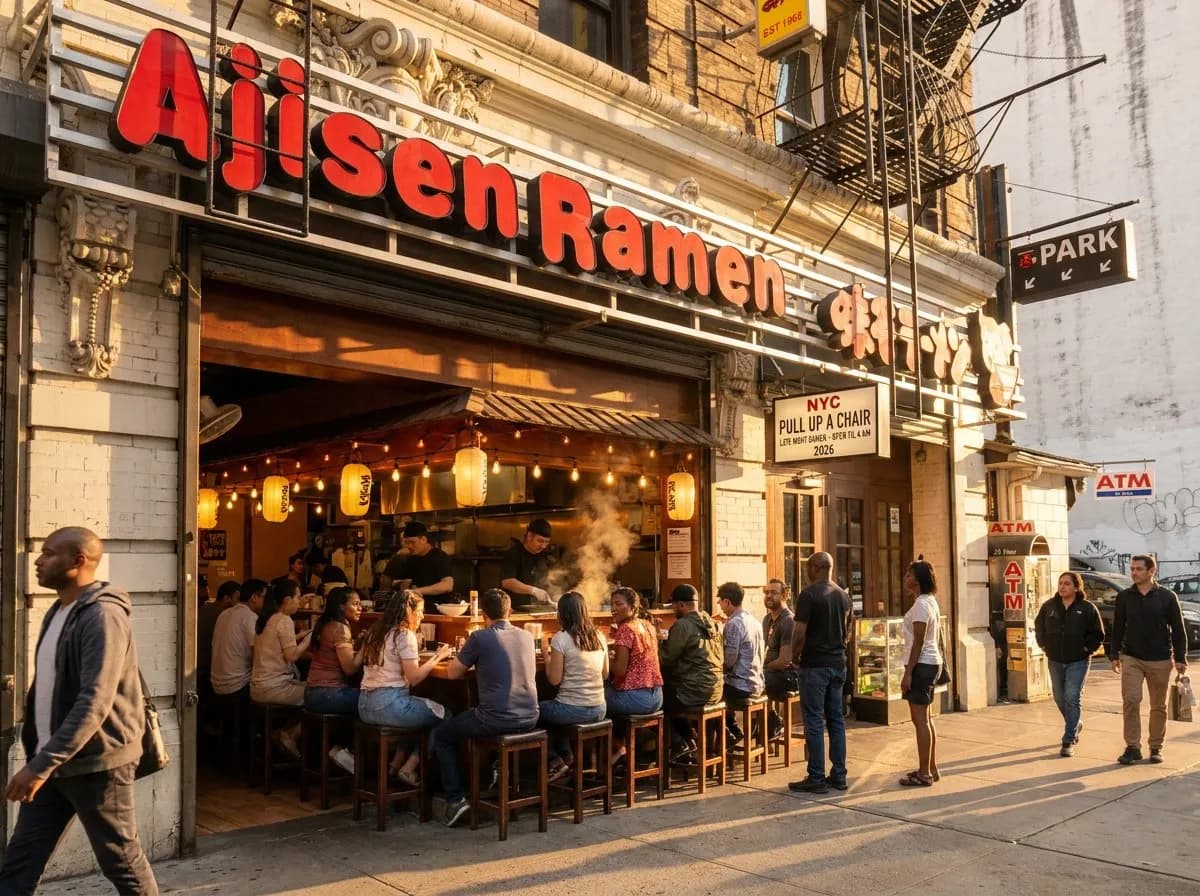
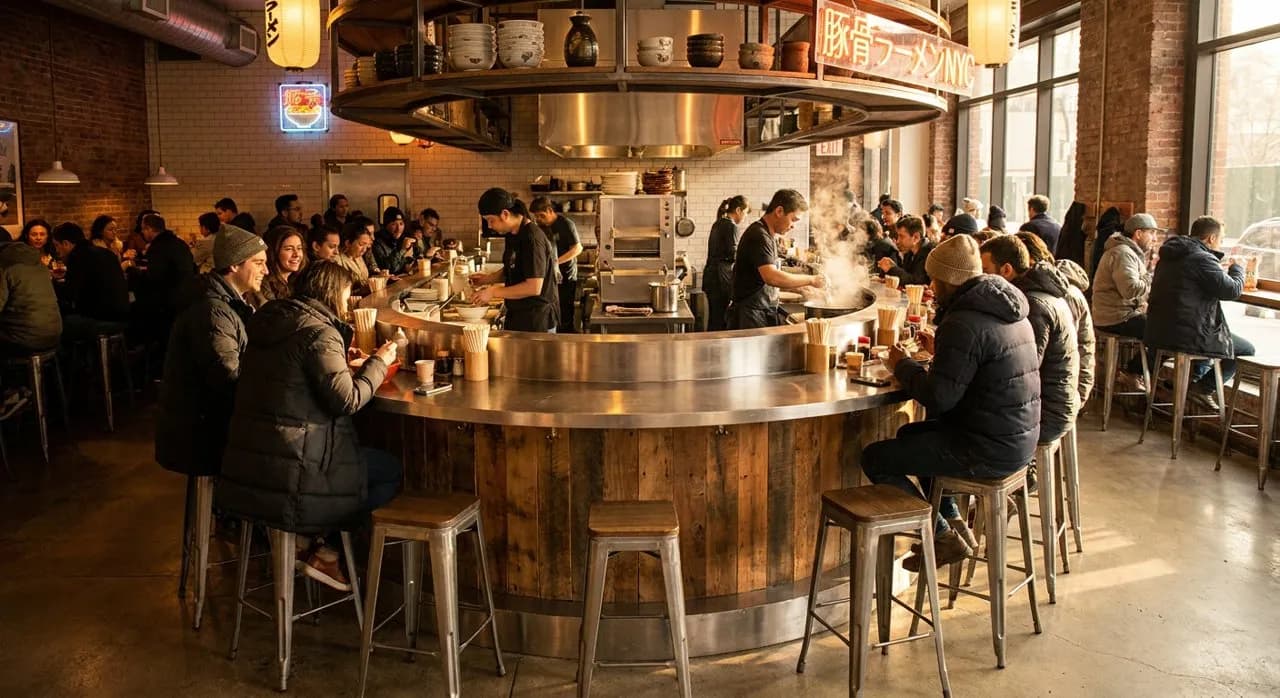
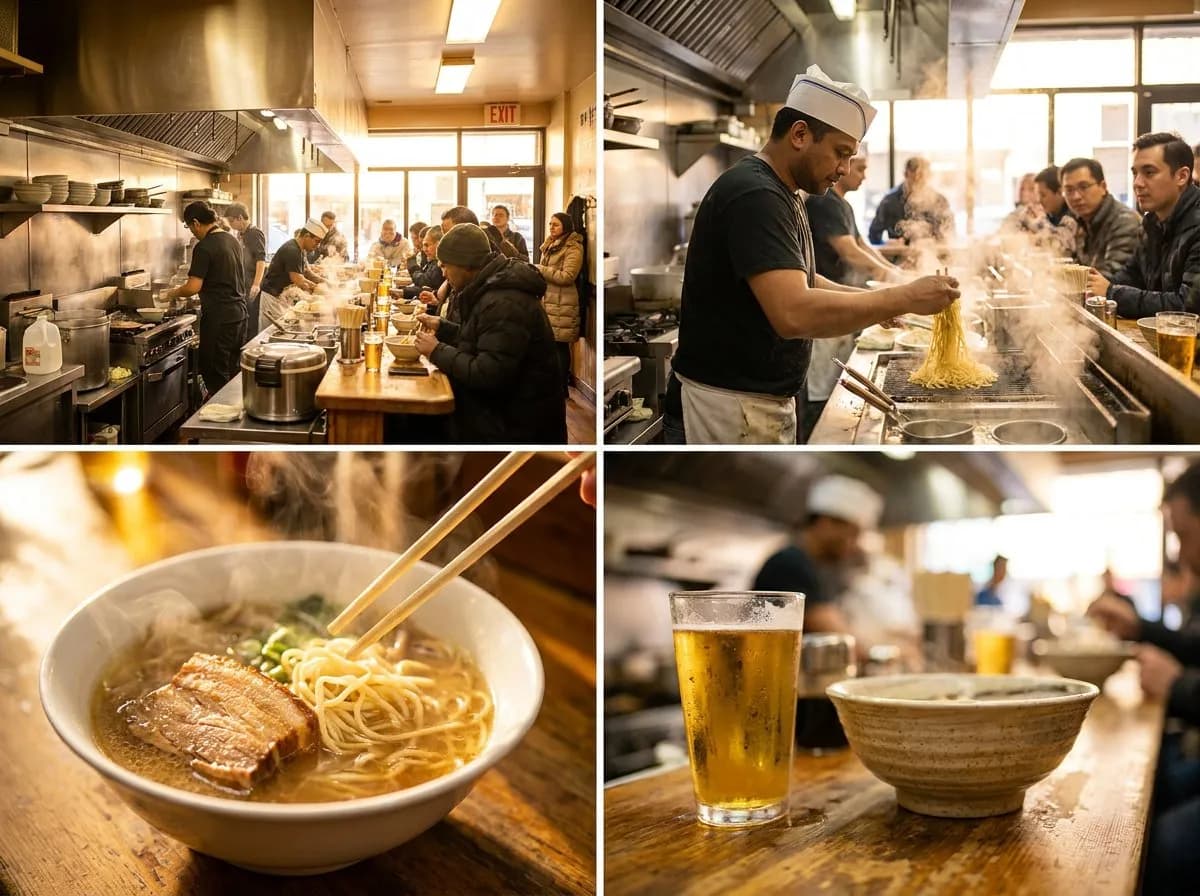
There's something particular about eating ramen at a counter past midnight. The format strips away pretense—no sprawling dining rooms, no lengthy waits for tables. You slide onto a stool, the kitchen directly before you, and within minutes a bowl arrives. The transaction is immediate, the comfort swift. Manhattan's late-night ramen counters have cultivated this specific ritual, where solitary diners sit elbow-to-elbow with strangers, united by appetite and the hour. The city's frenetic energy persists even after dark, and these spots absorb the overflow: restaurant workers finishing shifts, night students, insomniacs, travelers adjusting to time zones. The counter itself becomes a democratic space—no reservations, no VIP sections, just available seats and the understanding that everyone here needs the same thing.
The East Village anchors
The East Village has long maintained New York's densest concentration of ramen shops, several of which stay open well into the early morning. Ippudo, with its location on Fourth Avenue, has served late-night crowds since opening in 2008, though specific closing times vary by day and should be verified closer to your visit. The original Momofuku Noodle Bar on First Avenue, though its hours have evolved over the years, helped establish the neighborhood's ramen culture when it opened in 2004. Totto Ramen, with multiple Manhattan locations including one on East 52nd Street, has traditionally maintained late hours for its chicken-based broths, though operating schedules can shift seasonally. These establishments share certain qualities: compact spaces, efficient turnover, and menus designed for quick decision-making. The East Village's pedestrian flow at midnight supports these operations—there's always someone walking past, catching the scent of pork broth, and making the turn inside.
Midtown's post-everything stops
Midtown's late-night ramen counters serve a different constituency: theater-goers spilling out after curtain calls, office workers who've stayed too late, hotel guests wandering jet-lagged through the streets. The rhythm here is less neighborhood-intimate, more transient. Ramen places near Penn Station and in the West 40s and 50s have traditionally catered to this flux, though many have adjusted their hours in recent years. The advantage of Midtown counters is their accessibility—near transit hubs, visible from major avenues, designed for people who need to eat and move on. The quality can be reliable without being revelatory, which is precisely what certain hours require. When you emerge from a theater at 11 p.m. or finish a transcontinental flight, you're not seeking culinary adventure—you want warm broth, properly cooked noodles, and a seat. These Midtown spots understand the assignment.
What late hours change about the bowl
Ramen tastes different at 1 a.m., and it's not just hunger talking. The contrast between cold streets and hot broth becomes more pronounced. The salt and fat in tonkotsu or miso bases hit differently when you're tired, providing not just flavor but ballast. Late-night ramen counters often simplify their menus after a certain hour—fewer specialty bowls, streamlined options that the kitchen can execute consistently when operating with reduced staff. This isn't a compromise; it's an acknowledgment that late-night diners prioritize different qualities. The theatricality of presentation matters less. The complexity of toppings becomes secondary. What matters is heat, richness, the reliable architecture of noodles and broth and perhaps a soft-cooked egg. Some shops prepare broths in the morning that simmer all day, reaching their deepest flavors by night. Others maintain multiple batches to ensure consistency across all hours. The result is that a bowl consumed at midnight carries the accumulated work of the entire day's cooking.
Counter culture and solitary dining
Late-night ramen counters have normalized solo dining in ways that traditional restaurants often struggle to accommodate. There's no awkwardness in claiming a single seat at midnight, no hovering host wondering if you're waiting for companions. The counter format provides a natural buffer—you're oriented toward your bowl and the kitchen, not forced into eye contact with other diners. Yet the proximity creates occasional moments of connection: a shared nod over particularly good chashu, a whispered question about which spice level to order, the wordless camaraderie of people eating the same food at the same unlikely hour. Many late-night counter regulars develop patterns—the same stool, the same order, the same time. The staff begin to recognize faces if not names. This repetition builds a rhythm that's distinct from daytime dining, where crowds churn and schedules compress. Late night stretches time slightly, allows for the kind of regular presence that establishes you not as a customer but as a fixture.
The economics of staying open
Running a late-night food operation in Manhattan requires specific calculations. Rent doesn't discriminate by hour, but staffing costs increase for overnight shifts, and foot traffic, while consistent, rarely matches dinner-rush volumes. Ramen counters manage these economics through efficiency: limited menus reduce ingredient waste, counter service eliminates wait staff, and high turnover maximizes seats per hour. Many shops that maintain late hours do so because their daytime business supports it—the late shift becomes an extension rather than a primary revenue driver. Others have built their identity around availability, becoming known specifically as the place that's open when everything else has closed. There's also the practical matter of kitchen prep: if you're already simmering broth for twelve hours and prepping ingredients in bulk, extending service by a few hours adds marginal cost while building loyalty. Some of Manhattan's longest-running late-night ramen counters have succeeded not despite the hour but because of it, carving out a niche that larger restaurants can't or won't fill.
Practical notes
Hours fluctuate more than you'd expect—always verify current closing times on the venue's website or by calling ahead, as many establishments have adjusted late-night service in recent years. Most Manhattan ramen counters are cash-friendly but increasingly accept cards; some have minimum purchase requirements for card transactions. Expect waits even late at night, particularly on Friday and Saturday—the line outside at 11:30 p.m. can rival dinner service. Counter seating means limited storage for coats and bags; come prepared to keep belongings at your feet or on lap. Many shops have no-phone or minimal-conversation policies to maintain kitchen focus and move service along. Tipping conventions apply as they would at any counter-service restaurant. If you're sensitive to strong food smells, note that clothes will absorb the scent of simmering broth—it's an inevitability, not a flaw. Solo diners will find the easiest seating; groups larger than two may face longer waits or need to split up. The latest hours are typically reserved for Thursday through Saturday nights, with earlier closing on Sunday through Wednesday.
Tags: #PullUpAChair #LateNightDining #RamenCounters #ManhattanEats #NYC2026 #NoodleBars #EastVillageFood #MidtownDining #SoloTravel #NightOwls #ComfortFood #TokyoStyle #AfterHours #UrbanRituals #CounterCulture
Sources consulted: Ramen — Wikipedia · East Village neighborhood — Wikipedia · Time Out New York — Restaurants · Eater NY — Dining Coverage · New York Times — Food
All trademarks are the property of their respective owners.