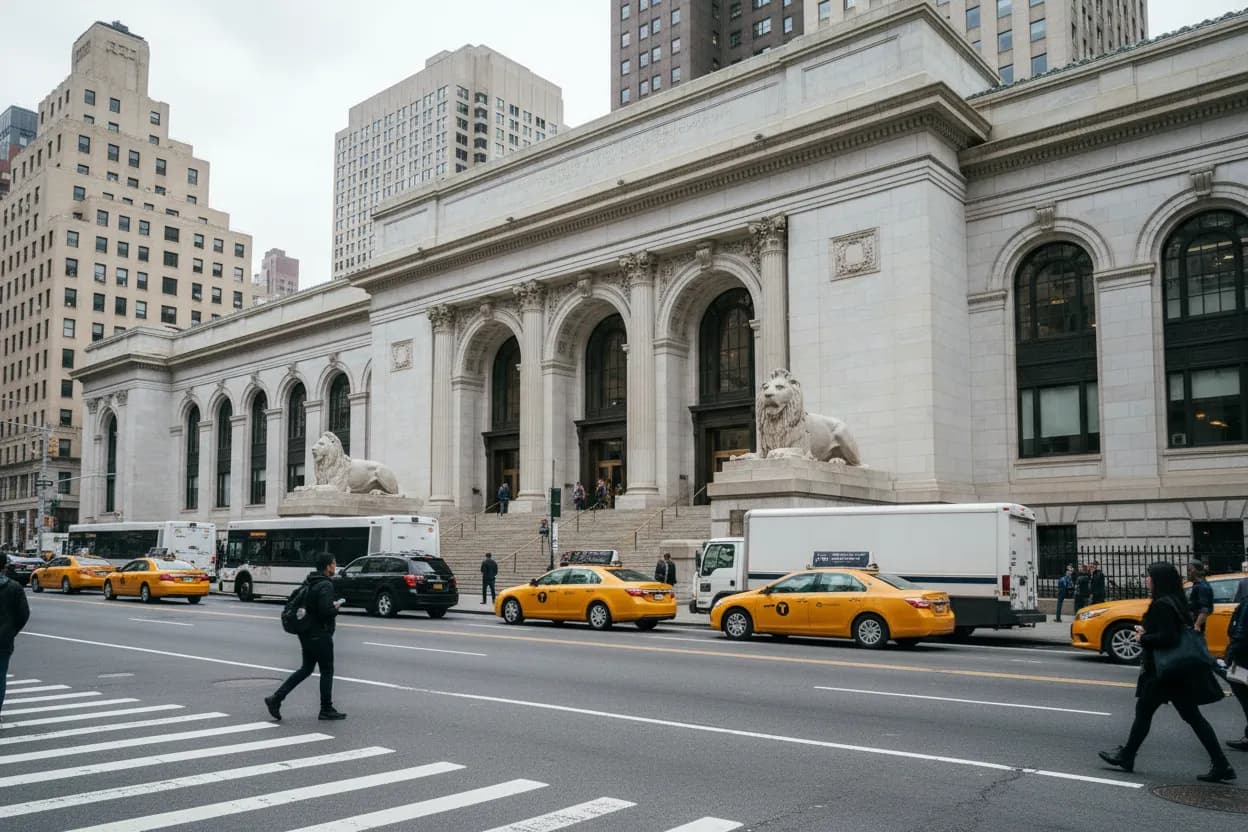
Search interest in donald trump 2026 midterm polling can pull New Yorkers into fast-moving national numbers, local election deadlines, and partisan claims that look more settled than they are. A better weekday plan is to use the New York Public Library’s Stephen A. Schwarzman Building at Fifth Avenue and 42nd Street as a calm research base, then compare what you find against official New York election pages and current polling aggregators. As of Wednesday, July 29, 2026, the practical goal is not to predict November with certainty. It is to separate national mood, New York voting rules, congressional race context, and stale screenshots before you share or act on anything.
Want a faster Midtown research route? Text Karpo for a NYC-specific checklist that links polling claims to library databases, election deadlines, and nearby verification stops before you go.
Start at the Stephen A. Schwarzman Building on Fifth Avenue
The Schwarzman Building is the right anchor because it combines public reading space, research staff, and access to databases that can put polling claims in context. NYPL lists the building at Fifth Avenue and 42nd Street, New York, NY 10018, and describes it as a premier research center. Some rooms are open for quiet study without an appointment, while certain collections need advance consultation, so treat specialized materials as a request, not a walk-up guarantee.
The easy pacing is a weekday visit built around one claim, not a full election forecast. Bring the poll name, sponsor, field dates, sample type, and the exact sentence you want to verify. If the building is crowded, under renovation, or a reading room has limited access, your backup is simple: use open public areas for note sorting, then ask NYPL which division or online database best fits polling, newspapers, or political science sources.
Use the Fifth Avenue Entrance or Accessible 40th Street Route
NYPL’s current Schwarzman research page says the building is fully accessible and notes accessible entrances at 40th Street and 42nd Street, in addition to the main Fifth Avenue entrance. That matters for this trip because a good research visit should not depend on stair-heavy routing or improvising once you arrive. If you need a wheelchair, last-minute accommodation, accessible tour information, or collection information in Braille or audio, NYPL’s Visitor Center page points visitors to dedicated contacts.
Access planning is also a truth-checking habit. Confirm same-day hours before leaving, because posted library hours, summer schedules, exhibitions, room closures, and renovation impacts can change. NYPL’s research page also notes Midtown Renovation work and asks for patience around possible noise or disruption. If quiet concentration is the priority, carry headphones, save the source URLs in advance, and be ready to move from a public room to a less busy research area.

Compare Bryant Park Headlines with New York Election Dates
A national midterm polling headline only becomes useful in NYC after you put it beside the official election calendar. The New York State Board of Elections lists the 2026 general election for November 3, 2026, with polls open from 6:00 a.m. to 9:00 p.m. It also lists early voting from October 24 through November 1, with hours varying by county. Those dates are more actionable than any speculative projection.
Registration timing is a common failure mode. The state deadline page and NYC Board of Elections registration page both list October 24, 2026, as the last day to register for the November 3 general election. For the June 23, 2026 primary, the listed registration deadline was June 13, 2026. If an article or post mixes primary and general dates, pause before trusting its turnout or ballot-access argument.
Read Poll Tables Before Social Screenshots at 42nd Street
For national polling, start with the table, not the commentary. RealClearPolling’s latest House polling page, crawled shortly before this draft, showed multiple late-July 2026 generic congressional ballot polls with Democrats ahead by varying margins, including Reuters/Ipsos, Emerson, Fox News, Economist/YouGov, Morning Consult, Rasmussen, and others. That does not mean every House race moves the same way. It means the national environment should be read as a range of evidence.
The tradeoff is speed versus depth. Aggregators help you see movement quickly, but they compress methodology, likely-voter screens, house effects, and sponsorship. A single poll can be useful for a question about mood; it is weaker for district-level expectations in New York City. If the claim names Trump approval, generic ballot, Senate control, or a New York race, record which metric it uses before comparing it with a different one.
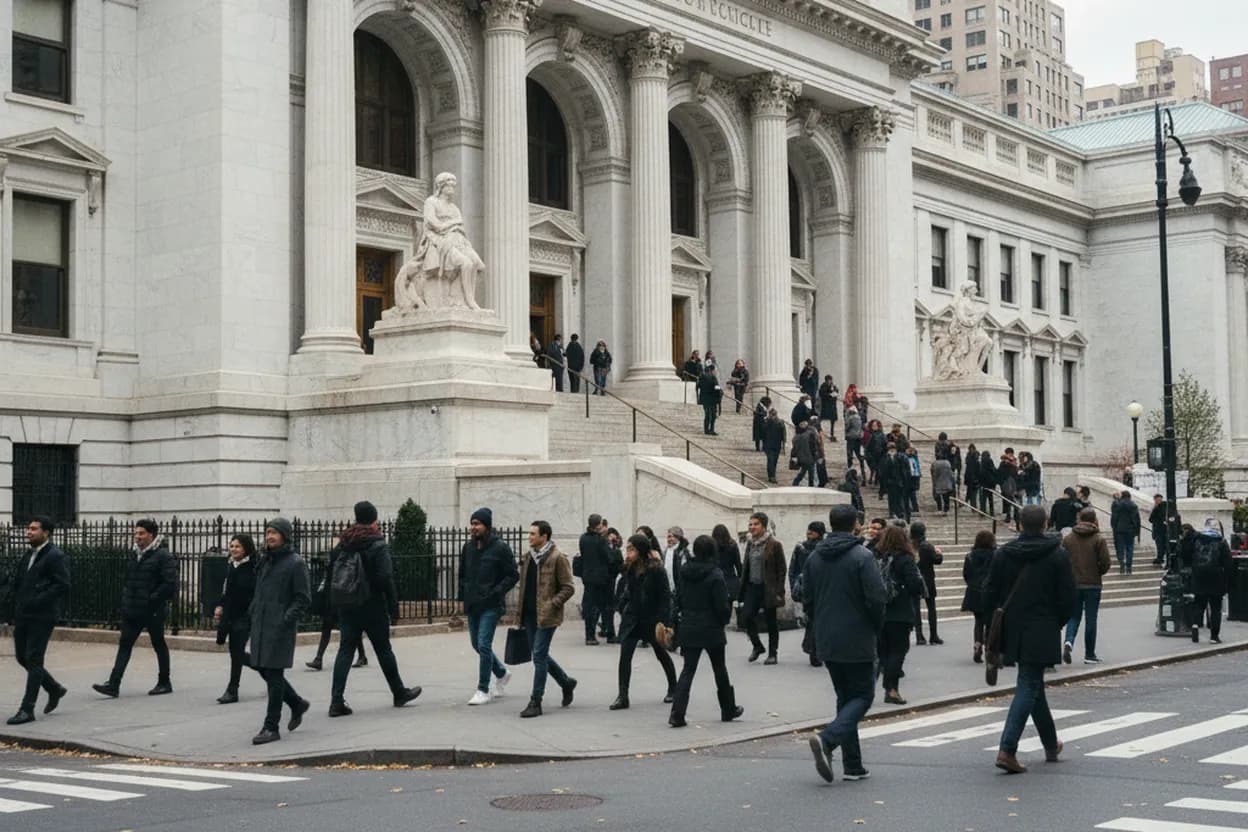
Check AP-NORC and Pew Before Calling a Trend Settled
Reputable standalone surveys add detail that an average may hide. AP-NORC reported in June 2026 that 37 percent approved of Trump’s overall job performance, with a nationwide poll conducted June 11-17 among 3,040 adults and a margin of sampling error of plus or minus 2.8 percentage points. Pew’s May 2026 report examined views of Trump and both parties, including public concern about ethics and honesty in government during his term.
Those sources still need careful use in New York City. National adult samples are not NYC registered voters, Queens independents, Brooklyn primary voters, or Manhattan congressional districts. They are context for the climate around Trump, not a substitute for a local ballot analysis. If you see a post converting national approval into a guaranteed New York result, mark that as an inference and look for district polling, candidate filings, turnout history, and official ballot certifications.
Bring a Notebook for Sponsors, Samples, and Field Dates
A practical Schwarzman workflow fits on one page. Write the claim at the top, then make columns for source, pollster, sponsor, field dates, population, margin of error, question wording, and link. Add a separate line for official election facts, such as the November 3, 2026 general election date and the October 24 registration deadline. This keeps factual rules separate from political interpretation, which is where many midterm posts become muddy.
Audience fit matters. This is a good solo weekday task for a voter, student, campaign volunteer, journalist, teacher, or neighbor trying to answer one claim calmly. It is not efficient if you need instant breaking-news certainty or legal advice about eligibility. For personal voting questions, use the NYC or state Board of Elections directly. For academic-style interpretation, ask NYPL staff which newspaper, politics, or social science databases match your question.
Verify the Poll Site, Library Page, and Ballot Page Before You Leave
The final action is a three-source check before you close your notes. Reopen the poll or aggregator page, reopen the original pollster or survey report when available, and reopen the New York election page that controls the voting fact you plan to cite. If any page has changed, note the access date as July 29, 2026, and do not smooth over the difference. Changing facts are part of the story.
If one source fails, use backup logic instead of filling the gap. For library access, check NYPL’s Schwarzman research and Visitor Center pages again. For voting rules, use the New York State Board of Elections and NYC Board of Elections. For polling claims, prefer current tables and named survey reports over unsourced posts. Your strongest takeaway may be modest: the claim is plausible, unclear, outdated, or unverifiable today.
Tags: #NYC #NewYorkCity #NYPL #SchwarzmanBuilding #Midterms2026 #TrumpPolling #ElectionResearch #VoterInfo #BryantPark #Manhattan #PublicLibrary #NeighborhoodGuides #AskKarpo #BeforeYouGo
Sources consulted: Source 1: web.nypl.org · Source 2: visitorcenter.nypl.org · Source 3: elections.ny.gov · Source 4: elections.ny.gov · Source 5: vote.nyc · Source 6: apnorc.org
All trademarks are the property of their respective owners.
Ask Karpo first
Tell Karpo your date, group size, budget, and starting point. We’ll check current access, timing, transit, and the cleanest New York City plan for New York Public Library, Stephen A. Schwarzman Building before you head out.


