 Tribeca Bowling Group Night Planner for Wedding Guests
Sports Social
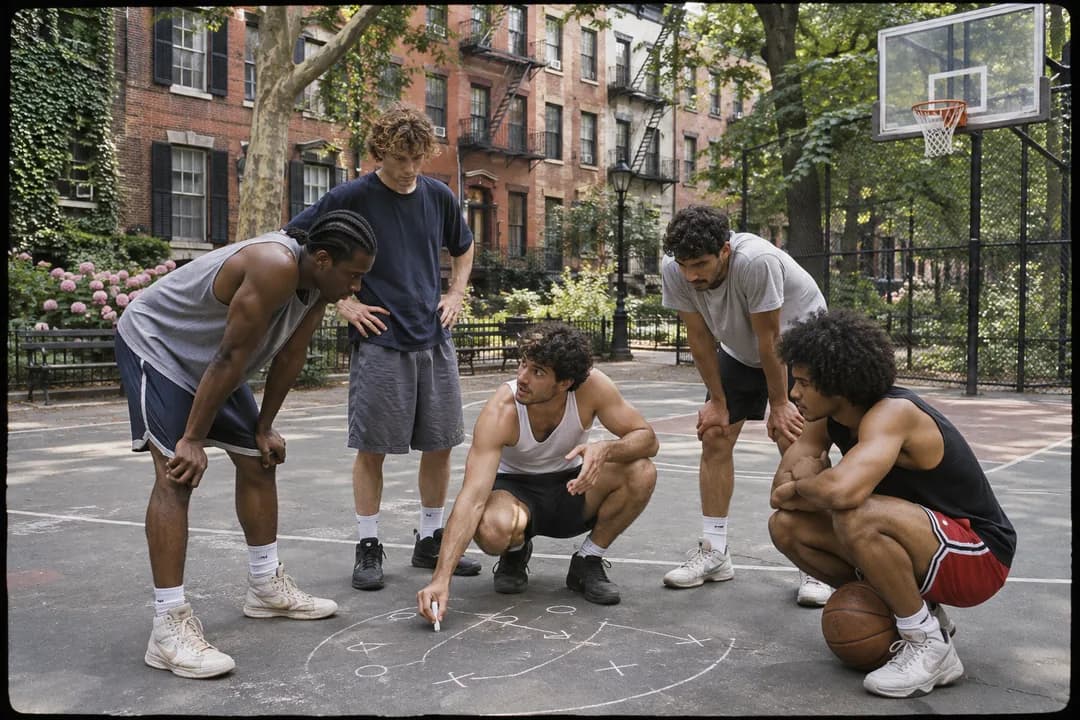
West Village Public Basketball Court Finder: Cage Runs
West 4th Street Courts and James J. Walker Park anchor West Village hoops. Compare subway exits, Hudson River backups, and open-run timing in Manhattan.
Step out of the West 4th Street–Washington Square subway station at Sixth Avenue and West 3rd Street and you hear the unmistakable rattle of chain-link fencing at The Cage, where NYC Parks first laid playground asphalt in 1933. Using a public basketball court finder in the West Village means understanding the difference between a high-stakes spectator showcase on Sixth Avenue and a neighborhood shootaround at James J. Walker Park or Pier 40 along the Hudson River. Every outdoor rim in these Village enclosures is free for public drop-in play outside permitted tournament dates.
Tight Sidelines and High Intensity at West 4th Street Courts
The West 4th Street Courts occupy a compact rectangular triangle along Sixth Avenue between West 3rd and West 4th Streets, hemmed in by towering twenty-foot chain-link mesh and constant sidewalk spectators. Because the out-of-bounds lines sit barely a step from the steel fence posts, ball-handlers have zero room for wide looping crossovers and must protect the rock against tight chest-to-chest pressure.
Since 1971, summer tournament play has made this enclosure famous across the five boroughs, and even non-tournament afternoons draw division-level guards testing their handles. Solo shooters who simply want thirty minutes of quiet form work should hit the Sixth Avenue gate between 7:30 AM and 9:30 AM before the midday crowd gathers.
Hudson Street Pivot to James J. Walker Park and Pier 40
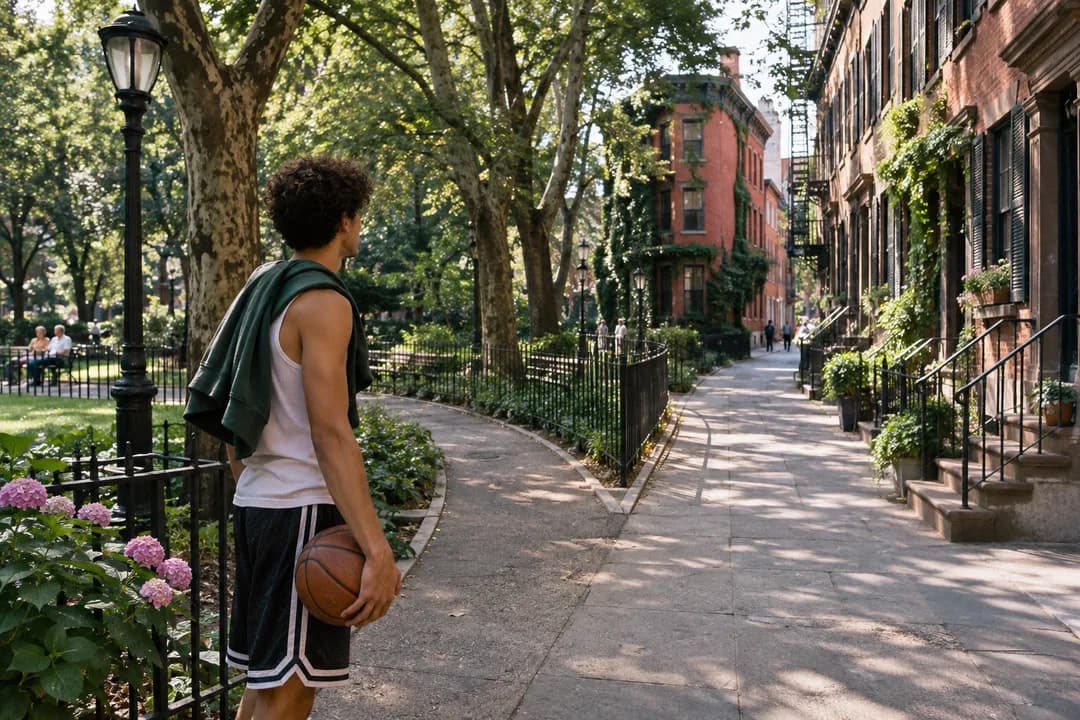
When The Cage is locked into a summer league bracket or stacked four teams deep on a warm Tuesday evening, walk seven minutes west along St. Luke's Place and Clarkson Street to James J. Walker Park at Hudson and Leroy Streets. Opened on the site of a nineteenth-century burial ground and converted into a neighborhood park in 1897, the tree-lined complex includes neighborhood court space with a far calmer residential tempo.
Continuing two blocks further west across West Street brings you to Hudson River Park's Pier 40 at West Houston Street, where outdoor court space sits beside waterfront breezes and panoramic New Jersey views. Pairing Sixth Avenue with Hudson Street and Pier 40 gives your crew three distinct court personalities within a ten-minute walk.
Subway Arrivals at West 4th Street and Houston Street
Few basketball corridors in Manhattan match the transit reach of the West Village: the West 4th Street–Washington Square station serves the A, C, E, B, D, F, and M lines directly beneath the Sixth Avenue courts, while the Christopher Street–Stonewall station and Houston Street station serve the 1 train along Seventh Avenue South. Every MTA subway ride costs $3.00 per tap with OMNY.
Instruct teammates riding the A, C, or E trains to use the southernmost West 3rd Street exit staircase so everyone emerges directly beside the basketball fence rather than three blocks north at Waverly Place. If your group starts at James J. Walker Park instead, the Houston Street 1 train exit at Varick and King Streets is less than three hundred yards away.
Reading Cage Etiquette and Calling Next on Sixth Avenue
At West 4th Street, hesitation on the sideline costs you forty minutes of court time. As soon as you enter the narrow gate, identify the player currently holding next and state clearly whether you are solo looking to get picked up or holding a full five-man squad.
Physical contact in Village full-court games is heavier than at suburban park rims, and players call only obvious fouls that alter a shot. If your group prefers a wider floor with less spectator noise and more room for corner three-pointers, treat Sixth Avenue as a five-minute visual check before continuing west toward Hudson Street.
Chain-Link Rebounds and Compact Court Geometry
Playing inside a high-fenced Manhattan cage changes how missed shots behave. Long rebounds that would roll thirty feet out of bounds in an open park hit the chain-link mesh and drop straight down onto the baseline, keeping fast breaks alive in tight quarters.
Wear court shoes with strong lateral outriggers and thick ankle support, since tight out-of-bounds margins mean you will decelerate hard within inches of the fence line. A heavy outdoor composite ball with deep pebble channels handles the soot and rubber dust kicked up from Sixth Avenue traffic far better than smooth indoor leather.
Hudson River Breeze Versus Sixth Avenue Heat Retention
Weather behaves differently on the eastern and western edges of the West Village. At Sixth Avenue and West 3rd Street, brick apartment blocks and constant avenue buses trap afternoon heat, making the blacktop feel ten degrees warmer on sunny spring and autumn days.
Down at Pier 40 along the Hudson River estuary, steady crosswinds off the water cool players rapidly between games and push high-arc corner jumpers off line. Pack a windbreaker or hoodie in your bag if your route moves from Sixth Avenue toward the waterfront as the sun drops toward Hoboken.
Bleecker Street Water Stops and Fence-Hook Storage
With spectators leaning against the outer fence along Sixth Avenue and West 4th Street, never leave backpacks or phones resting on the outer sidewalk curb. Bring an S-hook or heavy carabiner to hang your bag high on the interior chain-link diamond mesh near the bench corner.
Pick up cold liter bottles along Sixth Avenue, Bleecker Street, or Hudson Street before stepping into the enclosure. Having forty ounces of water at your feet means you never forfeit your spot in a fast-moving pickup queue to go search for a working park fountain.
Post-Shower Drainage and Shaded Sycamore Corners
Because the West 4th Street cage is open to the southern sky along Sixth Avenue, sun and foot traffic dry the center jump circle quickly after a light rain, though painted baselines hold moisture longer. Over at James J. Walker Park, mature London plane trees shade the perimeter, leaving wet leaf stains along the corners after autumn storms.
Always test the painted key apron with a controlled stop before sprinting into a contested layup. If one baseline remains damp, run half-court sets on the sunnier end until the asphalt dries completely.
Cooling Down Along St. Luke's Place and Bleecker Street
After an intense hour of full-court presses or half-court three-on-three, take fifteen minutes to walk the tree-canopied brownstone block of St. Luke's Place between Hudson Street and Seventh Avenue South. Slowing your stride along the quiet nineteenth-century rowhouses lets your breathing normalize away from the horns of Sixth Avenue.
From there, loop south to King Street or east toward Washington Square Park to stretch tight quads and debrief with your teammates before heading down into the subway.
Honest Trade-Offs: Who Should Skip The Cage at Peak Hours
Do not bring a casual group of beginners or rusty players looking for a leisurely Sunday afternoon shootaround to the West 4th Street Cage between 1:00 PM and 7:00 PM. During peak hours and summer tournament schedules, the court belongs to fiercely competitive five-on-five runs where every possession is contested at full speed.
Casual groups and solo shooters chasing high-volume reps will have a much better afternoon starting at James J. Walker Park or visiting Sixth Avenue before 9:30 AM on a weekday.
Organizing Your Village Court Plan in Karpo APP
Lock in your West Village basketball route inside the Karpo APP by saving West 4th Street at Sixth Avenue alongside James J. Walker Park and Pier 40. Note the West 3rd Street subway staircase and set a strict fifteen-minute wait rule before walking west.
Jotting down quick observations after each run—such as tournament closures, afternoon wind at the pier, or morning rim availability—turns your Karpo APP log into a dependable Village hoop guide.
Ask Karpo for more information.
Keep reading
- Tribeca Bowling Group Night Planner for Wedding Guests
 Flushing Bowling Group Night Planner for Thanksgiving Break
 Bushwick Bowling Group Night Planner After Band Practice