 Lower East Side Axe Throwing Group Night Picker: Bride Crew
Sports Social
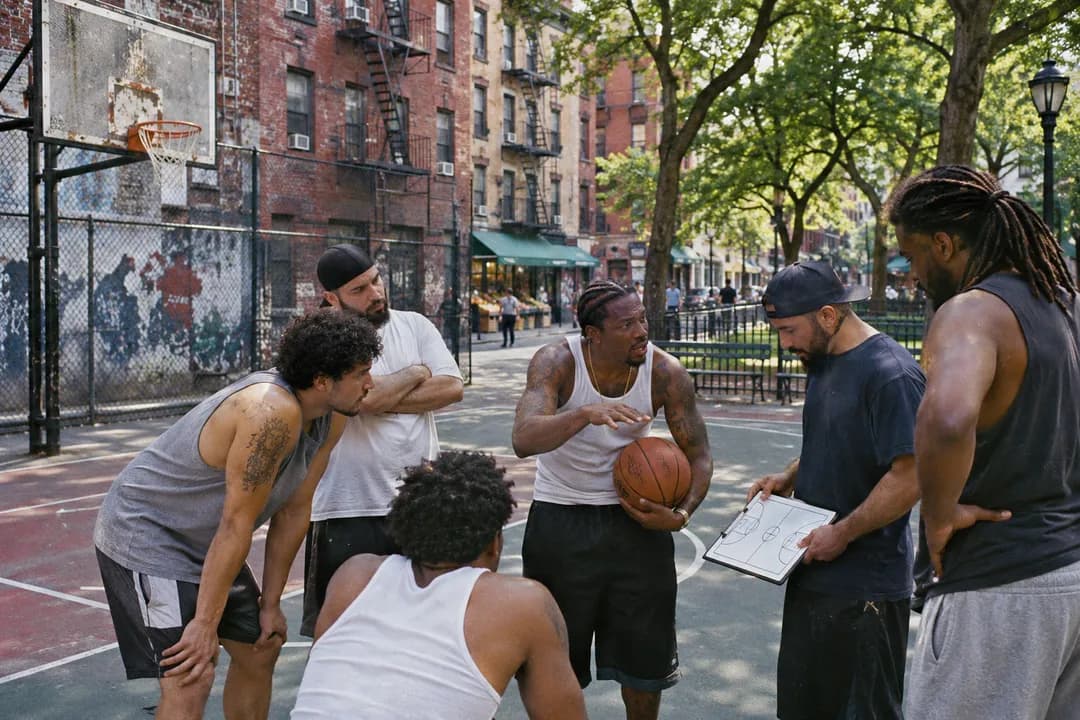
LES Public Basketball Court Finder: Free Seward Runs
Seward Park and Sara D. Roosevelt Park offer free outdoor courts on the Lower East Side. Compare half-court runs, subway exits, and backup hoops in NYC.
Stepping out of the East Broadway F train station puts you two blocks from the oldest municipal playground in the United States, where Seward Park opened in 1903 at Canal and Essex Streets. Using a public basketball court finder on the Lower East Side means weighing tight tenement-bordered blacktop against the long, multi-court stretch of Sara D. Roosevelt Park running from Canal to Houston Street. Every outdoor hoop in these NYC Parks enclosures is free and open without permits for casual walk-up shooting, though late afternoon brings organized five-on-five winners-stay runs that lock up the primary rims.
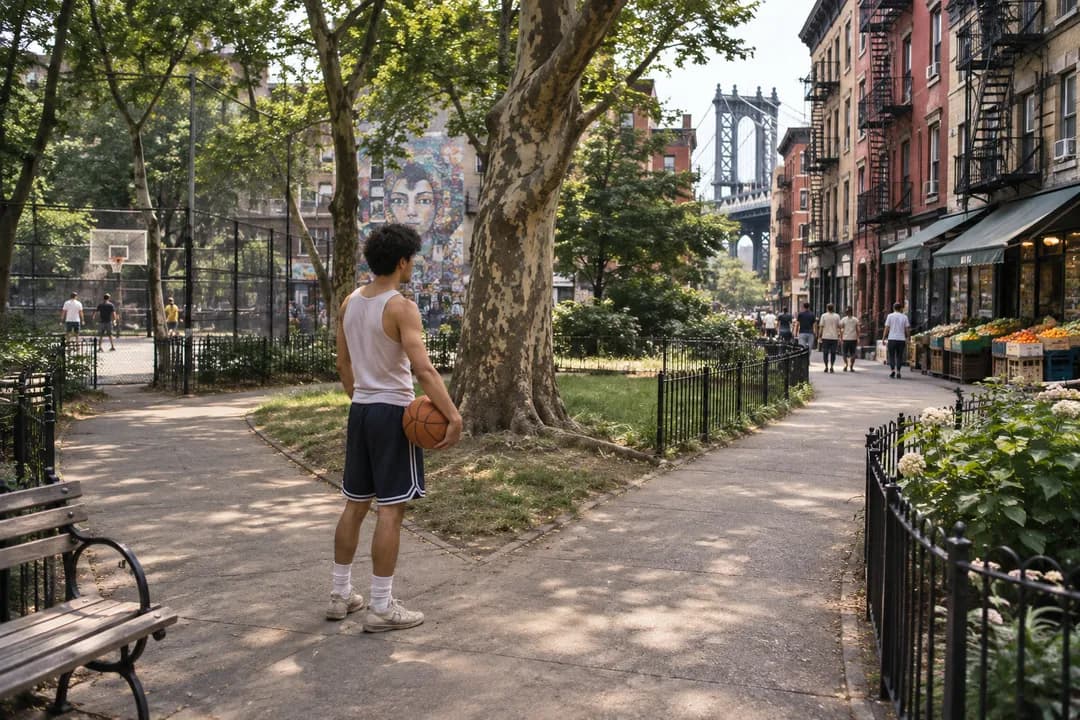
Seward Park Blacktop and Tenement Shade Patterns
The fenced basketball enclosure inside Seward Park sits near the Hester and Jefferson Street side, framed by pre-war brick apartments and mature London plane trees. Because tall masonry buildings border the southern edge, winter and autumn glare drops off earlier here than on exposed riverfront parks. Morning shooters arriving before 10 AM usually find open rims for solo form work, footwork drills, and free-throw routines before neighborhood high school players arrive after 3 PM.
When evaluating this spot in your route planner, factor in the heavy concrete bleachers and single gate bottleneck. Regulars hang backpacks along the chain-link fencing and call next with the last shooter on the sideline. If two full-court games are already stacked with three or four waiting squads, staying here means thirty minutes of standing cold on the baseline rather than getting touches.
Chrystie Street Linear Courts at Sara D. Roosevelt Park
Seven blocks west of Seward Park, Sara D. Roosevelt Park stretches seven blocks north-south between Chrystie and Forsyth Streets, created in 1934 as a narrow greenway slicing through the tenement grid. Basketball hoops appear in distinct segments near Broome Street, Delancey Street, and Stanton Street, giving players multiple walk-up checkpoints along a single straight walk. If the southern courts near Grand Street are occupied by local leagues or youth clinics, walking four minutes north past the Schiff Parkway overpass reveals another set of backboards.
The narrow park footprint means errant rebounds can bounce quickly toward the pedestrian promenade or fence line, so players value compact ball control and quick half-court three-on-three sets. Streetlamp illumination from Chrystie Street spills across the asphalt after dusk, though players should never count on stadium-grade floodlights once park gates close for the night.
East River Park Track Reconstruction and Corlears Hook Pivot
Runners and hoopers who remember the old waterfront courts along the FDR Drive need to account for the ongoing East Side Coastal Resiliency reconstruction project, which has phased closures across East River Park since 2021. Instead of walking blindly toward the Williamsburg Bridge waterfront expecting every historical court to be open, smart Lower East Side planners anchor their eastern loop at Corlears Hook Park near Jackson and Cherry Streets or Murphy Brothers Playground further north.
Checking the street grid before walking east of Pitt Street saves a fifteen-minute detour along construction barriers. When wind gusts off the East River make outside perimeter jumpers unpredictable at Corlears Hook, cutting back inland toward Henry Street or Broome Street restores brick-wall wind protection within ten minutes on foot.
Subway Exits and Ten-Minute Walking Triangles
A practical Lower East Side hoop itinerary connects three subway hubs into a tight walking triangle: the Delancey Street–Essex Street station (F, J, M, Z lines), the Grand Street station (B, D lines), and the East Broadway station (F line). Starting at Grand and Chrystie lets you inspect the mid-park courts first, then cut east along Canal Street toward Essex Street if every basket is packed.
Riding the MTA subway costs $3.00 per tap with OMNY, so keeping your primary and secondary courts within a half-mile walking radius avoids paying a second fare just to find an open backboard. Save the exact cross-street intersection—such as Stanton and Forsyth or Canal and Essex—in your group thread so teammates exiting different train cars do not wander the wrong end of a seven-block park.
Reading Sideline Stack Depth Before You Lace Up
Never unlace your street shoes until you watch two full possessions from outside the gate. On Lower East Side courts, game tempo shifts sharply by hour: weekday midday draws restaurant workers on break, freelance creatives, and solo rebounders, whereas 4:30 PM to dusk brings fast-paced physical runs where teams know each other's cuts by heart.
Count the players standing near the scorer's bench or leaning against the interior fence with basketballs under their arms. Five waiting players equals one next squad; ten waiting players means at least two games before a newcomer touches the floor. If you brought only two friends and want immediate three-on-three half-court reps, skip a double-stacked full court immediately and pivot to your secondary pin.
Asphalt Grip, Rim Forgiveness, and Outdoor Ball Choice
Municipal blacktop on the Lower East Side takes a beating from winter freeze-thaw cycles, delivery dust from Delancey Street, and fallen plane-tree leaves after rainstorms. Heavy double-iron rims and chain or nylon nets mean high-arc shots drop cleaner than flat line drives that rattle out off the back iron.
Leave slick indoor leather basketballs at home; bring a composite or rugged outdoor rubber ball that holds its pebble grain on coarse asphalt. Low-top court shoes with thick herringbone rubber outsoles hold up far better on painted concrete aprons than soft translucent soles designed for hardwood gymnasiums.
Hydration Refills and Corner Bodega Timing
Public drinking fountains inside NYC Parks playgrounds are shut off seasonally during freezing months and can have low pressure on hot summer afternoons. Before entering the cage at Seward Park or Forsyth Street, pick up two liters of water along Essex Street, Grand Street, or Orchard Street so you do not lose your spot in rotation hunting for a drink.
Keep court-side gear minimal: a single cinch bag or carabiner clips neatly to the bottom chain-link mesh where you can see it from both ends of the floor. Avoid leaving loose phones or wallets on stone benches outside the basketball fence where pedestrian foot traffic flows constantly toward the Essex Market crossing.
Weather Branches: Wet Paint Lines and Puddle Drainage
After a morning downpour, painted key lines and three-point arcs stay slick long after the unpainted gray asphalt dries. Courts tucked under dense tree canopy near Hester Street hold damp patches in the corners, while the more open sections along Chrystie Street catch midday sun and dry thirty to forty minutes faster.
When puddles sit inside the restricted area under the basket, shift your workout from driving layups to stationary catch-and-shoot drills from the dry wings, or walk to the secondary court to inspect drainage. A flexible plan treats damp pavement as a thirty-minute shooting warmup rather than a wasted subway trip.
Cooling Down Along Orchard and Essex Streets
Once your legs heavy up after three straight games to eleven or fifteen, build a twenty-minute cooldown walk into the route rather than sitting stiffly on cold subway plastic. Strolling west from Seward Park up Orchard Street or Ludlow Street lets your heart rate settle while passing historic brick tenements and independent storefronts.
Groups wrapping up an early weekend run can loop past the historic 1903 Seward Park Library exterior or walk north toward Houston Street to split toward different subway lines. Keeping the post-game walk simple ensures everyone cools down together and agrees on which court earned top priority for next week's run.
Honest Trade-Offs: When to Skip Peak Weekend Runs
Skip the main Delancey Street cages on warm Saturday afternoons between 2 PM and 6 PM if you are looking for relaxed half-court shooting or bringing beginners who want unhurried reps. Those peak windows belong to high-intensity five-on-five runs where contested drives, quick transition threes, and vocal sideline energy dominate every possession.
For low-pressure shooting or rust-shaking drills after a layoff, target Tuesday through Thursday mornings between 8:30 AM and 11:30 AM, or Sunday mornings before 10:00 AM. Matching your honest skill goals to the right clock window prevents frustration and keeps every player in your group engaged.
Structuring Your Saved Route in Karpo APP
Organize your Lower East Side basketball loop inside the Karpo APP by saving two concrete court pins, the nearest subway exit, and a clear fifteen-minute switch rule. Label which stop serves as your primary full-court run check and which acts as your half-court shooting fallback so your group has zero debate on the sidewalk.
After each session, jot down a one-line observation on rim condition, shade angle, or crowd turnover at that specific hour. Over a few weeks, those firsthand notes turn a generic public basketball court finder search into a battle-tested personal playbook for Lower Manhattan.
Ask Karpo for more information.
Keep reading
- Lower East Side Axe Throwing Group Night Picker: Bride Crew
 West Village Axe Throwing Group Night Picker: Quiz Rivals
 Carroll Gardens Axe Throwing Group Night Picker: Parents Off