The street wakes differently today
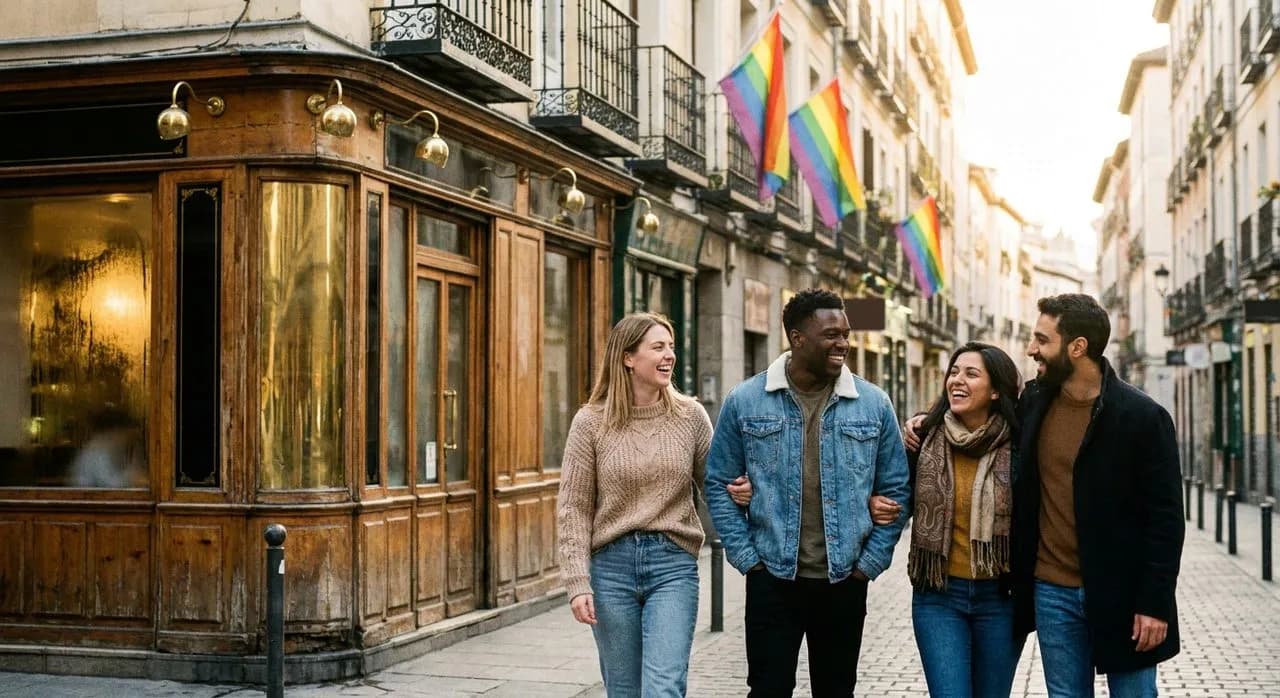
You arrive at Christopher Street station at 7:52 a.m., late June. The platform smells like coffee and sunscreen. Above ground, the intersection at Seventh Avenue South looks almost ordinary—except for the rainbow flags hanging from every fire escape between Bleecker and West 4th, and the barricades stacked against the Stonewall Inn's brick facade. A man in his seventies unfolds a canvas chair precisely where the curb meets the crosswalk at Grove Street. He's wearing a faded ACT UP t-shirt and has claimed this spot for years. He nods at the bagel shop owner across the street, who's already taping a pride flag to his window. This is the choreography of the first hour, when Christopher Street still belongs to the people who live here.
The Stonewall may open its doors early on parade morning, well before official parade time. A bartender props the door with a rainbow-painted brick. Inside, the jukebox plays Sylvester at low volume. Early arrivals occupy spots at the bar, drinking coffee with a splash of something stronger. They'll switch to beer as the morning progresses. The morning light cuts through the front windows differently than it does at 2 a.m., illuminating the framed photographs that line the walls: Marsha P. Johnson, the '69 riots, decades of defiance compressed into black and white. You can order a grapefruit mimosa that tastes like optimism and history mixed in equal parts.
The neighbors arrive with precision
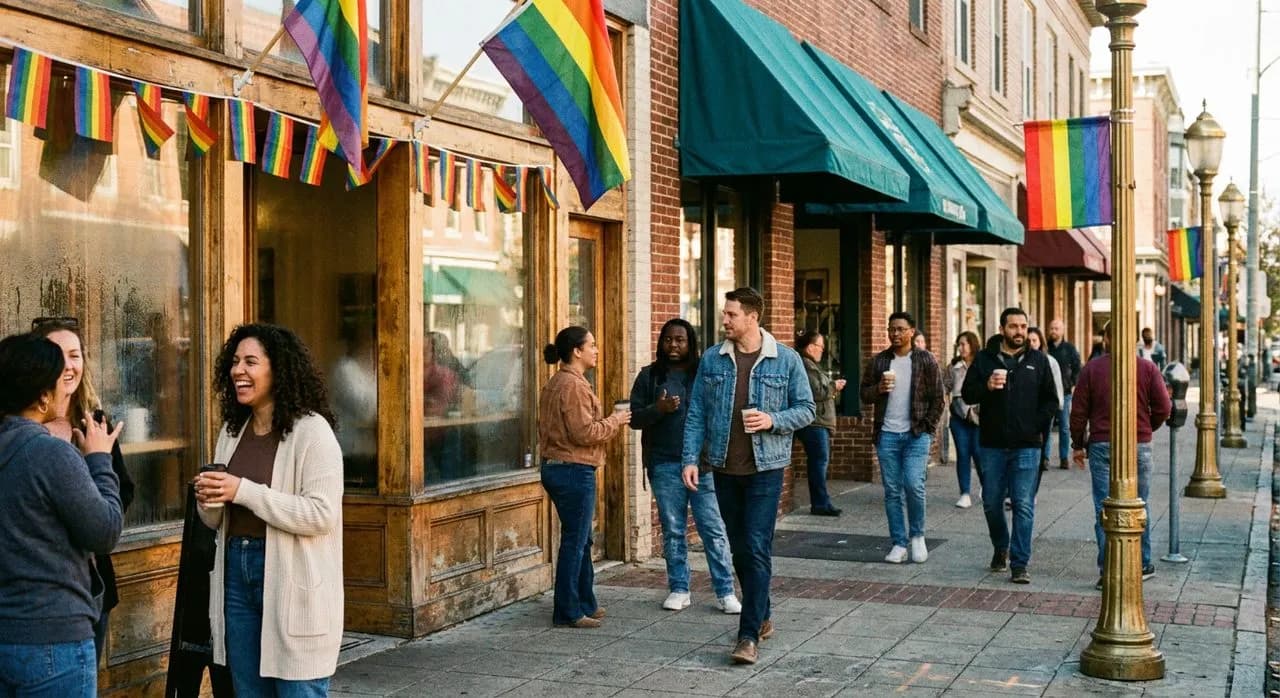
By 8:30 a.m., the sidewalk real estate game begins in earnest. Families from the townhouses on Commerce Street emerge with coolers and folding tables. Long-married couples set up their annual viewing stations at the northwest corner of Christopher and Greenwich. They bring card tables, camping chairs, and homemade cookies they'll share with strangers all morning. Grandchildren help unfold hand-painted banners, slightly sun-faded from previous years. A few doors down, shop owners position their chairs at careful angles to catch both the parade route and the morning sun. They've learned the geometry of this corner through many Prides. A woman waters the window boxes outside her apartment, then drapes a trans pride flag over the railing. She'll watch from her third-floor perch, same as always.
The bodega on the corner has been awake since six, stocking extra ice and arranging rainbow-frosted cupcakes in the window. The owner's daughter, home from college, works the register. She knows the rhythm: sell coffee and breakfast sandwiches until nine, then switch to water bottles and beer. By 9 a.m., she'll move through cases of Poland Spring. The store's cat, a grey tabby, watches the growing crowd from his usual spot on top of the lottery machine. He's seen many Prides. Nothing surprises him anymore.
The quiet accumulation of presence
Nine o'clock brings the bridge-and-tunnel crowd, the early birds who've timed their arrival to beat the crush. They walk down Christopher from the PATH station, eyes wide, phones out, trying to capture something that hasn't quite started yet. The locals can spot them immediately—they're the ones stopping to photograph the Stonewall sign, standing in the middle of the sidewalk, blocking the flow. But there's no hostility this morning, just gentle navigation around them. An older man with rainbow suspenders points a couple toward the best viewing spot near Waverly Place. "Get there now," he says. "In an hour, you won't move for six hours."
The sound changes as the street fills. Individual conversations blur into a low hum punctuated by laughter. Someone's portable speaker plays Whitney Houston. A drag queen in full regalia—makeup perfect, heels high, wig towering—emerges from a building on Grove Street and walks toward the staging area. People applaud spontaneously. She waves like royalty, practiced and genuine. Two police officers lean against their cruiser on Hudson Street, drinking bodega coffee. The veteran officer knows which corners flood first, which side streets stay clear, where the medical tents should go. By 9:30 a.m., he'll be too busy to drink coffee.
The hour when everything's still possible
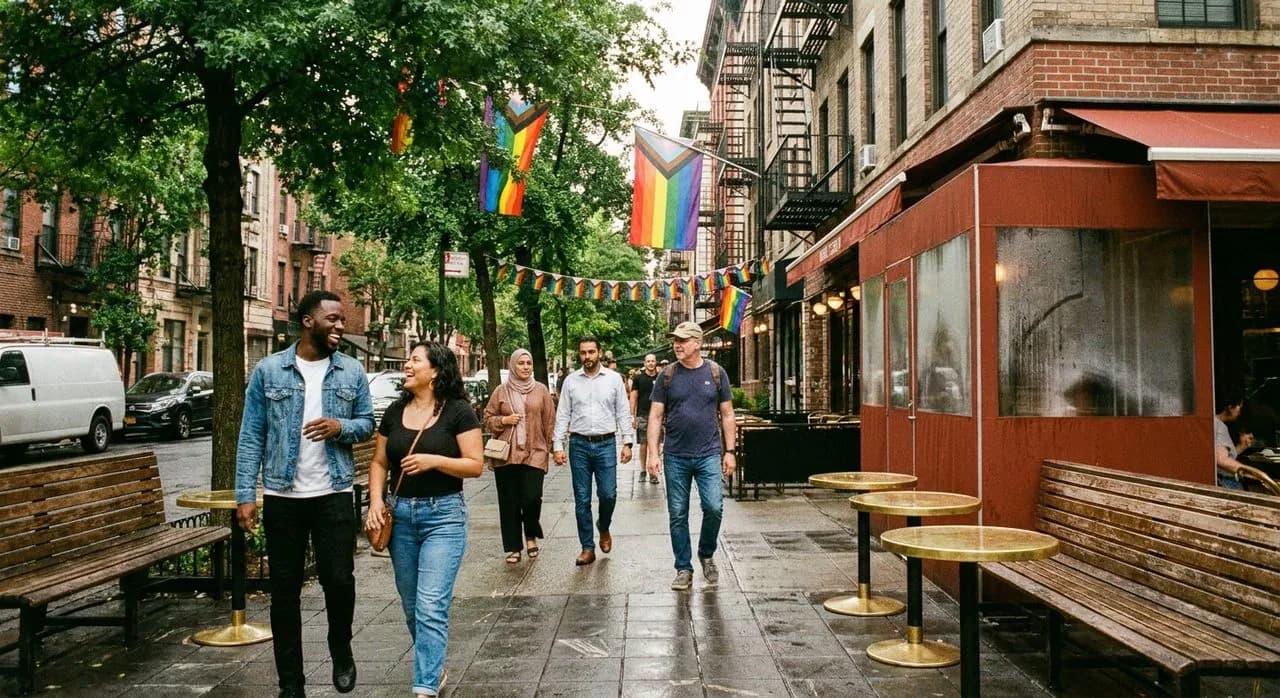
At 9:15 a.m., Christopher Street exists in a liminal space between neighborhood and spectacle. You can still walk from one end to the other, still duck into Cafe Reggio for an espresso, still have a conversation without shouting. The man in the ACT UP shirt has been joined by three friends, all his age, all with their own folding chairs. They're talking about people who aren't here anymore, voices low but not sad. This hour belongs to memory and anticipation in equal measure. A young couple holds hands on the Stonewall steps, taking selfies. They're visiting from out of state. They don't know that they're sitting exactly where history pivoted in 1969, but they feel something. You can see it in how carefully they frame their photos.
The parade staging area on Greenwich Street hums with organized chaos. Float drivers check their routes. Sound systems blast test runs. Volunteers in neon vests speak into walkie-talkies. But on Christopher Street proper, there's still space to breathe. The woman with the trans flag comes downstairs with a thermos of iced tea and sits on her stoop. She'll stay there until the last float passes, usually around 4 p.m. Her neighbors know to save her spot if she needs to use the bathroom. This is the unspoken contract of Pride morning: we take care of each other, we hold space, we remember why we're here.
When the volume rises
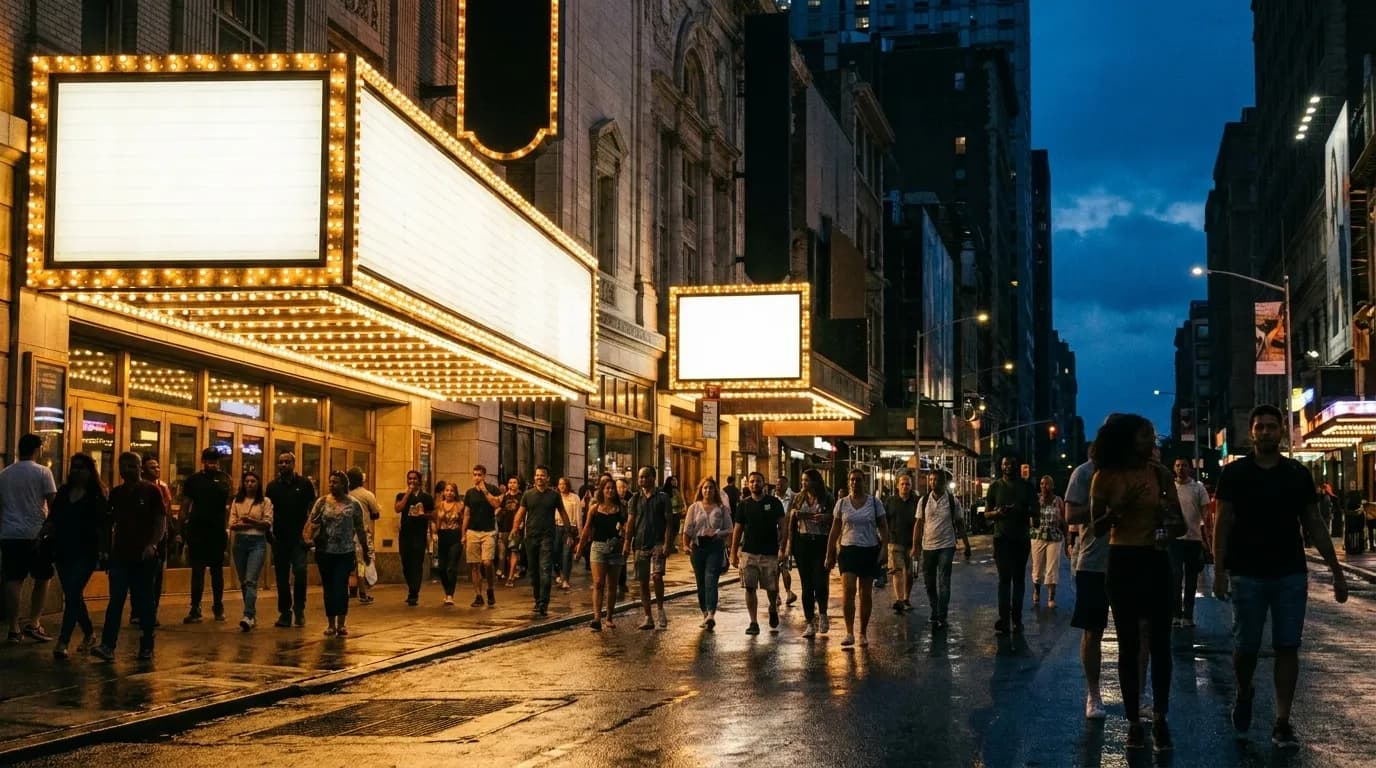
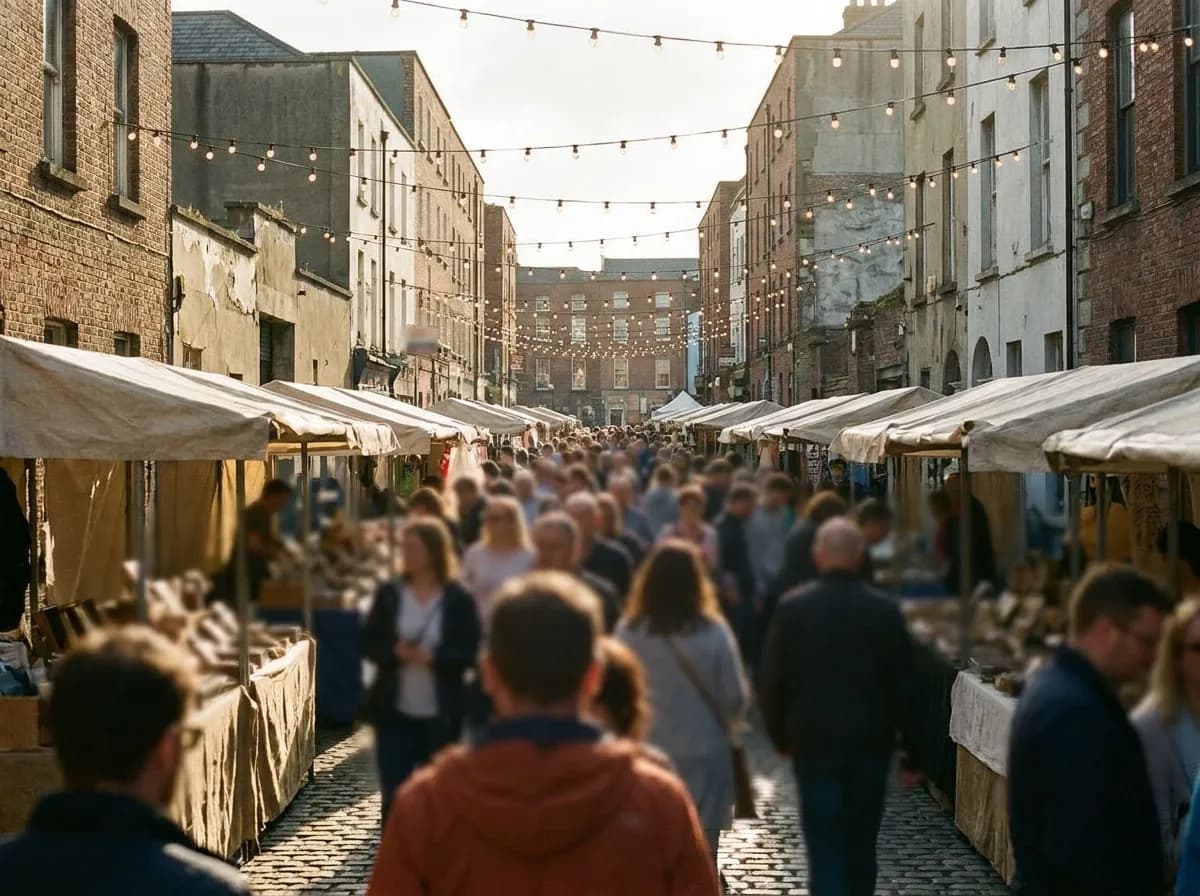
By 9:45 a.m., the crowd has tripled. The sidewalks compress. You're standing shoulder to shoulder with strangers who feel like friends, at least for today. The neighbors have already given away much of their homemade food. The bodega has sold hundreds of water bottles. Stonewall's occupancy has hit capacity; the bartender has started a waitlist for the second-floor viewing area. The police officers have abandoned their coffee and moved to traffic control positions. Christopher Street station has closed its Christopher Street exit; everyone's being routed through the Seventh Avenue entrance to manage the flow. The man in the ACT UP shirt stands up, stretches, and surveys the crowd with satisfaction. "Here we go," he says to no one in particular.
The first float is still twenty minutes away, but you can hear it already—a bass line thumping from somewhere near Washington Square, getting closer. The energy shifts from anticipation to celebration. Phones rise into the air. Someone starts chanting. The drag queen from earlier reappears on a nearby float, waving at the crowd she walked through an hour ago. The morning light has given way to full sun, hot and bright, the kind of weather that will make headlines tomorrow. But right now, in this moment before the parade officially begins, Christopher Street holds everything: history and future, locals and visitors, quiet reverence and explosive joy. You're standing at the intersection where it all started, and for one more minute, you can still feel the neighborhood underneath the celebration.
Practical notes
Christopher Street station (1 train) exits directly onto the parade route; arrive before 8 a.m. or expect crowd-control rerouting. The Stonewall Inn (53 Christopher Street) is a National Monument commemorating the 1969 Stonewall uprising. The NYC Pride March takes place annually on the last Sunday of June (Pride Month), with Christopher Street and the Stonewall Inn serving as the symbolic heart of the celebration in Greenwich Village. Street viewing is free, but bring cash for bodega supplies—most local shops experience credit card reader overload by mid-morning. The best viewing spots are the north side of Christopher between Greenwich and Waverly (morning shade) or near the Stonewall if you arrive early. The parade officially starts mid-morning but rarely moves down Christopher before 10:30 a.m. No public restrooms exist on the immediate route; plan accordingly. Cafe Reggio (119 Macdougal Street) is a two-minute walk and allows bathroom access for customers. The crowd peaks between noon and 2 p.m., reaching enormous densities. Exit strategies: walk east toward Washington Square or south toward Houston before 11 a.m., or commit to staying until 4 p.m. when the route clears.
Tags: #PrideNYC #ChristopherStreet #StonewallInn #PrideParade #GreenwichVillage #NYCPride #LGBTQHistory #WestVillage #PrideMonth #NYCNeighborhoods #LocalPride #StonewallNational #QueerHistory #NYCEvents #PrideWeekend
Sources consulted: nycpride.org · nps.gov
Please drink responsibly. Must be of legal drinking age.
All trademarks are the property of their respective owners.