 SoHo Tailor Alteration Shop Finder for Sample Sale Finds
Neighborhood Guides
NYC Post Work Route Planner: 3 Subway Delay Choices
Choose a bounded walking alternative when subway delays interrupt your evening, with a clear checkpoint, an onward connection, and a low-effort fallback.
A delayed subway changes more than the journey home. You are suddenly deciding whether to wait underground, walk to another station, or turn the interruption into a short evening outside. A NYC post-work route planner can help organize that choice around the information you actually have. Start in the Karpo APP with your location, your destination, and the service notice you are looking at. Ask for a walking alternative with a deliberate exit point, so an uncertain wait does not become an exhausting, open-ended trek.
Read the notice before changing your route
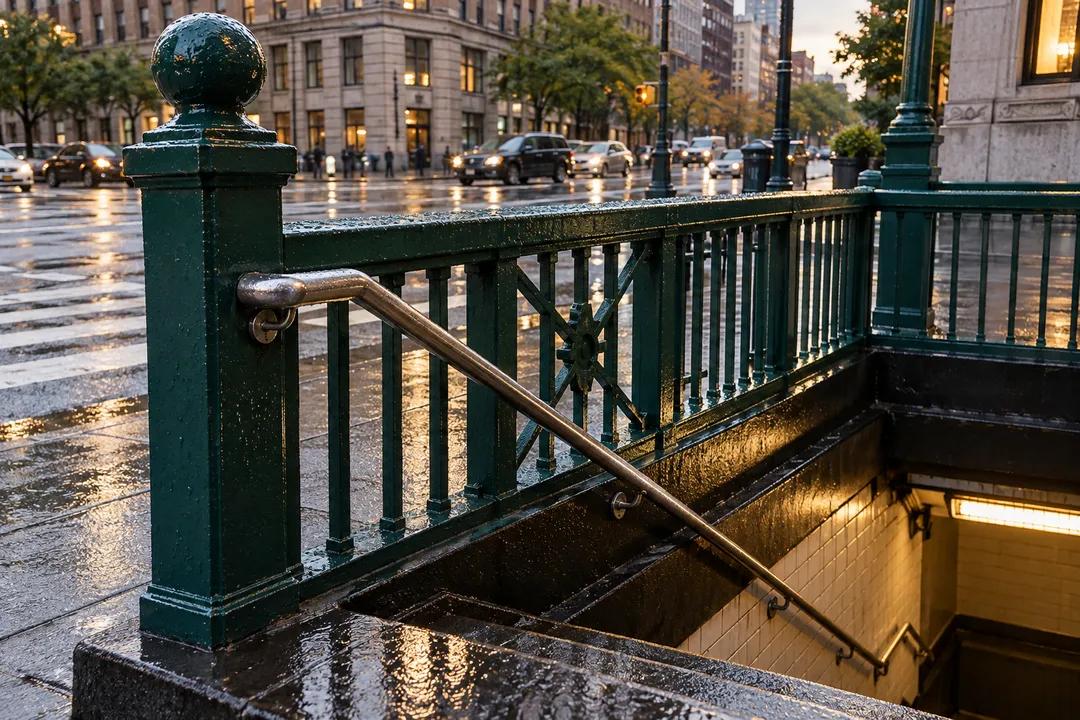
First, work out what has changed. A message about your line, a closed entrance, and a suspension over part of a route describe different problems. Use the MTA's service information for the transport situation. If you paste a notice into your planning request, include its timestamp and the station or direction it concerns. An old screenshot should not silently become the basis for tonight's route. You are supplying context for a decision, rather than subscribing to automatic monitoring.
Do not assume that moving one station solves every disruption. The problem might affect the same track beyond that station, while a nearby entrance might lead to exactly the service you just left. Ask for the reasoning behind an alternative. Which part of the original journey would the walk replace? Which part would still rely on the affected service? This small distinction prevents a scenic detour from becoming a long way back to the same platform.
Set two limits while you are still stationary
Choose a maximum walking effort and a latest acceptable arrival. These limits need not match. You might accept arriving later if most of that time can be spent sitting, or prefer a brisk outdoor section if it avoids another transfer. Tell Karpo whether you are carrying groceries, protecting a sore knee, or meeting someone who cannot wait. A route designed for an unburdened solo commuter can be a poor fit for someone hauling a laptop and a shopping bag.
Make the fallback explicit: “If no sensible walking alternative fits these limits, give me the simplest transit-based option to assess.” This is a request format, not a guarantee that a faster connection exists. Waiting can remain the more comfortable choice. The point of building alternatives is to see the costs clearly. You do not have to turn every interruption into a city walk, and you do not have to keep walking to prove that leaving the station was worthwhile.
Request three genuinely different responses
Ask for a short walk to a different useful connection, a longer pedestrian segment with one optional stop, and a minimal-walking choice. These should represent different strategies rather than three parallel streets leading to the same uncertainty. For each, request a plain description of the remaining transport dependency. It should be obvious whether you would still need a train, a bus, or another mode after the walk, even if you have not chosen a detailed itinerary yet.
A practical prompt is: “I am at this Manhattan intersection, heading to this destination. My usual journey is disrupted according to the notice below. I can walk for about twenty-five minutes and want one straightforward alternative plus a shorter fallback. Keep an onward connection within the plan and explain what information is still unknown.” The walking limit is an example you can replace. The answer should not present that input as a measured travel time to a real station.
Use a checkpoint instead of chasing recovery
Give the walk a decision point that you can identify on a map before setting off. This could be the intersection where you would turn toward an alternative station or the edge of the area you intended to cover. Choose a point with a simple next action. You are walking to a useful place to reassess, not following an endlessly moving target because a train might return to normal at any moment. A defined checkpoint makes changing your mind easier.
Reconsider the route there, while stopped and out of pedestrian traffic. Compare the remaining effort with the information then available from the transport operator. If the original journey becomes practical again, returning to transit can be a perfectly good outcome. If the alternative still makes sense, continue with its next leg. Avoid changing direction repeatedly between updates. Every reversal consumes distance and attention, even when a map makes it look like a tiny adjustment.
Put a stopover where it serves the journey
An optional food or rest stop works best near the decision point or the onward connection. Placing it halfway down an unrelated side trip means you have to finish the detour even when you would rather leave. Ask for the stop to satisfy a specific need: water, a simple meal, or a place to sit. A broad request for “something fun nearby” can distract from the commute problem and introduce more choices than you wanted after work.
Treat any merchant suggestion as a separate proposal. No part of a route outline establishes a business's opening time, an available seat, or your place in a queue. When those details are absent, keep the stop optional and retain a route that does not depend on making a purchase. You can ask for a street-based walking segment without selecting a restaurant at all. Here, no particular business is named and no price or service window is claimed.
Plan for rain and access needs together
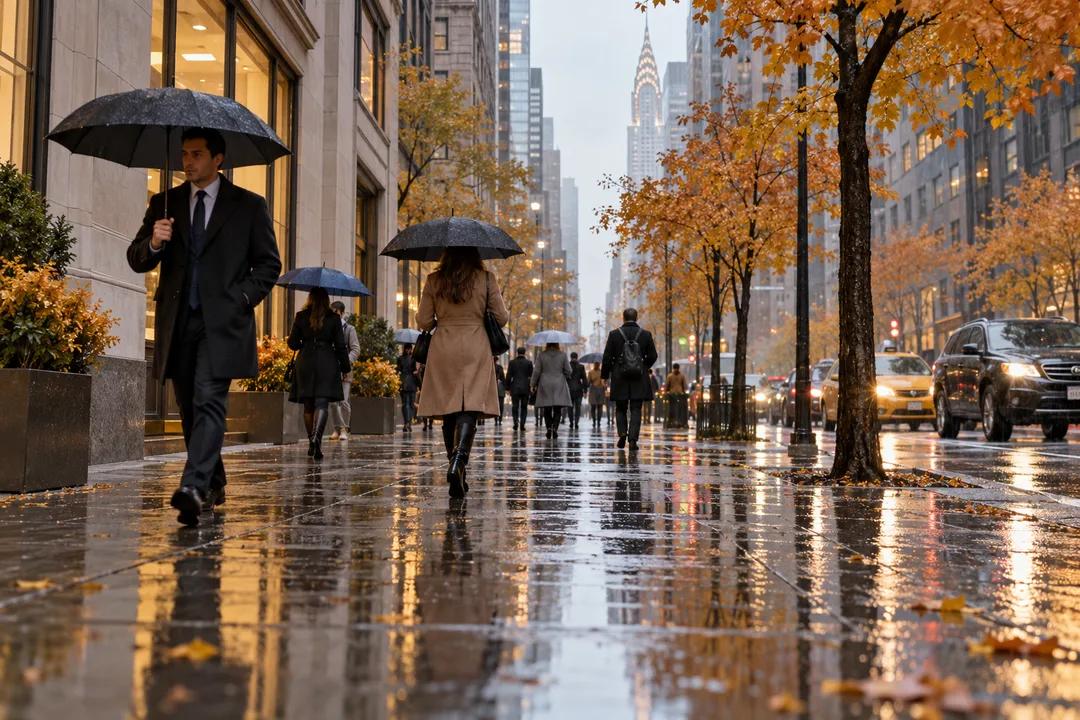
A rainy walk has different costs from a dry one: holding an umbrella, protecting a bag, and managing wet steps can all matter. State whether a short outdoor segment remains appealing. If it does not, remove the scenic requirement and prioritize a simpler connection. Do not equate a sheltered shop entrance with a public waiting room. Private indoor spaces have their own access conditions, and a route should not rely on occupying them without a reason to enter.
For a step-free journey, include that requirement in the first request rather than adding it after the route is chosen. The MTA publishes accessibility information and elevator or escalator status separately from a generic street map. Use the relevant operator details when choosing a connection. A nearby station on the map does not by itself establish an accessible route to the platform you need. Keep an alternative that suits your actual mobility requirements, even if its line on the map is longer.
Finish with a decision you can explain
Before moving, reduce the plan to one sentence: walk to this checkpoint, then choose this connection or this fallback. If you cannot describe it that simply, ask for fewer turns or fewer options. Keep the destination fixed unless you intentionally change the evening. A small detour to eat is different from abandoning the trip home, and a route planner should help make that distinction visible instead of quietly adding more stops to fill the disruption.
The useful result is a bounded choice, not a prediction of when the network will recover. Keep official service information separate from estimated walking effort, and keep both separate from your personal tolerance for waiting. After the trip, note which detail mattered most: fewer stairs, a clear exit point, or food before another transfer. Next time, that becomes part of your brief. An interrupted commute can still end with a calm decision, even when the original route remains unavailable.
Ask Karpo for more information.
Keep reading
- SoHo Tailor Alteration Shop Finder for Sample Sale Finds
 Williamsburg Tailor Alteration Shop Finder for Bike Riders
 Upper West Side Tailor Alteration Shop Finder for Kids