 SoHo Tailor Alteration Shop Finder for Sample Sale Finds
Neighborhood Guides
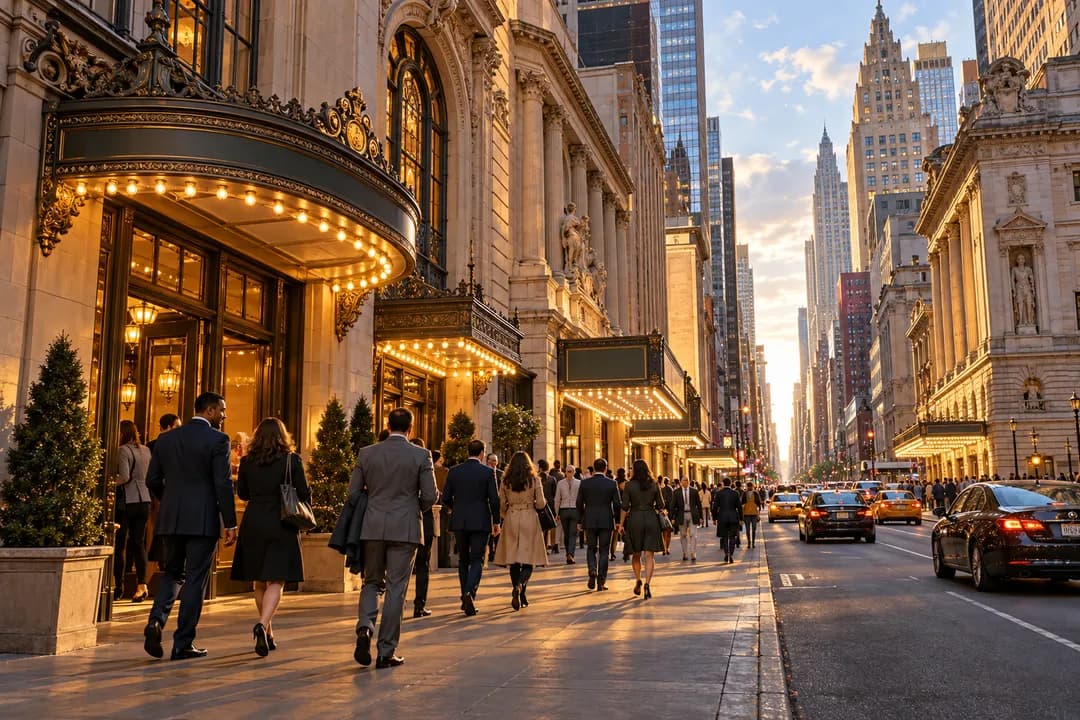
NYC Post Work Route Planner: 90 Minutes Before Broadway
Fit dinner and travel around a Broadway curtain with a worked 90-minute planning budget, clear cutoffs, and simpler meal options when work runs late.
You have ninety minutes between leaving work and the start of a Broadway performance. Dinner sounds possible until you remember the journey, the restaurant entrance, the bill, and the theater queue. A NYC post-work route planner helps put those competing pieces into one small decision. In the Karpo APP, begin with the theater on your ticket and the time you intend to reach its entrance. Build dinner around that fixed point, with a simpler meal ready to replace the original choice if work runs late.
Decide what the ninety minutes must cover
A useful plan counts the whole window from your actual office exit. It does not begin when you reach the restaurant. Include the journey from work, the approach to dinner, ordering, eating, payment, and the final walk to the theater. If you are meeting someone, count that handoff too. One person standing outside a restaurant while another is still leaving the office does not mean the group has started dinner, even if both calendars say the same time.
The theater's entry guidance and your ticket determine the arrival target. Do not substitute a general claim about how early every Broadway audience must arrive. Different venues and productions set their own instructions. Put the specific entrance and any bag or access requirement into your planning brief when you have them. Here, “curtain” means the performance start listed for your own booking. This article does not name a show, quote a ticket price, or assert that tickets are available.
Work backward through a sample budget
Here is an illustrative allocation for a ninety-minute window: twenty minutes for the journey to the dinner area, thirty minutes for a simple meal including ordering and payment, fifteen minutes for the onward approach, and twenty-five minutes of protected arrival margin. Those numbers total ninety. They are planning allowances, not measured travel times or a restaurant's promised service speed. Replace them with estimates for your actual start and destination, then preserve some margin rather than fitting in another course.
If the office exit is at 6 pm and the booked performance begins at 7:30 pm, that sample allocation puts dinner between 6:20 and 6:50, the onward approach between 6:50 and 7:05, and arrival margin after 7:05. This is a worked hypothetical example. It does not state that any particular restaurant serves at those times or that a named theater uses a twenty-five-minute entry process. The example makes the tradeoff visible: a longer first leg must take time from somewhere else.
Pick dinner by friction before cuisine
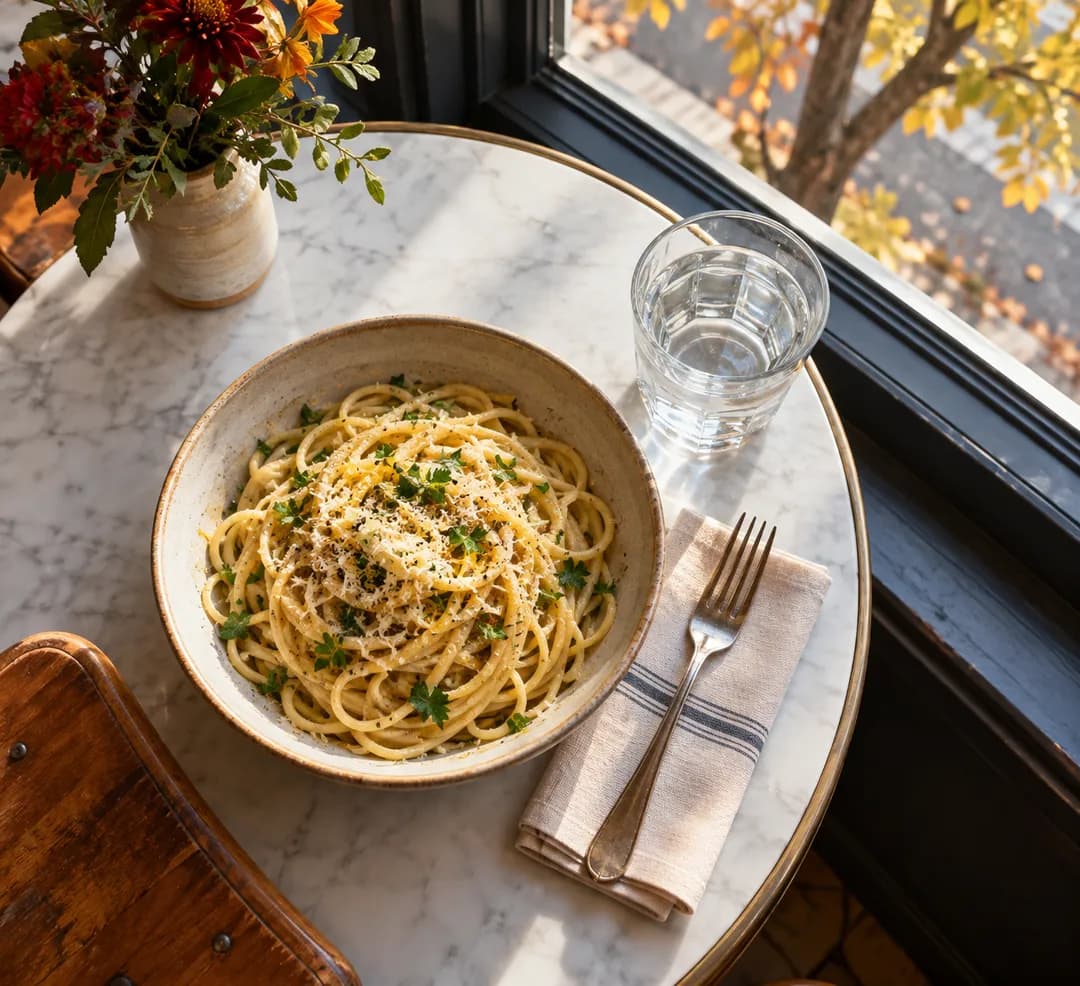
The best meal format depends on the remaining window. A compact counter-service meal can be easier to bound than an elaborate sit-down dinner, although neither format guarantees a particular wait. Ask for suggestions that match the type of meal you want and your timing constraints. State dietary needs, whether you need indoor seating, and whether you are comfortable eating before meeting your companion. These are more useful filters than asking for the most exciting restaurant in the entire theater district.
Treat a restaurant near the theater as one candidate, not an automatic winner. The path between its door and the theater entrance still matters, especially if the two are on different sides of a busy area. Ask for the final approach to be considered when comparing choices. A slightly less elaborate dinner with an obvious onward walk may fit your evening better than a destination meal that requires another transport decision after the bill arrives.
Give the planner a fixed point and a cutoff
Use a request like this: “I have ninety minutes from leaving this office intersection to a Broadway performance. Here is the theater and my ticket's entry guidance. I want a straightforward dinner with these dietary requirements. Work backward from my arrival target, keep a buffer, and give me a simpler meal if the first option no longer fits.” Add a comfortable walking limit. Ask for a brief explanation of what you would give up by choosing the slower dining format.
Set a dinner decision cutoff before you are seated. For example, if the first journey takes longer than the allowance, switch to the simpler option rather than trying to recover lost time by rushing through every later stage. The cutoff is your personal rule, not a prediction that service will take exactly thirty minutes. Make it easy to apply: one point where you decide whether a seated meal still fits, followed by a meal format that requires fewer commitments.
Keep the companion handoff uncomplicated
If you are coming from different offices, choose one meeting point and say who can start the meal independently. Waiting for both people can consume the part of the evening you reserved for eating. A practical alternative is to meet near the theater after separate quick dinners. That arrangement is especially useful when one person has an uncertain work finish. Explain this preference in the request so the outline does not assume that a shared dinner is the non-negotiable centerpiece.
Discuss payment before the final minutes. Separate bills, another round of drinks, or a coat left in a different place can each delay departure. You do not need a rigid restaurant script, just a shared understanding of the point when dinner ends. Keep your ticket and essential belongings together so the move toward the theater is straightforward. The plan should make the transition easier without claiming priority entry, expedited restaurant service, or a reservation that nobody has made.
Change the plan when the first leg expands
A delay at work is a reason to simplify the evening. If twenty minutes disappear before you leave, do not preserve the original meal by deleting all arrival margin. Ask for a revised outline using the time actually left. A snack before the show and a fuller meal afterward might be one possibility, but it depends on your appetite and the performance's duration. No late dining venue or kitchen closing time is assumed here, so the fallback can also be food at home.
For the transport part, MTA trip planning and service information can inform your decision. Keep those operator details separate from a conversational route outline. Karpo is not being described as watching your train continuously or holding a restaurant table until you arrive. You remain responsible for the ticket you bought and any dining arrangement you choose to make. This distinction is useful because it lets the planning conversation focus on options without mistaking a proposal for a completed transaction.
Leave for the performance with one clear next step
Before dinner begins, reduce the second half of the evening to a destination and a departure target. Know which theater entrance you are aiming for, how you will approach it, and which part of dinner you are willing to omit. Keep optional wandering outside the ninety-minute budget. A browse through a shop or a photograph of a marquee can wait until it fits naturally, rather than competing with a meal and a fixed performance start.
The practical test is whether the plan still works after one modest delay. If a late office exit forces several new decisions, remove a commitment before you go. If the meal requires rushing to count as a success, choose less food theater and more actual theater. A well-framed pre-show request protects the event you already chose while leaving dinner pleasant, manageable, and proportionate to the time between your desk and your seat.
Ask Karpo for more information.
Keep reading
- SoHo Tailor Alteration Shop Finder for Sample Sale Finds
 Williamsburg Tailor Alteration Shop Finder for Bike Riders
 Upper West Side Tailor Alteration Shop Finder for Kids