 SoHo Tailor Alteration Shop Finder for Sample Sale Finds
Neighborhood Guides
NYC Post Work Route Planner: 2 Brooklyn Crossing Plans
Compare a pause before crossing into Brooklyn with a pause after arrival, balancing bridge effort, onward travel, and the kind of quiet you actually want.
Crossing into Brooklyn after work can feel like a break in the day, but a bridge does not automatically provide the quiet you need. The calmer choice might be a pause before crossing, or a direct trip across followed by a rest near your final destination. Use a NYC post-work route planner in the Karpo APP to compare those two sequences. Start with your Manhattan departure point, your Brooklyn destination, and whether walking across a bridge is an essential part of the evening or merely an appealing possibility.
Compare the sequence before choosing a stop
Plan A puts the pause on the Manhattan side. You leave work, stop briefly for food or rest, and then continue toward Brooklyn. Its appeal is that you meet the immediate need before taking on another leg. If you are hungry or carrying a heavy bag, this order may feel more manageable. Its weakness is the unfinished crossing. You still have to move again after settling down, so the pause should have a clear purpose and a natural ending.
Plan B gets the crossing out of the way first. You travel into Brooklyn, then decide whether to add a short stop before continuing home. This puts more of the remaining journey behind you before the optional part begins. It works especially well when your final destination is on the Brooklyn side and you want the freedom to skip the stop. Its cost is that you need enough energy for the crossing before you get the rest you were hoping for.
Let the Brooklyn destination decide the crossing
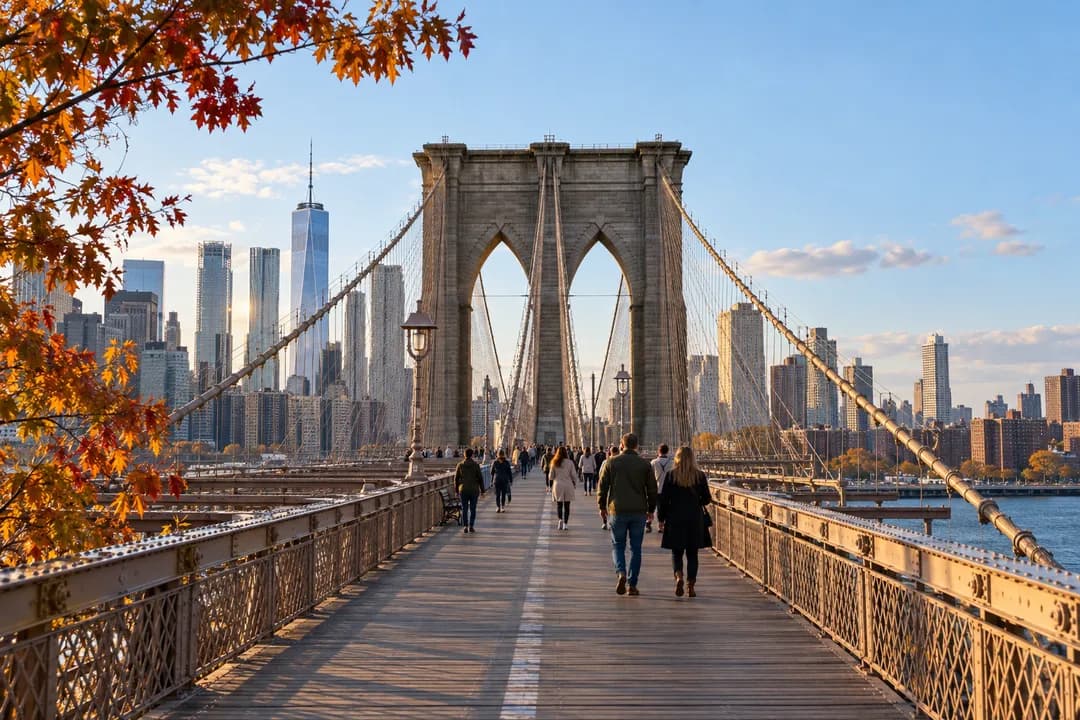
The Brooklyn Bridge and Manhattan Bridge both connect Manhattan and Brooklyn and have pedestrian routes. That shared function does not make them interchangeable for every commute. Begin with where you need to end, then consider the approach on each side. Do not choose a bridge for its name and assume that its Brooklyn landing is close to your apartment. A map of the full trip matters more than a photograph of the span in the middle.
If a bridge walk would be a large detour, keep a transit crossing in the comparison. You can still build an outdoor pause into the evening after arriving in Brooklyn. Ask for the difference between the necessary travel and the optional scenic portion to be made clear. This is especially helpful when you like the idea of a bridge walk but have not considered the approach distance. The structure should reveal that extra effort before you commit to it.
Define what quiet means for this evening
Quiet can mean somewhere to sit, a break from conversation, a less complicated route, or a view that draws your attention away from work. Those are four different briefs. Say which one matters most. A bridge-adjacent stop can be geographically convenient without being acoustically calm. This guide does not claim that a particular bench, street, or waterfront section will be empty. Ask for the features you value and a simpler alternative if those features are unavailable when you arrive.
Be equally clear about whether you want to spend money. A pause might involve a meal, but it might also mean drinking your own water or standing somewhere out of the pedestrian flow. Keep access conditions in view when a suggestion uses a park, a private lobby, or a business. A place appearing on a route does not establish permission to stay there. No specific merchant, opening time, seating guarantee, or purchase price is assumed in these comparisons.
Match the two plans to your energy
Choose the Manhattan-side pause when the immediate problem is hunger, discomfort, or the need to sit before another leg. Keep it near the direction you already need to travel. Moving away from the crossing to seek a supposedly ideal stop can undo the benefit. Ask for a version in which the pause is short and the onward move is obvious. If you decide you no longer want to walk the bridge afterward, the transit alternative should remain intelligible.
Choose the Brooklyn-side pause when completing the crossing would make the rest of the evening feel simpler. The stop should fit the direction toward your final destination, not pull you back toward Manhattan for the view. Leave it optional. You might reach Brooklyn and discover that getting home sounds better than another stop. That is a useful result from the comparison, because the plan has already carried you to the side of the river where you need to be.
Send a comparison request with useful constraints
Try this: “I am commuting from this Manhattan intersection to this Brooklyn destination. Compare a short pause before the crossing with a pause after arrival. I want less decision-making and a manageable amount of walking. Explain the extra effort each option adds, and include a transit-based version if walking across is too much.” Add a walking ceiling and any access requirements. This request asks for a comparison, not for continuous navigation or a guarantee of the quietest conditions tonight.
Give the bridge walk a separate decision from the stopover. You can choose Plan B while using transit, just as you can choose Plan A before a pedestrian crossing. Keeping those decisions distinct stops the word “scenic” from controlling the whole commute. Ask for one suggested sequence for your stated energy level, with the alternative kept short. Two clearly different choices are enough to make a decision without creating another list to rank after a long workday.
Include the approach and the exit in the effort
A crossing begins before you step onto a bridge and continues after you leave it. Count the walk from work, the approach to the pedestrian route, the span itself, and the final connection on the Brooklyn side. Durations in a proposed outline are estimates. Your pace, crossings, weather, and the items you carry affect the total. Avoid treating a bridge-only walking estimate as the complete journey, especially when your home lies well beyond the landing.
If stairs or an incline would make the trip difficult, state that before asking for routes. Use the relevant transport operator's accessibility information for any transit leg and the mapped pedestrian approach for a walking leg. A plan with fewer transfers is not automatically the least tiring option. It may exchange a transfer for a longer walk. The comparison should make that exchange visible in plain language so you can choose based on effort rather than the number of lines on a map.
Leave room to end the evening sooner
Before setting off, decide which optional element disappears first if you feel tired. It might be the waterfront detour, the food stop, or the pedestrian crossing itself. Keep one direct route to the final destination available as the simple finish. If a friend is joining, agree where the shared portion ends so one person can continue home without turning the other's pause into a commitment. A small amount of clarity makes an otherwise flexible evening easier to share.
The practical notes are straightforward: use your actual departure point, name the Brooklyn endpoint, budget for both bridge approaches, and describe the kind of rest you want. The NYC Department of Transportation publishes information about the Brooklyn and Manhattan bridges, while the transport operator provides the details for a transit crossing. Neither a scenic photograph nor a conversational suggestion establishes current crowd conditions. Pick the sequence that fits your energy, then let the optional pause stay optional all the way home.
Ask Karpo for more information.
Keep reading
- SoHo Tailor Alteration Shop Finder for Sample Sale Finds
 Williamsburg Tailor Alteration Shop Finder for Bike Riders
 Upper West Side Tailor Alteration Shop Finder for Kids