 Jackson Heights Thrift Store Crawl Planner: Kids' Coats
Hidden Gems & Odd Finds

Bushwick Plant Shop Crawl Planner for Artist Studio Spaces
Plan a Bushwick plant shop crawl for studios and lofts: pick plants for warehouse windows, trade cuttings with makers and weave the route through mural blocks.
Bushwick is a neighborhood of big windows and bigger ideas. Behind the roll-down gates and painted walls are warehouses full of studios, rehearsal rooms and lofts where people make things all day. Plants have become part of that world, softening concrete floors and adding life to rooms that smell of paint, sawdust and coffee. This plant shop crawl planner is for artists, makers and loft renters who want to bring more green into their workspace. It mixes shop stops with a cuttings swap and a mural walk, because in Bushwick the route between places matters as much as the places themselves.
Studio Light Is Different From Home Light
Warehouse windows are often tall, wide and set high in the wall. They pour in bright, even light, but sometimes only across part of the room. Corners near the door may be dark, while the area under the windows can be sunny for most of the afternoon. Old glass may be frosted, painted or wired, which softens light in ways that plants actually enjoy.
Studios also bring their own conditions. Spray paint, turpentine and solvents can stress plants, so keep greenery away from spray booths and well away from where you clean brushes. Dust from woodworking or plaster settles on leaves and blocks light, so plan to wipe them now and then. Temperature can swing too, since some buildings run the heat low on weekends. Pick plants that shrug off these changes.
Plants That Thrive Among Paint and Sawdust
Tough trailing plants are the backbone of a studio garden. Pothos, heartleaf philodendron and tradescantia grow fast, look great hanging from pipes or shelves and forgive irregular watering. A large monstera or rubber plant can anchor a corner and act as a natural room divider between work zones. Snake plants and ZZ plants handle darker corners near the entrance with ease.
For sunny windowsills, succulents, cacti and string of pearls add texture that photographs well when you share work online. Avoid fussy plants like calatheas or ferns unless the studio stays warm and humid. A good rule is to start with plants that can handle being forgotten during a big deadline. When a show is coming up and you live in the studio for a week, you will be glad you chose wisely.
Starting the Crawl Near the Train
Most people arrive in Bushwick by the L or the J and M trains, so start at your station and drift toward the main commercial streets. Small plant shops, vintage stores with plants in the window and cafes filled with hanging greenery are scattered across the neighborhood. Some sit on busy avenues, while others are tucked into side blocks between warehouses, which makes wandering part of the fun.
Plant shops here tend to have a creative streak. You may find handmade ceramic pots from local potters, macrame hangers and plants arranged like sculpture. Ask the staff about local makers whose pots they carry. Buying a pot from a neighbor's kiln is a small way to support the creative community that keeps Bushwick alive, and it gives your studio a story worth telling.
Make Room for a Cuttings Swap
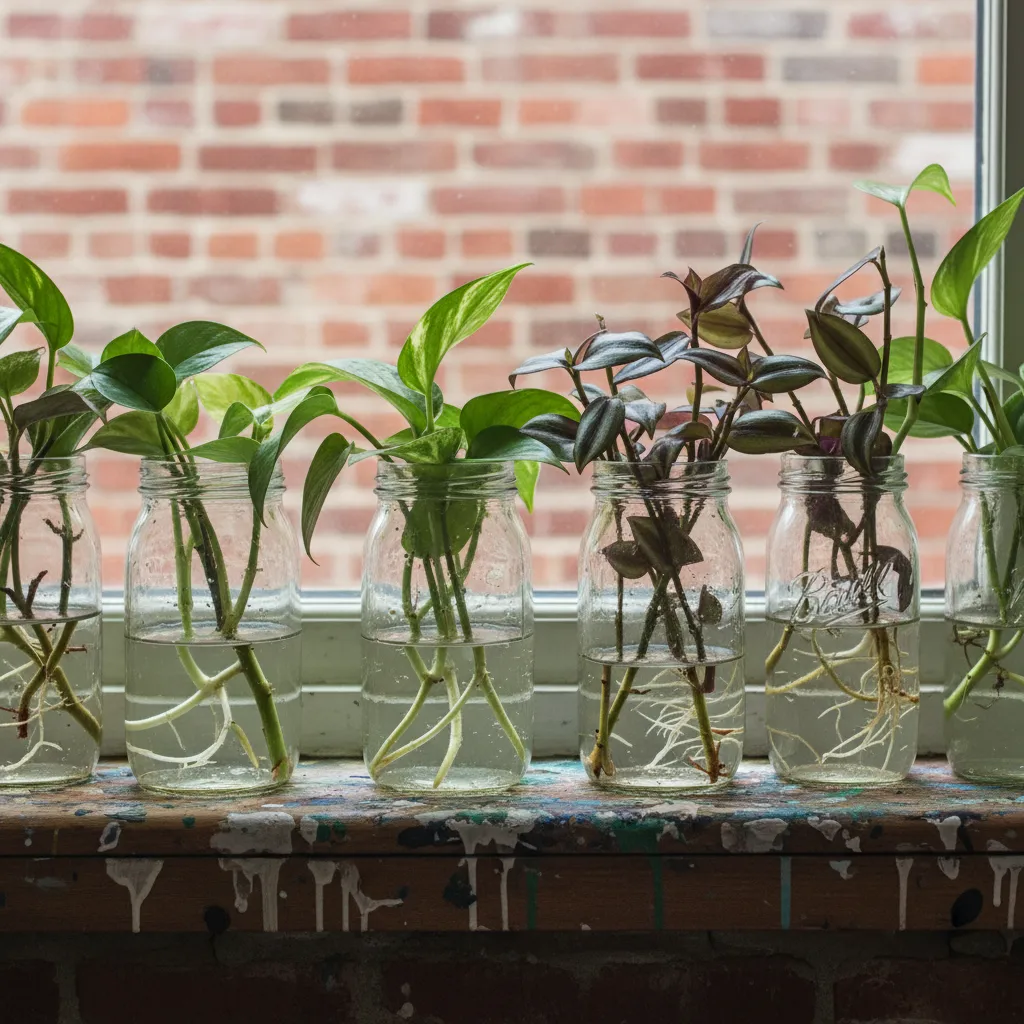
One of the best ways to fill a studio cheaply is to trade cuttings. Before your crawl, take a few cuttings from your own healthy plants, root them in water and bring them along in jars or small pots. Many Bushwick studio buildings have group chats, shared kitchens or bulletin boards where neighbors arrange swaps. Some plant shops and cafes host community plant swaps from time to time too.
A swap turns a shopping trip into a social afternoon. You meet the painter down the hall, the ceramicist upstairs and the musician who always seems to be watering something. You come home with new plants and new friends. Label each cutting with a simple name and care note, so whoever takes it home knows how much light and water it likes.
A Mural Detour Between Shops
Bushwick is famous for its street art, and a plant crawl is a perfect excuse to see it. Between shop stops, wander a few blocks of the mural district near the Jefferson and Morgan stations. Walls change often, as artists paint over old pieces with new ones, so every visit feels a little different. Many murals include plants, flowers and jungle scenes that echo what you are shopping for.
Take a slow loop and let your eye rest on color and pattern. Some of the best pieces are on side streets and loading docks rather than the main corners. If you are carrying plants, this is also a good moment to sit on a bench, rest your arms and look over your haul. The murals may even give you ideas for pots, layouts or your next canvas.
Hanging, Shelving and Floor Plants
Lofts have lots of vertical space and very little floor space that is not already full of work. Look up for opportunities. Exposed pipes and beams are natural anchors for hanging planters, as long as they are sturdy and you have permission to use them. Simple wall-mounted shelves near windows create a plant display that stays out of the way of easels and tables.
Large floor plants work best in corners or along walls where nobody will knock them over carrying a canvas. Put them on rolling plant caddies so you can move them when you need floor space for a big piece or a party. Keep a single watering can and a spray bottle in one spot so plant care becomes a short daily habit rather than a weekly chore.
Caring for Plants Through a Busy Season
Artists and makers live by deadlines, and plants suffer when life gets hectic. Before a show, a market or a long trip, water everything deeply and move delicate plants out of direct sun. Group them together so they share humidity. Self-watering pots and wicking systems are worth the small effort for studios that sit empty for days at a time.
Watch for pests, especially in shared buildings where plants move between studios. Fungus gnats and mealybugs can spread quickly. Check the undersides of leaves before you bring new plants into your space, and isolate newcomers for a week or two. A quick rinse in the sink and a wipe with mild soapy water handles most small problems before they grow.
Plants as Part of Your Practice
Many Bushwick artists find that plants slowly become part of their work. A trailing pothos turns up in a still life, a cactus becomes a sculpture study, a fern inspires a textile pattern. Even if your work has nothing to do with nature, the act of caring for something living can be a calm counterweight to long hours at the bench or the easel.
Plants also change how a studio feels to visitors. Collectors, friends and clients who drop by often comment on the greenery first. A living room-like corner with a chair, a lamp and a few plants can make open studio days feel warmer and more welcoming, especially when the building is cold and the walls are bare.
Plan Your Next Bushwick Plant Walk
Once your studio has a few healthy plants, you will start seeing new shops, swaps and pop-ups everywhere. Spring and early autumn are lovely times to walk the neighborhood, when the light is warm and the murals glow. Winter is quieter, with fewer crowds and more time to chat with shop staff about indoor care.
Use the Karpo APP to find nearby plant shops, cafes and creative spaces before your next walk, so you can map a loop between the train, the murals and your studio door. Start small, swap generously and let your plants grow alongside your work. In Bushwick, a green studio is one more way to make something beautiful.
Ask Karpo for more information.
Keep reading
- Jackson Heights Thrift Store Crawl Planner: Kids' Coats
 Crown Heights Thrift Store Crawl Planner: Holiday Table Haul
 Tribeca Plant Shop Crawl Planner for Office Desks and Gifts