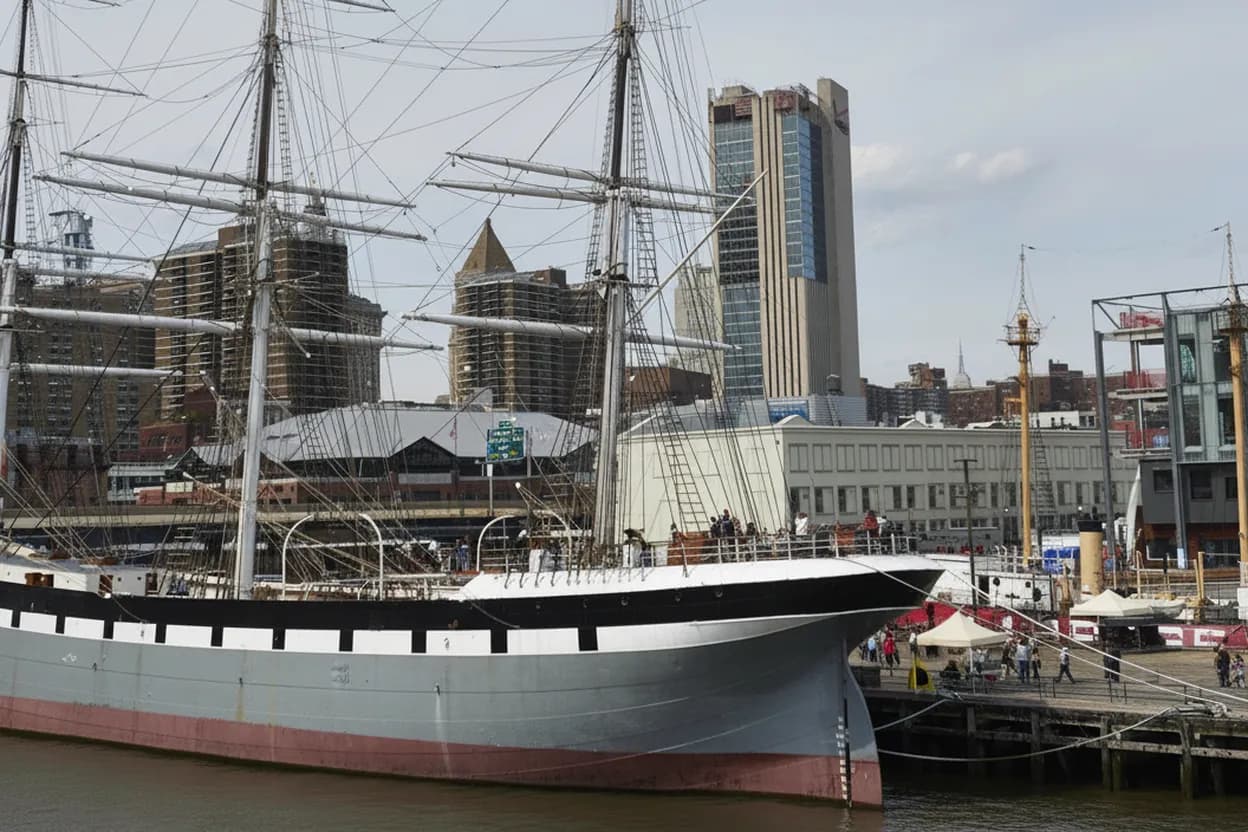
New York City’s pirate curiosity is better served by real harbor history than costume mythology, and South Street Seaport Museum is the strongest daytime starting point. The museum’s Lower Manhattan campus connects historic ships at Pier 16 with galleries in Schermerhorn Row and A.A. Thomson & Co., turning a rainy family outing into a practical look at trade, navigation, migration, printing, and port work. As of Wednesday, July 29, 2026, the museum posts Wednesday through Sunday daytime hours, but ship access and some non-climate-controlled areas can change with weather. Treat this as a plan for learning how maritime New York made room for privateers, sailors, merchants, and the darker legends behind pirates.
Want a tighter Lower Manhattan route before you head out? Text Karpo for museum timing, rain-smart transit, and nearby coffee or dessert stops around the Seaport.
Start at 12 Fulton Street in the South Street Seaport Historic District
The clearest entry point is the museum’s listed address at 12 Fulton Street, New York, NY 10038, inside the South Street Seaport Historic District. For families, that matters because the visit is a campus, not one single building. Expect to move between Fulton Street, Water Street, and Pier 16. On a rainy day, start at the indoor galleries, check in with staff, and ask what ship areas are open before promising kids a deck visit.
The neighborhood itself does part of the teaching. Cobblestones, old counting-house facades, river wind, and the tight walk to the East River show why this area mattered to cargo, insurance, shipping, and finance. That setting makes the pirate angle more grounded: instead of looking for fantasy villains, look for evidence of how ports created opportunity, risk, smuggling, privateering, and law enforcement problems across Atlantic trade routes. Keep the first stop short if younger children are wet or hungry.
Use Maritime City at 213 Water Street for the Main Story
The museum describes Maritime City as a three-floor exhibition in A.A. Thomson & Co. at 213 Water Street, with hundreds of selected objects from its collections and archives. Make this the anchor if rain limits outdoor time. The point is not a single pirate case; it is the wider machinery that made New York a maritime power: waterways, labor, goods, technology, migration, and the businesses that formed around the harbor.
For a curious family, pace the galleries as a scavenger hunt for tools of movement and control. Ask children to find navigation, cargo, printed paper, ship models, or images showing how people moved through the port. Adults should read labels for dates and trade context, then connect them back to pirates carefully: piracy and privateering existed around commerce because valuable ships, routes, and imperial conflicts created targets. If attention fades, leave deeper reading for adults and move outside when rain eases.
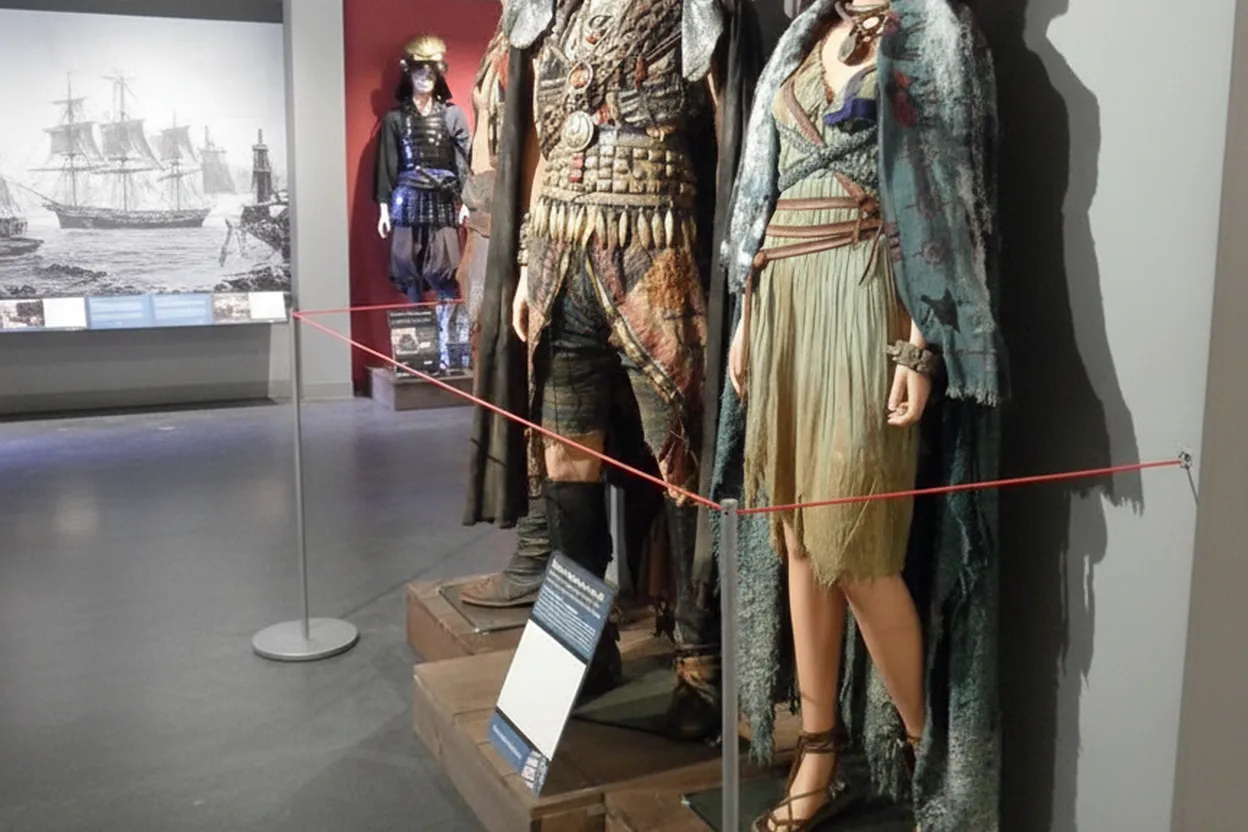
Board Wavertree and Ambrose at Pier 16 Only if Weather Allows
General Admission is listed as including the 1885 tall ship Wavertree and the 1908 lightship Ambrose at Pier 16, but the museum warns that extreme or inclement weather may limit access to historic ships and non-climate-controlled spaces. That is the main failure mode for this itinerary. If decks are closed, do not treat the visit as failed; shift the energy to Maritime City, Schermerhorn Row, and the collections narrative indoors.
If the ships are open, use them to make the abstract port story physical. Wavertree can help children understand cargo scale, rigging, decks, and life aboard a large vessel. Ambrose shows another part of maritime safety: a lightship functioning as a floating aid to navigation. Rain changes the calculus. Wet gangways, wind, and exposed decks make slip-resistant shoes more important than perfect photos, and umbrellas are not useful around shipboard stairs or tight circulation.
Take Fulton Street Subway Instead of Gambling on Surface Traffic
For most NYC readers, the simplest rainy-day approach is the subway to Fulton Street. The museum’s directions list the A, C, 2, 3, J, Z, 4, and 5 trains to Fulton Street, then a walk east toward the Seaport. That route avoids crosstown traffic and gives families several line options if one train is delayed. Check live MTA service before leaving because weekend-style changes and weather disruptions can shift the best transfer.
NYC Ferry can be more scenic, with Pier 11 nearby, but it is less forgiving in hard rain if your group dislikes wind, dock waits, or schedule uncertainty. It works best for families already near an East River landing and willing to verify real-time departures. Driving is the weakest default unless mobility needs require it; the museum lists nearby parking options, but Lower Manhattan garages add cost and do not remove the wet walk between campus buildings.
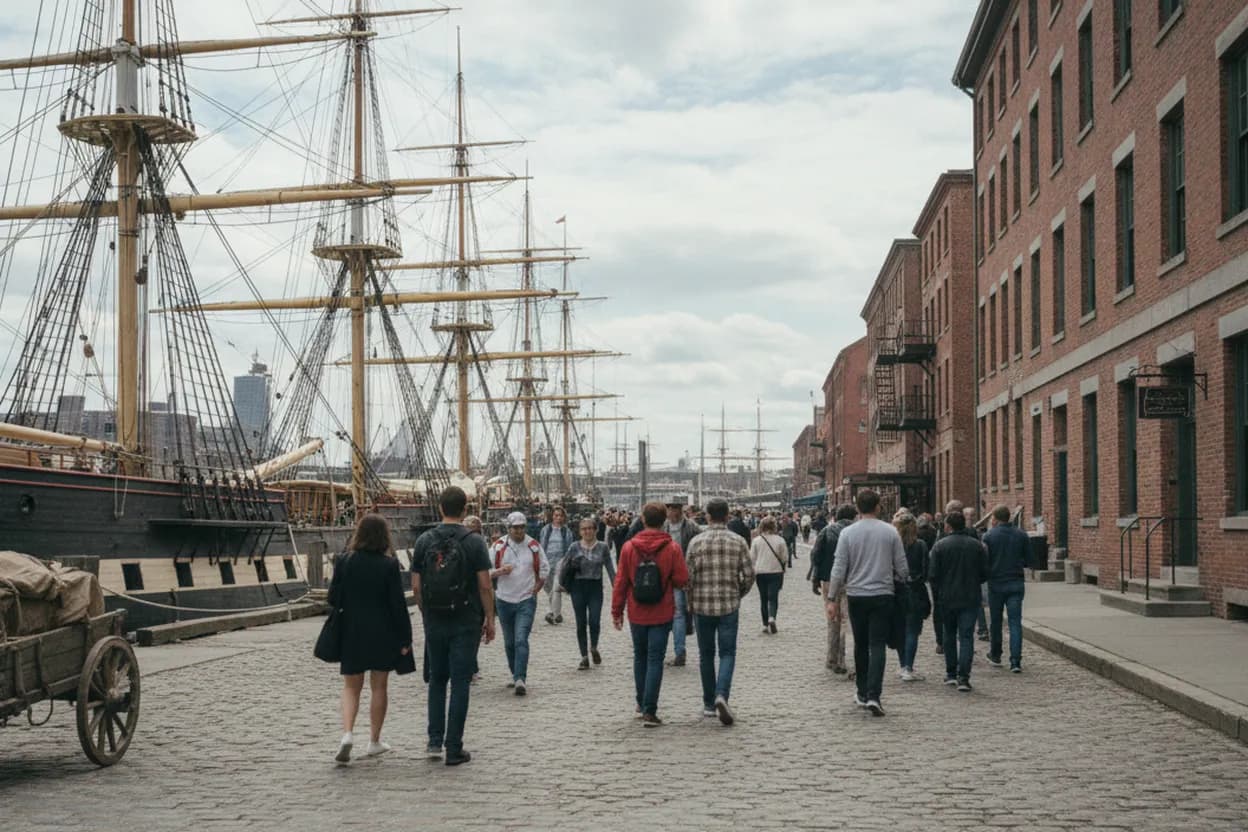
Match Schermerhorn Row Galleries to Children’s Attention Span
Schermerhorn Row at 12 Fulton Street is useful when the group needs something lower-friction after ships or a long gallery floor. General Admission is listed as including South Street and the Rise of New York and Millions: Migrants and Millionaires Aboard the Great Liners, 1900-1914 in first-floor galleries there. Those themes widen the visit beyond pirate curiosity into migration, wealth, passenger travel, and the port’s role in building the modern city.
This is where adults can correct the story without flattening the fun. A child may arrive asking about treasure; the better answer is that New York’s waterfront was about cargo, people, paperwork, labor, danger, and money. Keep a simple prompt: who had power on the water, who did the work, and who took the risks? If children are restless, choose three objects or labels and leave before the galleries become a forced march.
Plan Accessibility Around A.A. Thomson & Co. and Historic Ships
Accessibility is the biggest planning detail to verify on the day. The museum states that its campus includes landmarked buildings, historic ships, cobblestone streets, sidewalks, a busy intersection, and a weathered wooden pier. It also notes that A.A. Thomson & Co. has elevator access inside, but its platform lift was listed as unavailable while undergoing repairs. Anyone who needs that lift should email or call the museum before committing to the route.
Historic ships have sharper constraints than standard galleries. The museum describes steps, angled gangways, high sills, grating stairs, ladder-like stairs, limited seating, and exposed decks on different vessels. Strollers are permitted in the 213 Water Street galleries and first-floor Schermerhorn Row galleries, but ship and sailing storage is limited or unattended. For a family with a stroller, mobility device, or fatigue concern, build the day around indoor spaces first and treat ships as optional.
Verify Tickets, Open Areas, and Rain Changes Before Leaving Home
The museum’s homepage currently posts Wednesday through Sunday, 11am to 5pm for visits, exhibitions, historic ship tours, and Bowne & Co.; its visitor guide lists General Admission prices as adults $18, seniors and students $15, and children $5. Because prices, special exhibitions, processing fees, and access rules can change, confirm the ticket page before buying. Special exhibitions may require separate tickets, timed entry, or capacity management.
Make the final check practical: open the museum site on Wednesday, July 29, 2026, confirm today’s hours, ticket availability, ship status, accessibility notes, and any weather notices, then check MTA or ferry service for your chosen route. If rain closes ships, keep the visit as a museum-and-neighborhood outing with coffee, dessert, or a dry Pier 17 pause nearby. The decision is easy: go for indoor maritime history, not guaranteed deck access.
Tags: #NYC #NewYorkCity #SouthStreetSeaport #SeaportMuseum #MaritimeHistory #Pirates #FamilyNYC #RainyDayNYC #LowerManhattan #MuseumGuide #AskKarpo #BeforeYouGo #NYCWithKids #HistoricShips
Sources consulted: Source 1: southstreetseaportmuseum.org · Source 2: southstreetseaportmuseum.org · Source 3: southstreetseaportmuseum.org · Source 4: southstreetseaportmuseum.org · Source 5: seahistory.org · Source 6: ferry.nyc
All trademarks are the property of their respective owners.
Ask Karpo first
Tell Karpo your date, group size, budget, and starting point. We’ll check current access, timing, transit, and the cleanest New York City plan for South Street Seaport Museum before you head out.


