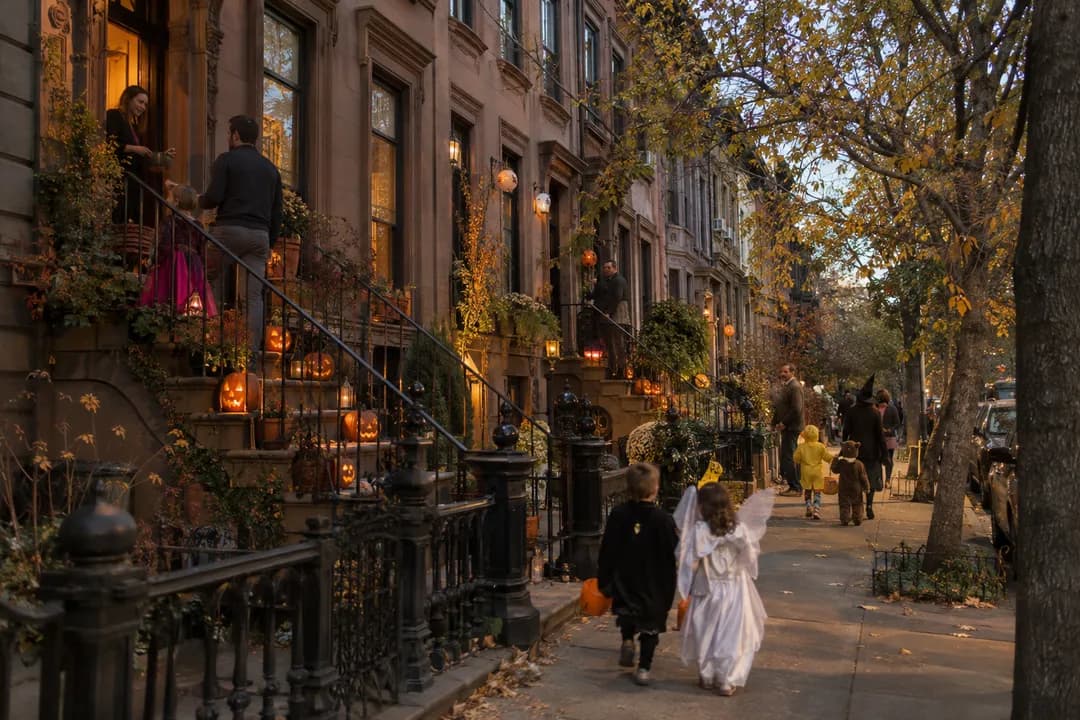
 Best Trick or Treating Neighborhoods Near Me: Park Slope
Neighborhood Guides
The PATH to Hoboken and Back: A Tunnel for a Waterfront View
Fifteen minutes underground from the World Trade Center, and you surface in a different century. The reward isn't Hoboken itself—it's the skyline you left behind, now framed across cold water.
The train nobody thinks about
The PATH isn't a subway, though it behaves like one. It's technically a commuter rail—separate fare gates, separate system—which means you'll need to pay a new fare even if you just swiped into the subway. Most visitors never notice the entrance at the World Trade Center Oculus, the transit hub beneath Calatrava's soaring white ribs. But if you descend one level below the main concourse, you'll find the turnstiles. The blue-and-white signs say Hoboken, Journal Square, Newark. Take Hoboken. The PATH runs on its own fare system—SmartLink cards or contactless payment—so your MetroCard won't transfer here. Wait on the platform where the tunnel smells faintly of river salt and electrical current. You're riding infrastructure that predates most of the subway's tunnels, a rapid-transit system run by the Port Authority that connects Manhattan to New Jersey.
Fifteen minutes of fluorescence

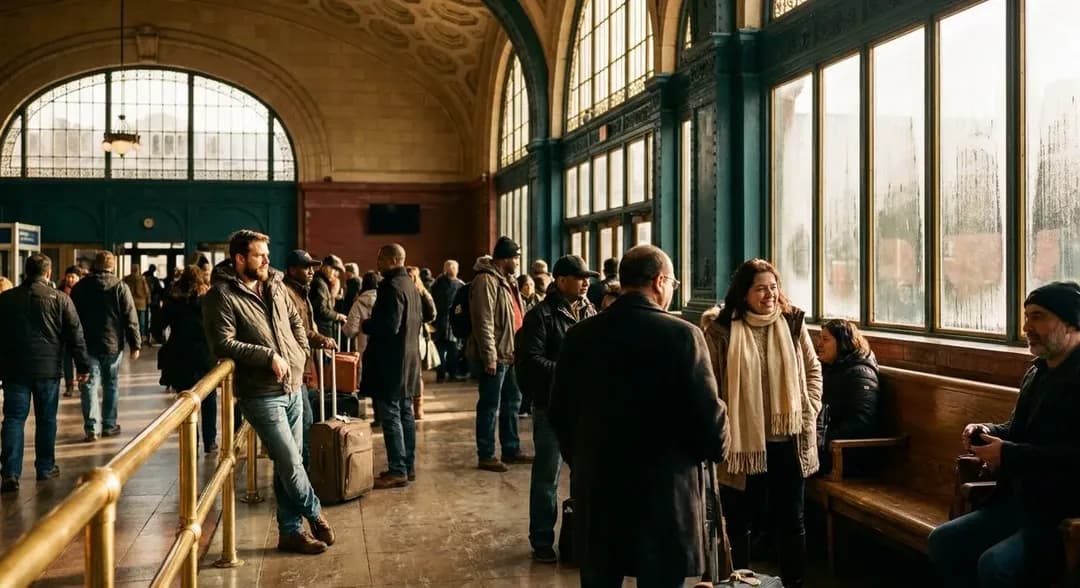
The train crosses under the Hudson in near silence. No view, no drama, just the hum of motors and the flicker of overhead lights. You'll share the car with hospital workers ending overnight shifts, Hoboken residents returning from brunch downtown, college students visiting friends at Stevens Institute. Nobody speaks much. The doors open at Christopher Street, then Ninth Street, then Hoboken Terminal. You want the last stop. When you emerge, you're standing in a Beaux-Arts waiting room with copper-green detailing and wooden benches worn smooth by decades of commuters. Walk straight through to the eastern exit—the one facing the river—and the air changes. Suddenly you can smell diesel from the ferries and something brackish off the water.
The waterfront that faces home
Hoboken's waterfront promenade runs along the Hudson, and you only need a short walk south from the terminal for the view. Turn left out of Hoboken Terminal and head toward the waterfront. The pathway is concrete, lined with benches that face east across the river. On clear mornings, the light hits the glass towers of Lower Manhattan at an angle that makes them look like they're leaning toward you. One World Trade catches the sun first, its western face glowing white-gold while the rest of the skyline is still shadowed. Early risers know to come here in winter, when the promenade is nearly empty except for runners and the occasional photographer with a tripod. You'll see the Statue of Liberty to your right, small and almost decorative from this distance. The real subject is the skyline—the full profile, the context, the sense of scale you can't get from Manhattan itself.
Carlo's, if you must

Carlo's Bakery sits on Washington Street, a few blocks west of the waterfront. You've seen it on television. The line forms outside on weekends, sometimes wrapping around the corner. The cannoli are fine—crisp shells, sweet ricotta, the chocolate chips distributed evenly—but they're not revelatory. What's worth your time is the sfogliatella, which they pull from the oven in batches throughout the morning. Ask the counter staff when the next tray is due. The pastry should be hot enough that the layers separate when you bite down, releasing steam and a faint scent of orange zest. Eat it outside on a bench near the door. Some locals skip Carlo's entirely and walk a couple blocks to other bakeries in the neighborhood, where the lines are shorter and the almond croissants draw their own quiet following.
The ferry that closes the loop
The NY Waterway ferry terminal sits at the southern end of the promenade, adjacent to Hoboken Terminal. Boats leave for Lower Manhattan throughout the day, with more frequent service during commuter hours. The ride takes several minutes. You'll stand on the upper deck if you're smart, on the side facing the skyline, where the wind comes off the bow and the towers grow larger with each passing moment. The ferry costs more than the PATH, but the return by water is the point of the whole exercise. You left Manhattan underground and you return on the surface, watching the city rebuild itself in reverse. The boat docks near where you started, though now you're arriving as cargo, not passenger. The commuters around you are checking phones, adjusting bags, preparing to merge back into the pace of the city. You've been gone ninety minutes, maybe two hours. It's enough.
Practical notes
The PATH station entrance at World Trade Center is located on the lower concourse level of the Oculus. PATH trains serve Hoboken, Journal Square, Newark, 33rd Street, and the World Trade Center. The system is run by the Port Authority and uses separate fares from the NYC subway—pay with SmartLink cards or contactless payment (MetroCard does not work for PATH). Hoboken Terminal offers classic waterfront views of the Manhattan skyline across the Hudson. NY Waterway ferries depart from Hoboken Terminal to Lower Manhattan; check current schedules and fares. Total loop time: 90-120 minutes. Bring a jacket—the waterfront wind off the Hudson is persistent year-round, particularly in morning hours.
Tags: #TheLongWayHome #PATH #Hoboken #HudsonRiver #ManhattanSkyline #NYCFerry #CarlosBakery #WaterfrontWalks #HobokenTerminal #WorldTradeCenter #HiddenCommutes #NYCDayTrips #SkylineViews #NewJerseyWaterfront #NYWaterway
Sources consulted: panynj.gov
All trademarks are the property of their respective owners.
Ask Karpo for more information.
Keep reading
- Best Trick or Treating Neighborhoods Near Me: Park Slope
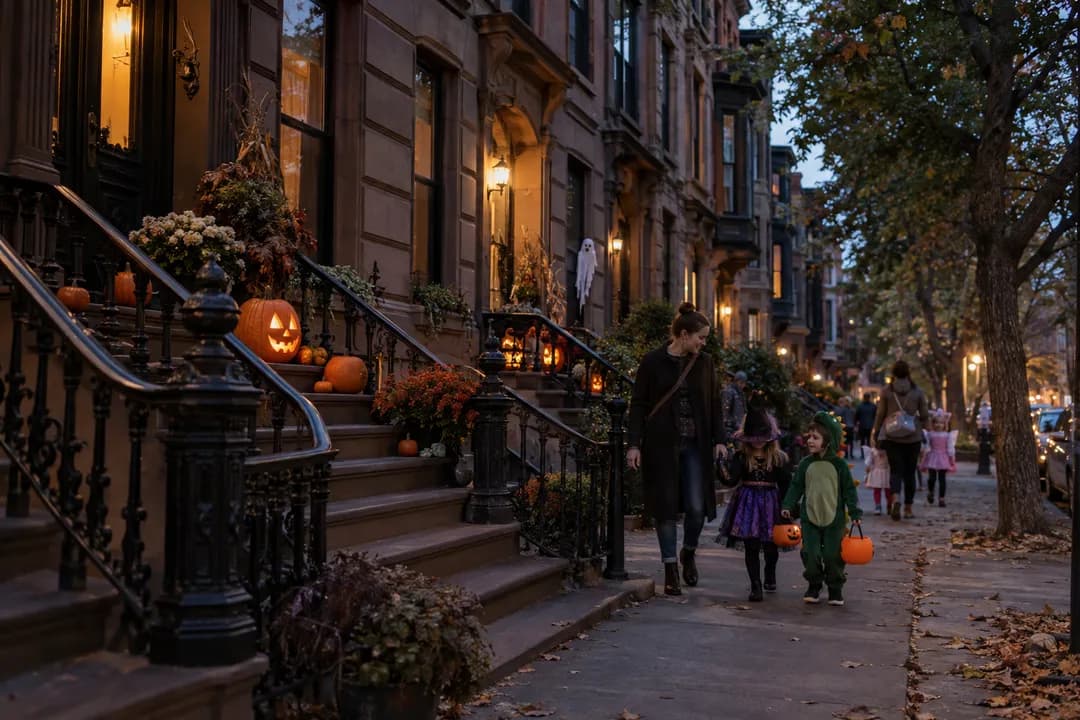 Best Trick or Treating Neighborhoods Near Me: Carroll Gardens
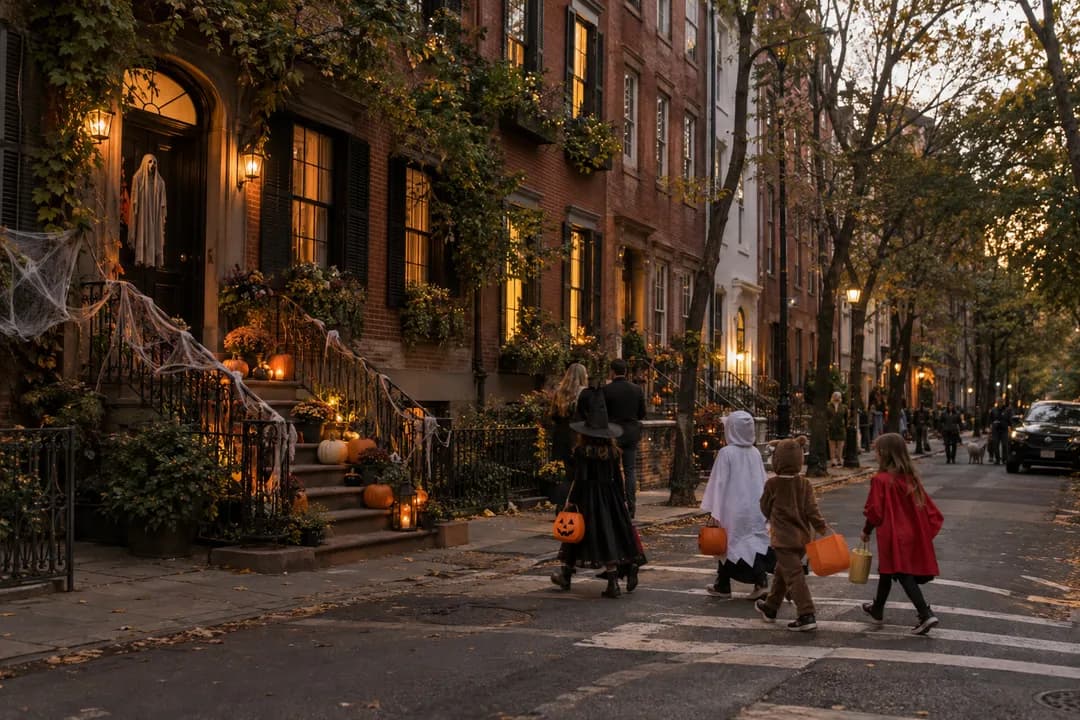 Best Trick or Treating Neighborhoods Near Me: West Village