New York's Jewish deli tradition isn't about rediscovery or reinvention. It's about pastrami that's been rubbed, smoked, and steamed the same way since your great-grandparents argued over the check. These four delis represent more than 400 combined years of hand-carving brisket, curing meat in-house, and piling sandwiches so tall they require structural engineering. This is food near me at its most unapologetic: salty, fatty, stacked on rye, and worth every minute you'll wait.
Karpo knows which deli has the shortest wait right now, where to find the best corned beef-to-pastrami ratio, and which spots still make their own pickles in-house. Ask before you queue.

Katz's Delicatessen: the 1888 original
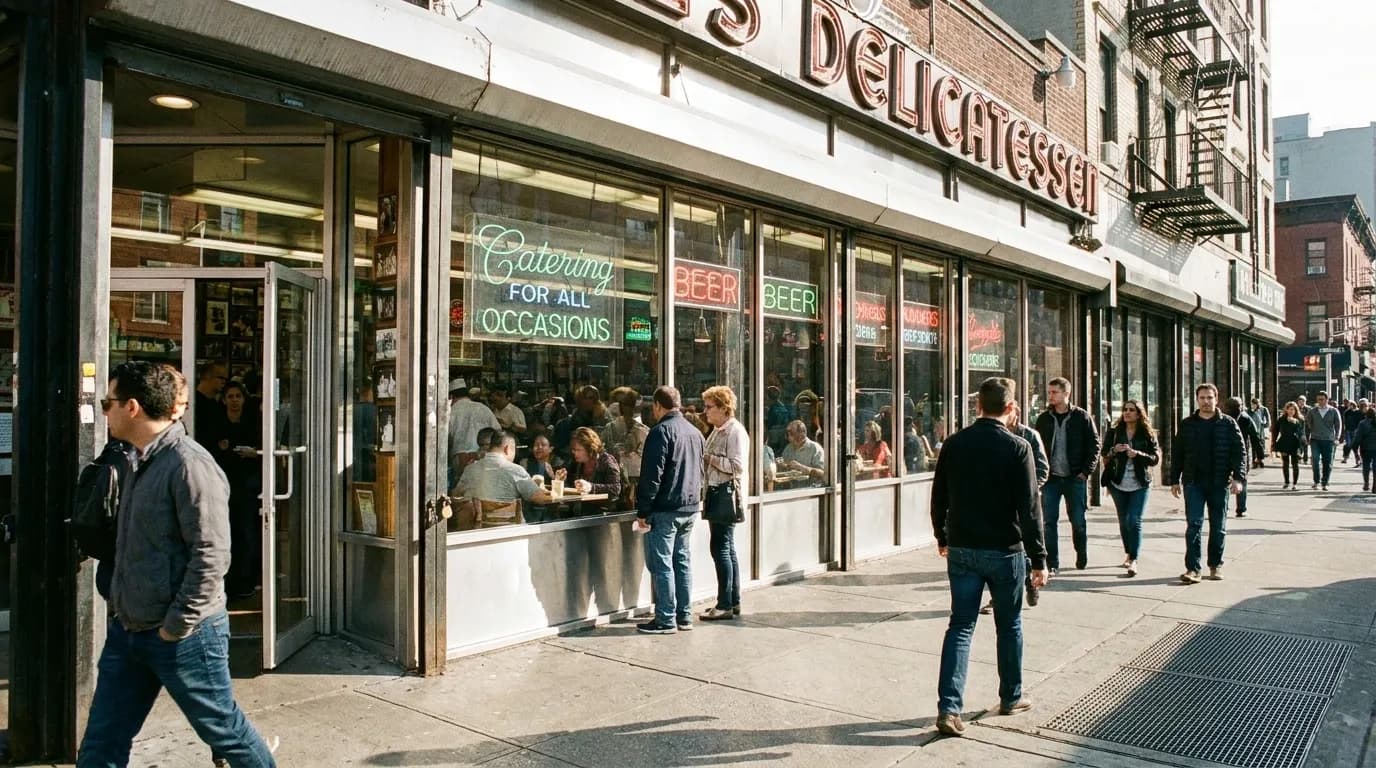
Katz's on Houston Street has been slicing pastrami since before the Statue of Liberty had her torch raised. The system hasn't changed: grab a ticket at the door, guard it with your life (you pay based on what's stamped), and approach the carving station. The cutters work fast, shaving hot pastrami against the grain, the meat so tender it barely holds together. They'll offer you a sample on a piece of rye before you order. Take it. That's your quality check.
The pastrami sandwich runs around twenty-six dollars now, but it's nearly a pound of meat. Get it on rye with brown mustard. Skip the Swiss cheese unless you want the cutter to judge you silently. The room is massive, fluorescent-lit, and chaotic, with signed celebrity photos covering every inch of wall space. Weekend waits can hit two hours after 11:30 a.m.; weekday lunches before noon are your best bet. Sit at the back communal tables where you can watch the kitchen line work. The knishes are dense and good. The matzo ball soup is correct but not transcendent. Come for the pastrami.
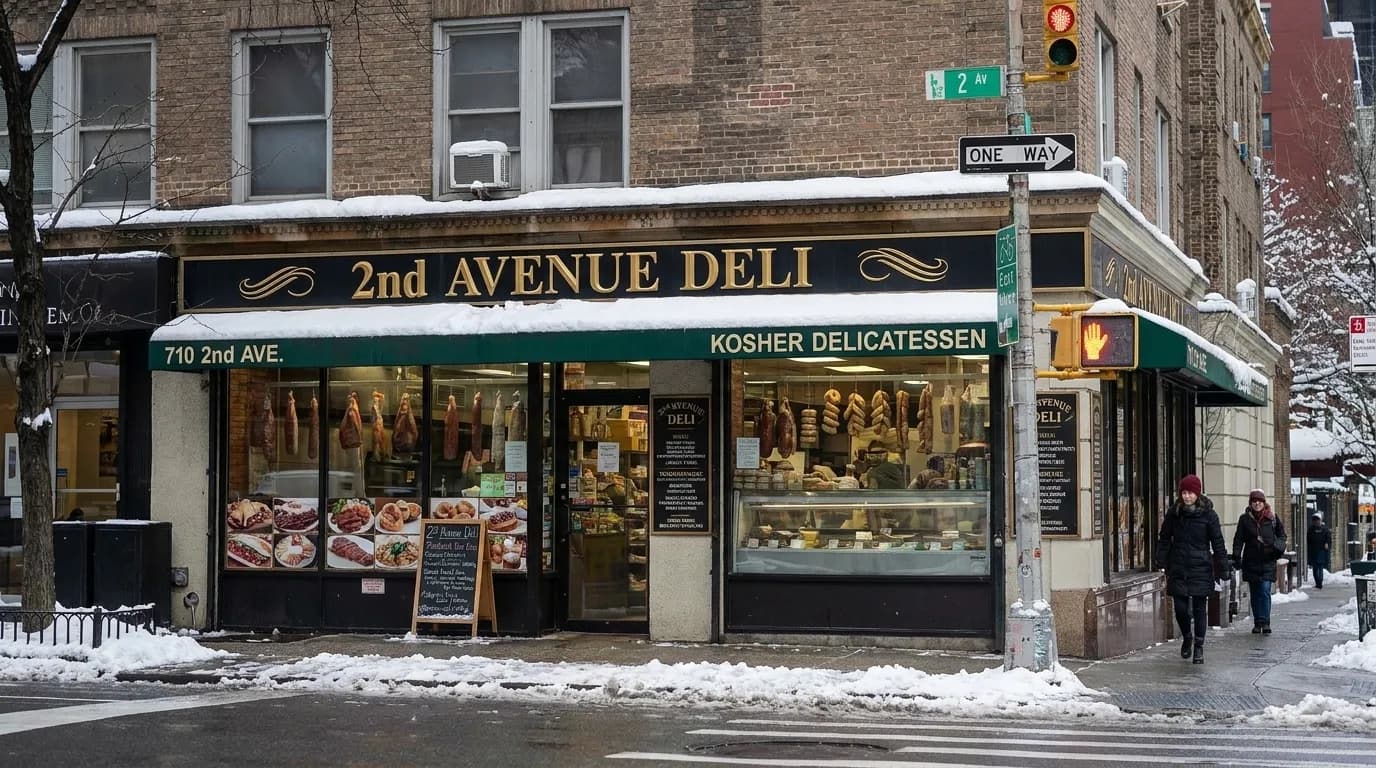
2nd Ave Deli: Midtown precision
The original Second Avenue location is long gone, but the two current outposts in Midtown and on the Upper East Side maintain the Lebewohl family's exacting standards. The pastrami here is leaner than Katz's, sliced thinner, layered with more precision. Some prefer it. The corned beef is the dark horse: peppery, juicy, and criminally underordered. The combination sandwich with half pastrami, half corned beef is the insider move.
The 33rd Street location near Murray Hill seats you faster and feels less touristy than you'd expect for the neighborhood. The matzo ball soup here is cloudlike, the broth deep and chickeny, and it comes with the real crinkle-cut carrots. Order the chopped liver if you're feeling brave; it's one of the best versions left in the city, rich and unapologetically oniony. Sandwiches run in the low twenties. They deliver, but the rye bread loses its snap in transit. Eat there.
Sarge's Deli: the all-night option
Sarge's sits on Third Avenue in Murray Hill and operates twenty-four hours on weekends, making it the late-night pastrami destination when everything else has closed. The space is old-school New York diner: vinyl booths, laminated menus the size of newspapers, and waitstaff who've seen it all. The pastrami is solid, not legendary, but it's available at 3 a.m. after a show or a shift, which gives it a different kind of value.
The real reason to come here is the blintzes—cheese or potato, crisped just right on the griddle, served with sour cream and applesauce. The brisket platter is another strong play, especially if you're tired of eating sandwiches standing up. Portions are absurd. A half sandwich and soup is a full meal for most humans. Prices are slightly lower than Katz's, and the vibe is more neighborhood regular than tourist pilgrimage. Go late on a Saturday when the theater crowd and the bar crowd collide over eggs and meat.
Liebman's: the Bronx holdout
Liebman's in Riverdale is the only deli on this list that requires you to leave Manhattan, and that's precisely why it matters. Opened in the 1950s, it's a Bronx institution where pastrami is still cured in-house using a recipe older than most of its customers. The meat is fattier, smokier, with a deeper spice crust than you'll find downtown. The slices are thick, almost steak-like, and the sandwiches come with coleslaw and a pickle that still has crunch.
The dining room feels like a suburban kosher catering hall, complete with wood paneling and a business-lunch crowd at noon. Order the pastrami Reuben if you want the full treatment: sauerkraut, Swiss, Russian dressing, grilled dark rye. The hot dogs are snappy natural-casing franks, and the potato pancakes are crisp-edged and worth the wait. It's a schlep—take the 1 train to 242nd Street or drive—but locals will tell you it's the best-kept secret in the city's deli pantheon. Closed Saturdays for Shabbat. Plan accordingly.
What makes a real deli pastrami
Real pastrami starts with beef navel or brisket, cured for weeks in a brine heavy with garlic, coriander, black pepper, and pink salt. After curing, it's coated in cracked spices and smoked low and slow, then steamed before service to render the fat and tenderize the meat. The result should be peppery on the outside, pink and juicy inside, with a smoke ring you can see. If it's gray all the way through or tastes like deli turkey, it's not real pastrami.
Every deli on this list cures and smokes at least some of their meat in-house, though modern health codes mean much of the heavy lifting happens at certified facilities in New Jersey. The slicing, steaming, and final prep still happen on-site, and you can taste the difference. Factory-sliced pastrami, reheated from vacuum packs, has a uniform texture and a faint chemical aftertaste. Hand-carved pastrami from a just-steamed brisket has irregular edges, varied fattiness, and a flavor that builds as you chew. It's worth the premium.
Practical notes
Katz's is cash-preferred but takes cards; keep your ticket or pay a steep lost-ticket fee. Weekend waits can exceed ninety minutes after 11 a.m.; go early on weekdays. 2nd Ave Deli takes reservations for dinner and is fastest at lunch before 12:30. Sarge's is walk-in only and rarely has a wait except weekend brunch. Liebman's is a thirty-minute subway ride from Midtown; call ahead for large groups. Expect to spend twenty to thirty dollars per sandwich, more with sides and a drink. None of these places are date spots unless your date knows what they're getting into. Bring napkins. Bring patience. Bring an appetite that can handle a week's worth of sodium in one sitting.
Tags: #pastraminyc #jewishdelis #katzsdelicatessen #2ndavedeli #sargesdelinyc #liebmansdeli #lowereastside #midtownmanhattan #bronxfood #nycfoodhistory #classicnyceats #pastramisandwich #oldschoolnyc #nycdelis #nostalgicfood
All trademarks are the property of their respective owners.
Ask Karpo first
Karpo tracks wait times at every deli in New York, knows when Katz's carving stations are running hot, and will tell you if Liebman's is worth the Bronx trip today based on what you're craving. Next time pastrami calls, ask first. You'll eat better and wait less.