You're craving Chinese food in New York City and Panda Express pops up on your map. Here's the thing: you're standing maybe ten blocks from restaurants that have been hand-rolling dumplings since before your grandparents were born. Nom Wah Tea Parlor opened in 1920. Jing Fong and Golden Unicorn have been feeding Chinatown families for decades in vast banquet halls that could swallow a dozen mall food courts. The gap between orange chicken under heat lamps and a bamboo steamer of har gow pulled from a rolling cart isn't just quality—it's a different century of tradition, and it costs about the same.
Karpo tracks which dim sum halls have the shortest waits right now and what to order when the cart rolls up. It learns what you actually like—no cilantro, extra spice, whatever—and routes you accordingly.

Nom Wah Tea Parlor: the 1920 original
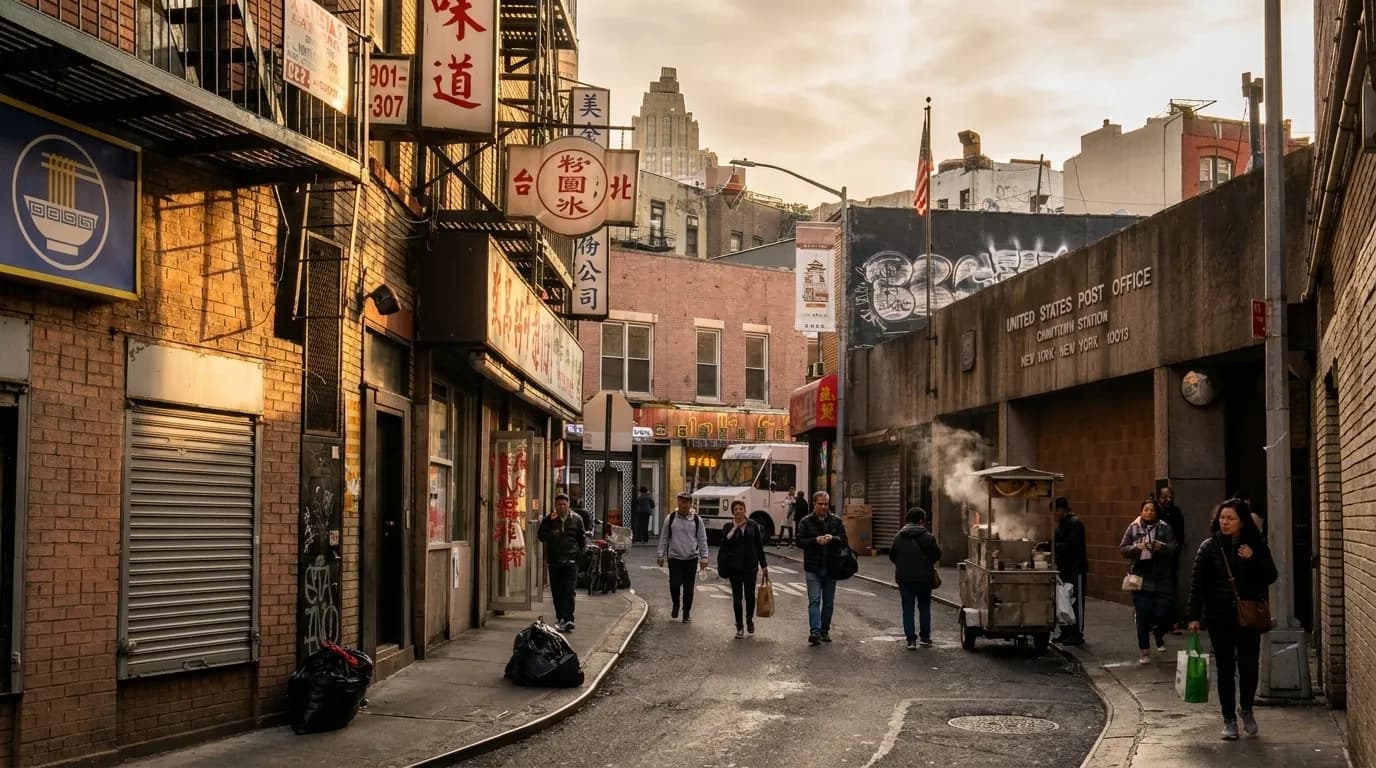
Nom Wah sits on Doyers Street, the crooked alley that bends like an elbow below Pell. The storefront hasn't changed much since the Roaring Twenties—pressed tin ceiling, narrow wooden booths, a long counter where regulars used to sip tea and read newspapers. It's the oldest dim sum parlor in the city, and the current owner grew up eating here before taking over from his uncle. You order from a checklist menu, not carts, which means everything comes out hot and nothing's been circling the room for twenty minutes.
Get the original egg rolls—fried to order, smaller and crispier than what you're used to, with a wrapper that shatters. The shrimp and snow pea leaf dumplings are seasonal and completely different from the standard shrimp-and-chive routine. Scallion pancakes here are pan-fried until they're almost lacquered, with enough spring onion to make your eyes water in the best way. Weekday mornings around 10 a.m. are the move—you'll sit next to Chinatown natives who've been coming for forty years, and you won't wait. Weekend brunch turns into an hour-long line that snakes onto the sidewalk.
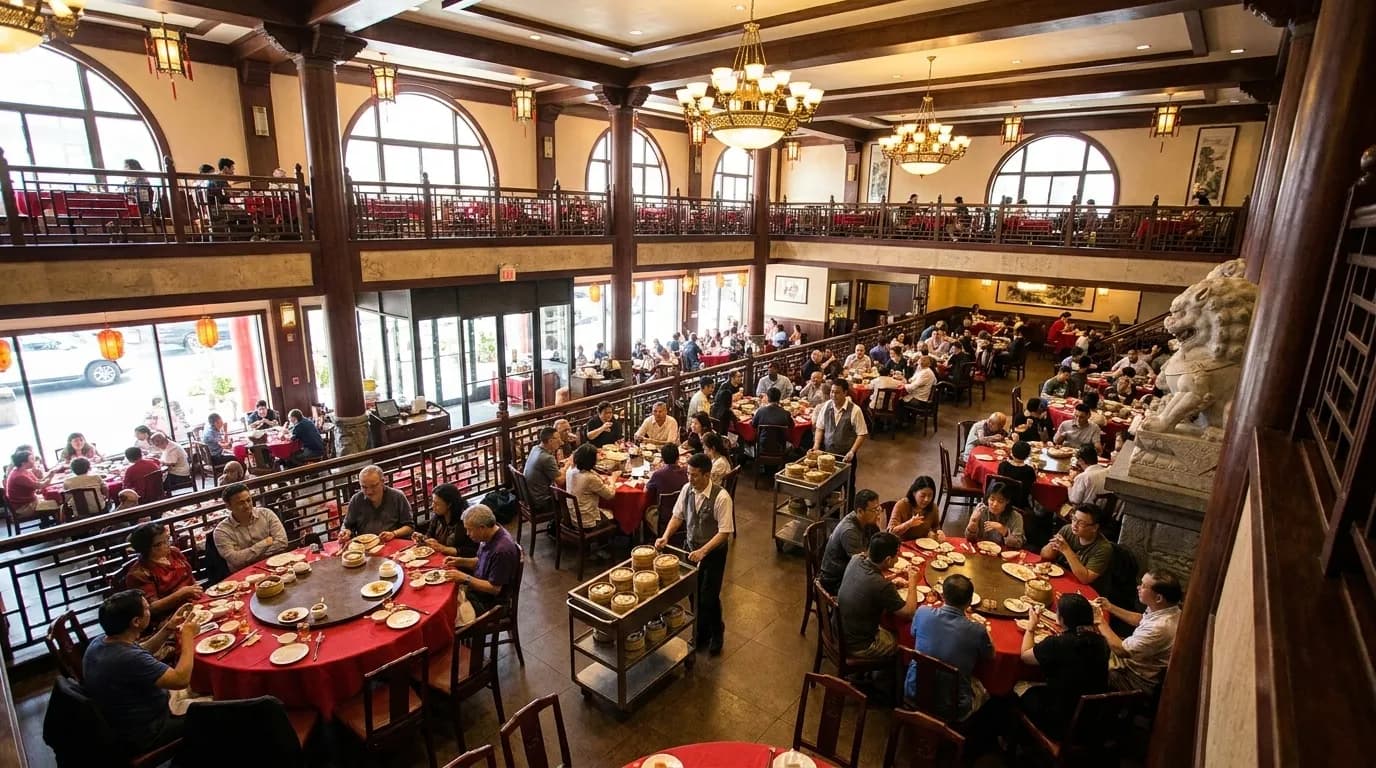
Jing Fong: the banquet-hall experience
Jing Fong occupies the second floor of a building on Elizabeth Street, and when you step off the escalator into the dining room you realize you've entered a different dimension. It's enormous—hundreds of seats under chandeliers, round tables packed with extended families, and women pushing metal carts loaded with bamboo steamers. This is dim sum the way it's been done in Hong Kong for generations: you flag down a cart, peek under the lid, and point. No English menu required, though the cart ladies usually know enough to explain.
The chaos is the point. You'll see whole roasted ducks hanging in the window as you walk in, trays of char siu bao bobbing past your table, and someone's grandmother reaching across three people to grab the last order of phoenix claws. Go for the classic shrimp dumplings, spare ribs in black bean sauce, and turnip cakes that get crispy-edged on the flat-top. The egg tarts arrive hot, custard still wobbling, from a separate dessert cart. Expect around twelve to fifteen dollars a person if you're restrained, closer to twenty if you're not. Weekend mornings are a mob scene; if you can swing a Wednesday at 11 a.m., you'll have your pick of carts and tables.
Golden Unicorn: three floors and no tourists
Golden Unicorn takes up multiple floors on East Broadway, and the locals know to head straight to the third floor where the cart service is fastest and the kitchen's closest. The ground level is for takeout and smaller groups; the second floor hosts wedding banquets on weekends; the third is where the action is. The room feels like a 1980s Hong Kong wedding hall—mirrored columns, red and gold trim, tables set with lazy Susans and pots of jasmine tea that get refilled before you ask.
The sui mai here are plump and pork-forward, topped with a little knob of crab roe. The baked pork buns have a sweet, crackly top that's almost cookie-like—completely different from the steamed bao at other spots. Don't skip the rice noodle rolls, either slicked with soy sauce and stuffed with shrimp or beef. The servers move fast and don't linger, so you need to make eye contact and nod decisively when a cart approaches. Prices run similar to Jing Fong, maybe a dollar or two less per dish depending on what you order. If you're here on a Sunday morning, you're joining half of Chinatown's families for their weekly ritual.
What Panda Express actually gives you
Look, Panda Express has its place. It's fast, it's predictable, and the orange chicken hits a very specific American-Chinese sweet spot. But it's not Chinese food in any meaningful sense—it's a formula designed for a mall food court, optimized for speed and shelf life. The recipes were invented in California in the 1980s, and they're built around sugar, cornstarch, and soy sauce in ratios that would baffle a cook in Guangdong. The vegetables are frozen, the proteins are pre-portioned, and nothing's made to order. You're paying eight to twelve dollars for a plate that was assembled in under two minutes.
At Nom Wah, Jing Fong, or Golden Unicorn, you're eating food that connects to a lineage stretching back through Hong Kong teahouses to Cantonese river towns. The dumplings are pleated by hand every morning. The char siu is lacquered and hung in the window. The turnip cakes are steamed in big trays, then sliced and pan-fried to order. You're not just getting better food—you're getting actual food, made by people who learned the recipes from their parents, in rooms that have been serving the neighborhood longer than chain restaurants have existed.
Ordering strategies for first-timers
If you've never done cart-style dim sum, the system is simpler than it looks. At Jing Fong and Golden Unicorn, you sit down, someone brings tea and a stamped card, and then you flag down carts. Each time you take a dish, the server stamps your card. At the end, they tally the stamps and you pay. Small, medium, and large plates run roughly four to six dollars, six to eight, and eight to ten. Start with the standards—har gow (shrimp dumplings), siu mai (pork dumplings), char siu bao (barbecue pork buns)—and then branch out to whatever looks good rolling by.
At Nom Wah, you're marking a paper menu, which gives you more control but less spontaneity. Order in waves so everything doesn't arrive at once, and don't be shy about asking what something is—the servers have explained turnip cakes to ten thousand confused customers before you. Across all three spots, go with a group if you can; dim sum is built for sharing, and you'll get to try twice as many things. And bring cash for Golden Unicorn and Jing Fong—they take cards now, but the process is slower and the servers prefer cash.
Practical notes
All three restaurants are walkable from Canal Street station (N, Q, R, W, J, Z, 6 trains). Nom Wah is cash-only and doesn't take reservations; weekday mornings are your best bet. Jing Fong and Golden Unicorn are walk-in only on weekends—arrive before 11 a.m. or after 1:30 p.m. to avoid peak crush. Jing Fong moved from its old location a few years back; the Elizabeth Street address is correct. None of these spots are precious about solo diners, but you'll have more fun with two or three people. If you're gluten-free or vegetarian, your options narrow fast—dim sum is built around wheat wrappers and pork. Expect to spend forty-five minutes to an hour once you're seated, longer on weekends. Skip Golden Unicorn's ground floor unless you're just grabbing takeout buns.
Tags: #nycfood #chinatownnyc #dimsumnyc #nomwahtea #jingfongrestaurant #goldenunicorn #pandaexpressalternatives #authenticchinese #newyorkeats #hiddengems #dumplings #teahouse #cartdimsum #localnyc #foodhistory
All trademarks are the property of their respective owners.
Ask Karpo first
Next time you're near Chinatown and craving dumplings, text Karpo instead of defaulting to the chain on your map. It'll tell you which of these three spots has the shortest wait right now, what to order if you hate cilantro or can't do shellfish, and how to get there from wherever you're standing. New York has a hundred years of dumpling wisdom folded into a few square blocks—you just need someone who knows where to point you.