The solo oyster eater knows what she wants: a good counter, a capable shucker within conversational distance, and no reservation hostage situation. Tribeca in late May 2026 delivers all three, with enough variety that you can rotate through half a dozen spots without repeating the scenery. The neighborhood's raw bar scene has matured past the white-marble-and-Edison-bulb template into something more textured—old zinc meeting new terrazzo, shellfish programs that shift with the week's haul, and bartenders who understand that a proper oyster martini should be cold enough to hurt. Pull up a stool. The bivalves are waiting.
The Marble Counter With the Old Mirror
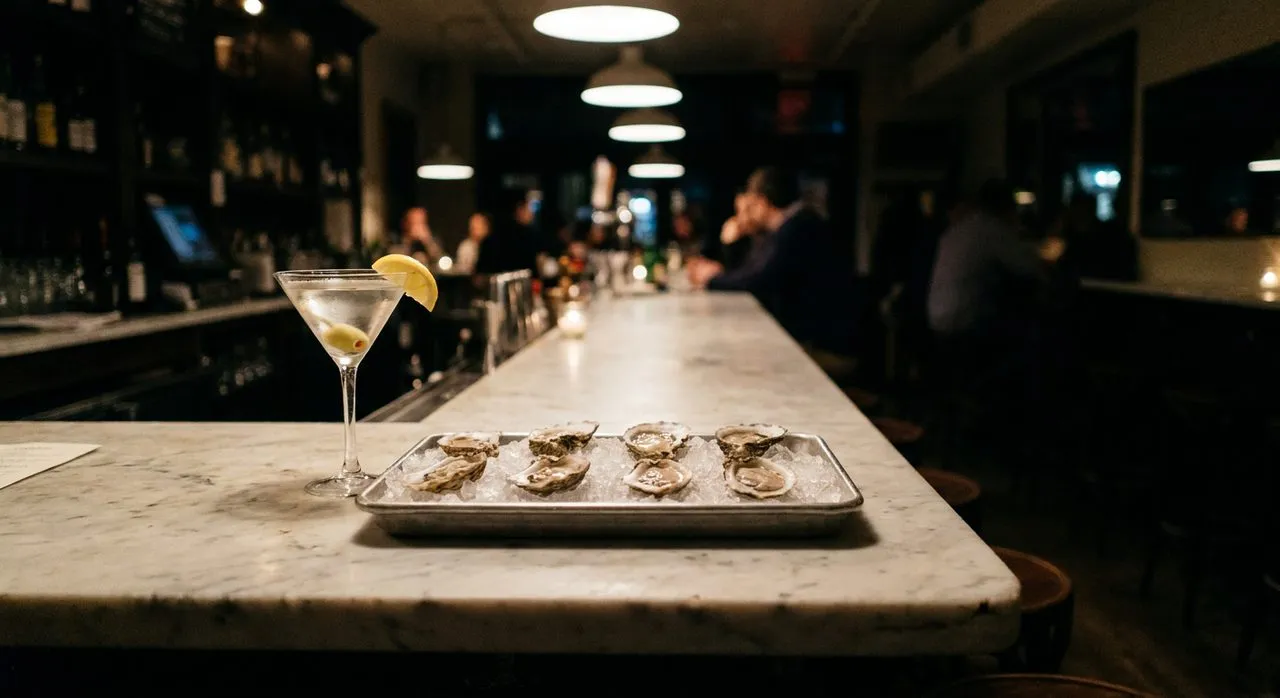
There's a narrow counter in Tribeca that catches the late-afternoon light just right in May, when the sun slants low through the western windows. The marble is cream-veined grey, worn smooth where decades of elbows have rested, and behind the shucker hangs an antique mirror that doubles the pile of crushed ice and makes the space feel twice as deep. Six counter seats, all of them good. The oyster list runs eight to ten varieties depending on the day, heavy on Maritime Canadas and the occasional Kumamoto when the distributor comes through.
The martini here is a study in restraint: cold gin, a whisper of vermouth, no garnish drama. It arrives in a chilled coupe that frosts over before you've finished your first oyster. The rhythm is easy—order a half-dozen, add three more if you're lingering, and let the sounds of shucking and murmured conversation fill the gaps. By six-thirty the counter is full but never frantic. This is the kind of place where solo feels natural, not lonely.
The Bright Corner With the Seafood Tower Overflow
A few blocks south, tucked into a corner space with wraparound windows, sits a counter that thrives on its own controlled chaos. The raw bar program here is ambitious—oysters, clams, shrimp, crab, all displayed on tiered ice that catches the overhead pendants and throws refracted light across the white subway tile. Four counter seats face the action directly; another three wrap around the side where you can watch both the kitchen pass and the shucking station. The energy is higher, the music audible but not invasive, the crowd a mix of post-work locals and visitors who've done their homework.
In late May the East Coast oysters are at their peak—plump, briny, with that clean mineral snap. The menu rotates weekly, and the servers know their provenance without consulting notes. Pair them with a dirty martini or one of the natural wines available by the glass. The vibe is modern without being precious, the kind of place where you can settle in for an hour with a book propped against the napkin dispenser and no one will rush you. Just don't come at seven on a Friday expecting an empty stool.
The Zinc Bar That Smells Like Lemon and Brine
West Broadway has a low-lit spot with a zinc counter that curves gently along one wall, patinated to a soft pewter glow. The scent hits you the moment you walk in: fresh lemon, sea brine, a faint trace of champagne mignonette. Seven counter seats, each with a dedicated cocktail napkin and a small dish for shells. The shuckers here work with quiet efficiency, building neat rows of oysters on crushed ice while fielding questions about salinity and merroir with genuine enthusiasm.
The happy hour window—roughly five to seven, though it shifts with the season—brings the price down to something almost reasonable for Tribeca. A half-dozen and a glass of Muscadet will leave you change from thirty dollars, and the quality doesn't waver. The lighting is warm, the acoustics muffled by heavy drapes and tin ceiling tiles, and the crowd skews toward regulars who nod at each other but respect the counter's unspoken code: eyes forward, conversation optional. It's a refuge, frankly, and one worth protecting.
The New Terrazzo Spot With the Champagne List
Tribeca has a newer oyster counter in a former Italian cafe space. The renovation brought in rose-flecked terrazzo, brass fixtures, and a raw bar that anchors the room like a sculpture. Five seats at the main counter, another four at a smaller bar that faces the street. The oyster program is tight—six varieties at any time, sourced from a rotating cast of small growers, each tagged with harvest date and location. The menu design is minimal, almost severe, but the staff soften it with real warmth.
The champagne list is the draw here, running from grower bottlings to prestige cuvées, all available by the glass thanks to a preservation system that keeps them fresh for weeks. Pair a dozen oysters with something bright and chalky, and watch the room fill with the kind of crowd that knows the difference between Blanc de Blancs and Blanc de Noirs. Late May means the windows are open, the breeze is gentle, and the terrazzo stays cool underfoot even as the evening warms.
The Dark Wood Counter With the Clam Chowder
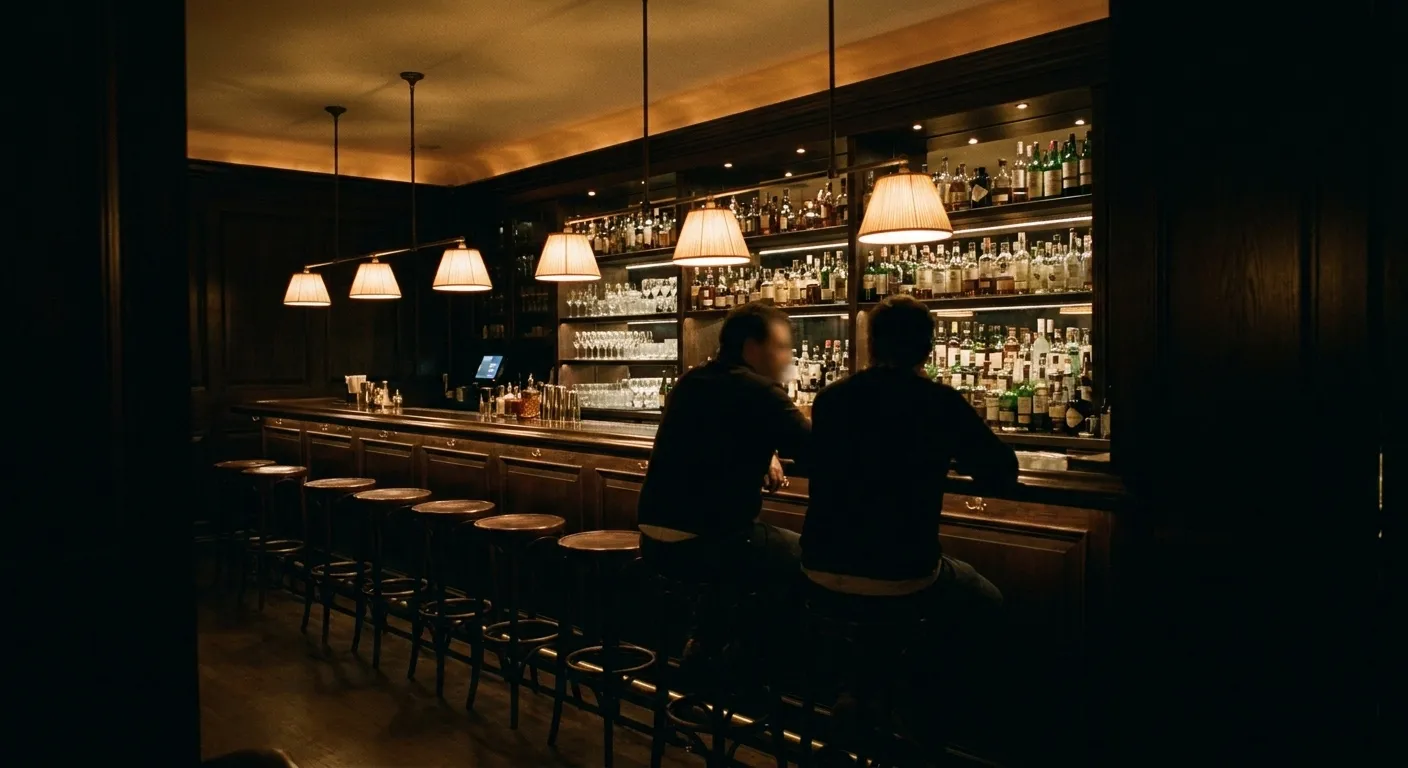
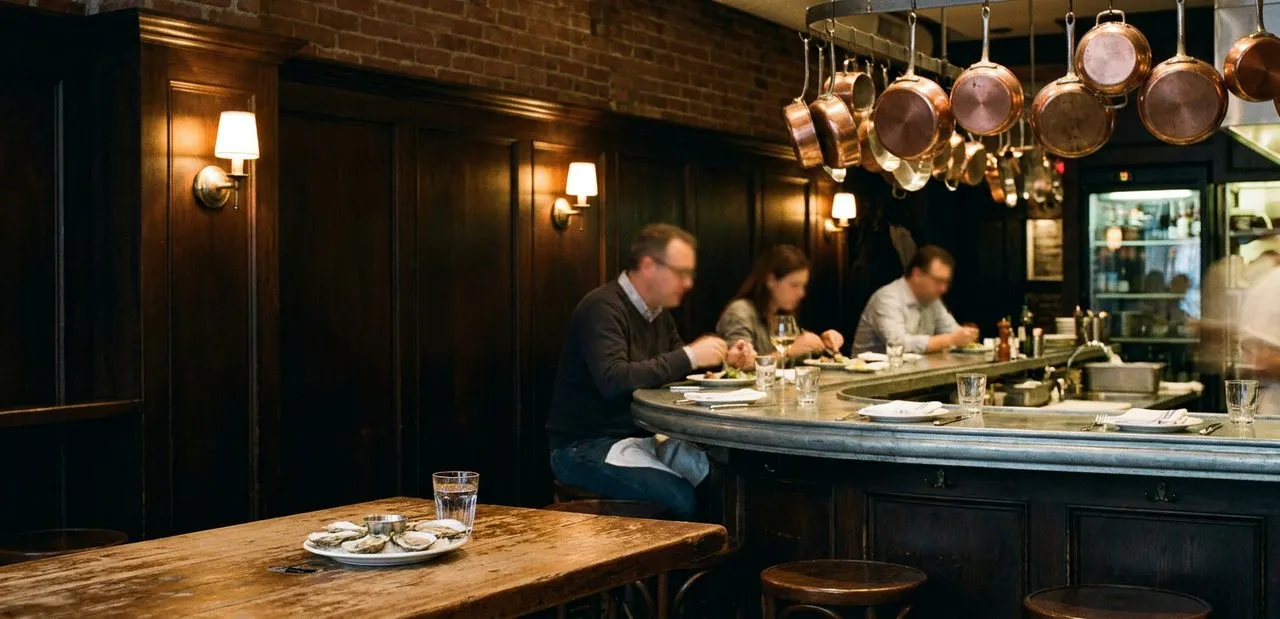
Not every oyster counter needs to be sleek. Near Chambers Street there's a tavern-like spot with dark wood paneling, dim Edison sconces, and a counter that seats eight along a bar scarred by decades of use. The raw bar selection is smaller—four oyster varieties, littlenecks, shrimp cocktail—but what they do, they do well. The real secret is the clam chowder, a New England-style version served in a bread bowl that pairs absurdly well with a cold lager and a half-dozen briny oysters.
This is the spot for when you want comfort over refinement, though the oysters themselves are impeccably fresh and properly shucked. The crowd is unpretentious, the music is classic rock played low, and the bartenders remember your drink after two visits. It's not trying to be anything other than a solid neighborhood oyster bar, which in Tribeca—land of aspirational everything—feels almost subversive.
The Glass-Walled Counter Facing the Courtyard
Tucked into a residential block near the north edge of Tribeca sits a quieter option with a glass-walled counter that overlooks a small courtyard garden. The space is all natural light and greenery, a rarity in a neighborhood of canyon streets and shadowed storefronts. Six counter seats, each with a view of the herb planters and climbing jasmine that's just beginning to bloom in late May. The oyster list favors West Coast varieties—Kumamotos, Shigokus, Hog Islands—balanced by a few East Coast standards.
The cocktail menu leans botanical: gin and tonics with house-made tonic, vodka sodas with muddled cucumber, a white Negroni that's more floral than bitter. It's the kind of place you bring a friend when you want conversation without shouting, or visit alone when you need to reset between meetings. The vibe is serene without being sterile, and the staff manages the rare feat of attentive service that doesn't hover.
Practical notes
Most of these counters cluster within a ten-minute walk of the 1/2/3 at Chambers Street or the A/C/E at Canal. Street parking in Tribeca is a gamble; the lot on Greenwich near Hubert is reliable if pricey. Happy hour windows vary but generally run five to seven; verify hours directly as seasonal shifts and private events can alter availability. Counter seating is first-come, first-served at all but one of these spots, and most see their peak crush between six-thirty and eight. Arrive by five-thirty or after eight-thirty for breathing room. Accessibility varies—older spots have steps, newer builds are level-entry. Bring a light jacket for the air-conditioned interiors, and cash for the rare spot that's still card-averse on tips.
Tags: #TribecaEats #OysterBar #PullUpAChair #SoloDining #RawBar #OysterHappyHour #TribecaRestaurants #NYCFoodie #BivalveSeason #MartiniAndOysters #CounterCulture #NYCOysters #SeafoodNYC #MayInNYC #KarposFinds
Please drink responsibly. Must be of legal drinking age.
Sources consulted: Tribeca · Oyster Bar · NYC Oyster Bars · NY Times Food · MTA Transit Info
All trademarks are the property of their respective owners.